

Executive Overview
As the political landscape shifts toward the midterms, a notable and strategic evolution is unfolding among Republican candidates running for governor across the United States. Once eager to champion strict, restrictive abortion laws in the immediate wake of the Supreme Court’s 2022 decision to overturn Roe v. Wade, several prominent GOP contenders are now executing a sharp rhetorical retreat. Rather than leaning into sweeping bans, candidates in critical battleground states such as Wisconsin, Pennsylvania, and Kansas are recasting previous legislative efforts as "settled law," deflecting questions about future restrictions, and striving to move the topic off the center stage of political debate.
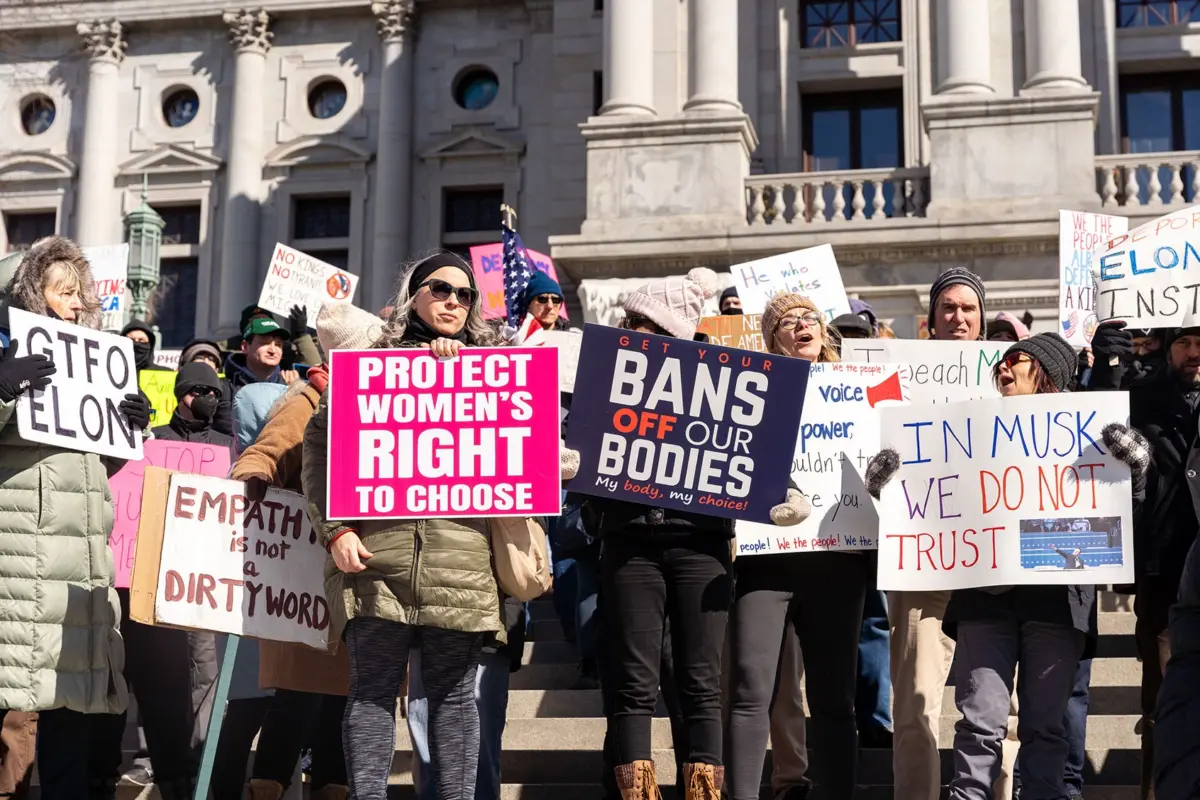
This calculated softening highlights a persistent political vulnerability for conservatives. While cost-of-living concerns and inflation often dominate voter priority lists, abortion access remains a potent mobilizing force—primarily for Democrats, independents, and moderate voters who view total bans or aggressive limitations as an overreach. Polls consistently show that roughly 60 percent of Americans believe abortion should remain legal in most or all cases. Consequently, Republican candidates find themselves walking a delicate tightrope: attempting to placate their core, anti-abortion base during primaries while reassuring a broader, more moderate general electorate that they have no intention of enacting draconian healthcare restrictions.
Detailed Chronology: A Trail of Changing Rhetoric
The pivot away from strict anti-abortion platforms is not merely anecdotal; it represents a documented, multi-state transformation in how conservative candidates present their records to the public.
Wisconsin: Tom Tiffany’s Six-Week Reversal
In Wisconsin, U.S. Representative Tom Tiffany has emerged as a prime example of this rhetorical shift. Running as the Republican candidate for governor, Tiffany has recently referred to his state’s current 20-week abortion limit as “settled law.”
However, a look back at his legislative history reveals a vastly different posture. Just three years prior, Tiffany proudly co-sponsored a federal and state-aligned push that would have implemented a strict nationwide or state-level ban on abortions at just six weeks of pregnancy—a point before many individuals even know they are pregnant. By recasting the 20-week boundary as established parameters rather than a floor for further restrictions, Tiffany is attempting to neutralize an issue that historically energizes the state’s progressive base.
Pennsylvania: Stacy Garrity’s Post-Roe Shift
A similar trajectory is visible in Pennsylvania. Stacy Garrity, the Republican gubernatorial contender, has taken to stating on the campaign trail that she would “respect” the commonwealth’s existing statutory framework, which currently permits abortion up to 24 weeks of pregnancy.
This moderate tone sharply contrasts with her immediate post-Roe actions. In the chaotic months following the June 2022 Supreme Court ruling, Garrity publicly called on anti-abortion advocates to “engage and make a difference” in reshaping state laws. Four years later, facing a state electorate deeply protective of bodily autonomy, Garrity’s messaging has pivoted from active mobilization to passive acceptance of the status quo.
Kansas: Ty Masterson’s Strategic Demurral
In Kansas—a state where voters decisively protected abortion rights via a constitutional referendum in 2022—Republican state leader Ty Masterson has adopted a strategy of calculated evasion. When directly asked during the current campaign cycle whether he would support a new statewide referendum aimed at stripping abortion protections from the Kansas constitution, Masterson has demurred.
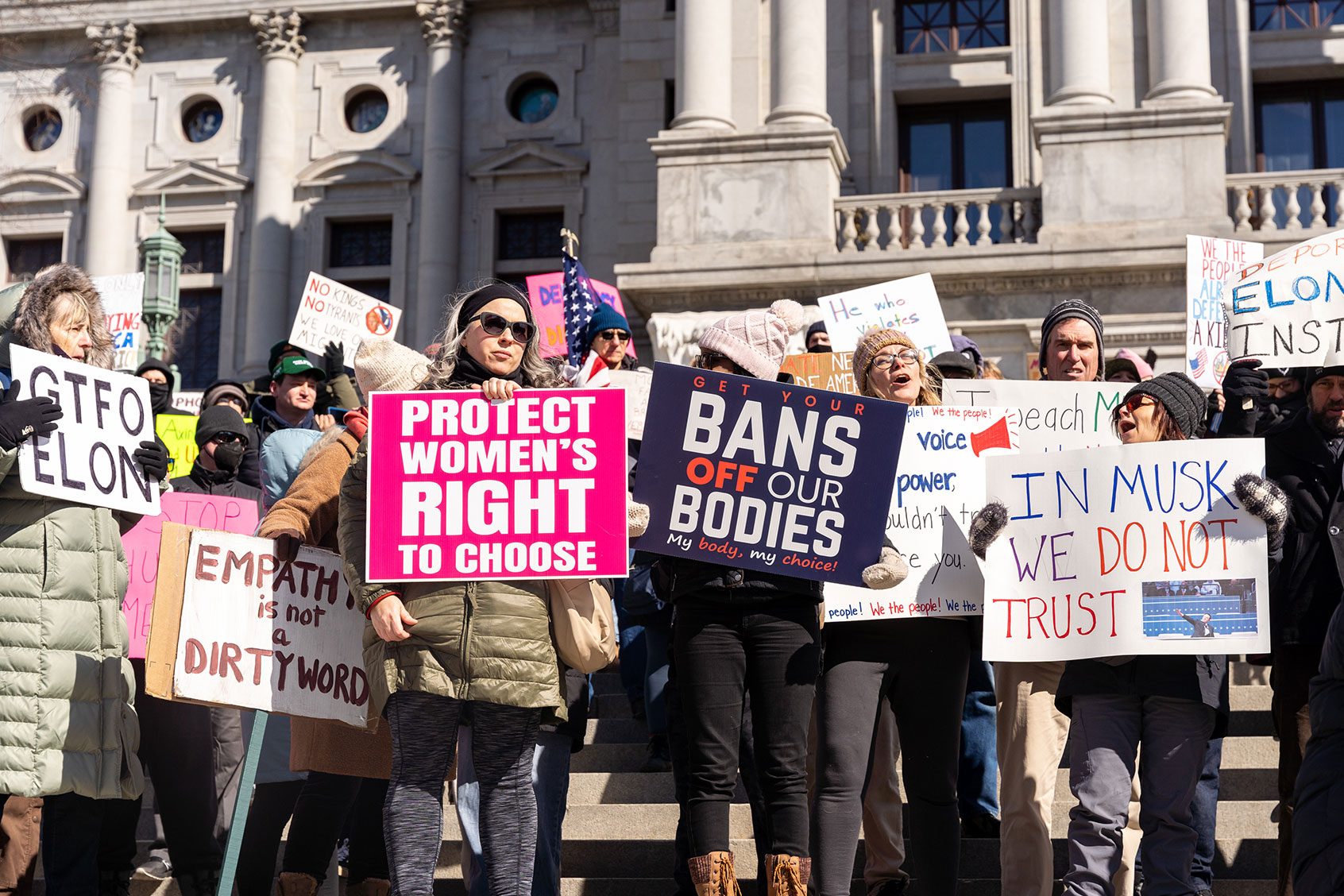
This caution marks a notable departure for a politician who previously built substantial political capital by speaking at anti-abortion protests and securing endorsements from prominent state and national anti-abortion organizations.
Supporting Context & Metrics: Polling and the Independent Voter Dilemma
To understand why conservative candidates are executing these sudden pivots, one must look closely at the data defining modern American voting behavior. According to polling data from The 19th and YouGov, approximately 60 percent of Americans believe that abortion should be legal in most or all cases. That figure climbs to roughly two-thirds among independent voters—a crucial demographic that ultimately decides gubernatorial races in swing states.
Molly Murphy, a pollster and president of the Democratic-aligned firm Impact Research, notes that pushing for total abortion bans has rarely been a widely popular retail-politics strategy, even prior to the fall of Roe v. Wade.
"It would get discussed in donor meeting hot mics, endorsement questionnaires, etc., but candidates wouldn’t run on the fact that they’d ban abortion," Murphy observed in an email exchange.
Celinda Lake, a veteran Democratic pollster, adds that voters fundamentally reject the notion that abortion access is "settled law." Instead, the overturning of Roe created a permanent psychological shift in the electorate.
"They feel like, ‘Wait a minute, it can be taken away again,’" Lake said. She notes that the share of voters actively opposing abortion bans has steadily risen, transforming the issue from a theoretical debate into a visceral threat to healthcare access.
Conversely, pollsters point out that softening the rhetoric is a deliberate attempt to suppress high-propensity Democratic turnout. Ashley Kirzinger, a pollster at KFF, suggests that the primary objective for candidates like Tiffany, Garrity, and Masterson is to take abortion off the table as a defining voting issue.
"That might be their strategy there, to try to demotivate Democratic turnout in the state to take abortion off the table as a voting issue, especially in tighter races," Kirzinger explained.
Official Statements and Counter-Strategies Across the Map
Despite the widespread strategic retreat among several top-tier candidates, the national political landscape remains deeply fractured. While some Republicans are running away from the issue, others are doubling down or finding themselves caught on tape.

Michigan: The Split Narrative
In Michigan, the dynamic has played out with intense public scrutiny. Republican gubernatorial candidate U.S. Rep. John James has framed abortion as a "decided" issue. Yet, just four years prior, James compared the practice to genocide and stated he opposed abortion in all circumstances.
Adding to the complexity of the Michigan race, James’s running mate, Jay DeBoyer, was recently caught on tape suggesting that Republicans could leverage a state constitutional convention to circumvent existing protections and enact a 12-week abortion ban. Following the leak of those recordings—first reported by The Detroit News and Michigan Advance—DeBoyer quickly pivoted back to calling abortion a "settled" issue in Michigan, where voters overwhelmingly amended the state constitution in 2022 to protect reproductive rights before fetal viability.
New Mexico: Doubling Down on the Fringe
Not all conservative candidates are hiding their ambitions. In New Mexico, where Democrats hold a firm grip on the governor’s office and the state legislature, Republican candidate Gregg Hull has taken the opposite approach. Hull has openly stated that he is "fully committed" to collaborating with Texas Governor Greg Abbott to curb abortion access for Texans traveling across the state line into New Mexico for care. While Hull has labeled himself "pro-life" and acknowledged he would need legislative backing to alter New Mexico’s currently unrestricted laws, his willingness to campaign on interstate abortion restrictions highlights that the anti-abortion wing of the party remains active in deep-blue territory.
Democratic Counteroffensives
Recognizing the political liabilities of their opponents, Democratic campaigns and allied political action committees are working aggressively to drag these historical statements back into the light.
- Wisconsin: Democratic gubernatorial nominee David Crowley has pledged to work with the state legislature to codify abortion rights directly into the Wisconsin state constitution.
- Maine: The political action committee Pine Tree State Prosperity, tied to the Democratic Governors Association, has launched heavy ad buys highlighting past anti-abortion statements made by Republican nominee Bobby Charles, positioning Democratic candidate Hannah Pingree firmly ahead in recent polls.
- National PACs: Groups like Planned Parenthood Votes are strategically deploying financial resources into key battlegrounds like Michigan to remind voters of the past records of candidates now claiming the issue is settled.
Future Outlook: The Enduring Shadow of Reproductive Rights
As the midterm elections draw closer, the tension between primary mobilization and general election viability will continue to define the Republican playbook on reproductive rights.
Anti-abortion organizations, such as SBA Pro-Life America, are actively pushing back against the candidates’ retreats. These groups are deploying aggressive advertising campaigns in states like Ohio, Wisconsin, and Michigan, attempting to cast both gubernatorial and congressional Democrats as extreme on the issue, while trying to hold conservative candidates accountable to their historic platforms.
However, political analysts suggest that these efforts may face a steep uphill battle against the cultural and political reality cemented over the last four years. As Celinda Lake points out, the evolution of public opinion has crossed a threshold where even voters who personally disagree with abortion morally are drawing a hard line against government intervention.
"We have in our research people who say, ‘I used to be pro-life, I didn’t support abortion, I would never get one, but I think this is a decision that needs to be made by a woman and her doctor,’" Lake noted. "People now feel this is just way too dangerous. This has gone way too far."
Ultimately, whether the strategy of rhetorical retreat will successfully insulate Republican candidates from the political fallout of abortion restrictions remains to be seen. What is clear, however, is that reproductive rights will continue to serve as a high-stakes battleground—one where past rhetoric can easily be resurrected, and where voters on both sides remain fiercely energized.