

Executive Overview
The landscape of domestic life shifts seismically upon the departure of a long-standing pet. In the wake of grief, households frequently grapple with a psychological vacuum—a phenomenon colloquially recognized among pet owners as the "void of dog." Navigating this terrain involves balancing the acute pain of bereavement against the complex, often guilt-laden imperative of introducing a new animal into a previously established domestic ecosystem.
This report documents the recent addition of a canine companion to a household managing such a transition. Following the loss of their beloved dog, Loa, in April, the family initiated a measured, deliberate search for a successor. What began as a cautious exploration of regional shelter systems—specifically the renowned Last Chance Ranch—quickly transformed into a swift, serendipitous adoption.
The newest resident, formally registered as Doctor Cooper Cheese Esquire the Third (and affectionately known variously as Cooper, Coop, Cheese, Mister Squish, or simply "Dude"), arrived through a convergence of institutional intuition and instant emotional resonance. This feature examines the mechanics of modern shelter matchmaking, the nuances of canine grief and recovery, the integration of multi-dog households, and the broader socio-emotional impacts of pet adoption on creative professionals.
Detailed Chronology: From Hesitation to Hearth
The Paradox of the Canine Void
The emotional architecture of pet loss is characterized by a distinct contradiction. To rid oneself of grief is to betray the memory of the departed; yet, to wallow in the absence is to deny the living space required for new chapters. As cultural observation dictates—famously echoed in the philosophy of George Carlin—human existence alongside dogs is fundamentally serial. One does not replace a singular soul; rather, one opens a new chapter in an ongoing chronicle.

Following the passing of Loa in April, the household acknowledged an eventual need to bridge the "Great Yawning Dog Chasm." However, the strategy was initially conservative. The plan relied on establishing high barriers to entry, dipping proverbial toes into the adoption market, and theoretically easing into the process over several months. A realistic timeline placed the introduction of a new dog somewhere around the Christmas holiday.
The Catalyst: Last Chance Ranch Open House
The acceleration of this timeline began with Last Chance Ranch, a shelter widely celebrated for its precise pairing methodologies. Operating less like a traditional holding facility and more like an elite sommelier service, the organization evaluates both human lifestyle and canine temperament to facilitate optimal pairings without prolonged stays.
Drawn by the shelter’s annual Open House—a community event featuring local merchants, food trucks, and equestrian demonstrations alongside public-facing shelter animals—the household intended merely to re-familiarize themselves with the adoption process. Concurrently, however, both partners independently reviewed the digital roster of adoptable animals.
Their attention was caught by "Scout," listed as a seven-month-old Hound and Terrier mix. Initial hesitations arose organically:

- The Gender Preference: A stated initial reluctance toward adopting a male dog.
- Breed Speculation: A mutual preference for retriever-infused genetics.
Despite these mental reservations, the couple attended the open house, toured the grounds, and interacted with various animals. Crucially, Scout was not immediately visible among the roaming dogs presented during the public tours.
The Intervention of Institutional Expertise
With a pre-approved adoption application already active on file—bolstered by the history of adopting both Loa and Snoobug from the very same facility—the couple inquired within the main administration area. Recognizing the family’s history and reading their unspoken desires with clinical precision, a shelter staff member intervened.
"You guys need to see Scout," the staff member noted, preempting any verbalized interest.
Upon presentation, Scout exhibited an immediate, disarming charm. Rather than displaying anxious or high-strung behaviors common in shelter environments, the young canine approached each family member systematically. He leaned his weight against their legs before melting to the floor, an endearing posture compared colloquially to the cheese melting on a cheeseburger.

Simultaneously, shelter staff introduced an alternative candidate, Lumi, a gentle hound female. Demonstrating high-level analytical insight, staff members cautioned against Lumi, noting that while her gentle disposition would suit the household’s aging resident dog, Snoobug, she might struggle profoundly with the eventual grief of outliving her companion. This candid assessment crystallized the family’s decision-making process: caution was discarded in favor of immediate action.
The Integration Phase
Because the shelter maintains strict protocols preventing holds without a formal "dog-meet-dog" evaluation—and given the high-traffic nature of the open house event—immediate departure with the animal was impossible. Fearing that Scout would be adopted by other attendees during the interim, staff implemented a rare procedural exception, placing a temporary hold on the animal.
Two days later, the resident dog, Snoobug, was brought to the facility for an evaluation. The introduction was an immediate success, characterized by mutual calm and harmonious physical interaction. With the final barrier cleared, Scout was formally integrated into the household.
Supporting Context & Metrics: Evaluating the Canine Addition
Behavioral Observations and Breed Realities
Initial shelter documentation categorized Scout as a seven-month-old Hound-Terrier mix. However, post-adoption behavioral analysis and physical development suggested a slight revision: the subject is estimated to be approximately nine months old, featuring a strong genetic blend of Hound and Retriever characteristics. This revision accounts for his exceptional proficiency in the game of fetch, an activity he pursues with tireless dedication.

| Metric / Trait | Observation | Behavioral Impact |
|---|---|---|
| Age | ~9 months (Revised from 7) | High energy balanced with trainability |
| Breed Profile | Hound / Retriever Mix | Exceptional fetch drive, tracking curiosity |
| House Training | 100% success rate | Zero indoor accidents; reliable signaling via door bells |
| Socialization | Highly egalitarian | Instantaneous positive integration with multi-age dogs |
Multi-Dog Dynamics and Behavioral Rejuvenation
The introduction of a younger, high-energy dog into a household with an established senior pet—in this case, Snoobug—carries inherent risks of friction or stress. However, the psychological impact observed has been profoundly restorative.
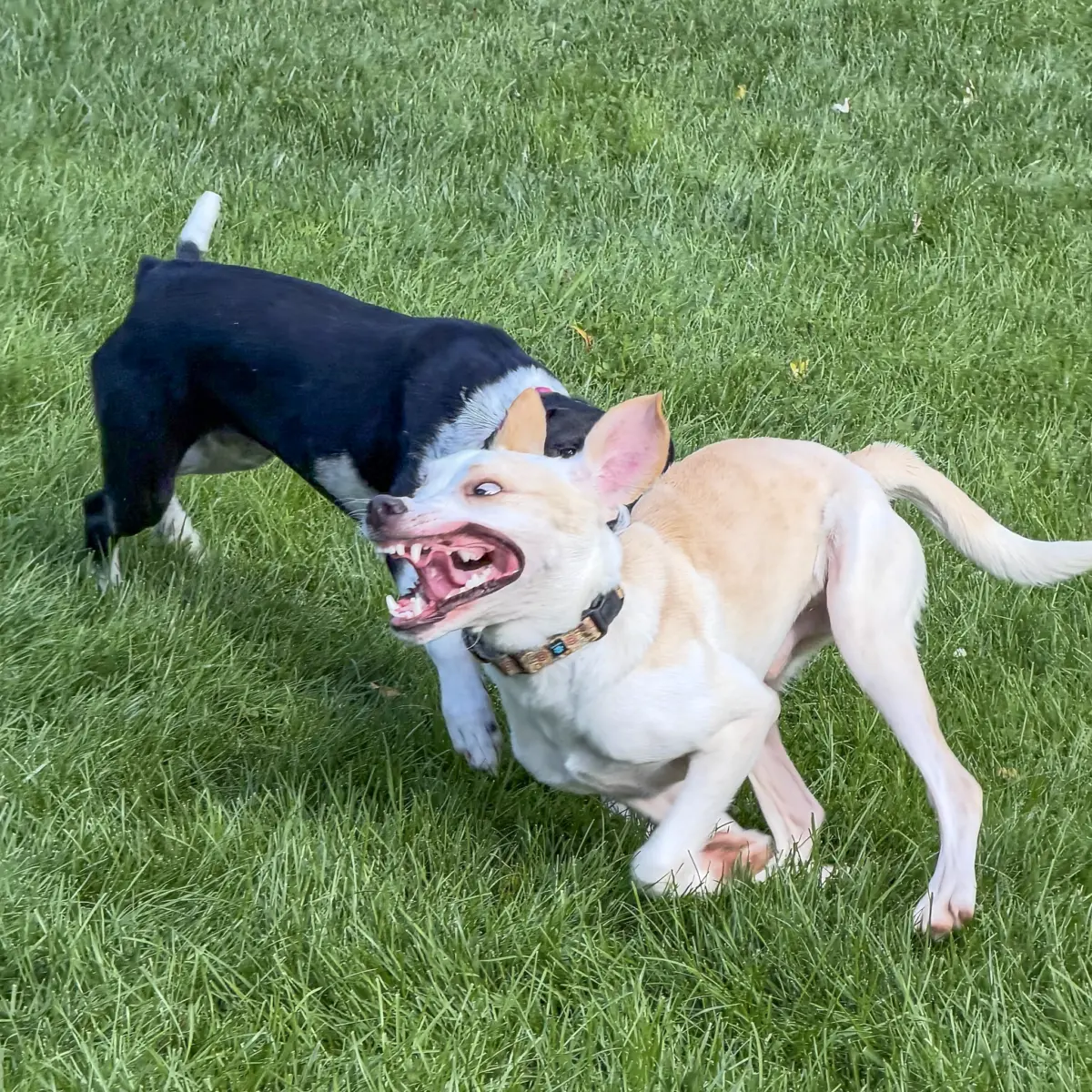
Snoobug, who shared a synchronized, sister-like dynamic with the late Loa, had settled into a period of senior repose characterized by frequent "loafing." The arrival of Cooper injected a fresh vitality into the domestic space. Far from inducing territorial anxiety, the newcomer’s playful demeanor spurred Snoobug into renewed physical activity. The two animals now regularly share sleeping spaces without conflict.
Furthermore, socialization metrics extend beyond the primary household. During extended play sessions with a peer-aged canine belonging to extended family, Cooper demonstrated high emotional intelligence and boundary awareness, engaging in robust, sustained play for upwards of 45 minutes without behavioral escalation.
Official Statements and Household Reflections
While the adoption process was handled through institutional channels at Last Chance Ranch, the primary commentary regarding the transition comes from the household principals. The integration of Doctor Cooper Cheese Esquire the Third has prompted public reflections on the nature of pet ownership, grief, and domestic humor.

"It’s a strange thing, to get a dog after you’ve ever had any other dog," the household representative noted via public chronicle. Addressing the delicate balance of replacing a pet, they added: "You know you had a dog in one of the beloved dog slots in your household, and then one day, you didn’t. You had a void of dog and that hurts to have, but it’s also kind of awful to fill."
Reflecting on the unexpected speed of the adoption and the undeniable charm of the animal, observations emphasized physical and temperamental attributes: "He’s a dog-type dog… just a happy galloping friend to everyone." Attention was additionally drawn to his aesthetic and communicative competencies, noting his proficiency in ringing designated sleigh bells to signal toileting needs, alongside possessing "champion-tier" eyelashes.
Future Outlook and Ongoing Engagements
The successful integration of Doctor Cooper Cheese Esquire the Third marks the beginning of a new operational chapter for the household. While the digital landscape of the family’s public platforms threatens to pivot toward a continuous, twenty-four-hour stream of canine content—colloquially dubbed a "Cooper Channel"—professional obligations in literature and public appearances remain firmly scheduled.
Upcoming Author Itineraries and Public Engagements
Concurrent with the domestic transition, professional commitments continue across the northeastern United States and Canada:

- Doylestown, Pennsylvania: Local bookstore appearance in support of author Keith Rosson and his latest work, Crone.
- New Hampshire & Vermont: Joint promotional events alongside author Delilah S. Dawson at Gibson’s Bookstore (New Hampshire) and Phoenix Books (Burlington, Vermont).
- Ottawa, Canada: Participation in the Can*Con literary convention.
- New York: Engagement at Oblong Books alongside author Sam Rebelein.
Supporters of the household and followers of the new canine addition are directed toward independent literary channels—specifically regional partners like the Doylestown Bookshop, which facilitates signed and personalized book orders—to indirectly support the ongoing provision of premium canine provisions for Mister Cheese.
As the household stabilizes around its new, expanded membership, the overarching narrative remains one of resilience: a testament to the fact that while grief leaves an undeniable footprint, the capacity of a home to welcome joy remains perpetually renewable.