

Executive Overview
For decades, the pursuit of top-tier search engine rankings has kept digital marketers, entrepreneurs, and content creators awake at night. At the absolute core of search engine optimization (SEO) lies a singular, burning question: "How many backlinks do I need to rank?"

The knee-jerk reaction for many practitioners is to aggressively chase volume—amassing hundreds or even thousands of links through automated outreach, low-quality directory submissions, or high-risk PBNs (Private Blog Networks). However, industry insights and modern SEO analytics continuously reveal a starkly different reality: most websites do not need nearly as many backlinks as they think to dominate the search engine results pages (SERPs).

In fact, haphazardly throwing link-building resources at a piece of content without upfront analysis is a fast track to wasted budgets and stagnant rankings. A strategic, data-driven approach is required to identify high-converting assets, calculate precise link deficits, and assess true competitor strength. This comprehensive blueprint outlines a rigorous 5-step methodology designed to accurately determine the exact quantity and quality of backlinks required to propel your content into the top tiers of Google’s first page—maximizing return on investment (ROI) and securing sustainable, long-term organic traffic.

Detailed Chronology & Methodology: The 5-Step Ranking Blueprint
Determining your exact backlink requirement is not a guessing game; it requires a systematic evaluation of your current standing relative to the real-world performance of your competitors. The following 5-step framework walks through the exact process used by elite SEOs to audit, prioritize, and execute targeted link-building campaigns.

Step 1: Identify Your Highest-Priority Backlink Targets
Before counting a single link, you must isolate which assets on your website actually drive business outcomes. Not all pages are created equal. Rather than building links to low-intent informational pieces, your focus should be zeroed in on high-converting assets—pages that generate leads, capture revenue, and sit tantalizingly close to the upper echelons of page one (positions 4 through 10) but need a strategic push to break into the top 3-5 spots.

There are two primary methods to unearth these high-value targets efficiently:

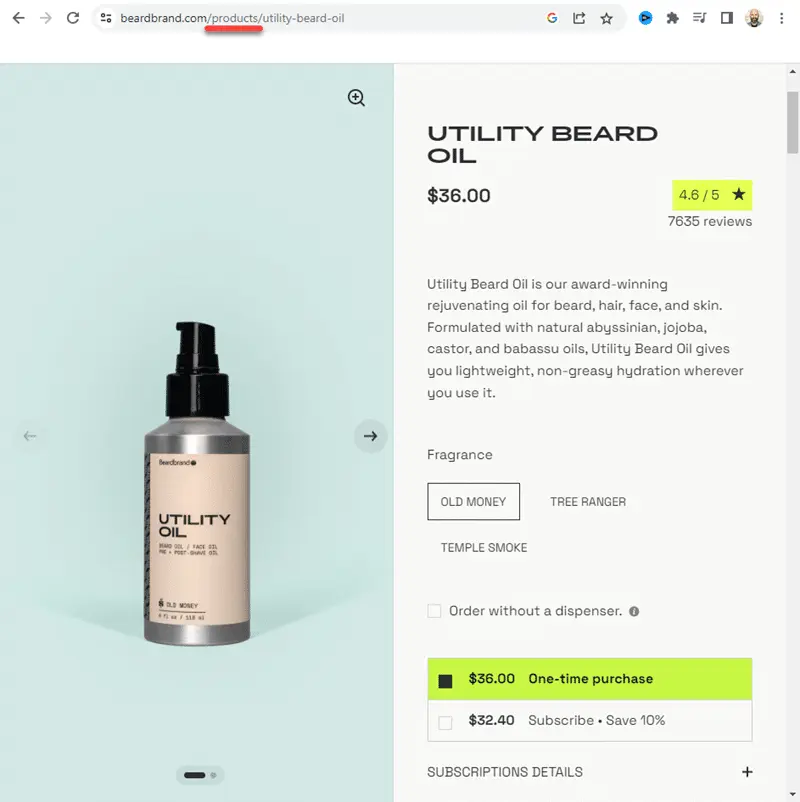
- Analyzing Website Subfolders: Many structured websites house their most commercially viable content within specific subfolders—such as
/products,/features,/industries,/reviews, or/services. You can quickly identify these paths by auditing the site’s navigation and footer, or by running the domain through an enterprise SEO tool like Ahrefs Site Explorer and reviewing the Subfolders report. Inputting these paths into the Top Pages report and applying a position filter (positions 4–10) yields an immediate shortlist of revenue-generating pages ripe for optimization. - Leveraging Keyword Modifiers: If your site architecture doesn’t rely heavily on distinct subfolders, keyword modifiers offer a reliable alternative. By filtering your Top Pages report for commercial intent queries containing terms like “best,” “software,” “tools,” “platform,” “solutions,” “alternatives,” or “vs,” you can pinpoint transactional and commercial investigation articles that are already generating traffic and conversions, but require external authority to climb higher.
Step 2: Review SERP Data and Spot the True Benchmark
Once you have isolated a target asset—such as an affiliate roundup or a product comparison page—the next step is to examine the competitive landscape.

By navigating to the Keyword Explorer overview and scrolling down to the SERP overview report, you can evaluate every URL currently occupying the top 10 positions. This view highlights the immense traffic potential awaiting a move into the top three positions. However, you must look past the raw Referring Domains (RD) metric at first glance.

Relying solely on a competitor’s total referring domain count is often misleading; raw numbers frequently dwarf the actual link equity needed. Instead, you must perform an "apples-to-apples" comparison:

- Match Domain Ratings (DR): Locate a competitor whose website domain rating is relatively close to or slightly lower than your own.
- Match Content Type and Format: Ensure they are ranking with a similar content structure (e.g., a blog post in a listicle format).
- Find the Lowest Baseline: Identify the competitor within that matched cohort boasting the lowest referring domain count. This represents your most realistic, achievable benchmark.
Step 3: Audit and Filter the Competitor’s Backlink Profile
Raw competitor link counts often include a significant amount of noise—spammy directories, irrelevant guest posts, or unverified redirects that pass little to no value. To find out how many links you truly need, you must deep-dive into the competitor’s backlink profile.

By opening the competitor’s Referring Domains report, you can apply rigorous filters:

- Exclude low-quality or zero-traffic domains.
- Filter out topically irrelevant domains that have nothing to do with the niche.
- Focus purely on contextually relevant, authoritative referring domains.
For instance, an initial competitor metric might show 85 referring domains. However, once robust filtering rules are applied to strip away low-tier or misaligned links, the true active domain count may drop drastically—sometimes down to just 22 contextually relevant, high-performing domains. Subtracting any topically irrelevant outliers leaves you with a lean, highly accurate backlink target.

Step 4: Assess Domain Rating Distributions and Link Types
Quantity alone tells only half the story; the quality of the backlinks dictates whether your campaign will succeed. Step four requires an audit of the competitor’s Domain Rating (DR) distribution.

By analyzing the breakdown of a competitor’s link profile, you can see how many links originate from ultra-high-authority sites (e.g., DR 80+) versus mid-tier sites (DR 70–79). If a competitor’s top rankings are propped up by a dozen elite, hard-to-earn enterprise placements, closing the gap will require a long-term, relationship-driven PR and outreach strategy.

Furthermore, inspecting the individual backlink sources reveals how your competitors acquired their placements—whether through strategic guest blogging, industry collaborations, or unlinked brand mentions. These insights serve as the tactical foundation for your own outreach campaigns.

Step 5: Determine Link Velocity Targets
Ranking on page one is rarely a one-time event; it is an ongoing battle for digital real estate. High-priority search terms are fiercely contested, and established competitors regularly build new links to defend their SERP rankings.

To ensure your strategy accounts for this dynamic environment, you must calculate link velocity. By toggling the competitor backlink report to display New backlinks over 30-day, 90-day, and 180-day intervals, you can gauge ongoing acquisition rates.

If a competitor has generated zero new referring domains in the past month, it signals that the niche is stable and you will not need an aggressive, high-volume ongoing link-building machine. Instead, your workflow crystallizes: build the initial batch of links required to close the baseline gap, followed by a modest maintenance cadence (such as one or two quality links per quarter) to secure your position indefinitely.

Supporting Context & Metrics: The Economics of Page One
Understanding the mathematical upside of this process contextualizes why precise link auditing is so critical. Organic search visibility follows a steep power-law curve: moving from the bottom of page one (positions 8–10) up into the podium positions (1–3) frequently results in a 2x to 4x multiplier in organic traffic.

- Case Study Insight – SERP Tracking Tools: In evaluating an under-optimized listicle targeting competitive commercial keywords, a site with a Domain Rating of 70 discovered a competitor ranking comfortably higher despite having a lower overall domain rating. By filtering the competitor’s 85 raw referring domains down to 22 genuinely relevant, high-quality referring domains, the publisher realized they did not need to build 80+ speculative links. Instead, a targeted refresh of the content coupled with a fraction of the estimated link acquisition effort was sufficient to bridge the authority gap.
- Case Study Insight – Enterprise SEO Tools: Similarly, analysis of enterprise software roundups demonstrated that secondary competitors often rank in the top five positions with fewer than five clean, topically aligned referring domains. Without proactive link building, a dormant page might collect random, low-value citations over time. However, pairing a comprehensive content update with just a couple of targeted DR 70+ placements can rapidly shift a lagging page into top-tier visibility, exponentially increasing downstream affiliate commissions and lead generation.
Future Outlook: The Evolution of Link Equity in Modern Search
As search engine algorithms continue to mature through advanced machine learning and natural language processing (such as Google’s continuous core updates and the integration of AI-driven search experiences), the mechanical manipulation of backlinks faces diminishing returns.

The future of SEO clearly favors efficiency over volume. Search engines are increasingly adept at identifying contextual relevance, user intent fulfillment, and genuine brand authority. Spray-and-pray link building is rapidly becoming obsolete, replaced by precision asset optimization.

Moving forward, digital marketers who master the art of the link deficit audit—identifying precisely what is missing, prioritizing high-intent commercial pages, and acquiring contextually pristine links—will outperform competitors who rely on brute-force link accumulation. By treating link building as a precision surgical tool rather than a blunt instrument, businesses can future-proof their organic visibility, protect their marketing budgets, and secure resilient, high-converting real estate on page one for years to come.