

Originally published by Northwestern University’s Medill Local News Initiative and republished with permission.
Executive Overview
For nearly six decades, the architecture of American public broadcasting rested on a foundational federal compact. Through the federally chartered Corporation for Public Broadcasting (CPB), Washington funneled vital subsidies directly into the veins of local radio and television stations, sustaining everything from high-minded national cultural programming to essential regional news.
That architecture was irrevocably altered when the Rescissions Act of 2025 was passed by Congress and signed into law by President Donald Trump. Sparing little momentum, the legislation clawed back approximately $1.1 billion in federal subsidies. It marked the first time in history that the federal government completely withdrew the financial backing that had built and sustained the nation’s public media network.
The political motivation behind the rescission was explicit. Critics within the Republican party had long targeted PBS and NPR, publicly framing them as ideologically biased against conservatives. But the real-world implications extended far beyond partisan talking points. Within two weeks of the bill’s enactment, the CPB announced it would wind down its operations entirely. Industry observers warned of a looming extinction-level event for local stations nationwide.
Yet, as the dust settles on a turbulent post-rescission era, the anticipated apocalypse of mass public media closures has not materialized. Instead, an unprecedented wave of grassroots "rage giving," coupled with historic interventions from major philanthropic organizations, has formed an unlikely safety net. Stations that braced for immediate financial ruin discovered unexpected wells of local support.
At the same time, however, the financial relief has proven uneven, leaving rural outposts deeply vulnerable while forcing major institutional networks to enact painful structural cutbacks. As public broadcasters navigate this brave new world through innovative mergers, regional collaborations, and digital pivots, a sobering question remains: Can a safety net woven from temporary political anger and philanthropy sustain public media for the long haul, or has the system merely delayed an inevitable reckoning?
Detailed Chronology: The Anatomy of a Historic Funding Crisis
The trajectory of the public broadcasting crisis unfolded across a tense, high-stakes timeline that caught media executives and local communities off guard.
Summer 2025: The Push for Defunding
The crisis intensified during the summer months of 2025, when President Trump aggressively urged Congress to eliminate nearly all federal funding for public broadcasting. Decrying PBS and NPR as irredeemably biased, the administration championed a "rescission package"—a parliamentary maneuver designed to formally claw back funds already appropriated by a previous Congress.
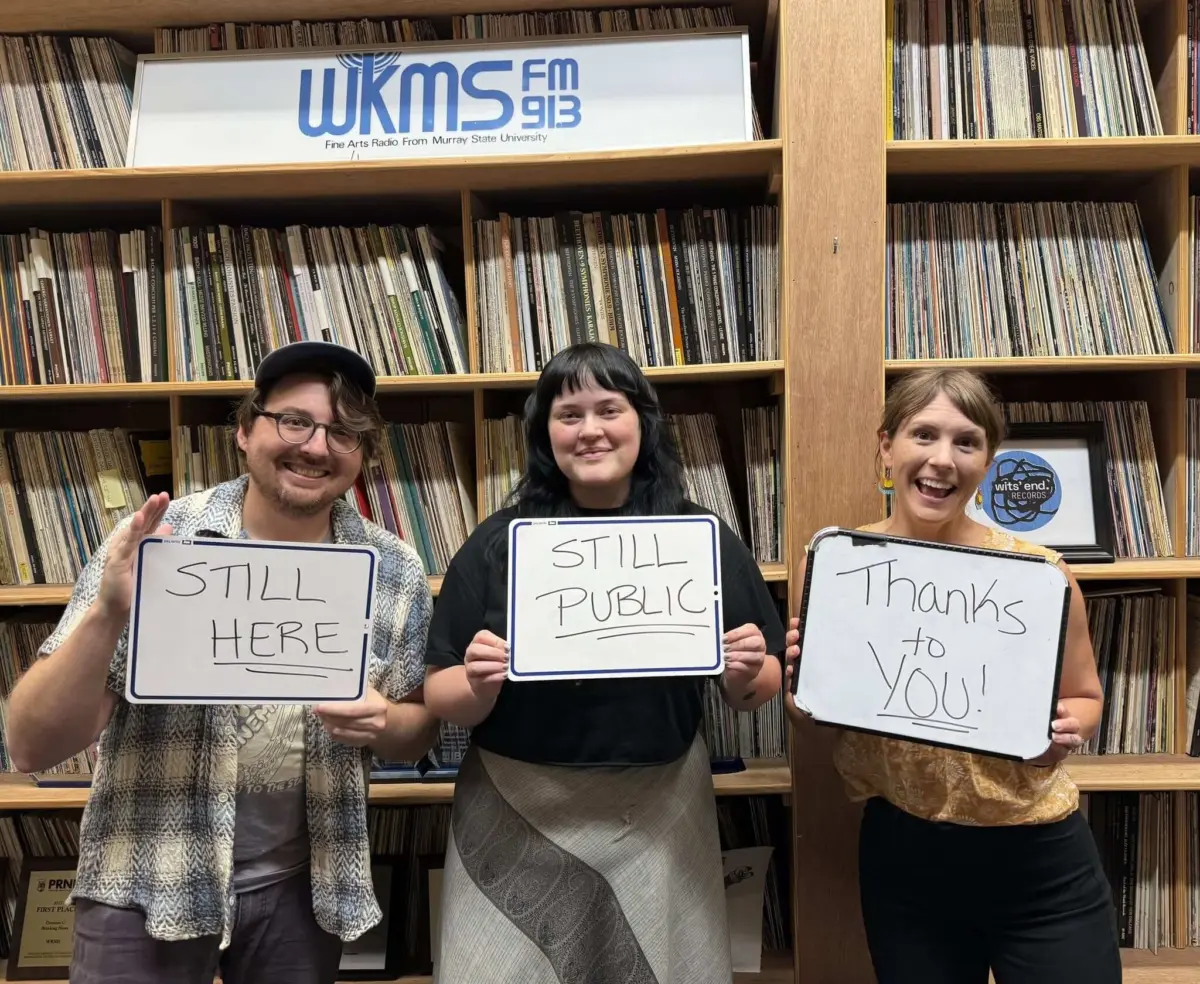
For managers of small and rural stations, the warning signs spelled disaster. At WKMS in southwestern Kentucky, station manager Asia Burnett faced the impending loss of $215,000 annually—roughly 15% of the station’s operating budget. In a region where per capita income hovered around $30,000, Burnett knew local sponsors and listeners would struggle to bridge the widening fiscal gap.
July–August 2025: The Hammer Drops
The political threat became reality in July 2025 when Congress passed the Rescissions Act. The repercussions were swift. Within a fortnight, the CPB initiated its wind-down sequence, abruptly severing the financial lifeline that connected Washington to over 1,500 local broadcast entities. Media analysts predicted immediate, widespread station darkouts, particularly in rural markets where federal funds accounted for upwards of 40% of operating budgets.
As the autumn of 2025 approached, the predicted closures began to manifest in painful ways. Major institutional producers—such as WETA in suburban Washington, D.C., and GBH in Boston—slashed staff by up to 10% to 15%, canceling flagship productions like the weekend edition of NewsHour. In California’s rural Humboldt County, KEET-TV lost nearly half its budget, forcing the cancellation of its Headline Humboldt newscast and shrinking its staff from 13 down to six.
Late 2025–2026: The Philanthropic and Grassroots Wave
Simultaneously, however, a counter-movement took shape. Provoked by the federal government’s actions, everyday citizens launched a massive wave of grassroots donations, colloquially dubbed "rage giving." Simultaneously, institutional heavyweights—including the Knight Foundation, Carnegie Foundation, MacArthur Foundation, Ford Foundation, and Mellon Foundation—mobilized through the Public Media Bridge Fund to inject emergency stabilization capital into the system.
By mid-2026, this dual-engine rescue effort had stabilized many of the nation’s most critical public media assets, though structural vulnerabilities continued to plague smaller, hyper-dependent stations.
Supporting Context & Metrics: The Numbers Behind the Survival
While the collective survival of public media is a testament to audience loyalty, aggregate data reveals a deeply bifurcated landscape.
According to data tracked by Semipublic, an organization monitoring public media analytics, the federal cuts—compounded by declining state-level support—have resulted in approximately 550 layoffs, accounting for roughly 3% of the total public media workforce nationwide.
Conversely, stations that aggressively mobilized fundraising campaigns reported staggering revenue jumps. Research from the Contributor Development Partnership (CDP), which analyzed 170 public stations, revealed that revenue rose an average of 44% in the months immediately following the federal clawback.
- The WKMS Phenomenon: In Kentucky, WKMS shattered fundraising expectations by pulling in over $900,000 in the months following the federal cuts—roughly two-and-a-half times its typical annual fundraising haul. The windfall included a single $250,000 gift, alongside contributions from everyday citizens, allowing the station to maintain its eight-person staff and bolster its endowment.
- Oregon Public Broadcasting (OPB): OPB absorbed a $5 million loss in CPB funds (about 9% of its budget), but surging local donations more than covered the deficit. CEO Rachel Smolkin utilized the influx to expand the newsroom by four journalists, aiming to convert temporary "rage-givers" into long-term financial "sustainers."
- The Bridge Fund Intervention: To prevent total collapse in vulnerable areas, the Public Media Bridge Fund and associated institutional donors assembled an $86 million war chest backed by roughly 1,500 individual and organizational donors. The fund directed some $26 million in emergency stabilization grants and loans to rescue an estimated 115 stations deemed at extreme risk of closure.
- The University Factor: Compounding the financial instability is the unique ownership structure of public media. More than half of public radio stations and roughly a quarter of public TV stations are owned by colleges and universities. Many of these institutions are currently bracing for an impending "enrollment cliff" and declining state appropriations, threatening institutional subsidies that local stations have historically relied upon.
Official Statements and Industry Perspectives
The rapid evolution of the public media crisis has forced media executives, data analysts, and foundation leaders to reevaluate the long-term viability of the industry.
Asia Burnett, Station Manager, WKMS:
"That’s a lot of money for a small, rural station to lose. It was a large hit. But it shows how important local journalism is. Journalism is always changing, but this speaks to how people still need a trusted source, a trusted voice."
Alex Curley, Executive Director, Semipublic:
"The end of federal funding was an incredibly dramatic event. People were motivated to give. It’s not the imminent crisis that everyone thought it would be a year ago. It doesn’t mean the crisis has been resolved. It just means it’s delayed."
Rachel Smolkin, CEO, Oregon Public Broadcasting:
"The kind of news and other information public stations provide—free to all and usually of high quality—is critical to converting rage-givers into ‘sustainers.’ Our goal is to build an organization with the scale and resilience to sustain robust, independent local reporting for decades to come."
Ashley Alvarado, CEO, Texas Public Radio:
"The reality across local journalism is that resources are tight, philanthropic dollars are competitive and audiences are fragmented. The goal wasn’t just to save a dollar today. It was to build an organization with the scale and resilience to sustain robust, independent local reporting."
Erik Langner, Executive Director, Public Media Bridge Fund:
"The system will have fewer originating organizations in the future. Many stations remain significantly vulnerable. However, institutional commitments ensure at least some continuity in the years to come."
Future Outlook: Collaboration, Consolidation, and the Road Ahead
As the initial adrenaline of post-rescission fundraising begins to normalize—CDP indexes noted a 16% cooling in new donor growth by mid-2026—public broadcasters are looking toward systemic structural evolution to guarantee their survival.
1. Mergers and Cross-Platform Acquisitions
To trim administrative overhead while expanding newsgathering capacity, public stations are increasingly merging with digital-first newsrooms. Texas Public Radio’s combination with the digital nonprofit San Antonio Report created a robust 31-person newsroom designed to share operational costs. Similar cross-pollinations have taken root in Chicago, St. Louis, Los Angeles, and New York, uniting legacy broadcast infrastructure with nimble digital journalism outfits.
2. The Expansion of Regional Networks
Resource-sharing cooperatives are expanding rapidly to fill the void left by collapsing for-profit newspapers. Pioneered by The Texas Newsroom, NPR’s Collaborative Journalism Network model has been replicated across the American South, California, New England, Appalachia, and the Mountain West. These regional hubs pool reporting resources to cover state politics, immigration, health, and climate issues efficiently.
Similarly, specialized safety networks—such as the Florida Public Radio Emergency Network, fully funded by the state for a modest $256,270 annually—demonstrate how low-cost, high-impact public service operations can secure state-level backing by providing indispensable, life-saving weather alerts.
3. The Threat of the Long-Term Slump
Despite these innovations, industry analysts warn that complacency is dangerous. Once public broadcasting fades from the immediate national political spotlight, sustaining audience outrage and high-volume donations will become increasingly difficult. Without a permanent structural replacement for federal baseline subsidies, the public media ecosystem faces a contraction.
Ultimately, the heroic rescue efforts of 2025 and 2026 proved that local communities deeply value public journalism. But as the post-rescission era matures, the industry must transition from surviving on temporary surges of political anger to building permanent, self-sustaining financial models capable of weathering the storms of tomorrow.