

Executive Overview
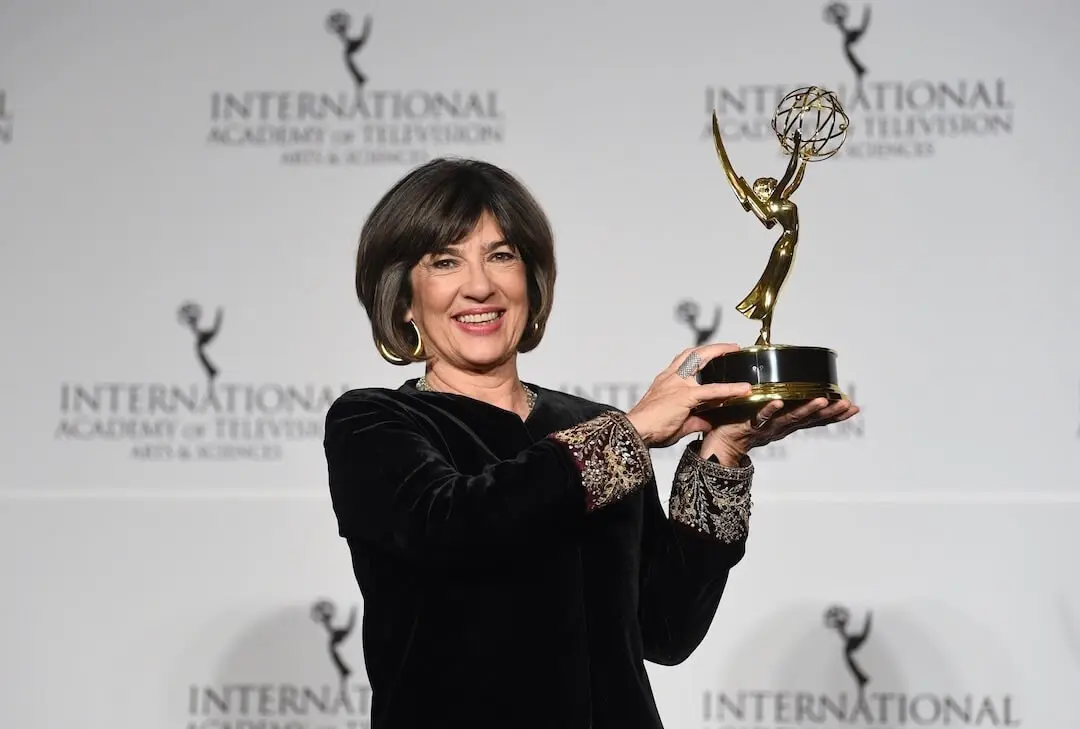
In a seismic development for international broadcast journalism, legendary anchor and foreign correspondent Christiane Amanpour announced her impending departure from CNN, bringing an extraordinary 43-year tenure to a close. Amanpour, who serves as the network’s chief international anchor, revealed that she will officially part ways with the cable news giant next June. Her exit marks the end of a foundational chapter for the network she helped build from its infancy.
Amanpour’s announcement arrives during a period of profound structural transformation across the American media landscape. Her departure makes her the first major personality to exit CNN following the blockbuster acquisition of its parent company, Warner Bros. Discovery, by David Ellison’s Paramount Skydance. This high-stakes megacapital merger has created a media colossus, uniting CNN and CBS News under a single corporate umbrella.
While network executives, including CNN CEO Mark Thompson, maintain that Amanpour’s departure is the result of months of amicable discussions regarding her career path, the timing has intensified industry speculation. Amanpour has long been a vocal advocate for the absolute separation of church and state in journalism, and her exit occurs against a backdrop of deep anxiety among legacy media professionals regarding editorial independence, corporate consolidation, and rising political pressures.
Simultaneously, the broader media ecosystem is experiencing unprecedented volatility. On the same day as Amanpour’s announcement, comedian Jon Stewart bucked industry contraction trends by extending his contract with Comedy Central—another property under the new Paramount Skydance-Warner Bros. Discovery umbrella—through the 2028 U.S. presidential election. Meanwhile, international reporting faced grave physical perils overseas, underscored by the arrest of ten suspects following a violent, coordinated assault on Washington Post photojournalist Heidi Levine in the occupied West Bank.
Detailed Chronology: From Entry-Level Desk Assistant to Global Icon
To understand the magnitude of Christiane Amanpour’s departure, one must trace a career that is practically synonymous with the rise of modern 24-hour cable news. Amanpour’s journey at CNN began in 1983 when she was hired as an entry-level assistant on the international assignment desk, just three years after the network’s inception by media pioneer Ted Turner.
Through sheer tenacity, linguistic skill, and an unflinching commitment to being on the front lines of history, Amanpour rapidly ascended the journalistic ranks. She distinguished herself as a foreign correspondent during the defining geopolitical conflicts of the late 20th and early 21st centuries. Her visceral, fearless reporting from the Gulf War established CNN as a credible, indispensable global newsgathering apparatus.
Over the subsequent decades, Amanpour’s datelines read as a roll-call of humanity’s most harrowing humanitarian crises. She reported extensively from the brutal breakup of Yugoslavia during the Bosnian War—frequently calling out international apathy toward the siege of Sarajevo—as well as the Rwandan genocide, the post-9/11 war in Afghanistan, and the Arab Spring. Her interviews with world leaders, dictators, and revolutionaries set a gold standard for accountability journalism.
Her departure will unfold in structured phases to allow viewers a prolonged farewell. Beginning in January, her flagship CNN International program will scale back its frequency to a weekly broadcast before concluding its run entirely in May. Her long-running public broadcasting program, Amanpour & Company, is slated to wrap up its syndication in December. She will officially sever ties with CNN next June, though she plans to continue producing her independent podcast, The Ex Files, alongside her former husband, diplomat Jamie Rubin.
Supporting Context & Metrics: Corporate Consolidation and Industry Tremors
The corporate architecture governing American television news has shifted dramatically with the completion of the Paramount Skydance acquisition of Warner Bros. Discovery. This megamerger has concentrated immense media power into a single entity, sparking immediate anxiety among journalists, unions, and media watchdog organizations regarding the future of editorial independence.
The apprehension surrounding the new corporate leadership was amplified earlier this year when Paramount Skydance appointed Bari Weiss as editor-in-chief of CBS News. Weiss, a prominent commentator and former New York Times opinion writer with no prior executive experience in television news, moved swiftly to restructure the CBS newsroom. These sweeping modifications triggered a wave of high-profile departures and terminations, most notably within the legendary investigative unit of 60 Minutes.
Among those affected was Anderson Cooper, who ended a distinguished two-decade run as a 60 Minutes correspondent in July. While Cooper—widely regarded as one of CNN’s premier stars—solidified his loyalty to CNN by signing a contract extension in December, the broader talent exodus at sister network CBS has injected a palpable sense of unease into the industry.
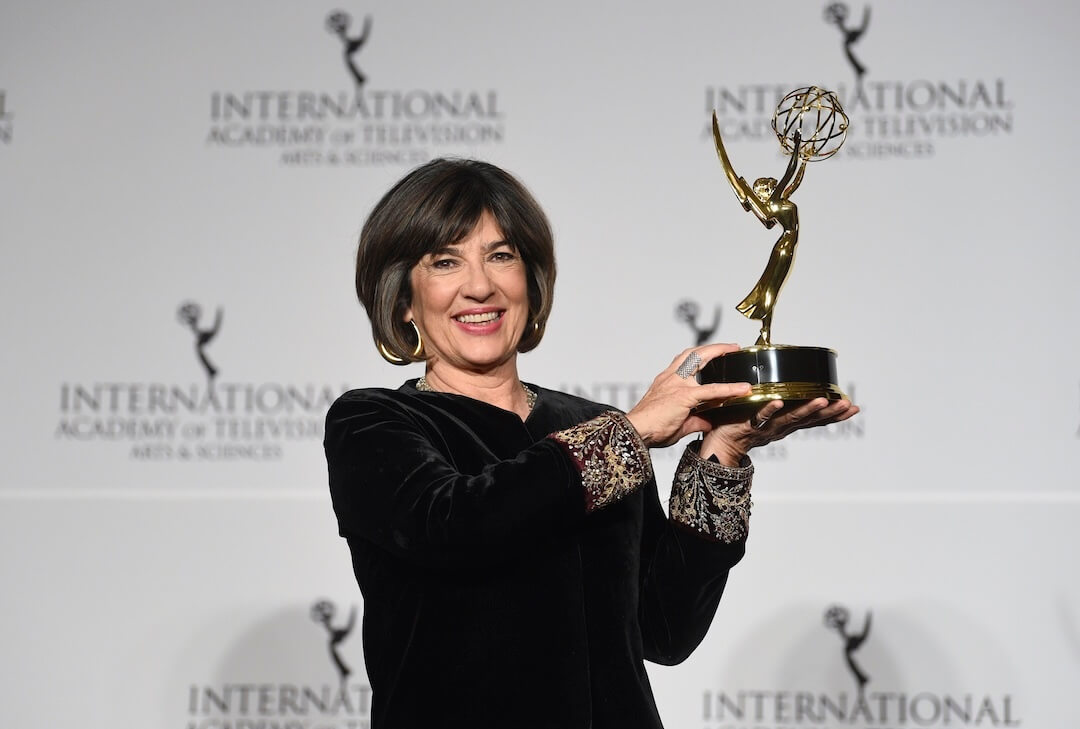
Amanpour herself voiced profound disquiet regarding these structural realignments well before the merger was finalized. In May, she publicly criticized what she characterized as the ideological realignment of CBS and the potential dismantling of treasured journalistic institutions like 60 Minutes, stating frankly that she was deeply concerned for the future of investigative journalism.
These corporate headwinds contrast sharply with developments in late-night political satire. On the same Monday as Amanpour’s announcement, Jon Stewart committed his immediate future to Comedy Central’s The Daily Show, agreeing to helm the desk through the 2028 election cycle. Stewart’s return to the program in February 2024, following a nine-year hiatus, has been a singular bright spot for the network, driving robust engagement that includes 1.6 billion social media views this year and a Q3 audience high not seen in nearly a decade.
However, Stewart’s renewal occurs against a grim backdrop for the late-night television format as a whole. CBS permanently extinguished The Late Show with Stephen Colbert in May, drawing the curtain on a 33-year institutional franchise. Meanwhile, Disney executives, including President Dana Walden, have publicly designated late-night television a "very challenging day part," leaving the future of programs like ABC’s Jimmy Kimmel Live! shrouded in uncertainty.
Official Statements and Editorial Independence
While Christiane Amanpour did not explicitly mention David Ellison or the corporate merger in her formal resignation statement, her remarks were heavily underscored by an unwavering defense of journalistic autonomy.
"You know that I’ve always been fiercely independent, and I will continue to be that for you for as long as I am here and beyond," Amanpour said in her broadcast address. "That’s especially important today as we face unprecedented pressures from all sides — political, financial, and also from the rising dangers in the field."
Network leadership has moved quickly to project stability and continuity. CNN CEO Mark Thompson, whose position as chairman and editor-in-chief was secured prior to the finalization of the Skydance deal, noted that he and Amanpour had been quietly contemplating her exit strategy for several months. Ellison has likewise pledged to fiercely protect CNN’s editorial integrity. As part of a legal settlement with state attorneys general who challenged the merger, Skydance formally agreed to establish an independent board of distinguished journalists specifically tasked with safeguarding the editorial independence of both CNN and CBS News.
Despite these structural safeguards, industry observers view Amanpour’s exit as a symbolic tipping point. CNN is losing an institutional pillar whose career has spanned nearly the entire lifespan of the 24-hour news network, and whose personal brand has become synonymous with fearless, uncompromised international reporting.
Future Outlook: Physical Dangers and the Evolving Media Landscape
As Christiane Amanpour prepares to transition into her next chapter of independent projects, the broader profession of journalism continues to grapple with perils both corporate and physical. The dangerous realities of field reporting were starkly illustrated over the weekend in the occupied West Bank.
Israeli police confirmed Monday that ten unidentified suspects had been arrested following a series of violent incidents, most notably a coordinated assault on Washington Post photojournalist Heidi Levine. Levine, who was wearing standard protective body armor clearly marked with "PRESS" insignia on both her front and back, was violently knocked to the ground and repeatedly kicked by a group of masked Israeli settlers.
The attack on Levine has been condemned by media freedom organizations as part of an accelerating pattern of unchecked settler violence against journalists and foreign diplomats in the region. While international bodies, including the United States government, have repeatedly pressured Israeli authorities to crack down on extremist settler violence, legal accountability and prosecutions remain exceedingly rare.
The juxtaposition of Amanpour’s departure, the corporate consolidation of legacy television networks, and the physical violence confronting reporters in conflict zones paints a complex portrait of modern journalism. As the industry enters the Ellison era, the departure of foundational figures like Amanpour serves as both a reminder of a golden age of foreign correspondence and a stark warning about the fragile state of independent media in the years ahead.