

The relationship between the executive branch of the United States government and the national press corps has reached a historic inflection point. Legal battles, shifting media ecosystems, and unconventional administrative policies are dramatically altering how the public accesses information regarding the presidency. At the center of this turbulence is a compounding series of restrictions implemented by the Trump administration against major news organizations—most notably CNN, Politico, MS NOW, and The Associated Press—alongside speculative proposals to fundamentally alter the physical architecture of the White House press facilities.
Simultaneously, the broader media landscape is undergoing seismic structural shifts. While legacy newsrooms fight for physical proximity to executive power in Washington, D.C., the consumption habits of the American public are migrating rapidly toward digital platforms, exemplified by TikTok’s emergence as a dominant primary news source for nearly a fifth of the U.S. population. Compounding these systemic tensions are deeply personal debates within journalism itself, such as the ethical dilemmas surrounding public figures who turn their own families into subjects of high-stakes cultural discourse.
This comprehensive report examines the escalating legal standoffs between the Department of Justice and major broadcast networks, the administration’s designs on the iconic White House press briefing room, the evolving demographics of news consumption via social media, and the profound personal accountability demanded of modern investigative reporting.
Detailed Chronology
The Mid-September Escalation
The current phase of friction between the White House and the independent media apparatus formally began on September 18, when the Trump administration enacted a blanket ban barring reporters from CNN, Politico, and MS NOW from core presidential workspaces within the White House complex. The move disrupted decades of established protocol, which guaranteed baseline physical access for accredited news agencies to cover executive branch operations.
In swift response to the exclusions, the targeted media organizations banded together to file a joint federal lawsuit against the administration. This legal challenge yielded a temporary victory via a preliminary injunction issued by a federal judge, which restored a portion of the outlets’ physical access. However, the enforcement of these parameters has remained deeply contentious, particularly regarding dynamic spaces such as the presidential aircraft, Air Force One, and the inner sanctum of the Oval Office.
The Weekend Exclusions and Broadcast Boycotts
The ongoing standoff crystallized over a weekend in mid-October, when CNN was systematically barred from accompanying President Donald Trump on official travel itineraries to Georgia and Florida. In adherence to traditional journalistic solidarity and established pool guidelines, the four other major broadcast and cable networks—ABC, CBS, Fox, and NBC—declined to backfill CNN’s vacant position within the traveling press pool.
Consequently, President Trump traveled without mainstream television representation. Instead, broadcast coverage was absorbed by the conservative network Real America’s Voice, which stepped into the designated "secondary TV" slot—a privilege routinely afforded to the network whenever mainstream participants are barred or sidelined by executive directive.
The Legal Ultimatum and Immediate Fallout
By Monday, October 20, the standoff escalated from operational friction to legal brinkmanship. CNN’s outside counsel, veteran First Amendment attorney Ted Boutrous, dispatched a formal letter to the United States Department of Justice. Describing the administration’s ongoing maneuvers to block CNN journalists as "mistaken, counterproductive, and unlawful," Boutrous issued a firm ultimatum: the DOJ must formally confirm by Thursday evening that the White House would permanently abandon any policy targeting and excluding CNN from the Oval Office and Air Force One. Failing this, CNN warned it would pursue aggressive, additional legal actions.
Despite the gravity of the legal threat, the Department of Justice remained silent, failing to issue an official response to media inquiries or the counsel’s demands. As scheduled travel itineraries rolled out—such as a presidential trip to South Carolina—CNN was once again left off out-of-town travel manifests, while Real America’s Voice was slotted into the secondary positions, signaling that the administration had no immediate intention of backing down.
Supporting Context & Metrics
The Architecture of Executive Access
To fully understand the gravity of the restrictions placed upon the press corps, one must examine where modern political journalism actually takes place. The physical proximity of reporters to the commander-in-chief dictates the frequency and spontaneity of presidential accountability.
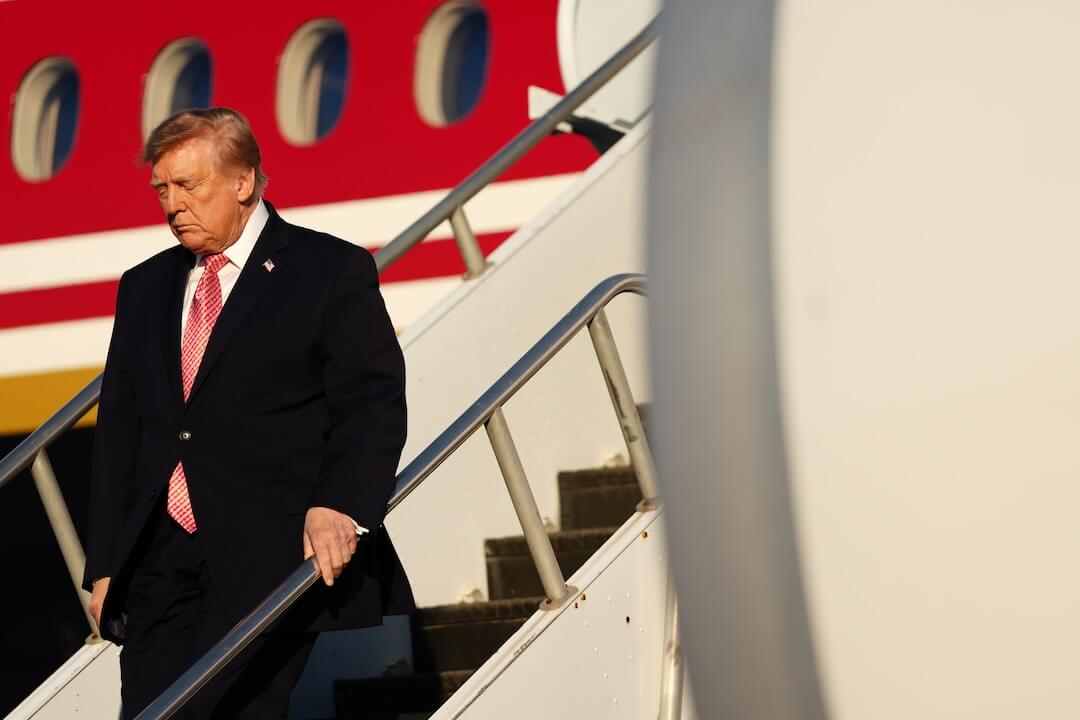
Data compiled from the current term highlights a striking operational shift:
- Over 4,700 questions have been answered by President Trump in high-accessibility zones—specifically the Oval Office, aboard Air Force One, and along travel tarmacs.
- By contrast, just 150 questions have been fielded within the traditional confines of the White House press briefing room since the administration took office.
By controlling access to the Oval Office and Air Force One—and by seizing direct control of the rotating press pool system formerly managed autonomously by the White House Correspondents’ Association (WHCA)—the administration possesses the structural leverage to effectively curate which organizations can aggressively question the executive.
Reimagining the Briefing Room
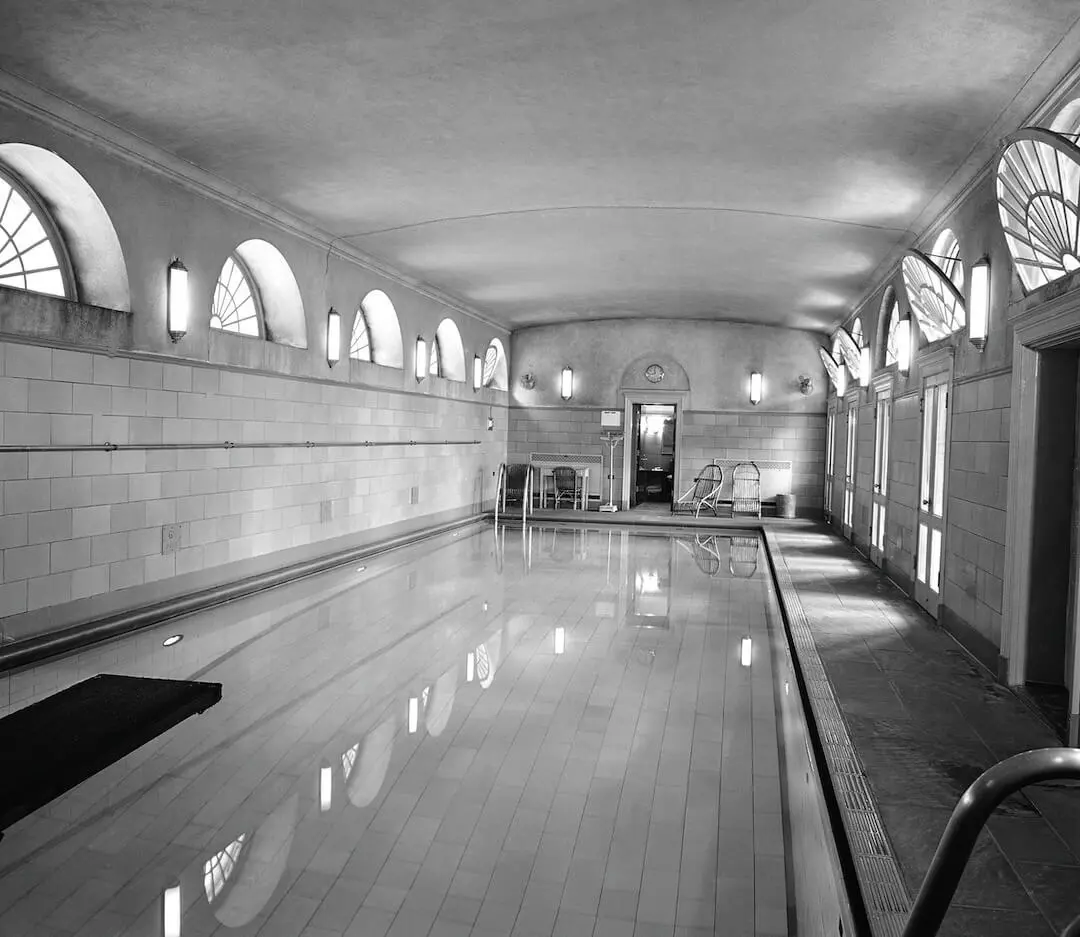
Beyond curating who enters the executive suite, the Trump administration has repeatedly weighed plans to fundamentally dismantle the physical apparatus of the press briefing room itself. Reports indicate that President Trump has frequently floated the idea of reverting the space back to its original incarnation: an indoor swimming pool originally constructed during the administration of Franklin D. Roosevelt. The space was later converted by Richard Nixon into an auditorium tailored for formal press conferences.
While historical precedents for such drastic actions are virtually nonexistent—barring a brief, unrealized proposal floated by former First Lady Hillary Clinton during the Bill Clinton administration—current officials have left all doors open. White House communications director Steven Cheung noted that "all options remain on the table," elevating what might once have been dismissed as rhetorical bluster into a serious symbolic attack on the structural footprint of the press within the executive mansion.
Digital Disruption and the Pew Research Findings
While legacy media battles for physical square footage in Washington, the foundation of how Americans consume news is shifting beneath everyone’s feet. A comprehensive survey released by the Pew Research Center in October 2026 reveals that 1 in 5 American adults (20%) now regularly consume news via TikTok, a dramatic surge from just 3% six years prior.
Demographic breakdowns underscore a generational and cultural chasm in media trust and consumption habits:
- Age Disparities: Nearly 39% of Americans aged 18 to 29 turn to TikTok regularly for news, compared to 25% of those aged 30 to 49, 11% of those aged 50 to 64, and a mere 4% of individuals aged 65 and older.
- Ethnic Divides: Approximately one-third of Black (32%) and Hispanic (35%) adults rely on the platform for news updates, compared to just 14% of both White and Asian adults.
- Partisan Cleavages: Democratic and Democratic-leaning independents (22%) demonstrate a marginally higher tendency to utilize the platform for news compared to their Republican counterparts (15%).
Official Statements
The legal and ideological battle lines are defined by sharply contrasting statements from key legal counsel, executive spokespersons, and affected journalists:
- Ted Boutrous, CNN Outside Counsel: Characterizing the White House maneuvers in his official DOJ correspondence, Boutrous asserted that the administration’s actions are "mistaken, counterproductive, and unlawful," demanding a definitive cessation of exclusionary policies regarding the Oval Office and Air Force One.
- Steven Cheung, White House Communications Director: Addressing the speculative plans to repurpose the press briefing room, Cheung maintained a posture of non-committal resolve, stating, "All options remain on the table, and we will make an announcement when appropriate."
- Nikole Hannah-Jones, Pulitzer Prize-Winning Journalist: Reflecting on the intense public scrutiny and personal introspection sparked by her viral New York Times Magazine essay concerning school segregation and her own family, Hannah-Jones noted the complex burden of public accountability: "My daughter has been kind of this symbol ever since she appeared on the cover of the magazine… and she was the one who had to live it. And so I felt she deserved to have a say. And she deserved for me to be honest about—that she did bear a cost."
Future Outlook
The trajectory of White House press relations points toward an increasingly litigated and fractured future. As CNN’s Thursday evening deadline passes without compliance from the Department of Justice, the impending escalation of legal battles promises to test the constitutional boundaries of executive discretion versus First Amendment protections. Courts will be forced to untangle the legal definition of public access in an era where traditional norms of decorum and institutional cooperation have been largely discarded.
Concurrently, the physical workspace of political journalism faces an existential question. Should the administration follow through on its threats to dismantle the press briefing room and convert it into a swimming pool, it would serve as the ultimate physical manifestation of a hostile strategy toward traditional media. Yet, as audience metrics definitively prove, the survival of the Fourth Estate is no longer tethered solely to a podium in Washington. With nearly 40% of young Americans sourcing their news from short-form digital algorithms, the broader media ecosystem is adapting to a reality where physical exclusion from the West Wing may accelerate an already inevitable migration toward decentralized, digital-first journalism.