

By Mitchell Parton
Senior Commerce Reporter
Executive Overview
The landscape of modern e-commerce is undergoing a seismic shift, driven by the rapid evolution of artificial intelligence and autonomous software agents. In a move that positions the retail giant starkly against its biggest competitors, Walmart has officially opened its digital doors to third-party AI shopping agents. This strategic pivot allows autonomous programs to browse, curate, and complete transactions on behalf of consumers directly through the retailer’s massive e-commerce infrastructure.
Walmart’s proactive embrace of agentic commerce arrives hot on the heels of a major industry flashpoint. Just a month prior, Amazon made headlines by aggressively blocking Meta’s “Muse” AI assistant from integrating with its platform, signaling a protectionist approach to consumer data and transaction rails. While Amazon opts for closed ecosystems and walled gardens, Walmart is building a dedicated integration portal designed to welcome third-party AI agents securely and efficiently.
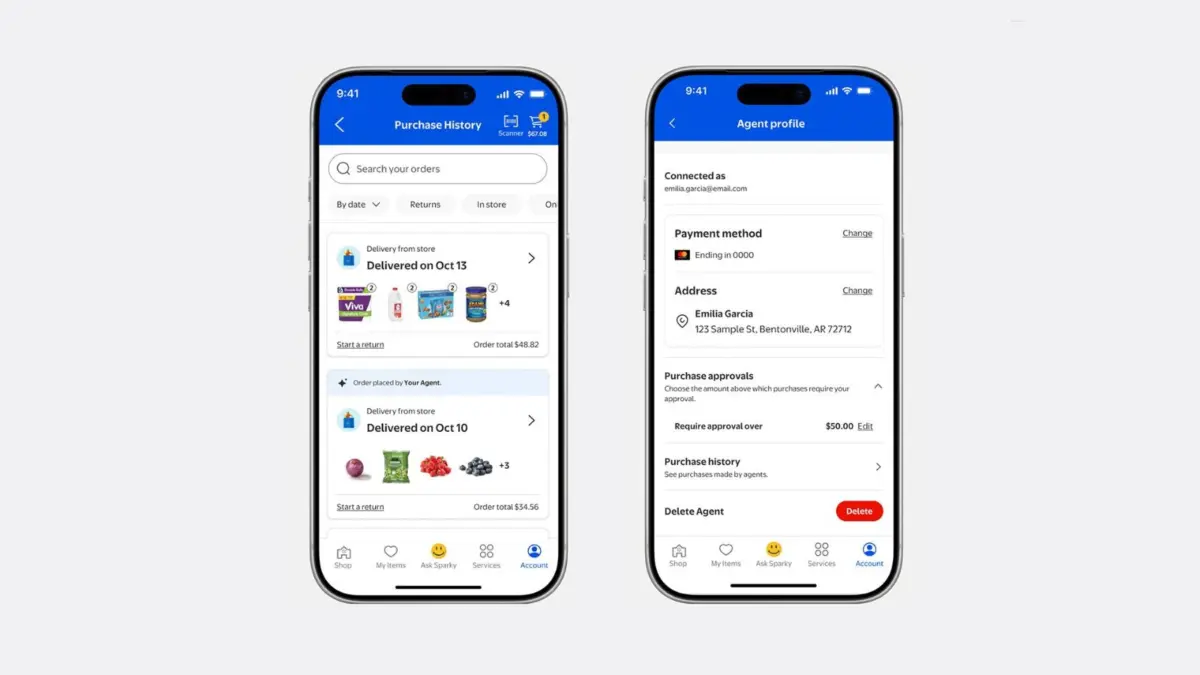
To balance automation with consumer trust and financial safety, Walmart is simultaneously rolling out comprehensive control features. Within the next month, the retailer will launch "Agent Profiles"—a dedicated dashboard enabling shoppers to set hard spending limits, require manual purchase approvals, and seamlessly segregate their autonomous shopping activities from personal transaction histories. As the retail media and commerce landscape moves toward automated, intent-driven purchasing, Walmart’s open architecture could redefine how brands, platforms, and AI intermediaries interact in the digital marketplace.
Detailed Chronology: The Rise of Agentic Commerce and the Walmart Pivot
The journey toward autonomous retail has accelerated dramatically over the past several years, transforming AI from a novelty customer service chatbot into an active financial participant capable of executing end-to-end consumer transactions.
The Shift from Search to Action
For decades, digital retail relied on the traditional search-and-click paradigm. Consumers typed queries into search bars, filtered results based on price and reviews, added items to a digital cart, and manually checked out. Generative AI fundamentally disrupted this flow by shifting the consumer journey from passive browsing to active delegation. Today’s AI agents can analyze dietary restrictions, monitor household inventory, compare prices across the web, and determine optimal times to purchase household staples without human intervention.
Recognizing this behavior shift, technology companies began developing autonomous assistants capable of bridging conversational AI with transactional APIs. However, this transition immediately created friction between major technology platforms and traditional e-commerce giants.
The Amazon vs. Meta Showdown
The underlying tensions of agentic commerce boiled over in late 2026 when Meta introduced its Muse AI assistant. Designed to function as a universal shopping concierge, Muse attempted to interface directly with Amazon’s vast product catalog to source and buy items for users.
Rather than welcoming the integration, Amazon locked out Meta’s Muse, citing security concerns, user data privacy, and unauthorized scraping. Industry analysts viewed Amazon’s move as a classic defensive play: protecting its proprietary customer relationships, high-value advertising ecosystem, and Prime lock-in. By barring external agents, Amazon sought to ensure that all autonomous shopping traffic flows through its own proprietary AI initiatives rather than third-party platforms.
Walmart’s Open-Door Strategy
In stark contrast to Amazon’s protectionist stance, Walmart has chosen an inclusive pathway. Rather than fighting the proliferation of third-party AI agents, retail executives recognized that consumers increasingly prefer unified assistants that manage their lives across multiple domains.
By developing a dedicated developer and integration portal, Walmart is rolling out the welcome mat for external AI agents. This technical infrastructure allows authorized programs to safely connect to Walmart’s product catalog, inventory databases, and checkout systems. Rather than viewing third-party AI as a threat to its direct customer relationship, Walmart is positioning itself as the most accessible, agent-friendly infrastructure in modern retail.
Supporting Context & Metrics: The Mechanics of Autonomous Retail
The integration of agentic shopping is not merely a software update; it represents a fundamental overhaul of retail technology stacks, security protocols, and consumer management tools.
The Technology: APIs and Dedicated Portals
To support autonomous agents, e-commerce platforms must modernize their backend systems. Traditional websites are optimized for human eyes, utilizing visual layouts, dynamic drop-down menus, and promotional banners. AI agents, conversely, interact via structured data inputs and Application Programming Interfaces (APIs).

Walmart’s new dedicated integration portal provides third-party AI developers with clean, secure pathways to access real-time stock levels, pricing variations, shipping availability, and product specifications. This reduces the risk of agents encountering broken links, out-of-stock items, or outdated pricing—common pitfalls when AI models attempt to scrape traditional retail websites.
Consumer Empowerment: Agent Profiles and Guardrails
While automated purchasing offers unmatched convenience, it introduces significant consumer anxieties regarding financial security, privacy, and accidental spending. To mitigate these concerns, Walmart is introducing Agent Profiles within the next month.
- Granular Authorization: Shoppers can explicitly authorize individual AI agents (whether powered by OpenAI, Google, Apple, or specialized retail startups) within their primary Walmart account.
- Transaction Segregation: Purchases made by an AI agent are categorized separately from personal browsing and manual checkouts, providing absolute clarity on automated expenditures.
- Spending Limits & Approvals: Users retain ultimate control by establishing strict financial guardrails. Consumers can pre-approve recurring purchases (such as weekly groceries) while setting mandatory approval triggers for discretionary or high-value items exceeding a specified dollar threshold.
Market Dynamics and Retail Media Implications
The rise of agentic commerce carries profound implications for the multi-billion-dollar retail media network (RMN) ecosystem. Historically, brands pay for sponsored product placements and banner ads designed to catch a human shopper’s eye during the active search phase.
In an agentic shopping environment, traditional visual marketing loses some of its efficacy. If an AI agent is instructed to "buy the highest-rated paper towels under $15 with the lowest environmental impact," it relies on algorithmic parameters rather than flashy packaging or sponsored search banners. Consequently, brands must adapt their digital strategies, focusing on structured data optimization, verified quality metrics, and API-readable specifications to ensure their products are selected by autonomous shopping algorithms.
Official Statements and Industry Perspective
While Walmart’s formal rollout details continue to unfold, retail technology analysts and commerce experts have weighed in heavily on the strategic implications of the move.
Industry observers note that Walmart’s decision to embrace open agentic integration is a calculated gamble to capture market share from competitors who choose to restrict access. By becoming the preferred destination for third-party AI agents, Walmart can drive massive transaction volumes without bearing the full cost of developing and maintaining a dominant consumer-facing conversational assistant.
Furthermore, retail technology specialists emphasize the importance of consumer trust in this nascent sector. By introducing robust financial guardrails and Agent Profiles ahead of widespread adoption, Walmart is directly addressing the primary barrier to automated commerce: the fear of runaway spending and unauthorized access.
"The battle lines in e-commerce are no longer just about who has the best website or the fastest delivery," noted one retail technology strategist. "The next era belongs to the platforms that build the most secure, friction-free bridges for autonomous software. Walmart understands that trying to lock AI out is fighting an inevitable tide; building the gateway allows them to set the rules of engagement."
Future Outlook: What Agentic Commerce Means for the Next Decade
As Walmart’s dedicated integration portal goes live and Agent Profiles roll out to consumers over the coming weeks, the retail industry stands at a critical juncture. Several key trends will define the maturation of agentic shopping over the next decade:
1. The Standardization of Agent Protocols
As multiple retailers adopt varying stances on AI integration, the industry will likely push for standardized protocols governing how AI agents interact with retail databases. Security standards, authentication tokens, and standardized product data feeds will become essential to prevent system strain and ensure safe consumer transactions.
2. The Evolution of Consumer Loyalty Programs
Traditional loyalty programs rely on points, credit cards, and proprietary apps to keep customers within a single ecosystem. In an agentic future, loyalty may be redefined by how easily a retailer’s backend integrates with a consumer’s preferred AI assistant. If an AI agent finds it easier, cheaper, and more reliable to purchase goods through Walmart’s API than through a restrictive competitor, brand loyalty may increasingly be mediated by software efficiency.
3. The Redefinition of Customer Service and Returns
Autonomous shopping introduces new complexities regarding customer service, returns, and dispute resolution. When an AI agent mistakenly purchases the wrong size, color, or brand based on ambiguous user prompts, accountability must be established. Retailers and AI developers will need to collaborate on streamlined return mechanisms tailored specifically for machine-initiated transactions.
Conclusion
Walmart’s strategic embrace of agentic shopping marks a watershed moment in digital retail. By rejecting the walled-garden mentality demonstrated by competitors like Amazon and instead building secure, transparent infrastructure for third-party AI agents, Walmart is positioning itself at the forefront of the next retail revolution. As Agent Profiles launch and autonomous transactions become commonplace, the companies that succeed will be those that successfully balance cutting-edge technological integration with uncompromising consumer trust and control.