

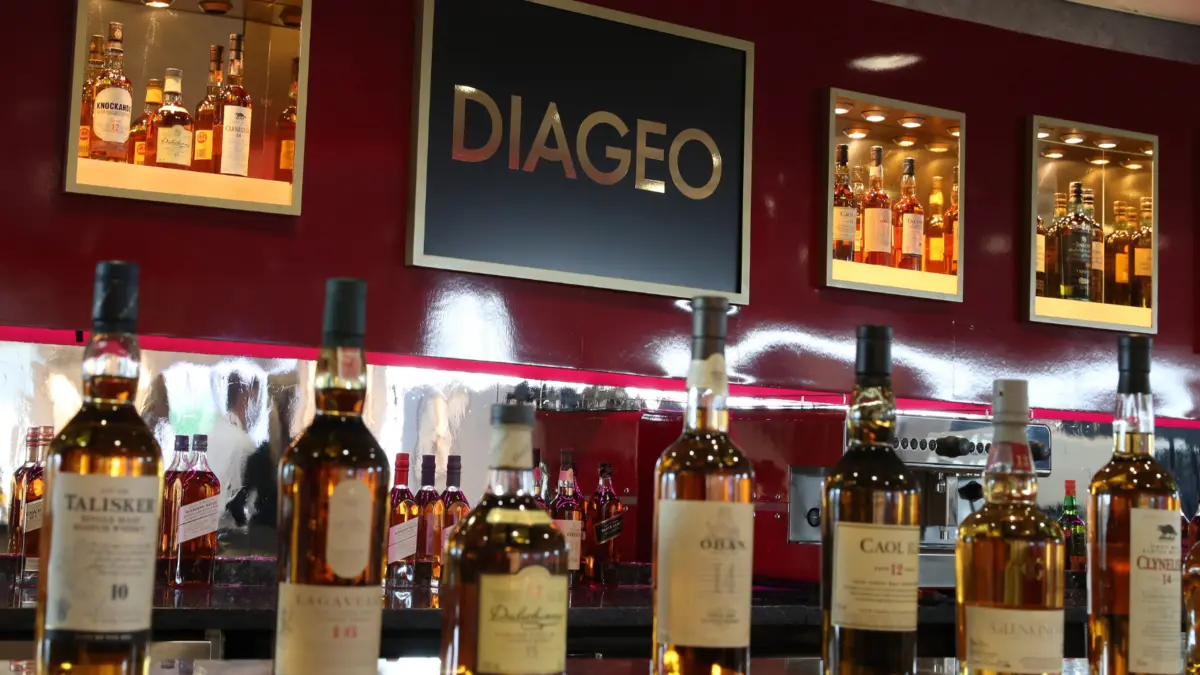
Diageo North America, the continental engine and traditionally the most profitable subsidiary of the London-headquartered beverage behemoth, has officially secured its new Chief Marketing Officer. Sebnem Erim, a seasoned CPG executive with deep trenches of experience forged at global powerhouses PepsiCo and Anheuser-Busch InBev, steps into the role at a critical inflection point. Her mandate is as expansive as it is formidable: revitalize a sprawling portfolio of iconic spirits and beverages across a region that currently represents both the company’s greatest revenue opportunity and its most stubborn operational headache.
The appointment arrives during a period of macroeconomic recalibration, shifting consumer demographics, and intensifying competitive pressures within the American beverage-alcohol sector. Erim’s transition to Diageo was formally announced via a professional update on LinkedIn, where the incoming CMO expressed enthusiasm for the "opportunity to help shape the next chapter for some of the world’s most iconic brands." While Diageo corporate representatives have confirmed the appointment, the multinational has otherwise maintained a tight-lipped posture regarding the immediate strategic blueprint, declining requests for further elaboration.
Yet, the context of her arrival speaks volumes. Diageo—the parent entity of roughly 200 distinct global brands, ranging from the amber depths of Johnnie Walker to the crisp botanical notes of Tanqueray, the ubiquitous clarity of Smirnoff, the spiced warmth of Captain Morgan, and the creamy pour of Guinness—is hardly adrift. However, its North American operations have hit a turbulent patch. In stark contrast to historical growth trajectories, the region has transitioned from a dependable growth engine into a complex turnaround project.
By parachuting in an executive who has spent decades navigating the hyper-competitive waters of carbonated soft drinks and mega-brew beer marketing, Diageo is signaling a decisive pivot. The company is actively looking outside its traditional legacy playbook, betting that Erim’s cross-category expertise, mastery of digital-first consumer engagement, and deep understanding of high-volume retail dynamics can inject much-needed velocity back into its American ledger.
Detailed Chronology: The Path to Erim’s Appointment and Diageo’s North American Realities
To fully understand the weight resting on Sebnem Erim’s shoulders, it is essential to trace the recent timeline of strategic shifts, executive declarations, and market adjustments that have culminated in this leadership transition.
The Macro Landscape and the Genesis of the Search
Over the past twenty-four months, the global beverage-alcohol landscape has undergone a seismic contraction. Following the explosive, pandemic-era "at-home" consumption boom that heavily favored premium spirits and ready-to-drink (RTD) cocktails, the market experienced a profound normalization. Consumers, squeezed by persistent inflation, rising interest rates, and a shifting cost-of-living equation, began pulling back on discretionary spending, particularly in the premium and super-premium tiers where Diageo traditionally commands healthy margins.
Concurrently, cultural shifts among younger legal-drinking-age (LDA) demographics—specifically Millennials and Generation Z—have accelerated trends toward moderation, health-conscious non-alcoholic alternatives, and alternative social lubrication vehicles such as cannabis-infused beverages. For a legacy portfolio anchored in high-proof spirits, these behavioral tailwinds represent a systemic challenge to long-term volume growth.
Diageo’s leadership team, monitoring these metrics closely from its London headquarters, recognized that traditional brand-building approaches—heavy reliance on legacy advertising, broad-brush linear television, and wholesale reliance on tier-one distributors—were no longer yielding the same return on investment. The search for a new North American CMO became inextricably linked to a broader corporate restructuring of how the company goes to market, communicates with fragmented consumer bases, and leverages digital data to drive brand affinity.
The May Revelations: Naming the Challenge
The urgency underlying Erim’s appointment was laid bare in May, when Diageo CEO Sir Dave Lewis addressed investors and market analysts. In a candid assessment that sent ripples through the industry, Lewis identified the core vulnerability in the company’s global empire.
"North America remains our biggest challenge," Lewis stated bluntly during a fiscal trading update, noting that "marketing conditions are soft and our offer needs to be more competitive."
This public acknowledgment was a rare, transparent admission from the top that Diageo’s market share in the United States and Canada was under siege. Competitors ranging from agile craft distillers and independent RTD innovators to aggressive multinational giants had begun eating into the market share of stalwarts like Smirnoff and Captain Morgan. Furthermore, the distributor tier—the critical middleman in the U.S. three-tier system—was tightening inventory levels, putting additional pressure on primary shipment volumes.
Sir Dave’s remarks effectively drew a line in the sand. The old guard of marketing leadership needed a refresh; the company required a tactical and creative reset capable of re-engaging the American consumer at scale.
Sebnem Erim’s Entry and the Digital Announcement
Enter Sebnem Erim. With a career spanning decades of building market share for fast-moving consumer goods (FMCG) titans, Erim’s resume is a masterclass in scale marketing. Her tenure at PepsiCo exposed her to the cutthroat world of non-alcoholic beverages, snack foods, and global youth culture marketing, where speed-to-market and localized digital execution are paramount. Her subsequent tour at Anheuser-Busch InBev embedded her deeply within the mechanics of the beverage-alcohol ecosystem, navigating complex regulatory frameworks, distributor relations, and the nuanced branding requirements of mass-market beer portfolios.
Rather than orchestrating a traditional, highly choreographed corporate press release, Erim signaled her arrival via LinkedIn. In her post, she noted:
"I am thrilled to embark on this new journey and look forward to the opportunity to help shape the next chapter for some of the world’s most iconic brands at Diageo North America."
This digital-first, personal announcement was itself a subtle nod to the modern communication strategies she is expected to champion within the organization: direct, authentic, and immediately engaged with the broader industry professional community. While corporate headquarters in London confirmed the hire while declining further elaboration, industry insiders immediately recognized the strategic chess move. Erim was not brought in to maintain the status quo; she was hired to disrupt it.
Supporting Context & Metrics: Inside the Diageo Portfolio and Market Dynamics
To grasp the magnitude of the task ahead, one must examine the sheer scale, structural composition, and current performance metrics governing Diageo North America.
The Empire of 200 Brands
Diageo’s global portfolio encompasses roughly 200 distinct brands, but a significant concentration of its top-line revenue and volume sales is anchored in the North American market. The portfolio can be categorized into several distinct pillars, each facing its own unique set of market dynamics:
- Global Giants (The Volume Drivers): Brands like Smirnoff (the world’s leading vodka), Captain Morgan (a pillar of the spiced rum category), and Johnnie Walker (the undisputed titan of international blended Scotch) form the bedrock of Diageo’s cash flow. However, these legacy brands have faced intense commoditization pressure and rising competition from regional craft competitors and private-label alternatives.
- Local Jewels (The Heritage Anchors): Icons deeply embedded in specific regional cultures, such as Crown Royal Canadian whisky (which holds a massive, fiercely loyal consumer base in North America) and Bulleit bourbon, represent critical profit centers. Crown Royal, in particular, has been a bellwether for flavored whisky innovation, though growth in that sub-category has plateaued.
- Category Leaders in High-Growth Verticals: Tanqueray in gin, Don Julio and Casamigos in ultra-premium tequila. It is worth noting the meteoric rise—and subsequent normalization—of Casamigos, the celebrity-backed tequila brand co-founded by George Clooney, which Diageo acquired in a blockbuster 2017 deal. While tequila has been the darling of the American spirits market for the past decade, growth rates are beginning to stabilize, forcing marketers to work harder for every incremental point of share.
- The Cultural Phenomenon: Guinness. Though fundamentally rooted in the brewing tradition of St. James’s Gate in Dublin, Ireland, Guinness has experienced a stunning renaissance in North America, driven heavily by Gen Z and Millennial consumers discovering the ritual of the "surge and settle" via viral social media content.
The Financial and Market Realities
Despite housing powerhouse brands, Diageo North America’s recent financial disclosures reflect the headwinds cited by Sir Dave Lewis. In recent fiscal reporting periods, organic net sales in the region experienced downward pressure, driven by inventory destocking by U.S. wholesalers and a consumer shift away from off-premise retail stockpiling toward on-premise experiential spending—though even the restaurant and bar sectors have felt the pinch of consumer belt-tightening.
Furthermore, the competitive landscape has fundamentally shifted. The explosion of Ready-to-Drink (RTD) spirit-based cocktails—a category where Diageo holds notable entries like the Tanqueray and Ketel One botanical spritzes, as well as the rapidly expanding pre-mixed cocktail line extensions—has introduced a new battleground. Consumers increasingly demand convenience without sacrificing quality. However, navigating the fragmented, state-by-state regulatory patchwork of alcohol distribution in the United States makes scaling RTD innovations exponentially more complex than launching a traditional consumer packaged good like a bag of chips or a soft drink.
This is precisely where Erim’s background at PepsiCo and AB InBev becomes invaluable. Managing high-velocity portfolios across the complex three-tier U.S. distribution system requires a nuanced understanding of wholesaler alignment, retail space negotiations, and localized trade marketing that purely digital-native executives often lack.
Official Statements: Navigating Corporate Silence and Strategic Intent
The corporate communication strategy surrounding Sebnem Erim’s appointment has been characterized by a calculated balance of public accessibility and institutional discretion.
When approached by industry analysts and trade publications, Diageo corporate headquarters in London issued a concise confirmation of the appointment while explicitly declining to offer further commentary. This posture is standard operating procedure for a multinational corporation orchestrating a high-level executive transition, particularly when a turnaround strategy is being finalized behind closed doors.
However, the silence from the corporate comms desk stands in sharp, intentional contrast to the public declarations made earlier in the year by CEO Sir Dave Lewis. By publicly diagnosing the North American division’s shortcomings—pointing directly to "soft marketing conditions" and the pressing need for the company’s offerings to "be more competitive"—Lewis set clear, measurable expectations for the incoming marketing chief.
The messaging architecture between London and the North American headquarters in New York highlights several core realities:
- Accountability at the Top: The public framing of North America as the company’s "biggest challenge" ensures that Erim’s performance will be evaluated against hard metrics: market share recovery, volume stabilization, and the successful repositioning of core portfolios.
- Empowerment Through Expertise: By selecting an executive with deep operational and commercial roots in mass-market FMCG and beer, Diageo’s leadership is signaling that marketing at the company is no longer just about glossy, award-winning creative campaigns; it is about commercial rigor, data-driven consumer segmentation, and disciplined retail execution.
- Cultural Alignment: Erim’s own public statements have been notably forward-looking and collaborative. By framing her new role as an "opportunity to help shape the next chapter," she has signaled an openness to listening, evaluating existing infrastructure, and driving cultural transformation within the North American marketing organization.
Future Outlook: The Roadmap Ahead for Sebnem Erim at Diageo North America
As Sebnem Erim settles into her office as Chief Marketing Officer of Diageo North America, the industry is watching closely to see how she will deploy her playbook. Turning around a portfolio of 200 brands in a softening market requires a multi-pronged strategic offensive. Based on current industry trajectories and her professional pedigree, several key focus areas are likely to define her tenure:
1. Reigniting Core Portfolio Relevance
While ultra-premium extensions and trendy RTDs capture headlines, the financial lifeblood of Diageo North America remains its core volume drivers: Smirnoff, Captain Morgan, and Johnnie Walker. Erim will need to reverse the narrative of commoditization surrounding these legacy giants. This will likely involve modernizing their brand narratives to resonate with multicultural consumers and younger demographics, moving away from archaic lifestyle tropes toward culturally resonant, experiential marketing.
2. Doubling Down on the RTD and Convenience Revolution
The consumer appetite for convenient, bar-quality cocktails at home shows no signs of abating, even as overall market growth normalizes. Diageo possesses the brand equity to dominate this space, but execution must be swift and agile. Erim’s experience at PepsiCo and AB InBev will be critical in optimizing supply chain communication, accelerating speed-to-market for new flavor innovations, and securing prime real estate in refrigerated retail set-displays alongside traditional malt-based beverages.
3. Precision Marketing and Data-Driven Consumer Segmentation
The days of relying solely on broad, top-of-funnel television and print advertising are effectively over for the beverage-alcohol sector. Erim is expected to champion a data-first marketing ecosystem, leveraging first-party consumer insights, retail media networks, and hyper-targeted digital campaigns. By understanding precisely how, when, and where modern consumers are socializing, Diageo can optimize its marketing spend to maximize return on investment across every state and distribution channel.
4. Navigating the On-Premise vs. Off-Premise Balancing Act
As macroeconomic pressures fluctuate, consumer drinking habits constantly swing between going out to bars and restaurants (on-premise) and entertaining at home (off-premise). Erim’s marketing strategy must be flexible enough to support hospitality partners—who serve as vital incubators for brand discovery—while simultaneously capturing the wallet share of the home-entertaining consumer through innovative retail promotions and digital partnerships.
5. Sustainability and Conscious Consumerism
Modern brand loyalty is increasingly tethered to corporate responsibility and sustainable practices. From water stewardship in whiskey and tequila production to eco-friendly packaging initiatives across the portfolio, Erim will need to weave authentic sustainability narratives into the brand marketing of Diageo’s marquee labels, ensuring they align with the values of the modern LDA consumer.
Conclusion
Sebnem Erim’s arrival at Diageo North America is much more than a routine C-suite shuffle; it is a calculated strategic intervention. Armed with a formidable resume spanning some of the world’s most demanding consumer goods and beverage corporations, she has been handed the keys to an extraordinary, yet currently embattled, portfolio. With CEO Sir Dave Lewis having publicly set the stakes—identifying North America as the enterprise’s paramount challenge—Erim enters the arena with clear eyes and high expectations.
If she can successfully modernize the company’s legacy giants, scale its ready-to-drink innovations, and outmaneuver softening market conditions through data-driven creativity, she will not only revitalize Diageo’s most important market—she will cement her legacy as one of the defining marketing strategists of her generation. The chapter is open; the industry is watching.