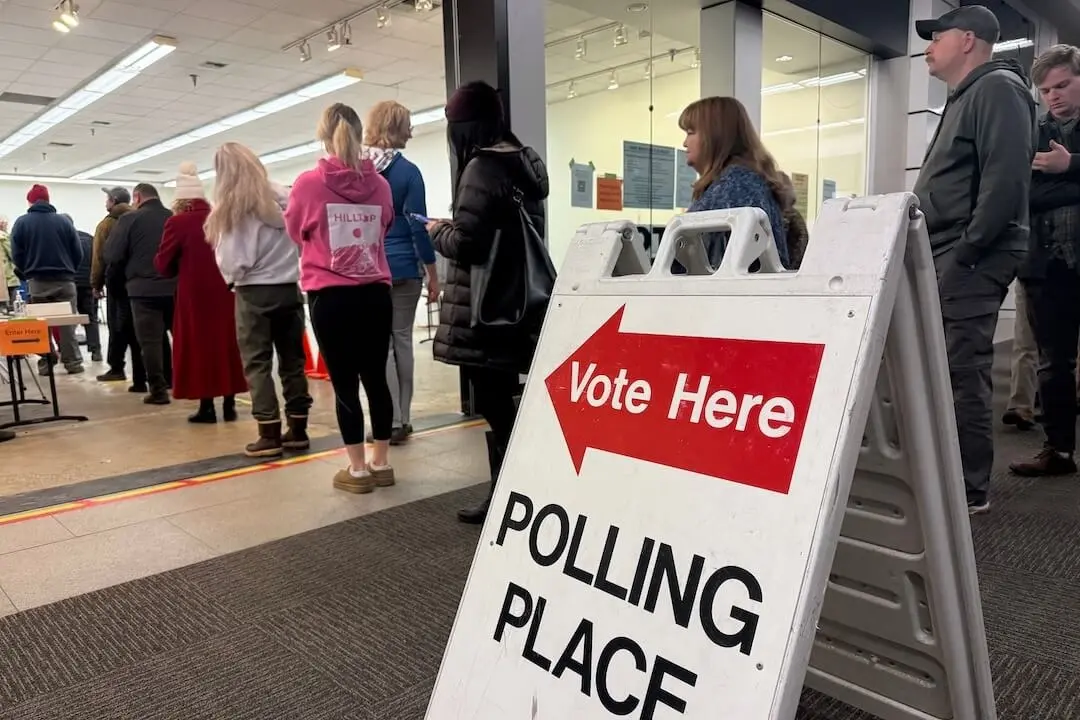
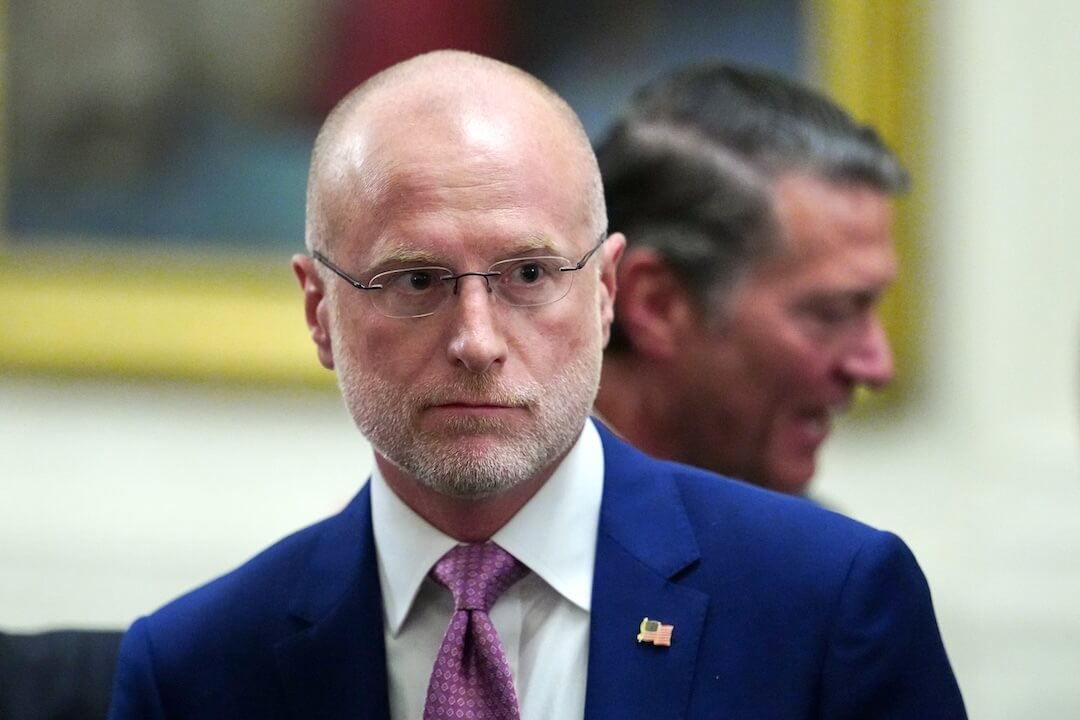
The American media landscape is navigating an unprecedented convergence of regulatory scrutiny, First Amendment confrontations, and profound structural transformations. In the waning weeks before the critical midterm elections, the Federal Communications Commission (FCC) has plunged headfirst into the delicate mechanics of political journalism. Led by Chairman Brendan Carr, the agency has issued sharp warnings to broadcasters regarding the airing of "fake and suppression polls," explicitly invoking federal regulations on news distortion and broadcast hoaxes.
This regulatory posture—occurring against a backdrop of manufactured polling scandals, such as the admissions by the newly formed Wedgewood Polls firm—has intensified an already fraught debate over government overreach and constitutional protections. Critics, including press freedom advocates and dissenting commissioners, argue that the FCC’s aggressive stance represents an alarming encroachment on editorial independence designed to appease executive political pressures.
Simultaneously, the broader media ecosystem faces seismic shocks across multiple fronts. Major legal and corporate battles are reshaping accountability, from a staggering $25 billion privacy penalty levied against Meta in New Mexico to widespread staff revolts and resignations at foundational publications like Christianity Today. Yet, even as contraction and executive friction threaten traditional reporting models, resilient regional partnerships—such as the unprecedented cross-newsroom collaborations unfolding in Alaska—demonstrate how journalists are banding together to safeguard the public’s right to know.
Detailed Chronology: Regulatory Escalation and Media Fallout
The friction between the federal government and broadcasters did not emerge in a vacuum; it is the culmination of a months-long escalation involving licensing threats, polling controversies, and legal counter-offensives.
August: The regulatory standoff intensified dramatically when ABC and its parent company, The Walt Disney Co., filed a landmark federal lawsuit against the FCC. The legal action alleged that the agency violated the First Amendment by weaponizing its licensing authority—specifically calling up local station licenses for premature review and early renewal years ahead of schedule—to penalize the network for its news reporting, comedy, and political commentary in an effort to appease President Donald Trump.
Late September: FCC Commissioner Anna Gomez publicly criticized the agency’s trajectory, noting on various platforms that she had never witnessed an FCC so lacking in operational independence from the executive branch. She predicted that ABC would likely prevail in its constitutional challenge, describing the agency’s targeting of network content through local affiliates as an unprecedented abuse of power.
Early October: Wedgewood Polls, a polling outfit launched earlier in the year, publicly acknowledged that it fabricated political surveys as a "social experiment" to expose vulnerabilities within the polling industry. Before the hoax was uncovered, these manufactured datasets had been picked up by legitimate news organizations and incorporated into major polling aggregators, distorting the pre-election information ecosystem.
Mid-October (The Warning): Following the Wedgewood revelations and amid a tumultuous political cycle featuring historic lows in presidential approval ratings in a Reuters/Ipsos poll, FCC Chair Brendan Carr issued a direct warning on social media and through regulatory channels. He cautioned broadcasters that airing unverified, fake, or suppression polls could violate the terms of their federal licenses under prohibitions against news distortion and broadcast hoaxes.
Mid-October (Judicial & Industry Rulings): A New Mexico state court handed down a historic $25 billion penalty against Meta for consumer protection violations linked to historical data privacy practices. Concurrently, public reports detailed a mass exodus at Christianity Today, where over half of the staff resigned or were laid off over a 14-month period due to executive interference in editorial independence.
Supporting Context & Metrics: Polling Crises and Systemic Press Pressures
To understand the weight of the FCC’s recent warnings, one must examine the fragility of the contemporary information pipeline. The rise of algorithmic amplification, combined with slashed newsroom budgets, has left traditional media outlets vulnerable to bad-faith actors.
The Wedgewood Polls Fallout
The admission by Wedgewood Polls that it intentionally manufactured political surveys underscores a systemic vulnerability in how public opinion data is gathered, vetted, and disseminated. By framing the fabrication as a "social experiment," the firm exposed critical blind spots within major newsrooms and polling aggregators that prioritize speed and volume over rigorous methodological verification.
When these fake numbers entered the media stream, they directly fed into narratives surrounding voter enthusiasm and turnout. According to Federal Communications Commission Chair Brendan Carr, this incident reflects a broader, "significant surge" in manipulative polling designed to alter election outcomes. However, media critics note that shifting the burden of verification entirely onto broadcasters—under the threat of losing federal operating licenses—creates a chilling effect that extends far beyond fraudulent data.
The Financial and Structural Crises in Publishing
Beyond broadcast television, print and digital journalism are enduring acute structural contractions. The turmoil at Christianity Today serves as a case study in corporate-editorial friction. Founded in 1956 by historic evangelical figures including Billy Graham, the magazine saw more than half of its staff depart via layoffs and resignations. Former employees, including former deputy editor Bonnie Kristian, detailed an alarming pattern where executive leadership—specifically CEO Nicole Massie Martin and COO Thomas Addington—discouraged investigative lines of reporting, delayed stories involving financially connected organizations, and exhibited a fundamental discomfort with principled journalism under financial duress.
With subscriber counts dropping from roughly 80,000 a decade ago to around 50,000, the institutional anxiety over reputational and financial loss has directly compromised editorial independence, illustrating how financial distress breeds self-censorship across the broader American media landscape.
Official Statements and Legal Analysis
The debate over the FCC’s jurisdiction regarding political polling has cleaved legal experts and commissioners along stark ideological lines, raising fundamental constitutional questions.
Pro-Regulation Perspective
Supporters of the FCC’s current posture emphasize the public interest obligations inherent in holding a broadcast license. Operating on public airwaves is a privilege regulated by the federal government, and proponents argue that knowingly or recklessly broadcasting demonstrably false data—particularly information engineered to suppress voter turnout or manipulate democratic processes—constitutes a breach of the public trust.
In his statements, Chairman Carr stressed that broadcasters have a legal and ethical duty to vet their sources:
"Many journalists and broadcasters have been amplifying or airing these Polls without regard to basic journalistic ethics and without informing the public that those Polls lack a scientific, accurate, or even real basis… Broadcasters are prohibited by the terms of their federal licenses from engaging in News Distortion or promoting Broadcast Hoaxes."
Constitutional and Critical Perspectives
Conversely, press freedom advocates and legal scholars view the FCC’s threats as an unconstitutional expansion of federal power. Seth Stern, chief of advocacy for the Freedom of the Press Foundation, issued a sharp rebuke following Carr’s warning, stating that journalists possess a clear First Amendment right to report on polling data, even if that data ultimately proves inaccurate or flawed.
Stern did not mince words regarding the political motivations behind the agency’s actions:
"FCC policies about hoaxes and distortions must be applied narrowly to avoid clashing with the Constitution, if they can be constitutionally applied at all. The law under which the FCC operates expressly prohibits censorship and meddling with free speech, as Carr himself used to regularly say before he traded in any integrity he had to hitch his wagon to Trump."
Democratic FCC Commissioner Anna Gomez echoed these constitutional anxieties, pointing out that establishing a violation of the agency’s news distortion policy requires proof of a "deliberate misrepresentation of something of significant importance"—a legal threshold that an inaccurate or deceptive poll picked up in good faith by a newsroom simply cannot meet. Gomez further warned that the agency’s actions reflect a profound loss of independence, noting during a public appearance that she had "never seen an FCC that’s less independent than this FCC."
Future Outlook: Collaborative Resilience and Industry Transformation
As the midterm elections approach and high-profile legal battles wind their way through the federal courts, the American media industry stands at a historical crossroads.
The Alaska Blueprint: Collaboration Over Competition
In the face of severe economic headwinds and logistical hurdles, regional journalism is pioneering sustainable models of survival. Nowhere is this more apparent than in Alaska, where news organizations spanning an immense, geographically challenging territory have largely abandoned cutthroat competition in favor of deep structural collaboration.
Through initiatives like the nonprofit Alaska News Coalition—where outlets freely exchange content, coordinate reporting schedules, and co-host political debates—newsrooms are stretching limited resources to ensure remote communities and high-stakes Senate races receive rigorous coverage. While structural limits remain, such as the prohibitive cost of air travel to off-road bush communities and occasional pushback from partisan outlets, the Alaskan model offers a pragmatic blueprint for regional media survival in an era of industry contraction.
Looking Ahead
The coming months will test the resilience of the American press on multiple fronts. The outcome of ABC’s First Amendment lawsuit against the FCC will likely establish a critical judicial precedent defining the limits of executive influence over broadcast licensing. Meanwhile, landmark financial penalties—such as the $25 billion judgment against Meta—signal that state and federal regulators are increasingly willing to impose severe accountability measures on technology giants for privacy and consumer protection failures.
Ultimately, whether through the defense of constitutional press freedoms, the evolution of collaborative regional reporting, or the painful restructuring of legacy institutions, the Fourth Estate is being forced to adapt. The core tension between regulatory oversight and editorial autonomy will continue to shape the contours of public discourse long after the ballots are cast.