In the fast-paced, multi-billion-dollar global beauty landscape, few brands have managed to fundamentally alter consumer behavior quite like Olive & June. What began as a rebellious childhood obsession hidden underneath a bedroom mattress evolved into a disruptive physical salon chain in Beverly Hills, and eventually, a ubiquitous national household name spanning over 15,000 retail doors. Founded by Sarah Gibson Tuttle—a former Wall Street executive who traded a decade of high-stakes finance for the tactile world of manicures—Olive & June has systematically dismantled the barriers holding back the at-home nail care market.
The brand’s trajectory hit a historic milestone with its acquisition by global consumer products powerhouse Helen of Troy for $240 million in 2024. Far from stepping back to enjoy a quiet exit, Gibson Tuttle has remained at the helm as CEO, steering the brand toward a projected $125 million in revenue for 2025, marking an astounding 35% year-over-year growth.
This comprehensive report examines the strategic pivots, relentless product innovation, and consumer-centric ethos that transformed Olive & June from an upscale Los Angeles destination into a dominant force in retail giants like Target, Walmart, and Ulta. Furthermore, it details the company’s latest frontier: the introduction of the industry’s first plant-based dip powder system, developed after 127 meticulous iterations to challenge traditional salon services.
Detailed Chronology: From Wall Street Desks to Beverly Hills Salons
The Genesis of a Rebel Brand
Long before she was managing international manufacturing chains and massive retail distribution networks, Sarah Gibson Tuttle was simply a young girl captivated by the transformative power of a manicure. However, her early entry into nail care was met with strict parental opposition.
“I’ve been obsessed with nails since my childhood,” Gibson Tuttle shares. “My dad wouldn’t let me paint my nails, so I had a box of nail polish hidden under my bed, and I would sneak manicures—especially red. That was his absolute least favorite color.”
This early prohibition planted an entrepreneurial seed that would lie dormant for a decade while Gibson Tuttle climbed the grueling corporate ladder on Wall Street. Yet, the systemic inefficiencies of the beauty industry eventually beckoned. Observing the landscape, she identified a massive chasm: consumers were forced to choose between exorbitantly priced luxury high-end salons and inconsistent, transactional mom-and-pop shops.
Drawing inspiration from how brands like Drybar revolutionized the blowout space by offering mid-level luxury, Gibson Tuttle engineered a blueprint to do the exact same for nail care.
The Brick-and-Mortar Launch and the Realization of Access
In 2013, Gibson Tuttle took the plunge, leaving her tenured career in finance to open the first Olive & June salon in Beverly Hills. The concept resonated instantly with consumers craving a chic, community-focused, and elevated salon experience. Rapid expansion followed, with new locations popping up in Pasadena and Santa Monica.
However, running physical locations quickly exposed a deeper, structural crisis in the nail industry: accessibility and capacity.
The Manicurist Shortage: Gibson Tuttle realized that physical salons could only scale so far due to a severe nationwide shortage of licensed manicurists.
Geographic Disparities: Consumers living outside major metropolitan hubs like Los Angeles or New York simply did not have access to high-tier salon offerings.
The math was clear. If Olive & June wanted to democratize nail care, physical expansion alone would never suffice. The brand needed to pivot to products.
Supporting Context & Metrics: Scaling the At-Home Revolution
Bridging the Product Gap in 2019
While nearly every other beauty vertical—hair care, skincare, and cosmetics—boasted robust, high-performance at-home alternatives, the nail category remained stagnant, dominated by messy application processes and formulas laden with harsh chemicals.
Determined not to rush a mediocre product to shelves, Gibson Tuttle spent nearly six years researching and developing Olive & June’s inaugural product line. The debut in 2019 was defined by genuine innovation rather than superficial branding.
The Poppy: The brand introduced its patented polish brush handle, featuring a counterweighted rubber silicone grip designed to steady the hand and drastically simplify self-application.
Clean Formulas: Alongside The Poppy, the brand dropped six shades of vegan nail polish entirely free of seven common toxins.
Retail Dominance and Pandemic Resilience
The initial retail strategy was calculated. Olive & June partnered with a competitive beauty brand to secure an end-cap display at Target—an inventory allocation that completely sold out in a staggering 10 days. This success cemented a four-year exclusive distribution partnership with Target, featuring 14 core SKUs.
When the COVID-19 pandemic forced global retail and service shutdowns, Olive & June’s brick-and-mortar salons faced prolonged closures. Rather than faltering, the management team executed a high-stakes pivot, channeling all resources into the consumer product division. This agility allowed the brand to scale aggressively, eventually expanding its footprint to over 15,000 retail doors across major retail partners, including Ulta Beauty and Walmart.
Crucially, the brand’s direct-to-consumer (DTC) channel did more than drive sales; it served as an educational portal. By providing comprehensive tutorials and guides, Olive & June demystified the art of the at-home manicure, driving long-term product adoption and customer loyalty.
Official Statements & The Helen of Troy Acquisition
The Decision to Join a House of Brands
As Olive & June’s annual revenue milestones rapidly accelerated—surpassing $50 million, $75 million, and marching toward nine figures—the operational demands of scaling a national enterprise caught the attention of major strategic buyers.
Despite having a profitable, self-sustaining business, Gibson Tuttle recognized the strategic advantage of aligning with a global operating partner that possessed deeper institutional resources, supply chain efficiencies, and international reach.
“We didn’t have to sell,” Gibson Tuttle emphasizes. “We were deeply profitable. It was truly our choice to sell at that moment. The core question was whether we could find the right partner that would continue to let us run the business, and run it precisely the way we want.”
In 2024, Helen of Troy—the global consumer products titan behind household staples like Hydro Flask and PUR water filtration systems—acquired Olive & June for $240 million.
Autonomy Meets Institutional Muscle
Skeptics frequently question founders who sell their companies, often anticipating an imminent departure. Yet, Gibson Tuttle’s contract has done little to slow her down. Retaining her role as CEO, she successfully propelled revenue to approximately $125 million by 2025, delivering an impressive 35% year-over-year growth rate.
[Olive & June Revenue Growth Timeline]
--------------------------------------------------
Pre-2019:  Physical Salons (Beverly Hills, LA)
2019:      Product Line Launch (Target Exclusive)
2021:      Super Stick Mani Press-On Collection
2024:      Acquired by Helen of Troy ($240 Million)
2025:      Projected $125 Million Revenue (35% YoY Growth)
--------------------------------------------------
“We run standalone,” Gibson Tuttle explains regarding the post-acquisition corporate structure. “Nothing has changed about anything, other than the fact that we now have a financial parent company, which helps me sleep better at night. In reality, I’m working harder than I’ve ever worked because we now have more retail partners than at any point in our history.”
Future Outlook: Listening to the Consumer and Conquering Dip Powder
From Founder Intuition to Consumer-Led Development
In the early days of Olive & June, product development was largely dictated by Gibson Tuttle’s personal intuition and aesthetic vision. However, as the brand’s digital community expanded, direct messages and customer feedback loops fundamentally reshaped the product roadmap.
Today, Gibson Tuttle describes the brand’s innovation strategy succinctly: “Consumer feedback-based, with a dash of gut.”
This philosophy was tested most notably with the introduction of press-on nails. Initially hesitant due to childhood memories of low-quality, temporary drugstore press-ons, Gibson Tuttle listened to the unrelenting digital demands of her community. In 2021, the brand launched Super Stick Mani, a collection crafted from 94% post-consumer recycled (PCR) materials and featuring double the size variations of standard market offerings.
“They have been explosive for the business,” Gibson Tuttle notes. “Now I’m a press-on stan. What’s important is that without ever giving up my brand voice, I leaned into the consumers guiding us with their dollars and their collective voice.”
The Frontier of Innovation: The Plant-Based Dip Mani System
Building on the successful scaling of gel and builder gel formulations, Olive & June tackled one of the most formidable and tightly guarded categories in professional salon services: dip powder.
Historically, dip powder systems have relied heavily on acrylic polymers—specifically a man-made chemical called polymethyl methacrylate (PMMA). While popular in salons for its durability, traditional acrylic is frequently linked to contact dermatitis, nail weakening, and heightened infection risks. Gibson Tuttle refused to compromise on health standards. The brand vowed to enter the dip powder category only if the formula could be entirely plant-based.
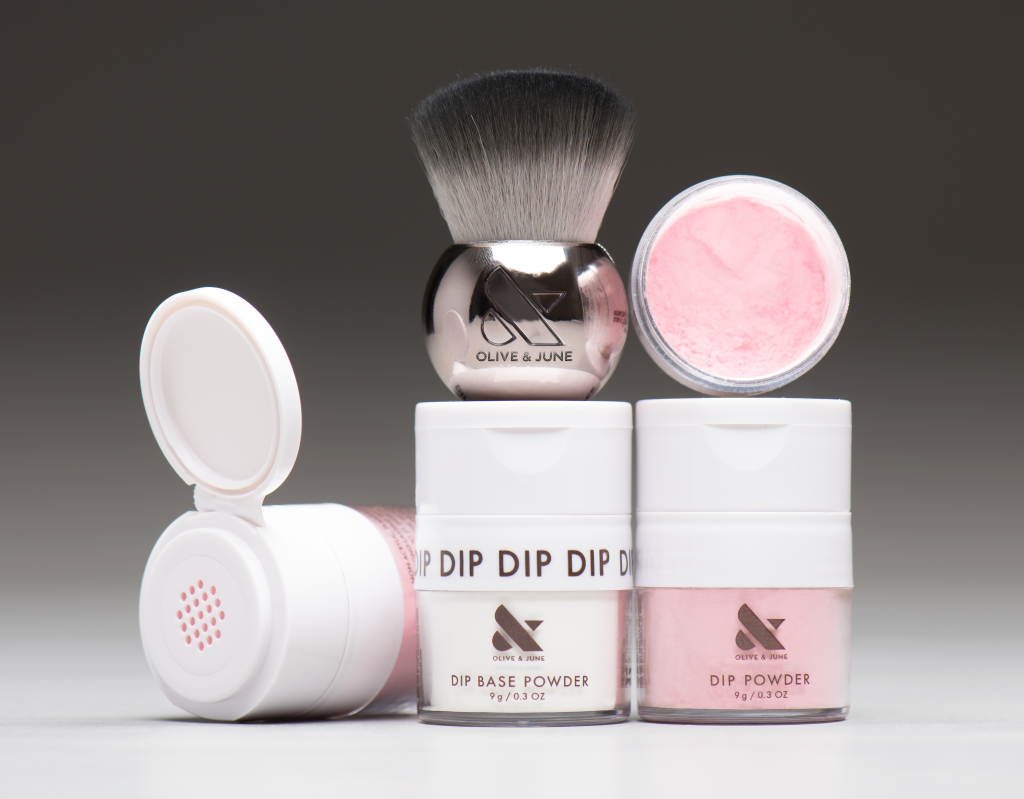
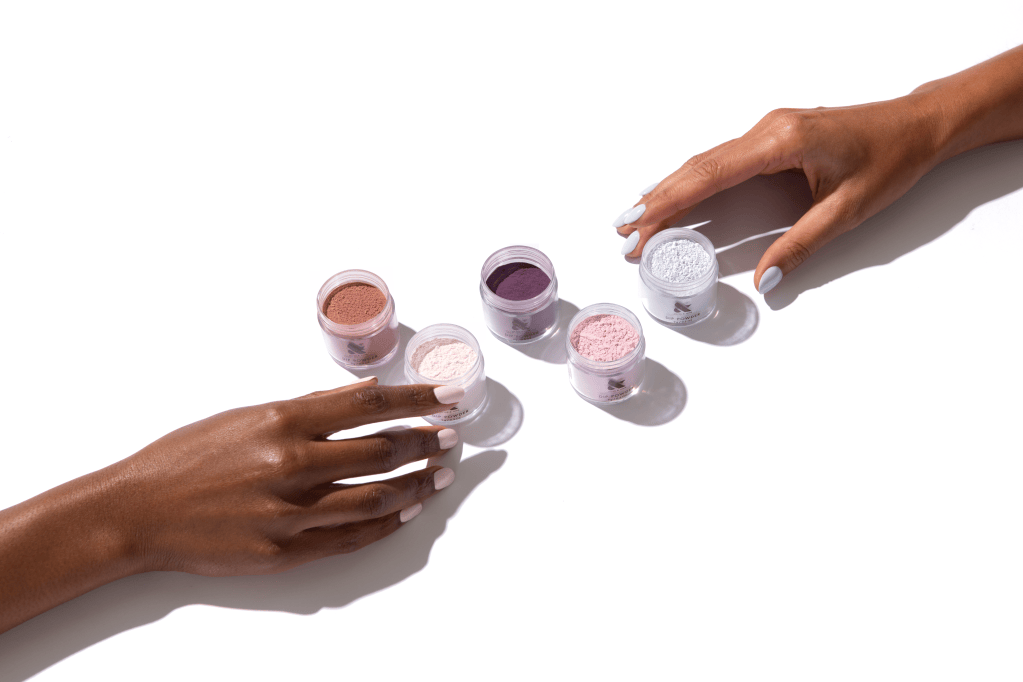
Developing this proprietary formulation required rigorous R&D. Working alongside specialized chemists, the team went through 127 distinct iterations before perfecting the five-step Dip Mani System, which delivers salon-grade longevity of up to 21 days. Because plant-based powders possess a naturally "fluffier" texture than acrylic counterparts, the team integrated a specialized application step to ensure seamless usability for at-home consumers.
Launched on October 22, the Dip Mani System retails between $75 and $100 depending on color bundle size. When broken down per application, the cost translates to less than $3 per manicure—vastly undercutting traditional salon visits, which typically range from $30 to $60 across the United States.
Looking Ahead
As questions regarding her post-acquisition timeline occasionally surface, Gibson Tuttle remains entirely focused on the horizon. For her, stepping away from the cultural phenomenon she built is a non-starter.
“I love the fever, the excitement, and the sheer enthusiasm that our community brings to the table every single day,” she reflects.
With Helen of Troy providing a formidable financial backbone, a booming retail footprint scaling past 15,000 doors, and a pipeline brimming with clean-beauty breakthroughs, Olive & June is no longer just a disruptor in the nail care industry—it is the definitive standard-bearer for the future of beauty.