

Executive Overview
ISTANBUL — In a development closely watched by international human rights organizations and Western allies, an Istanbul court ordered the release of four prominent journalists on Monday, pending the outcome of their high-profile trial. The case has long been regarded as a critical benchmark for the state of press freedom, freedom of expression, and the rule of law in Turkey.
Among those freed were Ahmet Şık and Nedim Şener, two fiercely independent investigative journalists who spent 375 days behind bars without a conviction. The defendants were swept up in the sweeping judicial investigations surrounding "Ergenekon"—an alleged ultranationalist shadow government and clandestine network accused of plotting to overthrow the ruling, Islam-rooted Justice and Development (AK) Party. Alongside Şık and Şener, defendants Coşkun Musluk and Sait Çakir also tasted freedom after the court cited the "likelihood of reclassifying the crime" and the substantial "time spent under custody" as the basis for their release. All defendants have vehemently denied all allegations.
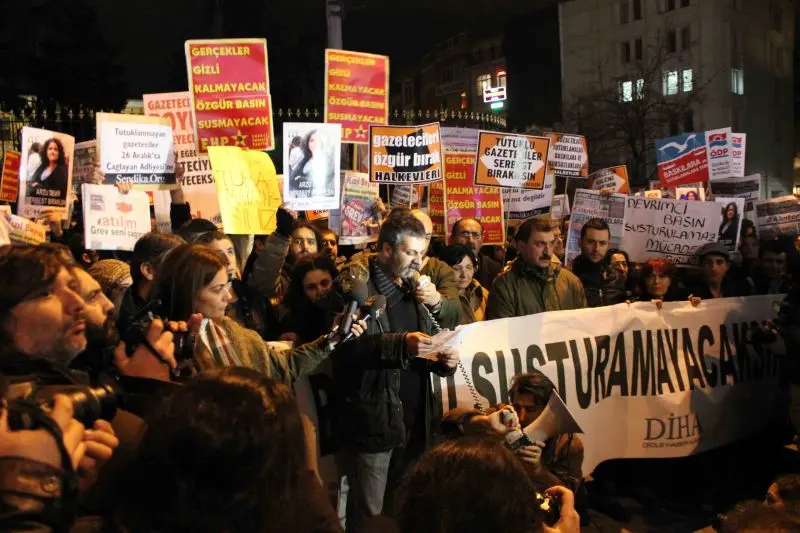
While the release of the four men sparked jubilant celebrations outside Istanbul’s Silivri Prison—where crowds waved Turkish flags and chanted "Free press cannot be silenced"—six other defendants in the same docket remain incarcerated. These include key editors from Oda TV, a hard-line secularist online news portal known for its blistering critiques of the AK Party administration.
The conditional liberation of Şık and Şener offers a glimmer of relief to a battered Turkish media landscape, yet it leaves unaddressed the broader systemic crisis facing journalism in the country. According to global press watchdog the Committee to Protect Journalists (CPJ), roughly 100 members of the press remain imprisoned or on trial in Turkey, giving the nation the dubious distinction of housing one of the highest numbers of jailed journalists in the world. As domestic and international actors assess the government’s next moves, the case underscores an escalating tension between state security apparatuses and the fundamental rights of a free press.
Detailed Chronology of the Case and Arrests
The legal ordeal that culminated in Monday’s conditional release began more than a year prior, marked by midnight raids, confiscated manuscripts, and sweeping accusations that shocked Turkey’s journalistic community.
The Ergenekon Probe and the Media Wing
The broader Ergenekon trials, which began in 2008, were originally framed as a historic reckoning with deep-state actors, military conspirators, and ultra-nationalist zealots suspected of orchestrating false-flag operations, assassinations, and civil unrest to destabilize the elected government. However, as the investigations expanded into 2010 and 2011, the scope widened dramatically to incorporate journalists, academics, and activists.
Investigators alleged that a dedicated "media wing" of the Ergenekon network was actively operating to manipulate public opinion, manufacture dissent, and lay the groundwork for a military coup against the AK Party. Critics of the government, however, argued that the conspiracy theory was being weaponized by prosecutors to silence critical voices and neutralize investigative reporting into state corruption and police infiltration.
The Arrest of Ahmet Şık: Targeting the Gulen Movement
Ahmet Şık, an investigative journalist with a reputation for tackling untouchable subjects, was detained in March 2011. Prior to his arrest, Şık had been intensively working on a book manuscript titled The Imam’s Army, which detailed the alleged systematic infiltration of the Turkish police force and state institutions by followers of Fethullah Gülen, a powerful, self-exiled Turkish Muslim preacher residing in Pennsylvania.
In a move that drew widespread condemnation, Turkish police raided publishing houses and confiscated electronic copies of the unreleased manuscript, treating a draft book as organizational evidence of a criminal conspiracy. Upon his release from prison on Monday, Şık reflected on the Orwellian nature of his detention:
"Justice will be served when those who made up these allegations against us are put in prison."
Nedim Şener and the Shadow of the Hrant Dink Assassination
Nedim Şener, an intrepid reporter for the mainstream daily Milliyet, found himself targeted following his relentless investigative work into the tragic 2007 assassination of Hrant Dink, a prominent Turkish-Armenian journalist. Şener’s book, The Dink Murder and Intelligence Lies, exposed systemic failures within the state apparatus, arguing that police and intelligence agencies deliberately overlooked mounting, actionable warnings regarding the assassination plot against Dink.
Despite his international acclaim for exposing state negligence, Şener was sucked into the Ergenekon vortex and accused of aiding the shadow conspiracy. Speaking to supporters from the prison parking lot immediately following his release, Şener vowed that his incarceration had only hardened his resolve.
"The truth cannot be imprisoned," Şener declared, confirming that he would immediately resume his investigative work to uncover the remaining institutional cover-ups surrounding the Dink murder.
The Legal Turning Point
During Monday’s hearing, the Istanbul court altered its legal posture, pointing to the "likelihood of reclassifying the crime"—a judicial signal that the severe charges of aiding an armed terrorist organization might be downgraded to lesser offenses—alongside the disproportionate length of pre-trial detention.
Despite this breakthrough, the legal battle is far from over. The next major hearing in the trial has been formally scheduled for June 18, where the four released men, alongside their still-imprisoned co-defendants, will continue to face the tribunal.
Supporting Context and Metrics: The State of Press Freedom in Turkey
The release of Şık and Şener has brought international focus back to Turkey’s deeply troubled press freedom index, highlighting a growing chasm between Ankara’s democratic pretensions and its authoritarian penal practices.
+--------------------------------------------------------------------------+
|                 TURKEY'S PRESS FREEDOM AT A GLANCE                       |
+--------------------------------------------------------------------------+
| • Total Jailed Journalists (CPJ Estimate): ~100                          |
| • Primary Legislative Hurdles: Vague Anti-Terror & Penal Codes           |
| • Demographics Most Affected: Kurdish journalists & secular critics      |
| • International Pressure Points: European Union accession talks, US dept.|
+--------------------------------------------------------------------------+
The Anti-Terror Law Paradox
At the heart of Turkey’s press freedom crisis lies its expansive and ambiguous anti-terrorism legislation. Vaguely worded statutes within the Turkish Penal Code and the Anti-Terror Law allow prosecutors to routinely conflate routine journalistic activities—such as interviewing Kurdish political figures, publishing leaked government documents, or criticizing high-ranking officials—with membership in or propaganda for armed terrorist organizations.
As Ahmet Şık astutely noted upon exiting the gates of Silivri Prison, the crisis extends far beyond the newsrooms:
"This is not just about press freedom, this is about freedom of expression… There are 100 journalists in jail, but freedom of expression is not just a problem for journalists."
Şık highlighted that approximately 60 university students and thousands of ordinary Turkish citizens languish in the nation’s prisons, swept up by the same legal mechanisms designed to stifle dissent.
Demographic Vulnerabilities: The Kurdish Press
While high-profile secular journalists like Şık and Şener capture international headlines, the vast majority of imprisoned members of the press in Turkey are of Kurdish origin. Reporters working for pro-Kurdish media outlets face systemic harassment, office closures, and protracted pre-trial detentions under the pretext of supporting the Kurdistan Workers’ Party (PKK), which is designated as a terrorist organization by Turkey, the United States, and the European Union.
International advocacy groups frequently point out that the Turkish state draws little distinction between violent insurgency and peaceful political advocacy or ethnic reporting, treating any critical documentation of the Kurdish conflict as a treasonous act.
Official Statements and International Reactions
The release of the four journalists triggered a flurry of official commentary from domestic politicians, international human rights monitors, and Western diplomatic missions.
Domestic Reception: Cautious Welcome from Ankara
Deputy Prime Minister Bülent Arıç adopted a conciliatory tone in a televised address welcoming the court’s decision, signaling that elements within the governing AK Party are increasingly aware of the severe diplomatic and reputational costs associated with mass journalistic detentions.
"It is pleasing," Arıç remarked. "Long periods under custody should not turn into punishment."
Despite these diplomatic overtures, the government continues to maintain its official line that journalists in Turkey are not prosecuted for their professional output, but rather for alleged criminal acts entirely unrelated to journalism. Critics, however, dismiss this defense as a rhetorical smoke screen designed to mask politically motivated intimidation.
International Scrutiny: CPJ and Western Allies
The Committee to Protect Journalists (CPJ) issued a sharp, unyielding statement following Monday’s court ruling, demanding that the Turkish government enact comprehensive legislative overhauls rather than relying on selective, piecemeal releases.
"The government must go beyond this mere gesture and release all journalists incarcerated under Turkey’s vague penal and anti-terror laws," the CPJ statement read. "Fundamental reform of the country’s legislation to align it with international standards is also essential."
The AK Party administration has faced mounting diplomatic pressure from both the United States Department of State and the European Union. As a candidate country for EU membership, Turkey is formally obligated to meet strict Copenhagen criteria regarding human rights, judicial independence, and freedom of expression. Continued crackdowns on independent media have severely stalled accession talks, alienating traditional Western partners who view the erosion of press freedoms as a dangerous democratic regression.
Future Outlook
Monday’s decision to release Ahmet Şık, Nedim Şener, Coşkun Musluk, and Sait Çakir represents a significant human milestone for the individuals and families who endured a year of unwarranted imprisonment. Yet, it remains an open question whether this judicial pivot signals a genuine, long-term softening of the Turkish state’s stance toward independent dissent or merely a tactical concession designed to placate international critics ahead of upcoming diplomatic summits.
With six defendants—including the leadership of Oda TV—still confined behind bars, and roughly 100 other journalists navigating the perilous waters of Turkey’s penal system, the broader struggle for freedom of expression is far from over. All eyes will now turn toward Istanbul on June 18, when the court reconvenes. That session will serve as a crucial test to determine whether Turkey is truly prepared to respect the independence of the press, or whether the shadows of arbitrary detention will continue to loom large over the nation’s democratic future.