

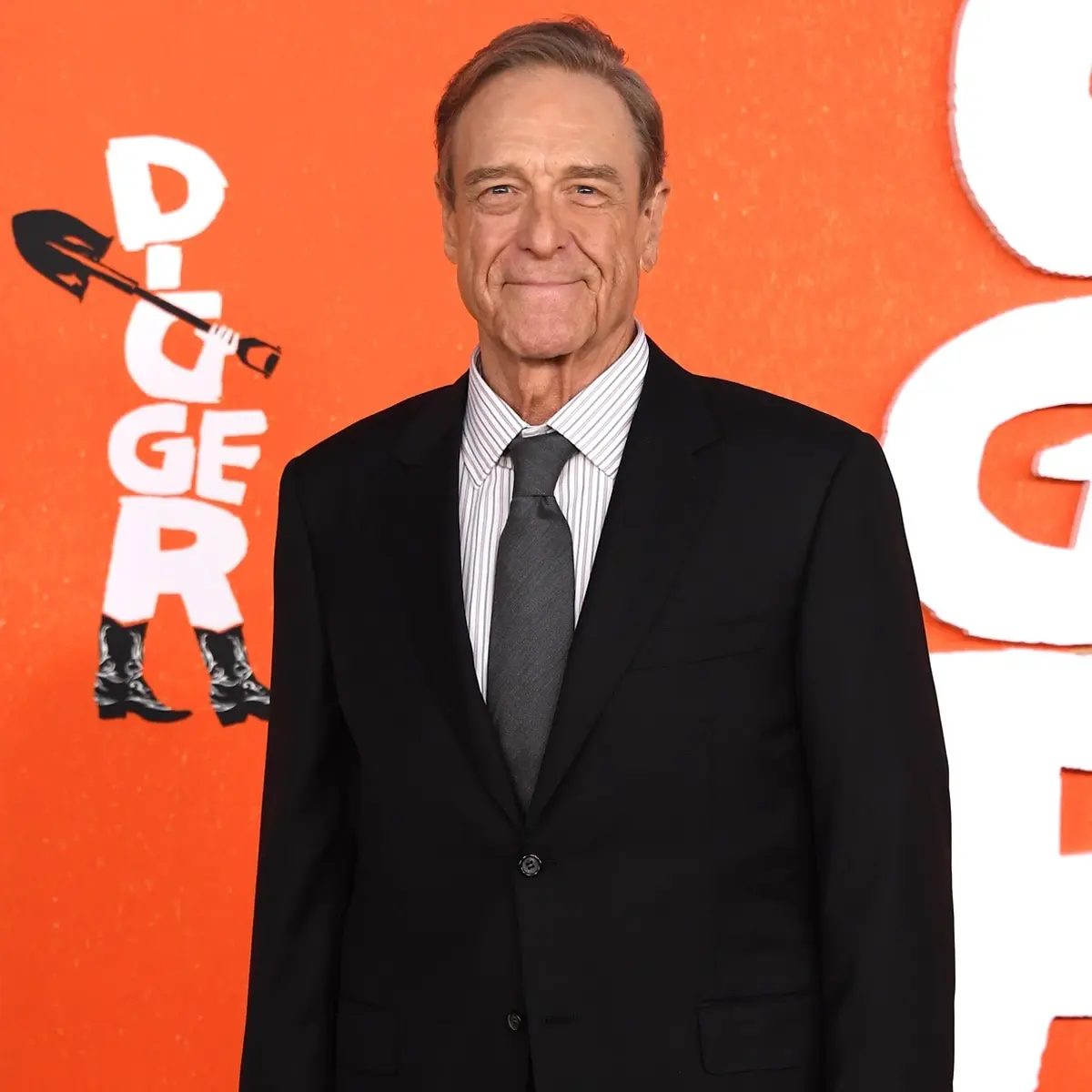
In the realm of modern celebrity culture, few physical transformations have been as visually striking—yet handled with such quiet dignity—as that of veteran actor John Goodman. Best known for his lovable, larger-than-life portrayals across a celebrated career spanning television, film, and theater, Goodman famously tipped the scales at roughly 400 pounds during the height of his fame on ABC’s Roseanne. Today, nearly a decade after initiating a fundamental restructuring of his daily habits, the 74-year-old star has shed an astounding 200 pounds, halving his body weight and entering an entirely new chapter of his personal and professional life.
Yet, as Goodman has candidly admitted in recent media appearances, this dramatic evolution has not been without its physical tolls. Grappling with a body that feels "messed up" from decades of extreme weight fluctuations, the actor’s journey is far from a simplistic Hollywood gloss-up. Instead, it serves as a sobering, deeply human case study in the realities of long-term recovery, the mechanics of sustainable lifestyle overhauls, and the psychological hurdles of adjusting to a drastically altered physique later in life. This report examines the comprehensive trajectory of Goodman’s transformation, the mechanics behind his success, and how his ongoing journey mirrors a broader cultural shift among public figures redefining health on their own terms.
Detailed Chronology: From the 400-Pound Pinnacle to Sustainable Sobriety
To understand John Goodman’s physical renaissance, one must examine the decades of cyclical habits that preceded it. For much of his early career, Goodman’s size was not only accepted by Hollywood—it was often weaponized as a defining characteristic of his casting. Whether playing the lovable blue-collar patriarch Dan Conner or taking on memorable film roles in The Big Lebowski, Barton Fink, and O Brother, Where Art Thou?, Goodman was the quintessential heavy-set character actor. Behind the scenes, however, a quiet crisis was unfolding.
The Cycle of Yo-Yo Dieting
In past interviews, Goodman has spoken openly about the exhausting loop of rapid weight loss and severe regression that plagued his earlier years. Before committing to his permanent lifestyle shift, the actor would routinely drop 60, 70, or even 80 pounds over the course of a single summer, only to watch the weight thunder back on.
"It was basically just portion control, and ‘I don’t need it,’" Goodman explained to AARP The Magazine regarding his eventual mindset shift. "I was just shoving everything into my mouth. But I don’t want to be an example to anybody when the weight comes thundering back on—when I start eating Crisco out of the can with a spoon and a side of confectioner’s sugar."
The root of the issue, Goodman eventually realized, extended far beyond simple nutritional intake. Following a three-decade battle with alcoholism, which culminated in his historic decision to get sober in 2007, the actor recognized a deeply ingrained behavioral pattern. "I was eating alcoholically after I stopped drinking," he shared in a profile with The New Yorker.
The Turning Point: 2007 and Beyond
The decision to embrace sobriety in 2007 served as the foundational bedrock for all subsequent health transformations. Describing his alcoholism to The Guardian as "30 years of a disease that was taking its toll on everyone around me," Goodman reached a literal and figurative crossroads.
Even after achieving sobriety, however, an internal emptiness remained—a psychological void that he had previously numbed with alcohol, cocaine, or excessive quantities of food. Rather than attempting to fill that void with destructive habits, Goodman slowly learned to simply acknowledge its presence. As he famously noted to ABC’s Peter Travers in 2016: "You recognize it and go, ‘There it is.’ You don’t have to fill it with another pork chop or another drink… You can’t fill it. And you go on and live with it."
Supporting Context & Metrics: The Blueprint for a 200-Pound Loss
Goodman’s 200-pound transformation did not occur overnight through crash dieting or fleeting wellness trends. It was engineered meticulously over years, driven by a profound exhaustion with his physical state and a desire to reclaim his quality of life.
The Daily Regimen: Diet and Exercise
In 2010, determined to dismantle his sedentary lifestyle—which he wryly summarized to People magazine by noting, "It takes a lot of creative energy to sit on your ass and figure out what you’re going to eat next"—Goodman enlisted the expertise of renowned health coach Mackie Shilstone.
Shilstone introduced Goodman to a disciplined regimen centered on two core pillars:
- The Mediterranean Nutritional Framework: Goodman eliminated refined sugars and severely curtailed processed foods, pivoting toward a clean, sustainable diet rich in fish, fresh vegetables, olive oil, and nuts.
- Structured Physical Activity: Moving away from crash-diet cycles, Shilstone integrated workouts six days a week. This routine prominently featured boxing—an intensive physical discipline involving an hour to an hour and a half of hitting mitts, working heavy bags, and mastering footwork.
"It’s usually just an hour, hour and a half of hitting the mitts, hitting the bags, learning footwork. It’s great," Goodman detailed to Rolling Stone in 2023. On days when boxing felt too demanding, the actor supplemented his routine with low-impact alternatives, including elliptical training, regular walks with his dogs, and deliberate core strengthening.
Overcoming Injury and Physical Realities
Maintaining such a rigorous regimen into his seventies has required immense adaptability. While filming the movie Digger alongside Tom Cruise, Goodman suffered a setback when he fractured his hip on set in 2025. Admitting that walking around in his stocking feet on set was "very stupid," the injury prompted a renewed focus on functional fitness. Today, his training philosophy prioritizes building core stability, balance, and targeted strength training specifically designed to prevent future falls.
Official Statements & Personal Reflections
Despite shedding half his body weight and garnering widespread public admiration—including viral attention at red-carpet premieres and social media spotlights—Goodman remains remarkably grounded, occasionally grappling with the psychological dissociation that comes with such a radical physical transformation.
Adjusting to the Mirror
Appearing on the Happy Sad Confused podcast, Goodman offered a candid look at his ongoing psychological adjustment to his slimmer frame:
"I’m still trying to get used to my face," he acknowledged. "It’s weird. I think of myself as one way and then I look at myself, ‘Oh, wow!’" Though he admits the ongoing metamorphosis feels "strange," he quickly added with a laugh, "It’s fun to get used to."
Rejecting the Role Model Trap
Unlike many public figures who commercialize their weight loss or position themselves as lifestyle gurus, Goodman has consistently resisted the urge to preach. Having experienced the demoralizing reality of weight cycling firsthand, he views his journey as a deeply personal, ongoing maintenance routine rather than a prescriptive blueprint for the masses.
"I wanted to do it slowly, move, exercise," Goodman explained to ABC News. "I’m getting to the age where I can’t afford to sit still anymore. And it gives me the energy to work, ’cause work is very draining."
Future Outlook: A New Normal in Hollywood
As John Goodman looks toward the future, his journey stands as a powerful testament to the intersection of mental health, physical longevity, and professional resilience. No longer anchored by the physical limitations that defined his early career, the Emmy-winning actor continues to take on demanding television and film projects—such as his critically acclaimed role in HBO’s The Righteous Gemstones—with renewed vigor and stamina.
In an industry hyper-fixated on superficial aesthetics, Goodman’s narrative resonates precisely because of its brutal honesty. By acknowledging that his body is "messed up" from years of strain, yet proving that it is never too late to rewrite one’s biological narrative through patience and professional guidance, John Goodman has secured a legacy that extends far beyond the screen. His transformation is not merely about losing 200 pounds; it is about gaining the presence of mind to finally look in the mirror—and choose to stay.