


Executive Overview
In a landmark legal challenge that could redefine the boundaries of reproductive rights and medical accountability in the United States, the family of a 37-year-old Texas woman has filed a groundbreaking lawsuit against state officials, medical providers, and institutions. The case marks the nation’s first-ever lawsuit directly tied to a preventable maternal death resulting from a restrictive state abortion ban.
Filed in state court by a specialized malpractice firm in collaboration with the reproductive rights organization Amplify Legal, the lawsuit names prominent figures including Texas Attorney General Ken Paxton, Stephen Brint Carlton—executive director of the Texas Medical Board—and Bexar County District Attorney Joe Gonzales. Crucially, it also targets the University of Texas Science Center at San Antonio (operating as the University Health System) and three specific physicians who administered care to the victim, Tierra Walker.
The complaint alleges that Texas’s near-total abortion ban violates both the state and U.S. constitutions, creating a climate of severe intimidation, legal ambiguity, and medical negligence. For the first time, Attorney General Paxton—who has aggressively spearheaded the state’s enforcement of anti-abortion statutes and is presently engaged in a high-stakes U.S. Senate race—is directly named as a defendant for his role in creating what legal advocates describe as a hostile environment that prioritizes criminalization over maternal survival.
Detailed Chronology: The Tragedy of Tierra Walker
The legal action stems from the harrowing final months and ultimate death of Tierra Walker, whose case initially drew national investigative scrutiny through reporting by ProPublica. Walker died on December 30, 2024, at the age of 37, leaving behind a 15-year-old son who discovered her body on his birthday. At the time of her death, she was approximately 20 weeks pregnant.
A High-Risk Pregnancy Met with Dismissal
Walker presented a complex medical history characterized by severe chronic conditions, including chronic hypertension, diabetes, obesity, and acute asthma. These pre-existing health issues rendered her pregnancy profoundly high-risk from its earliest stages.
Throughout her second trimester, Walker suffered through agonizing complications, experiencing recurrent hospitalizations, severe seizures, and debilitating physical distress. Despite her deteriorating condition and repeated, desperate pleas for an abortion, medical staff consistently rebuffed her inquiries. According to the lawsuit, physicians and hospital staff failed to provide her with information regarding out-of-state travel or medical options, instead repeatedly dismissing her symptoms with generalized assurances that "your baby is fine."
LaTanya Walker, Tierra’s aunt and the lead plaintiff in the lawsuit, recalled the frustrating wall of denial they encountered within the healthcare system. "They just kept saying, ‘It’s not the baby, the baby’s fine,’" LaTanya Walker stated during an emotional press conference. "It’s horrible that she’s gone and she was taken from us this way. I want justice for her. I want it to not happen to anyone else. It needs to stop."
Deteriorating Health and Fatal Discharge
Medical records cited within the court filings paint a grim picture of systemic institutional failure. During her final, critical hospital admission at the University of Texas Science Center at San Antonio, Walker exhibited dangerously elevated blood pressure levels that responded only temporarily to intensive medication.
Compellingly, internal medical notes documented by the attending physician—now a named defendant in the lawsuit—explicitly acknowledged that "delivering the baby" (thereby terminating the pregnancy) "may be the best treatment for preeclampsia," a severe pregnancy-related hypertensive disorder. Yet, despite this clinical recognition, no such life-saving intervention was performed.
Instead, Walker was discharged from the facility. Just days later, she suffered a fatal medical episode. An official post-mortem examination by the local medical examiner attributed her death to hypertensive cardiovascular disease compounded by preeclampsia—a textbook complication that medical experts agree necessitates immediate pregnancy termination when pharmaceutical management fails.
Independent medical reviewers consulted by investigative journalists confirmed that under standard medical protocols, Walker’s complex profile mandated immediate termination options to preserve her life. Yet, paralyzed by the draconian legal threats hanging over Texas medical facilities, her care team allowed her condition to pass the point of no return.
Supporting Context & Metrics: The Chilling Effect of Texas Abortion Bans
The legal battle over Tierra Walker’s death occurs against a backdrop of intensifying national crisis regarding maternal mortality in states with strict abortion prohibitions.
The Legislative Landscape and Ambiguous Exceptions
Texas currently enforces one of the strictest abortion prohibitions in the country. Under the state’s near-total ban, legal exceptions are exceptionally narrow, permitted only if continuing a pregnancy places the patient "at risk of death or poses a serious risk of substantial impairment of a major bodily function."
While the Texas Legislature enacted clarifying legislation in 2025—subsequent to Walker’s death—purportedly designed to delineate risk thresholds, medical professionals argue the statutory language remains dangerously vague. The penalties for violating the ban are severe, carrying threats of multi-year prison sentences, exorbitant civil fines, and the immediate revocation of medical licenses. Consequently, physicians find themselves forced to weigh clinical judgment against the looming threat of felony prosecution.
This chilling effect has transformed hospitals into legal battlegrounds where doctors delay essential interventions until a patient is actively crashing on the operating table, often waiting until sepsis, hemorrhaging, or multi-organ failure renders intervention too late.
The Travel Barrier and Systemic Inequality
While some affluent patients or those with flexible resources manage to circumvent Texas’s borders to access care in sanctuary states or safely order medication abortion online via telehealth networks, systemic inequalities heavily dictated Walker’s tragic outcome.
Molly Duane, an attorney representing the Walker family, emphasized that Tierra’s severe physical disabilities, debilitating seizures, and frequent hospitalizations completely precluded the possibility of traveling hundreds of miles out of state. While family members briefly explored the possibility of obtaining mail-order abortion pills, they ultimately abandoned the idea out of fear that self-managed care without medical supervision could violently exacerbate her unstable underlying conditions.
"That’s the problem. You should be able to get healthcare from your doctor," Duane remarked, underscoring the cruel paradox of a healthcare system that criminalizes the very treatments required to save patients’ lives.
Official Statements and Accountability Targets
The lawsuit takes direct aim at the machinery of state enforcement by targeting officials who have championed the criminalization of reproductive healthcare.
Ken Paxton and the Apparatus of Enforcement
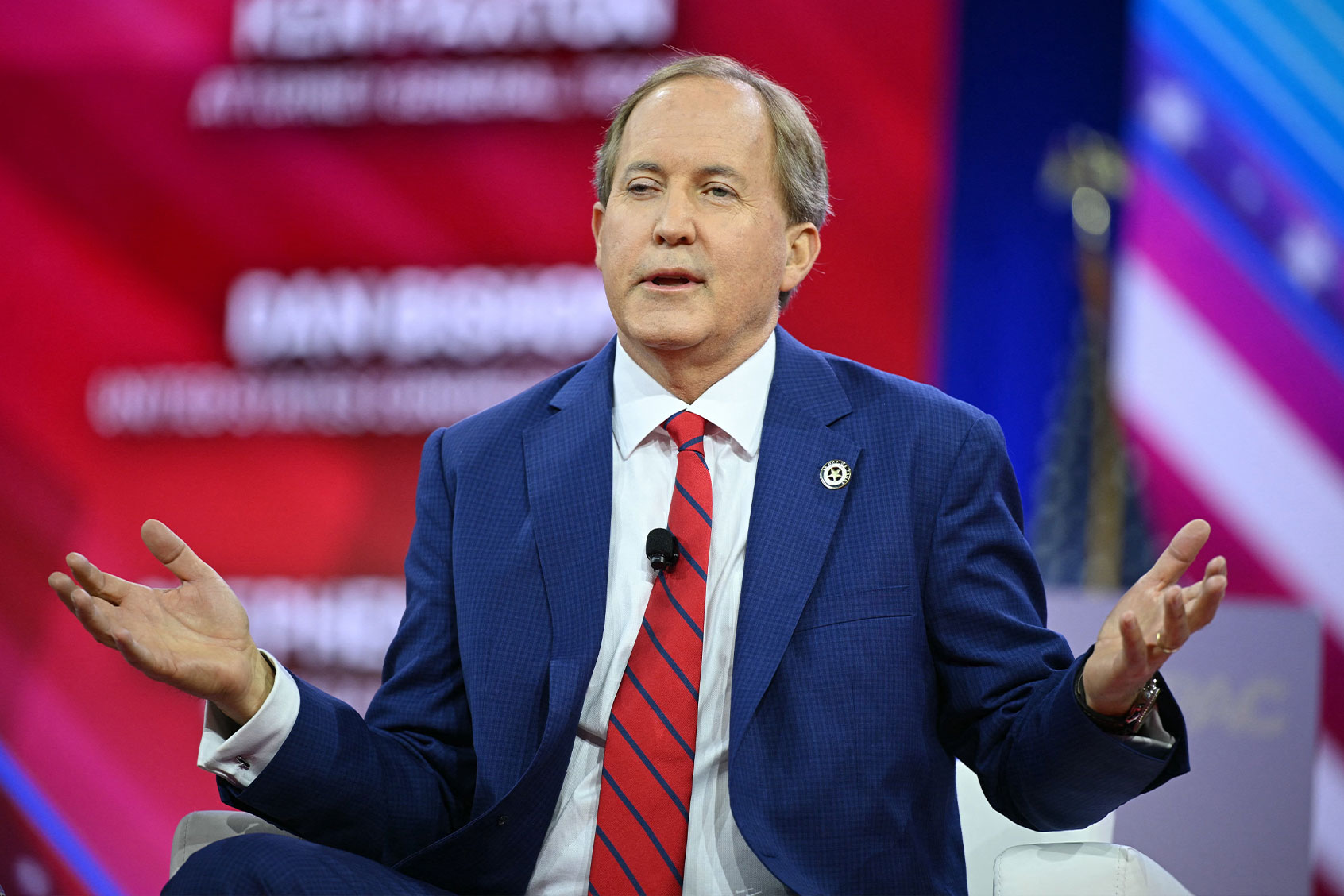
Attorney General Ken Paxton has established himself as the nation’s most aggressive litigator of abortion restrictions. Paxton’s office has repeatedly intervened in lower court proceedings to block emergency exceptions, threatened prosecuting entities who dare offer leniency, and actively sought to dismiss lawsuits brought by other Texas women who nearly died after being denied emergency pregnancy terminations. By naming Paxton in both his official and individual capacities, the plaintiffs are seeking to pierce the shield of sovereign immunity, arguing that his aggressive, politicized enforcement campaigns directly fostered an environment of terror that deterred doctors from saving Walker’s life.
In addition to Paxton, the lawsuit targets:
- Stephen Brint Carlton, Executive Director of the Texas Medical Board, for overseeing an apparatus that has intimidated physicians rather than safeguarding patient health.
- Joe Gonzales, Bexar County District Attorney, for his role within the local prosecutorial chain.
- The University of Texas Science Center at San Antonio, alongside specific treating physicians, for institutional negligence and breach of the standard of care.
Requests for comment sent to Attorney General Paxton’s office, his ongoing Senate campaign, the Texas Medical Board, the University Health System, and the Bexar County District Attorney’s Office drew no immediate substantive responses.
Future Outlook: Implications for Constitutional Law and Reproductive Rights
Legal scholars and civil rights organizations are monitoring the Walker litigation closely, viewing it as a potential watershed moment in post-Dobbs American jurisprudence.
Legal Theories and Demands for Relief
The lawsuit asserts that Texas’s abortion restrictions violate fundamental guarantees enshrined within both the state and federal constitutions, including the rights to life, liberty, bodily integrity, and equal protection under the law.
Rather than settling for standard medical malpractice claims alone, the plaintiffs are pursuing a comprehensive jury trial requesting:
- Substantial financial damages for wrongful death and pain and suffering.
- A declarative judicial judgment explicitly ruling that Texas’s current abortion framework violates constitutional guarantees by threatening pregnant individuals with preventable death.
The Road Ahead
If the lawsuit successfully overcomes state immunity defenses and proceeds to discovery, it could force public health systems, medical boards, and state attorneys general to open their internal communications to judicial scrutiny. Such transparency could expose the direct correlation between political grandstanding and catastrophic clinical outcomes.
For the Walker family, however, the legal battle is ultimately about securing a measure of accountability that can prevent future tragedies. As LaTanya Walker movingly summarized during the case’s announcement: "I want justice for her. I want it to not happen to anyone else. It needs to stop."