

Executive Overview
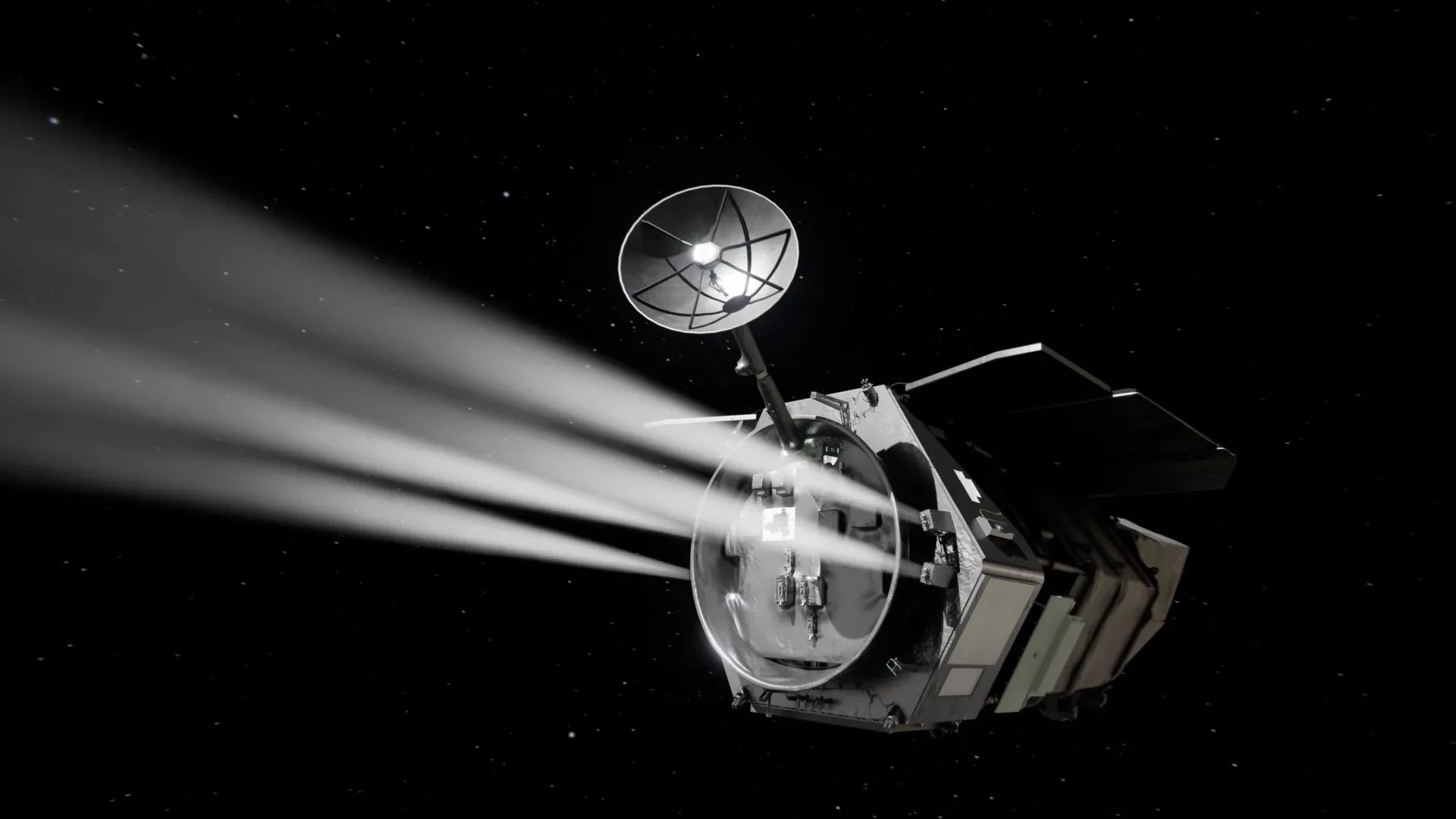
In a stunning triumph of aerospace engineering, orbital mechanics, and precision execution, NASA’s Nancy Grace Roman Space Telescope is poised to rewrite the playbook on deep-space mission longevity. Originally designed with a robust yet finite operational window of a decade, the advanced observatory now boasts a projected operational lifespan of at least 22 years. This phenomenal windfall—more than doubling the telescope’s expected scientific output—is the cumulative result of an exceptionally precise first mid-course correction, favorable mass margins at launch, and conservative propellant budgeting strategies that yielded staggering savings.
Jamie Dunn, center director at NASA’s Goddard Space Flight Center in Greenbelt, Maryland, captured the magnitude of the achievement, noting that the confluence of meticulous mission planning, flawless operational execution, and a pristine launch profile delivered by SpaceX has left Roman with enough propellant to fuel scientific discovery for more than two decades.
For the global astronomical community, this extension is nothing short of revolutionary. The Roman Space Telescope—tasked with unraveling the deepest mysteries of the cosmos, including the nature of dark energy, the distribution of dark matter, and the discovery of distant exoplanets—will now have more than twice the operational runway to execute its ambitious survey mandate. In an era where flagship space missions are routinely measured in single-digit years before fuel exhaustion forces retirement, Roman’s unexpected propellant bounty establishes a gold standard for interplanetary and halo-orbit mission efficiency.
Detailed Chronology
To understand how NASA engineers unlocked an extra dozen years of science operations, one must trace the critical milestones of the Roman Space Telescope’s journey from integration to its ongoing transit toward the second Sun-Earth Lagrange point (L2).
Pre-Launch Preparation and Mass Margins
The narrative of Roman’s extended lifetime began long before the observatory ever cleared the launchpad. Spacecraft design is an exercise in managing extreme variables, chief among them being mass. During the multi-year development phase, propulsion engineers must establish a baseline for how much propellant the spacecraft will require to reach its destination and maintain its station thereafter.
To safeguard against unforeseen weight gains during assembly, integration, and testing, NASA engineers utilized a conservative maximum design mass of 21,605 pounds (9,800 kilograms) when calculating the mission’s initial fuel requirements. However, as manufacturing and testing concluded, the actual mass of the fully integrated observatory proved to be significantly lower. Roman tipped the scales at launch at a mere 17,760 pounds (8,056 kilograms)—an impressive deficit of nearly 4,000 pounds compared to the maximum budget.
This lighter-than-expected footprint paid immediate dividends. Because the spacecraft required less energy to accelerate into its targeted trajectory, the mission team was afforded the rare luxury of filling Roman’s propellant tanks to their absolute physical capacity, rather than capping the load at the minimum threshold required for the baseline 10-year mission profile. This margin alone added roughly four years of potential operational lifetime before the vehicle even ignited its main thrusters.
The Historic First Mid-Course Correction (August 31)
With the spacecraft successfully separated from its SpaceX launch vehicle, attention immediately shifted to trajectory management. On August 31, Roman executed its critical first mid-course correction burn—a foundational maneuver designed to steer the observatory onto its precise path toward L2.
The maneuver was executed with staggering precision. Completed with greater than 99% accuracy, the burn consumed a microscopic fraction of the fuel originally reserved for it. Mission controllers had budgeted 441 pounds (200 kilograms) of propellant for the maneuver; Roman used a mere 40 pounds (18 kilograms).
This over-performance stunned even the veteran flight dynamics team. The savings realized during this single maneuver bypassed conservative mathematical models and immediately unlocked approximately four additional years of science operations.
The Upcoming Second Correction and L2 Arrival
The extraordinary accuracy of the first mid-course correction has created a beneficial cascading effect throughout the transit phase. Because Roman’s trajectory is already so closely aligned with its theoretical ideal, mission controllers have been able to exercise a greater degree of patience, delaying the second mid-course correction to allow for optimal positioning.
Scheduled for later this month, the second burn will provide the final propulsive adjustments necessary to nudge Roman into position for orbital insertion around L2, located roughly one million miles away from Earth in the opposite direction of the Sun. Because the first correction absorbed the vast majority of the trajectory errors, the second burn is now projected to require a fraction of the fuel originally allocated.
Following this upcoming adjustment, Roman is scheduled to arrive at its permanent orbital home approximately 100 days post-launch, placing its arrival in early December. Once it settles into its halo orbit around L2, the gravitational dynamics of the location will minimize the energy required to keep the spacecraft stable, setting the stage for decades of uninterrupted observation.
Supporting Context & Metrics
To fully appreciate the mathematical and logistical achievement behind Roman’s 22-year lifespan, it is essential to examine the underlying metrics governing spacecraft consumables. In deep-space missions, propellant is the ultimate finite resource. Once a spacecraft exhausts its fuel reserves for station-keeping and attitude control, it can no longer maintain its orientation toward scientific targets or keep its solar arrays pointed at the Sun. Consequently, fuel conservation directly dictates mission longevity.
The Baseline Mission Architecture
- Primary Mission Phase: 5 years
- Extended Mission Phase: 5 years
- Total Initial Design Budget: 10 years of continuous science operations
- Primary Constraint: Propellant mass as the primary spacecraft consumable
The Windfall Breakdown
The expansion of Roman’s operational window from 10 years to 22+ years can be mathematically segmented into three distinct operational victories:
- Launch Mass Surplus (~4 Years):
- Maximum budgeted mass: 21,605 lbs (9,800 kg)
- Actual launch mass: 17,760 lbs (8,056 kg)
- Result: Tanks filled to maximum physical capacity rather than baseline mission requirements.
- First Mid-Course Correction Efficiency (~4 Years):
- Allocated propellant: 441 lbs (200 kg)
- Consumed propellant: ~40 lbs (18 kg)
- Accuracy: >99%
- Projected Second Correction & Orbital Insertion Savings (~4 Years):
- Driver: Low residual trajectory error necessitating minimal correction burns.
- Result: Substantial conservation of propellant earmarked for orbital insertion, which can be reallocated entirely to long-term extended science operations.
Station-Keeping at L2
Once Roman establishes its station at the second Lagrange point, the energy required to maintain its orbit drops dramatically compared to low-Earth orbit missions. The spacecraft will only require periodic station-keeping burns executed roughly once every 28 days. Because the gravitational equilibrium at L2 acts as a natural parking spot, these minor periodic adjustments will consume very little fuel, allowing the accumulated surplus to accumulate untouched for future astronomical surveys.
Official Statements
The unprecedented operational outlook has drawn praise and commentary from the leadership and engineering teams steering the Roman Space Telescope program at NASA’s Goddard Space Flight Center.
Jamie Dunn, center director at NASA Goddard, emphasized the collaborative brilliance that enabled the milestone:
"As a result of exquisite planning by our orbital dynamics team, brilliant execution by the operations team, and a precise launch from SpaceX, Roman has fuel for at least 22 years of potential science operations."
The complexity of managing spacecraft mass during the grueling build cycle was addressed by Alison Rao, the Roman propulsion lead at NASA Goddard:
"A spacecraft’s mass changes throughout the design and build process, so we base the propellant budget on a set maximum value so we won’t come up short. We track the propellant needed based on actual mass throughout integration and testing as well, to make sure we have wiggle room. Since Roman’s was lower than we budgeted for, we were able to fill the propellant tanks to their capacity rather than only filling them as much as we needed to for the 10-year requirement."
These statements underscore a culture of aerospace conservatism meeting modern computational brilliance—where building in safety margins did not penalize the mission’s performance, but instead created an accidental windfall of historical proportions.
Future Outlook
The doubling of the Nancy Grace Roman Space Telescope’s operational timeline fundamentally transforms its scientific legacy. Originally envisioned as a powerful decade-long successor to past missions, Roman is now positioned to span multiple generations of astronomical research, potentially operating well into the 2040s.
Expanded Scientific Horizons
With more than two decades of fuel security, Roman will be able to undertake observational campaigns of unprecedented depth and breadth. Its primary scientific mandates include:
- Dark Energy Mapping: Utilizing wide-field infrared surveys to map the expansion history of the universe across billions of light-years, shedding light on the mysterious repulsive force accelerating cosmic expansion.
- Exoplanet Census: Employing gravitational microlensing techniques to discover thousands of new planets outside our solar system, including elusive rogue planets floating freely through the galaxy.
- Galactic Archeology: Surveying wide swathes of the infrared sky to map the structure and evolution of our Milky Way galaxy with unprecedented clarity.
Setting a New Precedent for Deep-Space Exploration
Beyond its direct scientific contributions, Roman’s fuel triumph serves as a case study for future flagship astrophysics missions. By demonstrating how meticulous mass-tracking, combined with advanced launch vehicle precision, can yield exponential returns on mission lifespan, NASA and its commercial partners have established a new benchmark for resource management in deep space.
As the Roman Space Telescope continues its serene coast toward L2, the astronomical community looks forward not just to its arrival in December, but to an extraordinary multi-decade voyage of discovery that will illuminate the dark corners of our universe for generations to come.