

Executive Overview
The ballroom floors of Dancing with the Stars (DWTS) are rarely quiet, but the turbulence of the current season extends far beyond the traditional tension of elimination nights. At the heart of the recent discourse is a longstanding, fiercely debated regulation: the strict prohibition of lifts in specific dance styles.
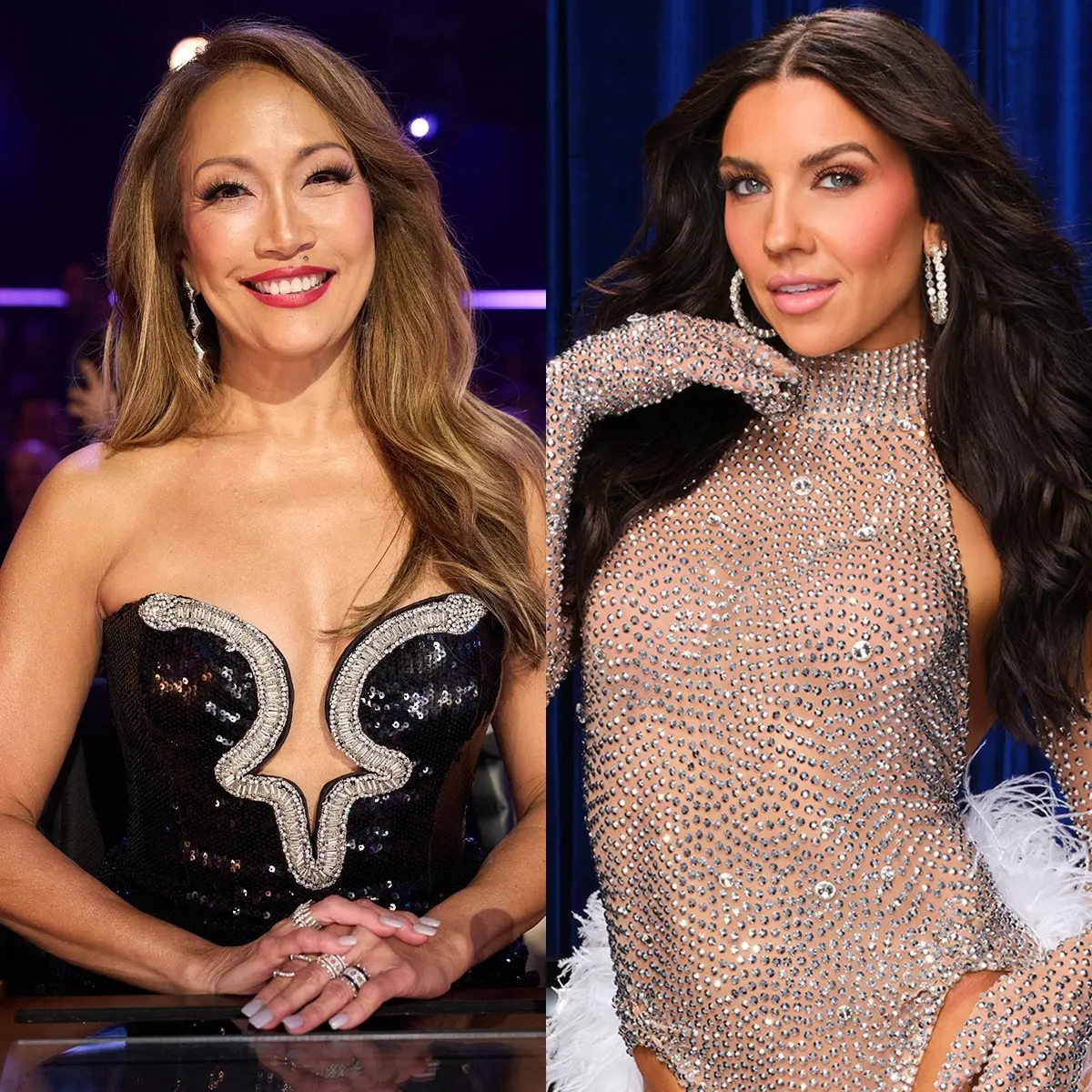
The controversy reignited following an October 13 Super Bowl Night routine performed by professional dancer Jenna Johnson and her celebrity partner, actor Harry Shum Jr. Judge Carrie Ann Inaba publicly called out the duo for incorporating an unsanctioned lift into their samba routine. What began as a routine technical critique on live television quickly ballooned into a multi-layered controversy, sparking intense fan debate, highlighting systemic frustrations among professional choreographers, and even drawing in outside drama that resulted in the temporary suspension of fellow pro Val Chmerkovskiy.
Despite the initial friction, recent developments indicate a path toward resolution. Inaba has since clarified her stance, proposing a collaborative summit between judges, producers, and professional dancers ahead of future seasons to modernize and clarify the rulebook. Meanwhile, Johnson and Shum Jr. have chosen to pivot away from the controversy, focusing instead on artistic validation, high scores, and the grueling physical demands of the competition. This report provides a comprehensive examination of the controversy, the underlying technical rules, the ripple effects across the cast, and the broader implications for the future of the beloved dance competition.
Detailed Chronology of Events
The Incident: Super Bowl Night (October 13)
The controversy took root during the October 13 episode, themed "Super Bowl Night." Jenna Johnson and Harry Shum Jr.—known for his impressive background as an alum of Glee and various dance-centric projects—took to the floor to deliver an energetic samba. However, their routine drew immediate scrutiny from judge Carrie Ann Inaba.
Inaba flagged the choreography for incorporating a lift, a move strictly forbidden under traditional ballroom rules for specific Latin and Ballroom styles unless explicitly permitted by the style’s parameters. To substantiate her critique, Inaba read the official definition of a lift aloud during the live broadcast:
"Any movement during which one of the dancers has both feet off the floor at the same time with the assistance or support of their partner."
The critique instantly polarized viewers and participants alike. While judges are tasked with maintaining the structural integrity of traditional dances established by pioneers like the late Len Goodman, modern audiences and choreographers frequently push the envelope, blending contemporary theatricality with classical technique.
The Fallout and External Complications
While Johnson and Shum Jr. initially absorbed the feedback and prepared for the upcoming weeks, the broader ecosystem of the show experienced secondary tremors. The online and social media discourse surrounding judging consistency quickly escalated.
Compounding the tension, professional dancer Val Chmerkovskiy—who is partnered with Jenna Dewan this season and is also Johnson’s brother-in-law—faced a one-week suspension from the production. The disciplinary action followed an ill-advised social media post referencing the infamous Academy Awards altercation between Will Smith and Chris Rock.
As a result of Chmerkovskiy’s suspension, Jenna Dewan was temporarily paired with fellow pro Alan Bersten for "Dedication Night," forcing the celebrity contestant to adapt mid-season while production managed the fallout behind the scenes.
The Rapprochement: Halloween Night (October 27)
Ahead of the October 27 Halloween episode, Carrie Ann Inaba took proactive steps to clear the air. In an Instagram comment posted on October 25, Inaba confirmed that she and Jenna Johnson had successfully buried the hatchet.
Rather than doubling down on punitive critiques, Inaba used the moment to advocate for systemic change, suggesting that the friction points between the judges and the professional dance troupe could be resolved through transparent, proactive communication before future seasons commence.
Supporting Context & Metrics: The Anatomy of the Lift Rule
To understand why a single lift can spark such intense controversy, one must examine the history and philosophy underpinning Dancing with the Stars.
The Legacy of Len Goodman
The strict enforcement of technical rules on DWTS was famously championed by the late head judge Len Goodman. Goodman, a legendary British ballroom dancer and adjudicator, viewed the preservation of authentic technique—such as frame, footwork, and rhythm—as paramount. Lifts were historically banned in traditional International Latin and Standard dances because they shift the discipline from partnered grounding and foot-to-floor connection into theatrical acrobatics.
Over the seasons, however, the show has undergone a significant identity shift:
- Casting Evolution: The series increasingly casts individuals with extensive contemporary, hip-hop, or Broadway backgrounds (such as Harry Shum Jr.).
- Audience Consumption: Viewers consume and react to routines through short-form video platforms (TikTok, Instagram Reels), where high-impact, gravity-defying moments often overshadow subtle technical nuances.
- Choreographic Innovation: Professional dancers are constantly challenged to reinvent classic styles to maintain viewer engagement, creating a perpetual tension between traditional rule-keeping and modern entertainment value.
Official Statements and Perspectives
Jenna Johnson’s Response
Speaking exclusively to E! News following the Halloween episode alongside Shum Jr., Johnson expressed full support for Inaba’s recommendation to formalize and clarify the rulebook.
"We should," Johnson told E! News. "I would love that. That would be amazing. I think that it would help all of us pros. I also saw that comment, and I really appreciated it."
Johnson’s willingness to embrace clearer guidelines underscores a collective desire among the professional troupe for transparency. Rather than viewing the critique as a personal attack, the veteran pro welcomed an objective framework that eliminates ambiguity.
Carrie Ann Inaba’s Vision for the Future
Inaba’s public commentary outlined a constructive blueprint for bridging the gap between the judges’ bench and the dance floor:
"A new lift rule should be created for next season," Inaba wrote on Instagram. "I think a session with all the dancers and the judges in a room together to discuss the history of how and why Len Goodman, our original producers and I defined the lift rule and what the purpose is, which is safety and fairness."
Inaba further emphasized the necessity of structural adaptation as the entertainment landscape shifts:
"The show has evolved tremendously, the way the show is cast has also changed, and so has our audience and the way they consume the show. Working together to create a better understanding between the dancers and the judges and our audience is important to me, as we move forward and is something I have asked for."
Harry Shum Jr. on Validation and Artistic Triumphs
Despite the early-season controversy, Shum Jr. and Johnson shifted their focus toward artistic validation. During Super Bowl Night, the couple delivered a standout, spooky routine that earned a coveted near-perfect score, bolstered by guest-judging feedback from legendary dancer Shirley Ballas.
Still dressed in his blood-soaked costume, Shum Jr. reflected on the emotional weight of earning praise from an icon of the dance world:
"We don’t do this show for validation, but that was the best validation of having someone like her to get the feedback and talk about kind of what she loved about it," Shum Jr. shared. "But we weren’t expecting it."
Directly acknowledging his partner, the Glee actor added:
"I know how much it means to you, also for me, as someone who came late to the game, like watching Shirley on Next Pro, and then going back and watching her videos, I’m like, ‘Oh my god!’"
Future Outlook: What Lies Ahead for Dancing with the Stars
As Season 35 progresses past its midpoint, the events surrounding the lift rule controversy offer valuable lessons for the long-running production:
- Policy Modernization: Inaba’s proposal for a pre-season workshop between judges, producers, and professional choreographers could institutionalize a modern understanding of what constitutes a violation, reducing live-show friction.
- Balancing Tradition and Spectacle: Producers must continue to navigate the delicate equilibrium between preserving the integrity of dances established by legends like Len Goodman and accommodating the high-energy, athletic style preferred by contemporary performers and viewers.
- Internal Stability: With Val Chmerkovskiy’s brief suspension resolved and temporary partnerships successfully integrated (such as Jenna Dewan’s time with Alan Bersten), the cast remains focused on the ultimate prize: the Mirrorball Trophy.
Ultimately, the dialogue sparked by Jenna Johnson, Harry Shum Jr., and Carrie Ann Inaba demonstrates that Dancing with the Stars remains a deeply passionate environment where both competitors and judges care profoundly about the craft. By turning a technical dispute into an opportunity for collaborative reform, the show paves the way for a more unified, transparent, and electrifying future on the ballroom floor.