

Executive Overview
For centuries, humanity has relied on pigments and dyes to color the built environment. From the vibrant frescoes of antiquity to the high-performance polyurethanes gleaming on modern hypercars, traditional coloration depends entirely on chemical compounds that absorb and reflect specific wavelengths of light. However, this foundational industrial paradigm comes with inherent liabilities. Pigments add substantial physical weight, degrade under relentless ultraviolet (UV) radiation, fade over time, and frequently require toxic chemical formulations to manufacture and apply.
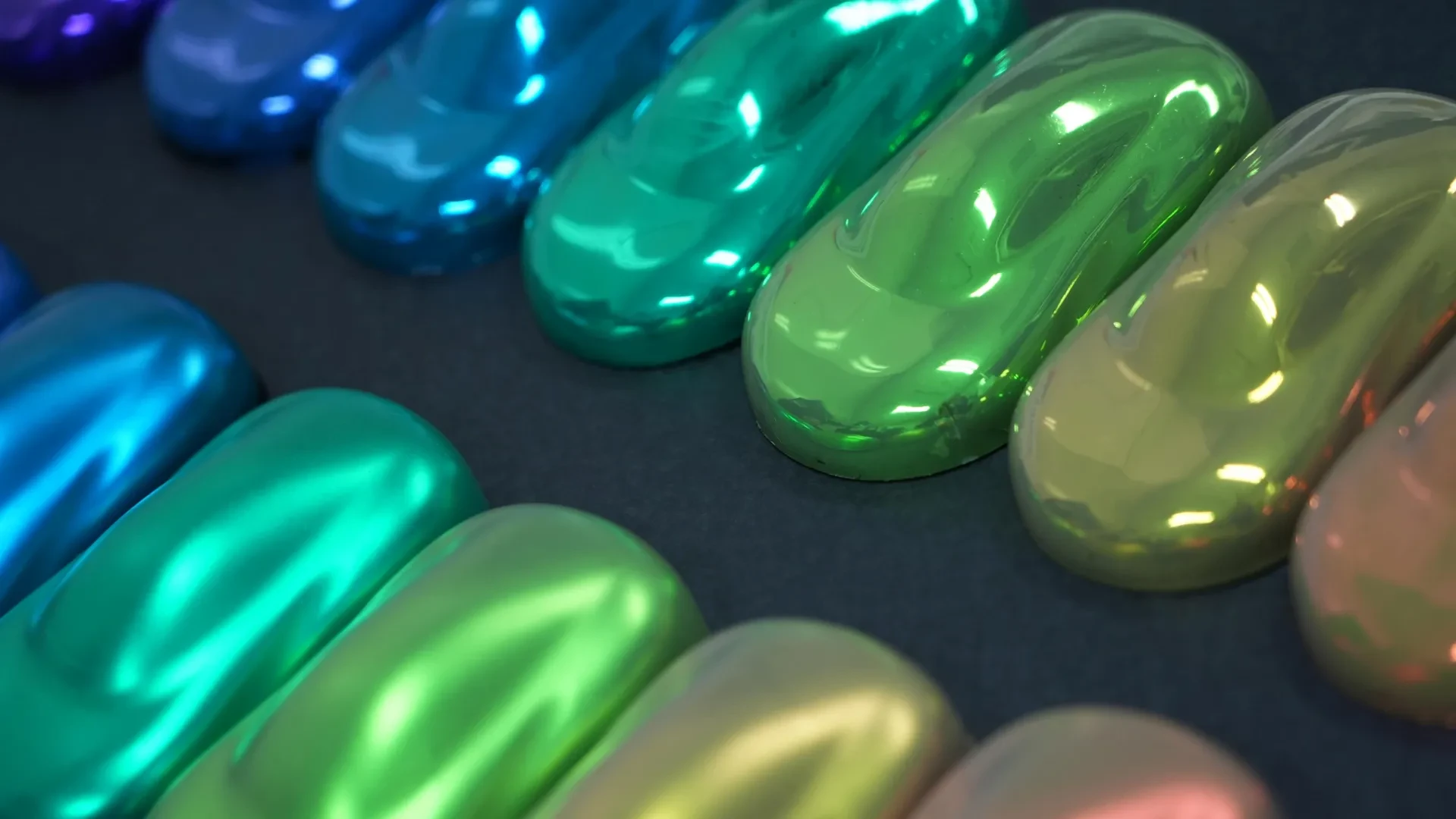
Now, a team of pioneering materials engineers at Kobe University has dismantled these limitations with a breakthrough that threatens to render traditional paint obsolete. Led by materials scientist Hiroshi Sugimoto, the research team has successfully developed a revolutionary coating technology that generates the rich, deep colors and high-gloss finishes characteristic of premium automotive paints—entirely without the use of pigments.
By harnessing the physics of light through engineered nanostructures, this innovation solves the historic trifecta of challenges that has long plagued the field of structural color: vulnerability to fading, severe angular color shifting (iridescence), and incompatibility with protective topcoats. Published in the prestigious journal Small Structures, this development bridges the chasm between academic theory and scalable, industrial reality.
The implications of this breakthrough stretch far beyond aesthetic improvements in the automotive sector. Because a single ultra-thin layer of silicon nanospheres achieves high opacity and brilliant color, the weight savings are staggering. Aviation industry analysts note that traditional paint systems on wide-body airliners add hundreds of kilograms of dead weight to an aircraft. The Kobe University coating slashes this requirement to a matter of grams—weighing less than a standard carton of milk for an entire commercial jet.
Furthermore, by utilizing abundant, non-toxic materials like silicon derived from the semiconductor industry and silica—one of the most prevalent compounds in the Earth’s crust—the technology promises profound environmental benefits. As Sugimoto and his colleagues prepare to commercialize the platform through a dedicated startup, industries from aerospace and consumer electronics to architecture stand on the precipice of a silent, weightless, and infinitely durable color revolution.
Detailed Chronology of the Breakthrough
To understand the magnitude of Kobe University’s recent achievement, it is necessary to examine the historical trajectory of structural color and the incremental milestones achieved by Dr. Hiroshi Sugimoto’s laboratory.
The Promise and Peril of Structural Color
Structural color is not a human invention; it is nature’s masterpiece. The brilliant, metallic sheen of a peacock’s tail, the iridescent shimmer of a morpho butterfly’s wings, and the kaleidoscopic brilliance of opals do not derive from chemical pigments. Instead, these phenomena are optical illusions created when light waves interact with microscopic physical structures. Nanoscale arrays selectively scatter, refract, or interfere with light, amplifying specific wavelengths while canceling out others.
For decades, material scientists have sought to replicate this phenomenon artificially. The advantages were obvious: structural colors never fade because there are no molecular bonds to break down under solar radiation. However, early artificial structural color systems stumbled against three insurmountable barriers:
- The Iridescence Problem: Most structural colors change hue dramatically depending on the viewing angle, shifting from blue to green to red as the observer moves. This makes them entirely unsuitable for automotive or architectural applications where a consistent, uniform color is mandatory.
- The Fragility of Order: Constructing the requisite precise microscopic architectures demanded complex, expensive, and low-yield manufacturing processes that could never be scaled to large, three-dimensional surfaces.
- The Topcoat Paradox: Applying a protective clear coat—essential for guarding against physical scratches and environmental wear—fundamentally alters the refractive index of the surface, destroying the delicate optical interference patterns required to produce structural color in the first place.
Overcoming the Viewing-Angle Limitation
Dr. Sugimoto’s journey toward breaking these barriers began with a fundamental re-engineering of the particles used to manipulate light. Rather than relying on complex multilayer films or jagged photonic crystals, Sugimoto pioneered a method utilizing tiny, precisely dimensioned silicon spheres.
Unlike asymmetric structures that reflect light directionally based on orientation, these microscopic silicon spheres scatter light uniformly in all directions. This ingenious geometric approach successfully neutralized the iridescence problem, ensuring that the generated color remained exceptionally stable and consistent regardless of the observer’s viewing angle.
Building upon this foundation, Sugimoto and his team successfully adapted the silicon nanoparticle technology for inkjet printing architectures in subsequent research phases. While this milestone proved that structural color could be applied via liquid deposition methods, it introduced a new complication: the random packing of the particles scattered reflected light diffusely, resulting in a dull, matte finish completely devoid of the glossy, mirror-like sheen demanded by consumers and industrial designers.
The Silica Shell Solution
The turning point that led to the Small Structures publication centered on controlling particle spacing and surface topography. The team realized that raw, unmanaged nanoparticles agglomerated unpredictably during the drying process, creating microscopic surface irregularities that diffused light.
To solve this, Sugimoto’s team encased the nanospheres within engineered silica shells. This encapsulation strategy served a dual purpose:
- It provided a mechanical shield for the active optical particles.
- More importantly, it acted as a precise spatial regulator.
The silica shells controlled the exact distance between neighboring silicon nanospheres, forcing them to self-assemble into remarkably neat, uniform arrays during the coating process. This uniform packing drastically reduced unwanted light scattering. As light struck the surface, the ordered nanospheres interacted predictably, creating a brilliant structural color capped by a deep, lustrous, high-gloss finish.
Conquering the 3D Surface and Protective Topcoat
With the scattering and gloss issues resolved, the Kobe team tested the technology on large, complex three-dimensional objects. In their landmark study, they demonstrated that the coating could be applied uniformly across contoured surfaces while maintaining its color fidelity and gloss.
Crucially, they applied standard protective topcoats over the structural color layer. In previous generations of structural color technology, this step would have ruined the optical effect. Thanks to the unique light-management properties of the silica-encapsulated silicon arrays, the protective layer had virtually no negative impact on the underlying hue or brilliance. This achievement marked the first time that glossy, non-iridescent, and protected structural color had been successfully unified into a single, scalable application platform for 3D objects.
Supporting Context & Metrics
The quantitative advantages of the Kobe University coating framework shed light on why industry stakeholders are treating this development as a paradigm shift rather than a minor incremental upgrade.
The Physics of Pigment vs. Structure
Traditional automotive and industrial paints are formulated by suspending solid pigment particles in a liquid binder (resin), which is then sprayed onto a primed substrate and cured. To achieve high opacity—the ability to completely hide the underlying surface color—these organic or inorganic pigment layers must be applied in relatively thick films, often measuring tens of micrometers deep. Over time, solar UV radiation breaks down the chemical bonds of these pigments, leading to chalking, fading, and discoloration.
In stark contrast, the Kobe University technology achieves total surface coverage and high opacity using a single, ultra-thin monolayer of silicon nanospheres. Because the color is a product of physical light manipulation rather than chemical absorption, it is fundamentally immune to UV-induced fading.
Weight Metrics: Aviation and Automotive Implications
Weight is the eternal enemy of efficiency in transportation engineering. Every extra kilogram carried aloft burns additional fuel, increases operational costs, and expands greenhouse gas emissions.
| Coating Metric | Conventional Paint System | Kobe University Silicon Nanosphere Coating |
|---|---|---|
| Coating Thickness | Tens of micrometers (multnomah layers: primer, base, clear) | Single monolayer (nanoscale thickness) |
| Wide-Body Airliner Weight Penalty | Several hundred kilograms (approx. 200–500 kg) | Several hundred grams (< 1 kg) |
| Fade Resistance | Susceptible to UV degradation and chemical oxidation | Completely impervious to UV fading |
| Material Abundancy | Synthetic petrochemicals, heavy metal pigments | Silicon (semiconductor grade), abundant silica |
To put the aviation metric into perspective: a wide-body commercial airliner, such as a Boeing 777 or Airbus A350, carries a paint load that weighs roughly as much as several adult passengers. Stripping this weight away and replacing it with a coating weighing less than a single carton of milk transforms the fuel economy equation. Over a commercial aircraft’s multi-decade operational lifespan, this weight reduction translates into tens of thousands of liters of saved fuel and a massive reduction in cumulative carbon emissions.
Environmental and Supply Chain Metrics
Beyond operational efficiencies, the material composition of the new coating addresses pressing environmental concerns. The primary active component—silicon—is already produced at multi-million-ton scales by the global semiconductor and photovoltaic industries. Impurities and byproduct streams from solar-grade and electronic-grade silicon manufacturing can be repurposed, creating a circular economic loop.
Silica, the structural shell component, is derived from silicon dioxide, one of the most abundant and chemically benign compounds found in the Earth’s crust. By eliminating heavy-metal pigments (such as lead chromates, cadmium sulfoselenides, and cobalt compounds) and toxic organic solvents often required in traditional paint formulations, the Kobe University process aligns seamlessly with global green manufacturing mandates.
Official Statements and Expert Insights
The transition from academic laboratory to industrial powerhouse is heavily driven by the clear vision and articulate advocacy of the technology’s creators.
Reflecting on the overarching state of surface finishing technology, lead researcher Dr. Hiroshi Sugimoto highlights the historical compromises that engineers have had to accept:
"Color coatings are expected to provide vivid color, brightness, gloss, and long-term durability, yet no existing technology satisfies all of these requirements simultaneously."
Sugimoto emphasizes that while structural color offered an escape route from the fading inherent in organic pigments, it introduced an unacceptable compromise in terms of viewing-angle stability and manufacturing complexity. By re-engineering the morphology of the light-scattering particles, his team has dissolved these trade-offs:
"Packing the nanospheres in silica shells not only protects the particles but also controls their spacing and should improve self-assembly into neat arrays."
Addressing the practical hurdles of applying advanced optics to real-world hardware, Sugimoto notes the significance of achieving a unified platform for three-dimensional objects:
"The most exciting aspect of this work is that it demonstrates glossy, non-iridescent and protection-coated structural color coatings for 3D objects in a single platform, making the technology useful for real-world applications."
Crucially, the commercial viability of any new coating technology depends entirely on its integration with existing manufacturing infrastructure. Factories will not re-tool entire production lines for a process that requires esoteric, one-off application equipment. Sugimoto points out that his team’s innovation sidesteops this capital expenditure barrier entirely:
"The process is compatible with scalable coating methods such as spray coating, slot-die coating, and roll-to-roll processing."
This compatibility ensures that automotive manufacturers, consumer electronics brands, and architectural panel producers can adopt the technology by simply swapping out their chemical paint formulations for the new silica-encapsulated silicon nanoparticle suspensions, utilizing existing spray booths and application robotic arms.
Future Outlook and Industrial Horizons
As Dr. Hiroshi Sugimoto and his colleagues actively establish a dedicated spin-off enterprise to scale up production, the horizon for structural color extends far beyond simple aesthetics. The successful demonstration of glossy, protected structural color on complex 3D geometries is merely the opening chapter of a much larger technological evolution.
Beyond Color: Multifunctional Smart Coatings
The fundamental physics governing these silicon nanoparticle arrays opens the door to active surface engineering. Because silicon is a semiconductor with unique optoelectronic properties, future iterations of these coatings will not remain passive layers.
Sugimoto outlines an ambitious research roadmap aimed at transforming these coatings into active functional interfaces:
"We want to expand the possibility of applications for the science behind our technology beyond coloration. Looking ahead, we aim to develop multifunctional silicon nanoparticle coatings that combine structural coloration with additional optical functions such as sensing, photocatalysis, and energy management."
What might these advanced iterations look like in practice?
- Integrated Sensing: Coatings on automotive bodies or aerospace skins could be engineered to change optical properties or emit electrical signals in response to structural stress, micro-fractures, or temperature extremes, serving as an invisible, continuous structural health monitoring system.
- Photocatalysis: By tuning the bandgap and surface chemistry of the nanoparticles, future coatings could actively break down organic pollutants, smog particles, or bacterial contaminants when exposed to ambient sunlight, turning building facades and vehicle surfaces into self-cleaning environmental purifiers.
- Energy Management: Advanced optical tuning could allow surfaces to selectively reflect infrared solar radiation while maintaining a vibrant visual color, drastically reducing interior cooling loads in buildings and electric vehicles, thereby boosting energy efficiency.
Industrial Disruption and Market Adoption
The commercial rollout will likely occur in stages, beginning in sectors where weight reduction and UV stability command a massive economic premium.
- Aerospace and Defense: Commercial aviation, private jets, and unmanned aerial vehicles (UAVs) represent prime early adopters. The extreme weight savings of a sub-kilogram coating system offer immediate return on investment through fuel burn reduction.
- Automotive Sector: Luxury automakers, electric vehicle (EV) manufacturers, and autonomous fleet operators are perpetually searching for ways to shave grams off vehicle weight to extend battery range while demanding flawless, high-gloss aesthetic finishes that never fade under desert suns or harsh winters.
- Consumer Electronics and Architecture: High-end laptops, smartphones, and architectural cladding panels requiring zero maintenance and resistance to environmental weathering will benefit immensely from the non-fading, vibrant finish of structural silicon coatings.
Conclusion
The breakthrough achieved at Kobe University marks the definitive transition of structural color from a biological curiosity and a laboratory novelty into a robust, scalable industrial technology. By conquering the historic demons of iridescence, surface scattering, and topcoat incompatibility, Dr. Hiroshi Sugimoto and his team have laid the groundwork for a post-pigment world.
As industrial production scales up through new commercial ventures, the future of surface finishing comes into sharp focus: it will be weightless, brilliant, environmentally benign, and enduringly permanent.
