

Executive Overview
As the nation approaches the culmination of the 2026 midterm elections, early voting data from across the American South has revealed an unprecedented political phenomenon: a massive, highly energized surge in voter turnout among Black Americans. This dynamic mobilization has materialized just six months after the U.S. Supreme Court’s controversial ruling in Louisiana v. Callais, which effectively gutted key provisions of the landmark 1965 Voting Rights Act (VRA).
Political analysts, pollsters, and civil rights historians are increasingly describing this groundswell as a defining "Blacklash" against the domestic policy agenda of the Trump administration and the broader MAGA movement. Rooted in psychological principles of loss aversion and forged through centuries of historical struggle, Black voters are demonstrating a powerful form of political muscle memory. What conservative strategists anticipated would be an expanding conservative foothold within the Black electorate—following Donald Trump’s modest gains in the 2024 presidential election—has instead collided with a fierce, localized defense of democratic representation.
Key battleground states long written off by national Democrats—including Mississippi, Louisiana, and South Carolina—are now witnessing historic participation levels. Young Black voters, in particular, are driving these numbers, upending conventional electoral models and setting the stage for potentially stunning upsets as final ballots are cast.
Detailed Chronology: From the Supreme Court’s VRA Ruling to the Midterm Trenches
To understand the current electoral momentum, one must trace the rapid sequence of judicial and legislative events that set the stage for the 2026 midterms:
- April 30, 2026: In a decision widely condemned by civil rights advocates as a "Jim Crow 2.0" ruling, the Supreme Court’s conservative majority handed down its verdict in Louisiana v. Callais. The ruling severely limited the enforcement capabilities of the Voting Rights Act, removing federal protections that had long ensured minority-majority districts.
- May – June 2026: Within weeks of the Callais decision, Republican-controlled legislatures across the South moved swiftly to redraw congressional and state legislative maps. States like Louisiana radically altered district boundaries to favor white majorities, directly threatening the ability of Black voters to elect candidates of their choice.
- July – September 2026: Despite initial assumptions by the GOP that the erosion of voting protections would secure safe legislative margins—and building on Trump’s surprising capture of roughly 15% of the Black vote in the 2024 presidential cycle—grassroots organizers across the South began noting an extraordinary spike in voter registration and civic engagement meetings.
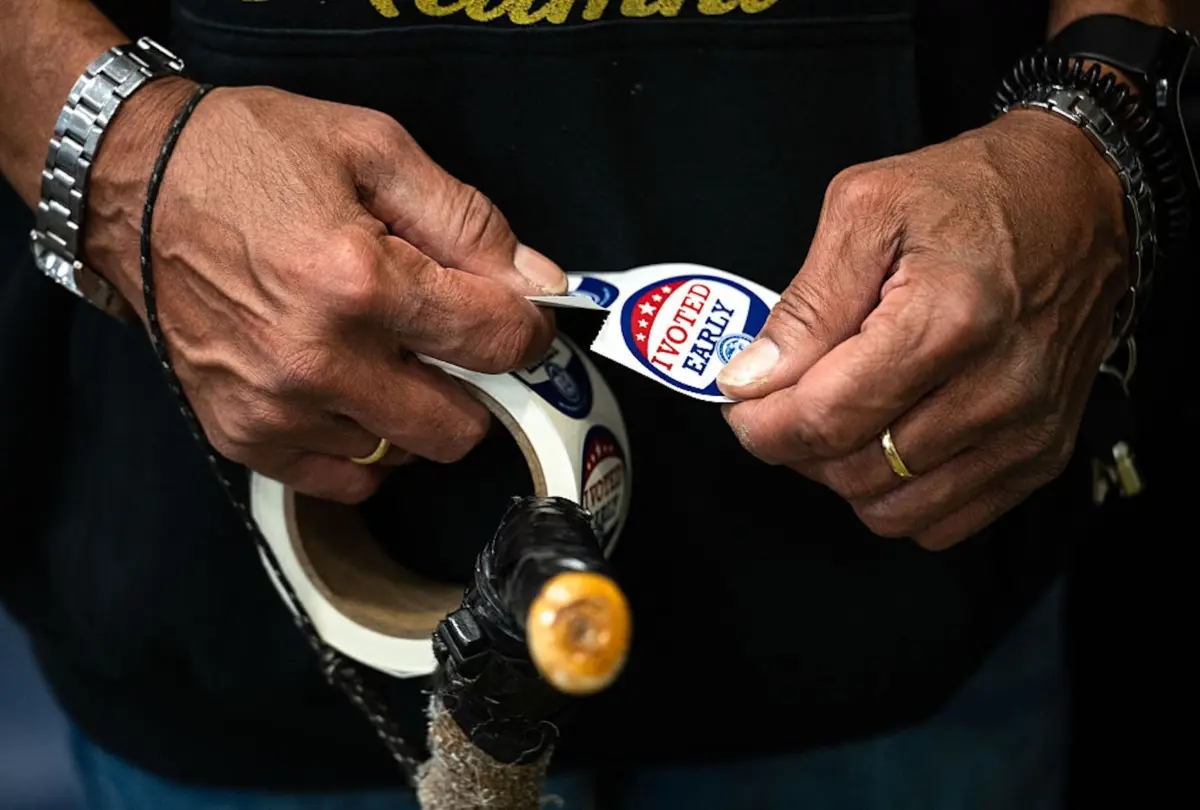
- October 2026: As early voting commenced, data analysis revealed that the expected drop-off in minority participation did not occur. Instead, early voting lines swelled with historic numbers of African American voters. Major outlets and data scientists began tracking anomalous turnout surges, particularly among younger demographics.
- Late October – November 3, 2026: High-profile political figures, including former presidents and national party leaders, flooded competitive Southern races. Senate and congressional contests in Mississippi, Louisiana, and South Carolina transitioned from safe Republican holds to dead-heat toss-ups, driven almost entirely by the late-stage early voting wave.
Supporting Context & Metrics: Unpacking the Data Behind the "Blacklash"
Behavioral economics offers a clear lens through which to view this political mobilization: loss aversion. Psychologically, the pain of losing a fundamental right is felt acutely—often twice as intensely as the anticipation of a political gain. When the Supreme Court and aligned state legislatures systematically dismantled decades-old voting protections, the resulting theft of civic agency produced an immediate, visceral backlash.
The empirical data emerging from the early voting period underscores this psychological drive:
- South Carolina: According to polling aggregates and early-vote metrics reported by The New York Times, Black voters accounted for approximately 28% of early votes cast by late October, despite making up roughly 20% of the overall electorate in recent election cycles. This disproportionate surge mirrors patterns observed in neighboring Georgia and North Carolina.
- Louisiana: Following a redistricting process that left the state with only a single majority-Black district despite a population that is roughly one-third African American, early voting turnout shattered expectations. Data shows that 34% of early votes were cast by Black Louisianans, propelling Democratic candidate Jamie Davis into a statistical dead heat with Republican opponent Julia Letlow for an open Senate seat.
- The Youth Factor: Unlike previous electoral cycles where older generations anchored minority turnout, demographic analysts emphasize that the 2026 surge is heavily propelled by young Black voters. This demographic views the rollback of civil rights not as a theoretical debate, but as a direct threat to their economic, social, and political futures.
- The Historical Parallel: Historians note deep parallels to the post-Civil War Reconstruction era. In the decade following the ratification of the 14th and 15th Amendments, Black Americans achieved unprecedented political representation—only to face a coordinated campaign of legal barriers, legislative disenfranchisement, and vigilante violence that established the Jim Crow era. Today’s electorate, conscious of this history, views current judicial and legislative rollbacks as a modern iteration of historical disenfranchisement.
Official Statements and Campaign Reactions
The unexpected tightening of races across the Deep South has forced both political parties to radically adjust their closing strategies in the final hours before Election Day.
In Mississippi, where former prosecutor and judge Scott Colom is mounting a fiercely competitive challenge against incumbent GOP Senator Cindy Hyde-Smith, national surrogates have descended on the state. Former President Barack Obama released a direct-to-voter endorsement ad praising Colom’s judicial background, while former President Bill Clinton and former Vice President Kamala Harris have made high-profile campaign stops.
Speaking to a packed community center in Jackson, MS, local civil rights organizer Marcus Vance addressed the energy on the ground:
"They thought that by dismantling the VRA in a courtroom, they could erase decades of progress with the stroke of a pen. They miscalculated. Our community understands what is at stake because we have read this history before. The lines outside these early voting precincts are not just about this midterm cycle; they are a declaration that our voices will not be legislated out of existence."
Conversely, Republican leadership has scrambled to deploy top-tier surrogates to shore up vulnerable incumbents. Former President Donald Trump made multiple emergency campaign swings through South Carolina to rescue the flailing campaign of Darline Graham—installed following the sudden passing of her brother, longtime Senator Lindsey Graham.
Addressing supporters at a rally in Charleston, SC, Republican National Committee spokespersons defended the party’s judicial appointments and legislative goals, framing the administration’s agenda as essential for restoring economic stability and border security. However, behind closed doors, GOP strategists have expressed growing anxiety that their aggressive judicial maneuvers have galvanized an opposition base that might otherwise have suffered from mid-term complacency.
Future Outlook: The Long-Term Implications for American Democracy
As the 2026 midterms draw to a close, the immediate question remains whether this monumental surge in early voting will translate into definitive electoral upsets on election night. Races in Mississippi, Louisiana, and South Carolina will serve as critical litmus tests for the viability of organizing against systemic electoral engineering.
Beyond individual Senate and House contests, the events of 2026 carry profound implications for the future of American jurisprudence and civil rights:
- Judicial Accountability: The severe backlash against the Supreme Court’s Callais decision may inject renewed urgency into national debates regarding court reform, ethical oversight, and the legislative codification of voting rights protections.
- Coalition Building: Democratic and independent strategists are being forced to reevaluate the Southern electorate. The data suggests that investing early resources into historically marginalized communities can fundamentally alter maps previously drawn to ensure single-party dominance.
- The Resilience of Democratic Norms: Ultimately, the 2026 midterms demonstrate that structural efforts to restrict the franchise can trigger an equal and opposite reaction among an informed, historically conscious electorate.
Whether the "Blacklash" results in historic congressional flips or merely serves as a powerful warning shot across the bow of the American political establishment, it has definitively proven that the fight for equal representation remains a defining, active pillar of modern civic life. As the final ballots are tallied, the message from Black America is clear, resounding, and historically grounded: enough is enough.
