

Executive Overview
For more than three decades, acclaimed documentarian Dawn Porter has trained her lens on the systemic fractures of the American legal system, interrogating structural racial inequality, the erosion of constitutional rights, and the immense, unchecked power of the state. Her catalog includes critical explorations of public defense in the American South, the systematic dismantling of reproductive healthcare access, and reverent biographical portraits of Supreme Court jurists and civil rights icons like John Lewis. Yet, with the release of her latest HBO documentary, When a Witness Recants, Porter confronts a harrowing narrative so profoundly distressing that she refuses to watch the completed film.
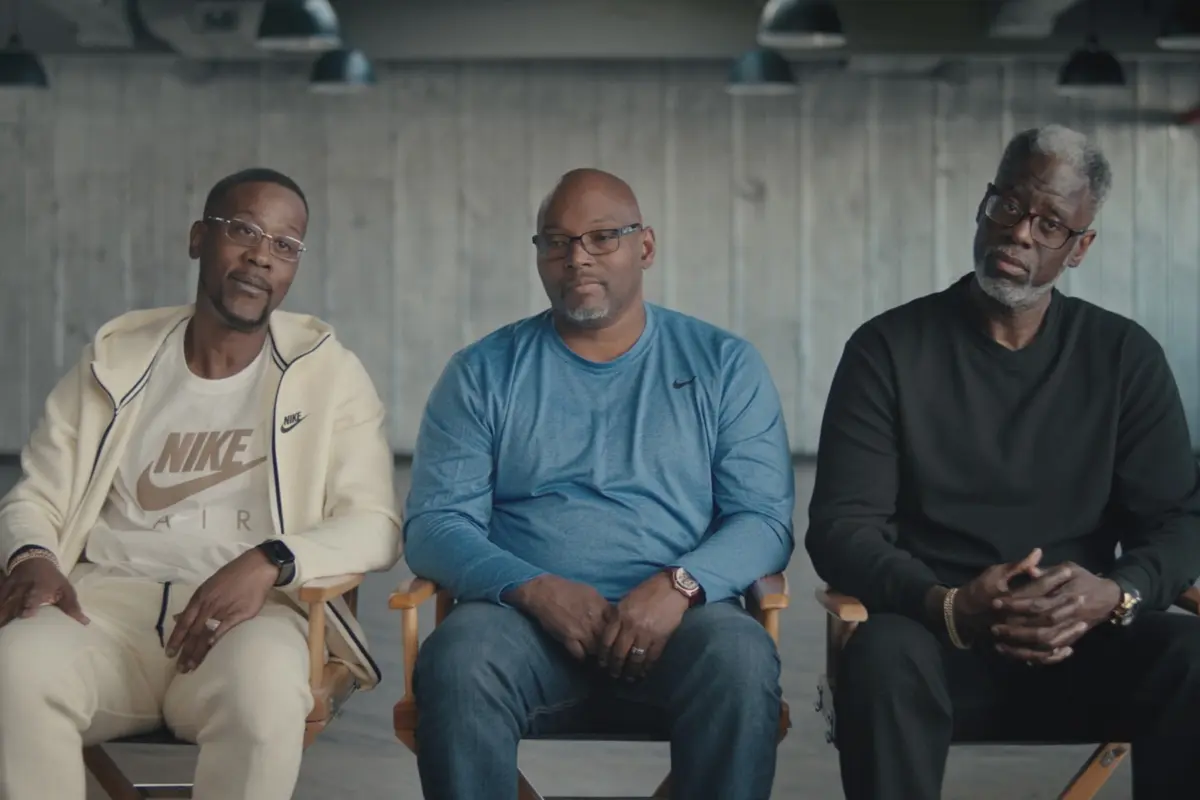
"I go through this cycle of getting really angry and sad and angry again," Porter shares. "Now that I know [these men], it’s even worse because they are three of the most honorable, kind, fun people. I just can’t take it. I get overcome with the injustice of it."
The documentary, adapted from Jennifer Gonnerman’s landmark 2021 New Yorker investigation of the same name, examines one of the most egregious miscarriages of justice in modern Maryland history. It chronicles the 1983 murder conviction and subsequent 36-year imprisonment of three innocent Baltimore teenagers: Alfred Chestnut, Ransom Watkins, and Andrew Stewart. Arrested at just 16 years old for a crime they did not commit, the trio spent decades behind bars before a tireless pursuit of the truth finally unraveled the state’s case. Through archival news broadcasts, striking animations, and raw first-person testimonies, When a Witness Recants exposes a chilling blueprint of police coercion, prosecutorial suppression, and judicial indifference—a systemic failure that robbed three young men of their youth, their families, and their fundamental liberty.
Detailed Chronology: The Fall and Rise of the Baltimore Three
November 18, 1983: The Tragic Incident
The roots of the catastrophe trace back to a chilly autumn afternoon inside the hallways of Harlem Park Junior High School in West Baltimore. On November 18, 1983, 14-year-old DeWitt Duckett was walking through the school corridors accompanied by two friends, Ron Bishop and Eddie Capers. According to the initial accounts provided by the terrified boys, a young man whom they only vaguely recognized stepped out from a deserted hallway and brandished a firearm.
The assailant demanded Duckett’s coat—a highly coveted navy-blue satin Georgetown jacket that had become a ubiquitous status symbol among urban youth at the time. After complying with the demand and handing over the jacket, Bishop and Capers fled for their lives. Moments later, the gunman shot Duckett in the neck. The teenager later succumbed to his injuries at a local hospital.
The tragedy sent shockwaves through a grieving West Baltimore community desperate for accountability. Under immense public pressure to deliver swift retribution, the Baltimore Police Department launched an aggressive, hurried investigation that bypassed thorough police work in favor of a fast-tracked narrative.
May 1984: Arrest, Coercion, and Conviction
Led by Baltimore Police Department Detective Donald Kincaid, the investigation zeroed in on Alfred Chestnut, Ransom Watkins, and Andrew Stewart within eight days of the shooting. All three were 16-year-old sophomores with no prior records or violent inclinations.
According to revelations later brought to light in the documentary, the acquisition of the state’s case relied entirely on psychological coercion and systemic manipulation. When Ron Bishop was initially interviewed by authorities, he stated unequivocally that the lone shooter was acting by himself. However, both Bishop and Capers now testify in the documentary that Detective Kincaid subjected them to aggressive interrogations without the presence of a parent, legal guardian, or attorney. Under implicit and explicit threats that they would be charged with the murder themselves if they did not cooperate, the young witnesses were coerced into falsely pointing the finger at Chestnut, Watkins, and Stewart.
The pattern of manipulation extended directly to the suspects. "I lived right across the street from the Western District Police Station, so they ain’t had to go far to come get me. They just walked across the street and took me out of my bed," Chestnut recalls. "The next day was Thanksgiving, so the first thing they asked all three of us was, ‘Do you want your mother to bring you a Thanksgiving plate?’ That was the worst [memory] for me."
Impoverished family backgrounds meant that neither Chestnut, Watkins, nor Stewart could afford private legal representation or post-arrest bail. They languished in adult pre-trial detention facilities until their trial commenced. During the proceedings, their defense attorney, Barry Diamond, found himself routinely stonewalled. Judge Robert Bell permitted the prosecution to suppress critical exculpatory evidence.
Chief among the suppressed evidence was a receipt provided by Chestnut’s mother, which proved she had legally purchased the very same "Georgetown" jacket allegedly recovered from Chestnut’s home. Furthermore, multiple neighborhood witnesses approached police to report that another teenager had been overheard boasting about committing the murder. Their testimonies were deliberately discarded. Denied a fair trial and tried as adults, Chestnut, Watkins, and Stewart were convicted of murder on May 28, 1984, and sentenced to life imprisonment.
Supporting Context & Metrics: The Mechanics of Wrongful Conviction
The Cost of Maintaining Innocence
For three and a half decades, the men endured the psychological torture of maximum-security incarceration while consistently maintaining their innocence. This stance carried a heavy institutional penalty: because they refused to admit guilt, the state parole board repeatedly denied their release.
Prison officials routinely offered the men deals, encouraging them to secure their freedom by implicating one another. When asked whether they were ever tempted to break under this pressure, Stewart, Watkins, and Chestnut respond with unhesitating, uniform solidarity: "No."

"We grew up in the dirt together. We played together. We fought together," Stewart reflects. "You couldn’t separate us because of a parole hearing or what police said. I told my mother I might die in prison because I’m never going to that parole board and telling them Alfred or Ransom committed a crime I know they didn’t commit."
The 36-Year Battle for Exoneration
The tide finally turned due to the relentless, unyielding efforts of Alfred Chestnut. Across decades of confinement, Chestnut penned letter after letter to the Baltimore Police Department, requesting access to the closed investigative files. Each request was systematically denied.
Eventually, Chestnut bypassed local channels and sent a direct appeal to then-State’s Attorney Marilyn Mosby, petitioning for a comprehensive review. Mosby referred the case to Lauren Lipscomb, the lead prosecutor heading Baltimore’s newly established Conviction Integrity Unit (CIU).
Upon auditing the original archive, investigators uncovered what had been hidden for 36 years: meticulous documentation proving that prosecutors and investigators had deliberately withheld vital exculpatory evidence from the defense. On November 25, 2019, a Baltimore circuit judge officially vacated the convictions of Chestnut, Watkins, and Stewart, restoring their freedom after 14,000 days behind bars.
Official Statements and Perspectives
The genesis of When a Witness Recants required immense sensitivity and trust. When the men were exonerated in 2019, they were immediately besieged by entertainment executives and media conglomerates hoping to capitalize on their trauma. It required a deliberate, empathetic approach from Dawn Porter and Pulitzer Prize-nominated writer and journalist Ta-Nehisi Coates—whose wife, Kenyatta Matthews, served as an executive producer on the project—to convince the trio that their story would be handled with ethical integrity.
Coates, a Baltimore native who appears in the documentary, noted that his initial meeting with the men revealed a deep, unhealed well of anguish. "It was very important to convince them that we understood their pain, that they could trust us, and that we felt the story on a deep level," Coates explains. "Their [arrests] were a systemic failing at a point when our communities were at their most vulnerable. It’s despicable."
For the survivors, the documentary serves not only as a record of personal survival, but as an indictment of municipal apathy. "What could have been Alfred’s life? What was Ransom’s goals, aspirations? What was [mine]?" Stewart laments. "Nobody sat down and said, ‘Wait a minute, this don’t feel right.’"
Future Outlook: Accountability and the Ongoing Fight for Justice
Following their exoneration, Stewart, Watkins, and Chestnut filed a historic civil rights lawsuit in 2020 against the Baltimore Police Department and Detective Kincaid, citing malicious prosecution, evidence suppression, and coerced witness testimony. The litigation culminated in a historic $48 million settlement with the city of Baltimore.
Yet, as all three men emphasize, financial restitution cannot retroactively manufacture a stolen youth, nor can it resurrect deceased family members whose funerals they missed while locked behind prison walls. The transition back into a modernized society—one that transformed entirely during their absence—remains a daily psychological battlefield.
"We babies in this world. We’re taking our time trying to adjust," Chestnut admits. "I’m thankful each and every day for all three of us. And I hope people [are] mindful and [know] anybody could be in this same situation. Life is precious. Freedom is precious. Don’t take it for granted."
Director Dawn Porter hopes that viewers of When a Witness Recants look past the surface-level tragedy and recognize the systemic complacency that allows carceral injustice to flourish unchecked.
"When you talk about the power of the state, it’s hard to see it, and this was such a clear example of what that incredible power can do," Porter concludes. "Unfortunately, [Kincaid’s] role in this is all too familiar. But it wasn’t just him. The prosecutor didn’t have to suppress those documents. The judge didn’t have to seal those records without looking at them. I’ve done a number of films about wrongful incarcerations, and it’s hard to illustrate how people are victimized. But here it’s clear as day what happened."
