

Executive Overview
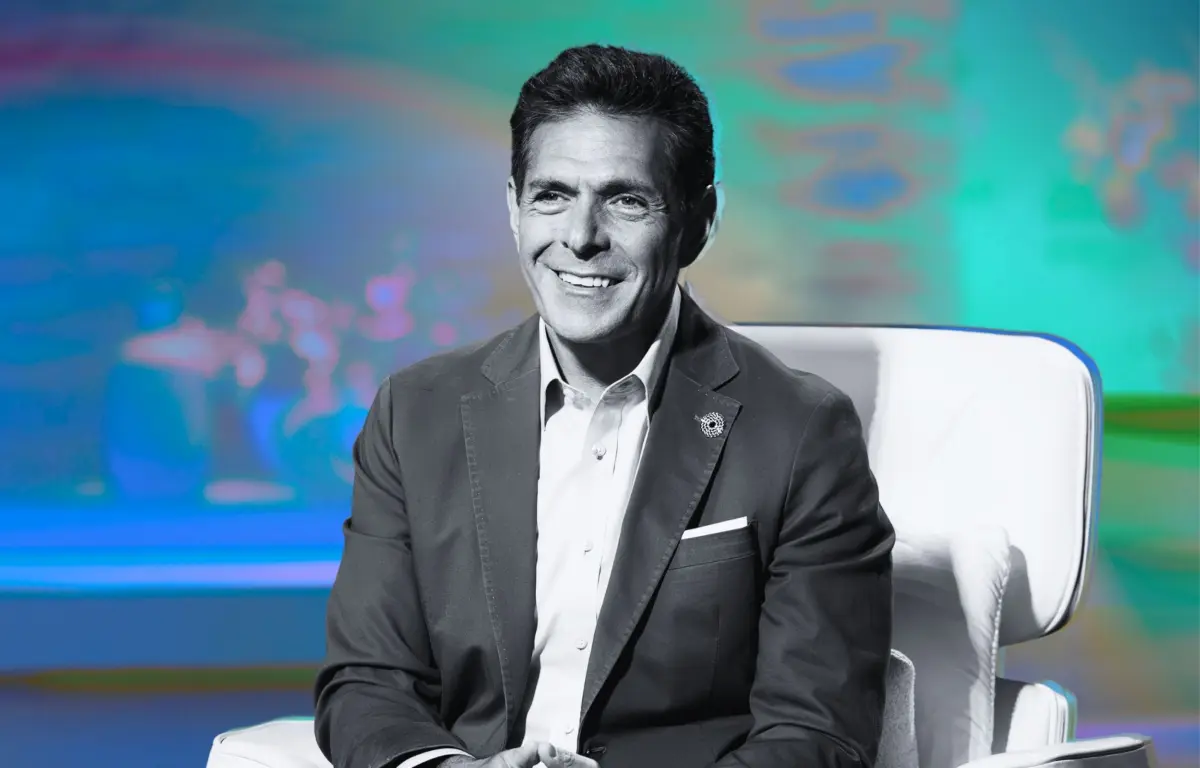
In the high-stakes theater of modern entrepreneurship, the line between visionary dedication and self-destruction is razor-thin. For Daniel Lubetzky, billionaire founder of Kind Snacks and prominent investor on ABC’s Shark Tank, that line was crossed long ago during the grueling foundational years of building his multi-billion-dollar empire. Operating on a meager four to five hours of sleep a night, sacrificing basic human necessities like sunlight and physical exercise, Lubetzky pushed himself to a physical and mental brink. He famously recalls looking like a "phantom raccoon" in the mirror—a stark, exhausted reflection of a relentless work ethic that threatened to consume him entirely.
Today, years after orchestrating the monumental $5 billion sale of Kind Snacks to Mars in 2020, Lubetzky is on a mission to reshape how modern founders approach their careers. In an era turbocharged by artificial intelligence—where digital tools keep creators plugged into their work twenty-four hours a day, seven days a week—the risk of burnout has never been higher. Lubetzky’s philosophy is clear: entrepreneurship is a marathon, not a sprint. To build a lasting enterprise, founders must learn to disconnect, step away from the endless stream of digital inputs, and reclaim control over their time and attention.
Detailed Chronology: From Garage Ambitions to a $5 Billion Empire
To understand Daniel Lubetzky’s warnings about burnout, one must first look at the trajectory that forged them. Long before he was sitting on the celebrity panel of Shark Tank or advising the next generation of unicorn founders, Lubetzky was an immigrant entrepreneur with a bold idea and very few safety nets.
The Early Grinds of Kind Snacks
When Lubetzky founded Kind Snacks in 2004, the healthy snack market was a fraction of what it is today. Consumers were accustomed to either chalky, unpalatable health bars or sugary confectionery disguised as wellness food. Lubetzky envisioned something radically different: transparent packaging that showed whole nuts and fruits, paired with a commitment to socially conscious business practices—the "Kind" philosophy.
However, turning that vision into reality demanded an extraordinary toll. In the nascent stages of the company, Lubetzky wore every conceivable hat. He managed manufacturing logistics, pitched skeptical retailers, oversaw marketing, and handled day-to-day operations. Like many first-time founders, he operated under the dangerous assumption that more hours equaled more success.
Sleep became an afterthought. Personal relationships were sidelined. Fitness and outdoor activity were traded for fluorescent office lighting and endless spreadsheets. By his own admission, this hyper-fixation was unsustainable, pushing his body and mind to dangerous limits. Yet, because the company was growing, the dangerous lifestyle was romanticized by both investors and peers—a toxic badge of honor in the startup ecosystem.
The Turning Point and the $5 Billion Exit
The relentless pace continued for years, but wisdom arrived alongside scale. As Kind Snacks matured into a household name and secured institutional backing, Lubetzky began to realize that true leadership required delegation, pacing, and personal preservation. He recognized that if he collapsed, the company would falter with him.
By pacing himself more strategically and empowering a world-class executive team, Lubetzky helped steer Kind toward unprecedented heights. In 2020, the milestone moment arrived: confectionery giant Mars acquired a majority stake in Kind Snacks, valuing the company at a staggering $5 billion.
Rather than riding off into the sunset to live a life of total leisure, Lubetzky pivoted his considerable capital and expertise toward mentorship, venture investing, and philanthropy—most notably through his role on Shark Tank and initiatives like Camino Partners and Starts With Us. Having survived the crucible of extreme startup scaling, he now uses his platform to warn others about the hidden dangers of the founder’s trap.
Supporting Context & Metrics: The Modern Founder’s Dilemma in the Age of AI
Lubetzky’s cautionary tales are more relevant today than at any point in business history. The contemporary entrepreneurial landscape is shaped by structural shifts that make overwork not just a personal failing, but a systemic hazard.
The Double-Edged Sword of Artificial Intelligence
We have officially entered the AI era, a paradigm shift that demands a completely new leadership playbook. Artificial intelligence offers founders unprecedented leverage. Tasks that once required entire departments—market research, initial code generation, customer service triage, and financial modeling—can now be executed in seconds by a single person using advanced language models and automated workflows.
While this drastically lowers the barrier to entry for startups, it creates a profound psychological trap. Because AI tools are perpetually accessible, founders feel an invisible pressure to match the velocity of their technology. If an AI agent can work 24/7, the human operator often feels compelled to do the same.
Instead of freeing up time for rest and strategic thinking, AI has frequently resulted in founders packing their schedules even tighter, juggling multiple simultaneous projects, and eroding the boundaries between work and personal life. The result is an unprecedented wave of digital fatigue.
The Overload of Modern Inputs
In his recent commentary, Lubetzky highlighted a core biological mismatch in modern work culture: the staggering imbalance between information intake and mental processing.
"The amount of inputs we’re throwing into our bodies is so much greater than the amount of processing of those inputs," Lubetzky observed. "Increase your digestion rate instead of just input, input."
Every day, the average founder is subjected to thousands of micro-interactions: Slack messages, email notifications, LinkedIn alerts, real-time analytics dashboards, and news updates. The human brain was never evolved to process this unrelenting flood of data. When founders fail to create periods of absolute quiet, their cognitive capacity diminishes, leading to poor decision-making, emotional volatility, and, ultimately, total burnout.
Official Insights: Lubetzky’s Framework for Avoiding Burnout
To combat the epidemic of founder burnout, Daniel Lubetzky has outlined a practical, actionable playbook. These are not grand, abstract wellness retreats, but micro-habits designed to help high-achieving professionals regain sovereignty over their minds and schedules.
1. Embrace the "Marathon, Not a Sprint" Mindset
Lubetzky is quick to acknowledge that early-stage startups require intense bursts of energy. There will be weeks when a crisis demands twenty-hour days or weekend problem-solving. However, he warns against normalizing this crisis mode as a permanent operating state.
"You have to work hard, but you need to find the balance between working hard and also reminding yourself that it’s a marathon, it’s not a sprint," Lubetzky advises. Founders who treat every month like a do-or-die sprint inevitably burn out right before their company reaches the scale where their leadership is most critical.
2. Schedule Unapologetic Micro-Breaks
During his most demanding years at Kind, Lubetzky discovered the therapeutic power of strategic pauses. Even amidst crushing deadlines, he would occasionally carve out an entire morning to completely step away from the business.
These were not vacations; they were mental reset buttons. Taking a single morning or afternoon off to decompress allowed him to return to the office with renewed clarity and emotional resilience. Founders must learn to view rest not as a reward to be earned after success, but as a mandatory operational requirement for achieving success.
3. Practice Radical Disconnection
Being "away from the desk" is not the same as being disconnected. Lubetzky urges founders to schedule blocks of time where they completely sever ties with technology and work-related thoughts.
This means engaging in analog activities with zero digital intrusion:
- Taking a walk in nature without a smartphone in hand.
- Practicing meditation or deep-breathing exercises.
- Taking a shower or eating a meal without background audio, podcasts, or screens.
- Sitting in absolute silence with no agenda or productivity goals.
These moments of apparent "unproductivity" are precisely when the brain processes complex information, connects disparate ideas, and solves the intractable problems that stumped the conscious mind during frantic work sessions.
4. Declare War on Notifications
Perhaps Lubetzky’s most tactical and immediate piece of advice centers on the psychological hijacking executed by modern software applications. Apps are intentionally engineered with variable reward loops designed to draw users back dozens—if not hundreds—of times a day.
"Turn off all of your notifications," Lubetzky urges. "Regain control over your lives by deciding when you want to check and don’t check 3,000 times a day."
By disabling push notifications for email, social media, and chat applications, founders transition from a reactive state (constantly responding to stimuli dictated by others) to a proactive state (intentionally carving out windows to check messages on their own terms). This simple behavioral shift dramatically lowers cortisol levels and preserves fragmented attention spans.
Future Outlook: Redefining Success in the Next Generation of Entrepreneurship
As we look toward the future of the global economy, the cultural narrative surrounding work is undergoing a seismic shift. The romanticization of the "hustle culture"—where sleep deprivation, social isolation, and chronic stress were worn like badges of honor—is rapidly losing credibility.
Visionary leaders like Daniel Lubetzky are paving the way for a healthier, more sustainable brand of capitalism. The next generation of unicorn founders is learning that longevity is a competitive advantage. Companies led by balanced, self-aware executives are inherently more stable, foster healthier workplace cultures, and attract top-tier talent who refuse to work in toxic, high-pressure environments.
Furthermore, as artificial intelligence continues to accelerate the pace of business, the ability for human leaders to cultivate deep focus, emotional intelligence, and mental stamina will become the ultimate differentiator. Algorithms can process data and execute repetitive tasks, but they cannot replace human judgment, resilience, and vision.
Daniel Lubetzky’s journey from a sleep-deprived "phantom raccoon" building Kind Snacks to a billionaire investor championing mental well-being serves as both a cautionary tale and an inspiring roadmap. For founders navigating the turbulent waters of the modern economy, his message is clear: protect your mind, master your time, and remember that the greatest asset you will ever bring to your enterprise is a healthy, grounded self.