

Executive Overview
As the autumn air gives way to the first biting frosts of winter, Madison Avenue and global marketing hubs have officially unleashed their most critical campaigns of the fiscal year. The fourth-quarter holiday advertising blitz is no longer merely a seasonal tradition; it is a high-stakes, multi-billion-dollar economic engine designed to capture consumer wallets amid tightening discretionary spending, inflationary pressures, and fragmented media consumption.
A comprehensive review of the latest slate of commercial releases reveals a distinct bifurcation in modern marketing strategies. On one side, legacy powerhouses and agile disruptors alike are leaning heavily into the magnetic pull of A-list celebrity endorsements. From pop music royalty and Hollywood heavyweights to elite athletes and charismatic character revivals, brands are buying instant cultural relevance to cut through the digital noise. Seldom have we seen such a dense concentration of star power deployed simultaneously, featuring heavyweights like Selena Gomez, Tate McRae, Channing Tatum, Alan Cumming, and Jude Bellingham.
Conversely, a parallel movement is redefining festive advertising through deeply emotional, high-craft cinematic narratives. Rather than relying solely on recognizable faces, brands such as Apple, Levi’s, Canva, and Visit Iceland are utilizing sophisticated storytelling, advanced technological capabilities, platform-specific utility demonstrations, and whimsical character design to forge authentic emotional connections with global audiences.
This report provides a rigorous, deep-dive analysis of the current Q4 advertising landscape. We examine the specific strategic alignments driving these campaigns, dissect the shifting mechanics of modern celebrity partnerships, evaluate the integration of cutting-edge production technologies, and project how these high-profile creative investments will shape consumer behavior through the end of the year and into the economic horizon of 2025.
Detailed Chronology: The Anatomy of the Q4 Campaign Rollout
The deployment of holiday advertising is a meticulously timed choreography. It begins as a localized trickle in early October before expanding into a global deluge by November, perfectly timed to coincide with Black Friday, Cyber Monday, Diwali, Hanukkah, and the lead-up to Christmas.
Phase One: Cultural Synergy and Star Power
The opening salvo of the holiday season has been characterized by an unprecedented mobilization of celebrity equity. Brands are moving past traditional, passive endorsement deals, opting instead for fully integrated narrative spots where stars embody the ethos of the brand.
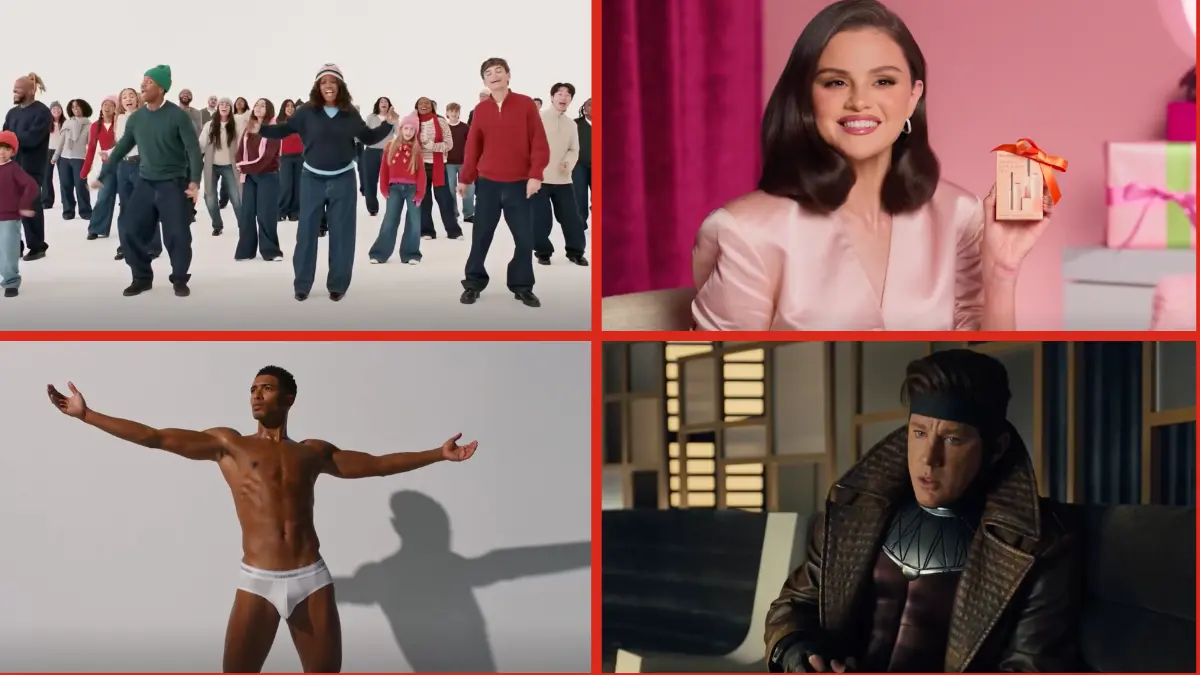
- Ulta Beauty’s Dual-Threat Pop Synergy: Ulta Beauty opened its seasonal playbook by bridging two generations of pop music royalty. Pairing global superstar Selena Gomez—whose rare beauty brand continues to dominate retail metrics—with rising pop sensation Tate McRae, Ulta crafted a high-energy spot designed to capture Gen Z and Millennial demographics simultaneously. The chronology of this campaign launch mirrors the acceleration of digital-first retail, dropping concurrently across TikTok, Instagram Reels, and linear broadcast during high-rated programming blocks.
- Dunkin’s Nostalgic and Pop-Culture Gambit: In one of the most unexpected crossovers of the quarter, Dunkin’ enlisted Channing Tatum to reprise his unmade, highly anticipated cinematic role as Marvel’s Gambit. By leveraging fan-service nostalgia and comic book culture, Dunkin’ successfully hijacked digital news cycles, proving that quick-service restaurant (QSR) brands can successfully play in the high-concept entertainment sandbox.
- The Theatricality of e.l.f. and Calvin Klein: Meanwhile, e.l.f. Cosmetics tapped the theatrical prowess of Emmy-winning actor Alan Cumming to narrate an intricate, animated holiday spot that leans into whimsy and high-fantasy aesthetics. Simultaneously, Calvin Klein stripped away the festive clutter entirely, opting for minimalist, high-impact sex appeal by featuring international football icon Jude Bellingham in a stripped-down campaign that immediately set social media metrics ablaze.
Phase Two: Cultural Diversity and Craft Cinematic
While Western markets lean into celebrity-heavy campaigns, global brands are simultaneously launching sophisticated, culturally resonant projects that celebrate diverse holiday traditions.
- Apple’s Diwali Masterclass: Apple carved out a distinct temporal and cultural space by releasing a breathtakingly choreographed, emotionally resonant film celebrating Diwali, the Festival of Lights. True to Apple’s ongoing marketing innovation, the entire piece was shot entirely on iPhone, serving as both a heartwarming holiday narrative and a staggering technical demonstration of mobile cinematography capabilities.
- Whimsy and Workplace Satire: Rounding out the mid-tier chronological rollout, denim titan Levi’s introduced audiences to "Gus the Yeti"—a lovable, tactile character that infuses classic heritage branding with modern family-friendly storytelling. Meanwhile, design platform Canva demystified graphic design through relatable, everyday utility narratives, and Visit Iceland deployed deadpan, brilliant workplace satire with a spot titled “Sits in on a meeting so you don’t have to,” proving that corporate fatigue is a universally humorous touchpoint.
Supporting Context & Metrics: The Economics of the Holiday Ad Spend
To understand why brands are deploying such staggering resources into these Q4 campaigns, one must examine the macroeconomic environment and the underlying media consumption metrics governing the fourth quarter.
The Stakes of Q4 for Global Retail
For the retail, beauty, technology, and QSR sectors, the final quarter of the year routinely accounts for 20% to 40% of annual sales. However, analysts note that consumer confidence heading into the final stretch of the year remains fragile, buffeted by lingering cost-of-living concerns and shifting employment metrics. Consequently, brand marketing must work harder than ever to justify premium pricing and incentivize early spending.
| Brand / Campaign | Primary Medium / Platform | Strategic Focus / Demographic | Key Asset / Talent |
|---|---|---|---|
| Ulta Beauty | Omnichannel (Digital + Linear) | Gen Z / Millennials | Selena Gomez & Tate McRae |
| Dunkin’ | Social-First / Digital Video | Pop Culture / Gen Z & Millennials | Channing Tatum (as Gambit) |
| Apple | Global Film / Digital / Mobile | Cultural Festivity (Diwali) | Shot on iPhone (Cinematic) |
| Calvin Klein | Global Digital / OOH / Social | Luxury / Young Adults / Fitness | Jude Bellingham |
| Levi’s | Broadcast / Cinema / Social | Family / Heritage / Whimsy | Gus the Yeti |
| Visit Iceland | Digital / Social-First | Tourism / B2C / Humor | Workplace Satire Concept |
The ROI of A-List Endorsements vs. Organic Craft
The financial investment required to secure talent of the caliber seen this season—ranging from Jude Bellingham to Selena Gomez—runs into the tens of millions of dollars when factoring in talent fees, global media buys, and localized adaptations. Yet, data suggests that celebrity-driven spots generate immediate earned media value (EMV) that traditional campaigns struggle to replicate.
According to recent media intelligence reports, campaigns featuring recognizable cultural icons see an average lift of 35% in early-stage social media engagement compared to anonymous-cast alternatives. However, industry insiders note a crucial caveat: consumer fatigue is real. Modern audiences—particularly younger cohorts—possess an acute radar for inauthentic cash grabs. This explains why brands are coupling high-profile stars with narrative subversion (such as Channing Tatum’s comedic superhero turn) or deep emotional resonance (such as Apple’s technical showcase).
Official Statements and Industry Insights
The creative and strategic rationale behind this quarter’s blockbuster campaigns reflects a profound shift in how marketing executives view the modern consumer journey. Industry leaders have increasingly spoken on the necessity of blending emotional resonance with undeniable cultural cachet.
While specific financial terms of these global partnerships remain closely guarded proprietary information, creative directors and brand executives have shared vital perspectives on the shifting paradigms of modern advertising:
"In an era where consumers possess the tools to instantly skip, block, or ignore advertisements, the traditional interruption model is dead. To win the holiday season, brands cannot simply shout louder; they must become part of the cultural conversation. Whether that is through the magnetic pull of an icon like Selena Gomez or Jude Bellingham, or through the breathtaking craft of a cinematic narrative shot on our devices, the currency of modern marketing is undeniable relevance."
— Senior Brand Marketing Strategist (Speaking on condition of anonymity regarding tech-sector ad deployments)
Furthermore, creative agencies behind this season’s breakout hits emphasize the importance of multi-platform adaptability. A campaign spot can no longer be designed solely for a 30-second television broadcast slot during a prime-time sitcom or sports broadcast. It must be modular—capable of being deconstructed into 6-second bumper ads for YouTube, vertical 9:16 aspect ratios for TikTok and Instagram Reels, interactive elements for retail apps, and high-resolution out-of-home (OOH) billboards in major metropolitan centers worldwide.
Future Outlook: What This Means for 2025 and Beyond
As the holiday season reaches its crescendo and Q4 financial results begin to crystallize, the lessons learned from this year’s commercial blitz will decisively shape marketing strategies for the coming year.
1. The Elevation of "Entertainment-First" Advertising
The boundary between advertising and pure entertainment is continuing to dissolve. Campaigns like Dunkin’s superhero-infused spot with Channing Tatum and e.l.f.’s animated theatricality prove that consumers are increasingly willing to consume advertisements voluntarily if they offer genuine entertainment value. Moving into 2025, expect brands to increasingly function as production studios, investing in longer-form narrative content, character IPs (such as Levi’s Gus the Yeti), and high-concept collaborations.
2. The Democratization of Production vs. High-End Gloss
The industry is experiencing a fascinating two-track future. On one track, we see ultra-high-budget productions featuring global icons and Hollywood-grade visual effects. On the opposing track, campaigns like Apple’s Diwali film—proudly highlighting that it was "Shot on iPhone"—validate the democratization of content creation. Brands will increasingly look to balance blockbuster celebrity endorsements with authentic, user-generated-style aesthetics that resonate with audiences seeking radical transparency and relatability.
3. Precision Targeting and Cultural Nuance
As global markets become more interconnected yet fiercely localized, blanket advertising campaigns are rapidly losing efficacy. The success of Apple’s Diwali celebration and Visit Iceland’s hyper-specific workplace humor demonstrates that cultural specificity and localized wit drive superior engagement. In 2025, successful global brands will hyper-localize their seasonal marketing, aligning their messaging with regional festivals, distinct cultural touchpoints, and localized humor rather than relying on a homogenized global message.
Final Conclusion
The Q4 holiday advertising landscape of this year serves as a masterclass in modern brand stewardship. By pairing the undeniable pull of major cultural icons—from music charts to football pitches—with sophisticated technological execution and emotional storytelling, brands have successfully navigated a complex economic climate. As these campaigns transition from screens to sales counters, they will not only define the success of the current holiday shopping season but also establish the creative benchmarks for the entire advertising industry in the year ahead.