

Executive Overview
The contemporary landscape of American culture, politics, and media has reached a volatile convergence point, marked by unprecedented institutional friction. Across the political spectrum, the entertainment industry, and traditional newsrooms, long-standing norms are being challenged, restructured, or outright upended.
At the center of this transformation is a pervasive tension between traditional authority and populist disruption. Whether examining the federal government’s ongoing clashes with cultural institutions, the sweeping systemic overhauls at legacy television networks, or the cascading ethical challenges introduced by viral media and artificial intelligence, the modern information ecosystem is shifting rapidly.
This report examines several defining developments shaping the national conversation:
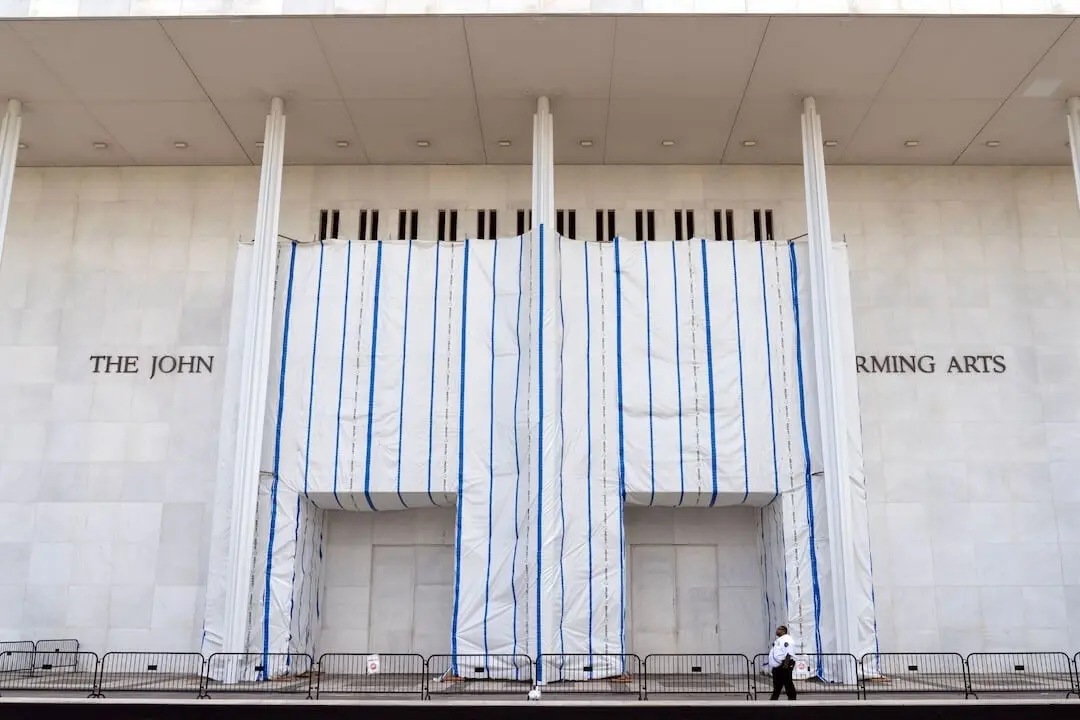
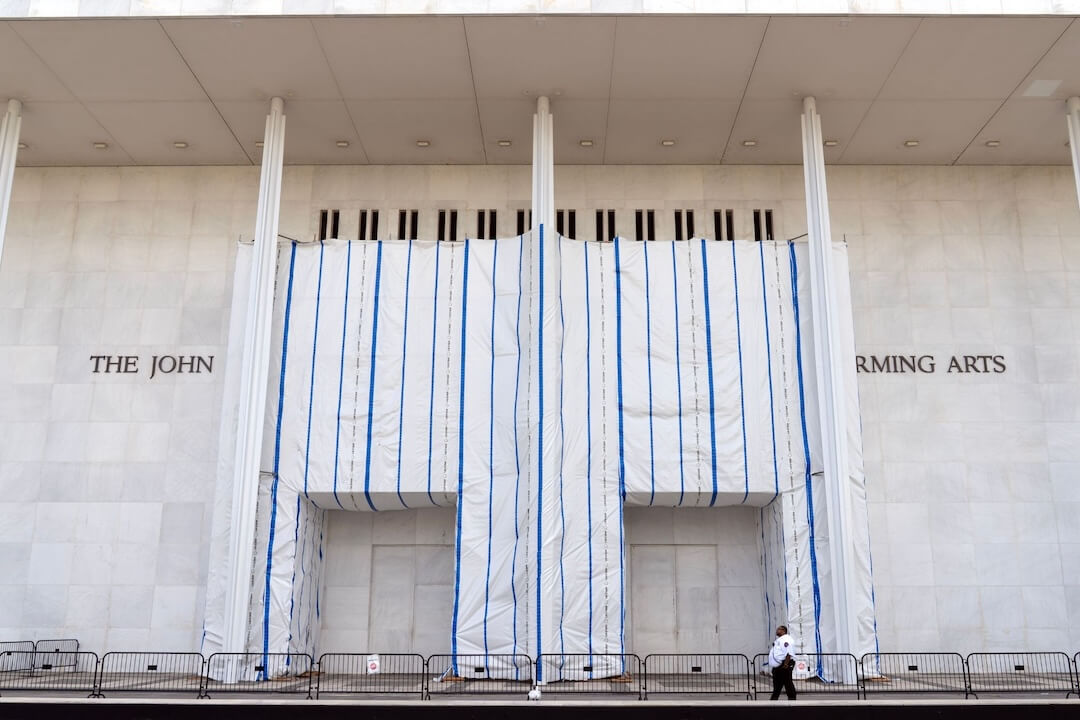
- The escalating standoff between the Trump administration and the board of the John F. Kennedy Center for the Performing Arts.
- The tumultuous debut of CBS News’ revamped 60 Minutes amid steep ratings declines.
- The quantifiable dominance of the NFL over political counter-programming.
- The strategic revival of The New York Times’ iconic "Media Equation" column under incoming writer Michael Hirschorn.
- A poignant moment of human empathy at the 78th Emmy Awards involving actress Allison Janney and Today show co-host Savannah Guthrie.
- A cautionary viral controversy in college sports involving Texas quarterback Arch Manning, ESPN reporter Holly Rowe, and the accelerating dangers of AI-generated media.
Together, these events illustrate a media and political climate where boundaries are continually pushed, forcing journalists, public figures, and citizens alike to re-evaluate the rules of public engagement.
Detailed Chronology: The Kennedy Center Standoff
The ongoing battle over the identity and governance of the John F. Kennedy Center for the Performing Arts reached a critical inflection point on Tuesday, when a federal judge issued a definitive ruling blocking the inclusion of President Donald Trump’s name on the national memorial’s facade.
A Repeated Legal Rebuttal
U.S. District Judge Christopher Cooper firmly reiterated a position he had established three months prior, ruling that the Kennedy Center’s Board of Trustees had acted illegally when it voted to affix Trump’s name to the institution.
In his written opinion, Judge Cooper did not mince words:
"Simply put, Defendants cannot install memorials for President Trump or anyone or anything else at the Kennedy Center without Congress’s blessing. The board resolution bucks a federal court order and a statute Congress enacted."
The legal dispute stems from executive and administrative efforts to rename or honor political figures across prominent federal landmarks—a trend that critics argue politicizes spaces designated as bipartisan national memorials.
Retaliation, Renovations, and a Volatile Phone Call
Following Judge Cooper’s ruling, the Kennedy Center board executed an abrupt about-face, voting to close the world-renowned performing arts facility immediately for extensive renovations, citing hazardous conditions within the current structure. The proposed $257 million renovation project, however, was quickly weaponized in a high-stakes political standoff.
President Trump made it clear on social media and behind closed doors that the massive capital improvement project was contingent upon his legal victory. In a post on Truth Social, Trump wrote:
"If the ruling is a negative one, which it should not be, and is not overturned by the U.S. Supreme Court, the Reconstruction and the Renovation of The Kennedy Center will not take place."
Reports from CNN shed light on the intense internal panic preceding the board’s closure vote. According to multiple sources, President Trump dialed into a tense board meeting to berate Democratic Representative Joyce Beatty of Ohio, who serves on the panel.
Insiders described the exchange as explosive. One source characterized the confrontation as "(expletive) crazy," detailing how Trump screamed at Rep. Beatty, blaming her and Democratic legal challenges for the institution’s impending downfall. Rep. Beatty fired back, asserting that the administration’s policies and legal maneuvers had driven the Kennedy Center into deep financial debt.
Political Repercussions
In a formal public statement following the ordeal, Rep. Beatty did not pull punches:
"President Trump is holding the Kennedy Center hostage unless he can put his name on this sacred memorial. The Court just rejected this proposal for the second time. This unlawfulness is as breathtaking as it is wrong, and it needs to stop."
As legal teams weigh potential appeals to the Supreme Court, one of America’s most prestigious cultural repositories remains caught in the crosshairs of a bitter partisan feud, leaving its physical upkeep and cultural mission in profound jeopardy.
Supporting Context & Metrics: Ratings Realities and Political Counter-Programming
While cultural battlegrounds dominate Washington, the media industry is grappling with stark quantitative realities, particularly regarding television viewership, demographic shifts, and the absolute dominance of live sports.
The 60 Minutes Season Premiere Slump
Sunday night marked the season premiere of CBS’s legendary investigative newsmagazine, 60 Minutes. However, the debut numbers were far from celebratory. Nielsen data revealed that viewership plummeted 21% compared to the previous season’s opener, pulling in 7.9 million total viewers down from 10.3 million a year prior. This represents one of the lowest-rated season debuts in the program’s illustrious history.
The sluggish numbers arrived on the heels of a turbulent summer at CBS News. Under the direction of newly appointed, highly controversial editor-in-chief Bari Weiss, the network implemented a dramatic restructuring of the program. These changes included the dismissal of the long-standing executive producer—replaced by an industry outsider with no television news background—as well as the departure of several veteran correspondents and the recruitment of a conservative New York Times opinion writer as a headline correspondent.
Despite featuring a compelling slate of stories—including an exclusive on the rescue of an Air Force pilot shot down over Iran, a hidden-camera investigation into presidential pardons, and a feature on the NFL’s Los Angeles Rams—the show struggled to retain its audience.
Media analysts point to structural hurdles as well. Stephen Battaglio of the Los Angeles Times noted that the program’s lead-in audience suffered from lower-than-average NFL afternoon ratings. Furthermore, a late start time of 7:48 p.m. Eastern meant that the final two quarters of 60 Minutes went head-to-head with NBC’s Sunday Night Football, television’s most-watched weekly program, causing viewership to dip to 6 million by the final quarter-hour.
The GOP Midterm Convention vs. The NFL
A similar collision between politics and sports played out on a grander scale during the Republican Party’s two-night midterm convention.
The opening night featured a nearly two-hour address by Donald Trump. Despite warnings from political strategists regarding the poor timing, the event went head-to-head with the NFL regular-season opening game—a high-profile Super Bowl rematch between the Seattle Seahawks and the New England Patriots.
The following day, Trump took to Truth Social to claim that convention broadcast numbers had "beat the NFL." However, official Nielsen metrics told a vastly different story:
- NFL Season Opener (NBC/Peacock): 25.1 million viewers.
- Trump Midterm Address (Fox News, Newsmax, NewsNation combined): Approximately 3 million viewers.
The second night of the convention fared similarly. Trump’s follow-up address drew roughly 2.6 million viewers on Fox News, alongside fractional audiences on smaller networks. Concurrently, an NFL international game played in Australia between the San Francisco 49ers and the Los Angeles Rams drew 18.5 million U.S. viewers on Netflix.
These figures offer a stark reminder to political architects: when scheduled directly against America’s unassailable sports juggernaut, political programming invariably takes a backseat.
Official Statements and Institutional Shifts
The New York Times Revives the "Media Equation"
Amid an era defined by deepfakes, algorithmic disruptions, viral short-form video, and constant political hostility toward journalists, The New York Times announced the resurrection of its legendary "Media Equation" column.
To steer the relaunch, Executive Editor Joe Kahn and Managing Editor Carolyn Ryan made an unconventional choice: media executive, entrepreneur, and veteran writer Michael Hirschorn.
In their formal announcement, the editors outlined the motivation behind the revival:
"We’re living through a media maelstrom like never before. Vertical video has swallowed the internet. Podcasts have become TV shows. Viral deepfakes have degraded trust. Forecasters predict the end of reading. Publishers plan for the end of internet search. And a media-hostile White House seeks to intimidate journalists on a regular basis. In other words, it’s time to bring back our vaunted media column."
Hirschorn brings a multifaceted resume to the role, having previously served as features editor at Esquire, executive editor of New York magazine, editor-in-chief of Spin, and head of programming at VH1. Notably, Hirschorn authored a prophetic 2008 essay in The Atlantic titled "End Times," which questioned whether legacy print institutions like The New York Times could survive the digital transition.
Reflecting on his new appointment, Hirschorn quipped:
"Back in 2008, I wrote that The New York Times could plausibly go out of business. I’m thrilled to have not only been proven wrong, but so wrong that you guys were able to turn around and hire me."
Hirschorn’s column is slated to debut in November, stepping into a lineage previously held by media icons David Carr, Jim Rutenberg, and Ben Smith.
Future Outlook: Accountability and Ethics in the Digital Age
As the media landscape evolves, the ethical responsibilities of public figures, journalists, and athletes are increasingly scrutinized. Two recent events highlight the human cost of public visibility and the dangers of unverified digital media.
Allison Janney and Savannah Guthrie
At the 78th Emmy Awards, veteran actress Allison Janney made television history by securing her eighth acting Emmy for her outstanding performance in the drama series The Diplomat, tying a record held by television legends Julia Louis-Dreyfus, Cloris Leachman, and Jean Smart.
Yet, rather than using her spotlight solely for self-congratulation, Janney used her backstage press presence to address a deeply personal national tragedy. She spoke candidly about Today show co-host Savannah Guthrie and her 84-year-old mother, Nancy Guthrie, who has been missing since disappearing from her home in February.
"I honestly can say I think about her every day, and think about the loss and what Savannah and her family are going through," Janney told reporters. "I don’t think I’m alone. I think all of America is thinking about her."
The heartfelt gesture resonated deeply. Appearing on the Today show the following morning, Guthrie expressed profound gratitude:
"I was so touched to see her do that. It was her moment, her triumph. For her to sit and just take a moment to think about our family — it meant so much. We just want our mom home to give her a proper goodbye. That’s all."
The Arch Manning and Holly Rowe Controversy
In stark contrast to moments of profound empathy, college athletics and digital journalism collided over a disturbing viral incident that underscored the pitfalls of artificial intelligence and rushed reporting.
Following the University of Texas’s thrilling, come-from-behind upset over No. 1 Ohio State, star quarterback Arch Manning—nephew of NFL legends Peyton and Eli Manning—was asked during a press conference about viral social media content surrounding the game. Manning referenced a widely circulated AI-generated video depicting Texas coach Steve Sarkisian physically striking ESPN sideline reporter Holly Rowe, laughing as he called it "hilarious." Several individuals in the media room joined in the laughter.
The reaction was swift and condemning. Critics rightly questioned what humor could be derived from fabricated media depicting violence against a female journalist.
Recognizing the gravity of his words, Manning issued a formal apology the following day:
"In my press conference yesterday, I made an insensitive comment about an AI video. There is nothing funny about it. It’s easy to say I didn’t mean it, but I know my words and actions were hurtful to a lot of people… I specifically want to apologize to Holly Rowe for what she has personally had to deal with because of my comments."
Rowe demonstrated professional grace, confirming that she and Manning had engaged in a private, respectful conversation to move forward.
The incident also drew accountability from the press corps. Evan Vieth, an Inside Texas reporter who initially posted a clip of the exchange with the caption "gold," issued a comprehensive and self-reflective apology on X:
"Captioning Manning’s response with ‘gold’ trivialized an AI video depicting violence against a colleague, and that is a mistake I deeply regret… Intent isn’t the same as impact, and I own that."
Conclusion
From the marble halls of the federal courts and the executive suites of broadcasting networks to the sports press room and the digital frontier of artificial intelligence, the events of this month serve as a powerful reminder of the fragility of institutional norms.
As political actors test legal boundaries, media outlets navigate turbulent viewership transitions, and public figures confront the ethical demands of an interconnected digital age, the need for rigorous accountability, intellectual honesty, and human empathy remains more vital than ever. The stories shaping today’s headlines are not isolated anomalies; they are the defining indicators of how truth, power, and culture will be mediated in the years to come.