

Executive Overview
The legal and public saga surrounding British comedian, actor, and media personality Russell Brand reached a watershed moment in November 2026, when a London court sentenced the 51-year-old entertainer to 10 years and six months in prison. Following a high-profile trial that scrutinized actions spanning an entire decade, Brand was convicted of one count of rape and three counts of sexual assault. Presiding Judge Joel Bennathan did not mince words during the sentencing hearing, branding the defendant a “sexual predator” who acted with a “casual, arrogant disregard” for the safety and autonomy of women.
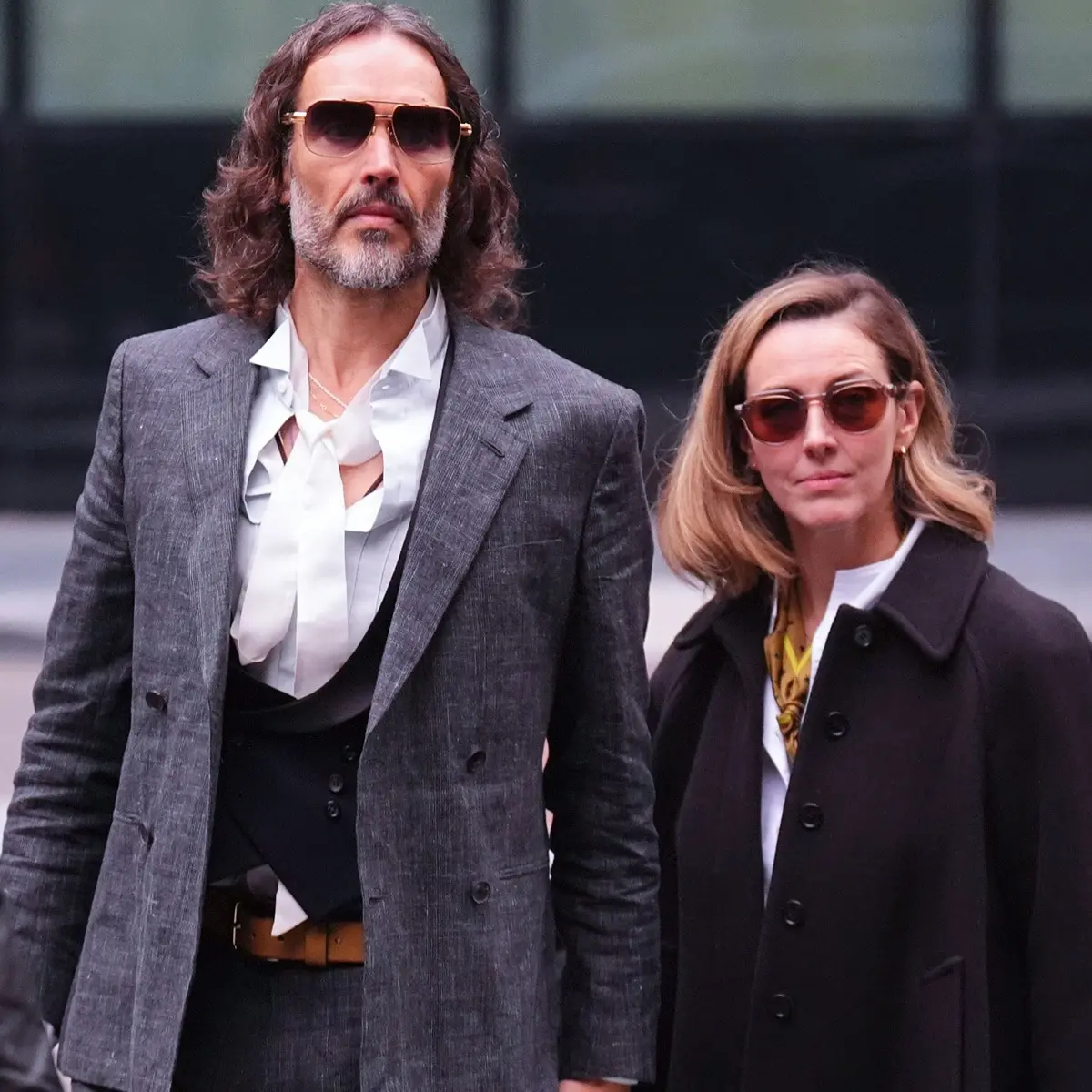
The fallout from the trial has reverberated far beyond the courtroom walls, deeply impacting Brand’s immediate family, professional enterprises, and public standing. Most notably, his wife, Laura Brand, stepped forward to address the public for the first time since the sentencing, charting a solitary path forward for their joint spiritual ventures. Meanwhile, despite the conclusion of this foundational trial, the shadow of legal jeopardy continues to loom over Brand, with law enforcement and prosecutors actively reviewing separate, additional allegations. This comprehensive review details the chronological evolution of the case, the judicial reasoning behind the sentencing, the immediate aftermath for his family, and the broader implications for the entertainment industry.
Detailed Chronology of the Legal Proceedings
The Genesis of the Investigation: April 2025
The formal reckoning for Russell Brand began in April 2025, when the Metropolitan Police of London formally charged the Forgetting Sarah Marshall star with multiple historical offenses. The initial charges comprised one count of rape, two counts of indecent assault, and one count of sexual assault, stemming from incidents alleged to have occurred between 1999 and 2005.
Brand responded almost immediately via a video posted to his social media channels. He vehemently denied the accusations, characterizing them as part of a wave of “egregious attacks” and a “litany of astonishing, rather baroque attacks” orchestrated by the media. While acknowledging a turbulent past marked by substance abuse and compulsive behavior, Brand maintained his innocence regarding any non-consensual acts, stating publicly: "I was a drug addict, a sex addict and an imbecile, but what I never was, was a rapist." He formally entered a plea of not guilty to all initial charges in May 2025.
Escalation and Additional Charges: December 2025
The legal pressure intensified significantly in December 2025. The London Metropolitan Police added further charges to the docket, accusing Brand of an additional count of rape and an additional count of sexual assault involving two separate complainants, with these incidents alleged to have occurred in 2009.
In response to these compounding charges, Brand released another video statement, turning toward overtly religious rhetoric. He prayed publicly for healing for anyone he may have hurt during his “years of mindlessness and sin” while continuing to assert that the absolute truth of his innocence would eventually come to light. By the conclusion of 2025, the total indictment encompassed three counts of rape, three counts of sexual assault, and one count of indecent assault, involving a total of six complainants over a ten-year timeline from 1999 to 2009.
The Trial and November 2026 Verdict
The trial commenced in late 2026 in London, serving as a focal point for intense international media scrutiny. Throughout the proceedings, the defense—led by counsel Ian Winter KC and Oliver Schneider-Sikorsky—argued that Brand was a fundamentally transformed individual, contrasting his past lifestyle of “reckless philandering” with his current religious and family-oriented life. Winter described the 2009 offense for which Brand was ultimately found culpable as a “momentary total failure.”
Nevertheless, the jury and the prosecution focused tightly on the evidentiary record and the testimonies of the complainants. On November 5, 2026, the court delivered its verdict: Russell Brand was found guilty of one count of rape and three counts of sexual assault. He was, however, acquitted of two separate counts of rape and one count of indecent assault.
The Sentencing: November 9, 2026
Four days after the verdict, on November 9, 2026, Judge Joel Bennathan handed down his sentence at a London court. Denying bail and ruling out non-custodial alternatives, the judge sentenced Brand to 10 years and six months behind bars.
In his remarks, Judge Bennathan lauded the “determination and bravery” of the women who came forward to testify against a powerful public figure. While acknowledging that the sentence represented a tragic loss for Brand’s three young children, the judge emphasized that the defendant bore sole responsibility for his actions, citing a pattern of arrogant disregard for the boundaries of others.
Supporting Context & Metrics
To fully understand the scope of Russell Brand’s legal downfall and its cultural resonance, it is helpful to examine the structural metrics of the case:
- Timeline of Alleged Offenses: 1999 through 2009 (a 10-year period spanning his rise through UK television, radio, and subsequent transition to Hollywood).
- Total Complainants: Six women came forward across the various counts investigated by the Metropolitan Police.
- Charges Filed vs. Convictions: Brand was initially tried on an expanded indictment of seven total charges (three counts of rape, three counts of sexual assault, one count of indecent assault). He was convicted on four counts (one rape, three sexual assaults) and acquitted on three.
- Prison Sentence: 10 years and 6 months, with the judge explicitly designating him a sexual predator and denying bail pending any potential appeals.
- Ongoing Legal Exposure: The Metropolitan Police confirmed active investigative files submitted to the Crown Prosecution Service regarding at least two additional complainants.
Official Statements and Public Reactions
Laura Brand Addresses the Public
In the wake of her husband’s sentencing, Laura Brand broke her public silence on the November 15 episode of their weekly spiritual podcast, Sunday Service with The Brands. Addressing her audience directly, the 39-year-old mother of three discussed the difficult transition ahead of her.
"I’m here to continue the good work that was being established here in this Sunday Service community," Laura told viewers. "Something very close to mine and Russell’s hearts. It may look different, but the ambitions are very much the same."
Acknowledging the pain of the situation, she noted that she was leaning heavily on her faith to navigate
the absence of her partner. She shared that she had remained in communication with Russell, noting that "he’s OK and he’s praying… and we decided for me to continue." Despite the seismic shift in her personal life, Laura’s commitment to the podcast signals an attempt to preserve a semblance of their shared ideological and community footprint.
Legal Representation and Judicial Statements
The response from Brand’s defense team highlighted a narrative of rehabilitation and historical context. Ian Winter KC maintained during mitigation that his client’s lifestyle during the period in question bore no resemblance to the man he had become in the years leading up to his arrest.
Conversely, the judicial branch drew a sharp line between public persona and criminal accountability. Judge Bennathan’s characterization of Brand as a predator who exploited his status left little room for mitigation based on post-offense lifestyle changes. The judiciary’s firm stance underscored a broader cultural shift in how historical sexual offenses by prominent media personalities are prosecuted and judged in the United Kingdom.
Future Outlook and Ongoing Investigations
While the November 2026 sentencing brings a definitive close to the primary trial that began nearly two years prior, Russell Brand’s legal battles are far from finished.
Following the conclusion of the trial, the Metropolitan Police of London confirmed to media outlets that detectives remain actively engaged in a separate, ongoing inquiry. This investigation stems from two additional allegations of rape brought forward by new complainants. The suspect has previously been interviewed under caution regarding these specific matters, and comprehensive investigative files have been submitted to the Crown Prosecution Service (CPS).
Legal analysts note that if the CPS decides to move forward with formal indictments on these new files, Brand could face a secondary trial, potentially extending his time within the correctional system and further complicating his legal liabilities. Meanwhile, his defense team retains the right to appeal the current conviction and sentencing, though legal experts suggest that overturning a verdict handed down by a high-court judge following a rigorous jury trial presents a formidable hurdle.
As Laura Brand attempts to steer their digital community into a solitary future, and as prosecutors weigh the viability of additional charges, the Russell Brand case stands as a landmark legal proceeding of the mid-2020s—one that fundamentally alters the legacy of a once-ubiquitous cultural provocateur.
