

Executive Overview
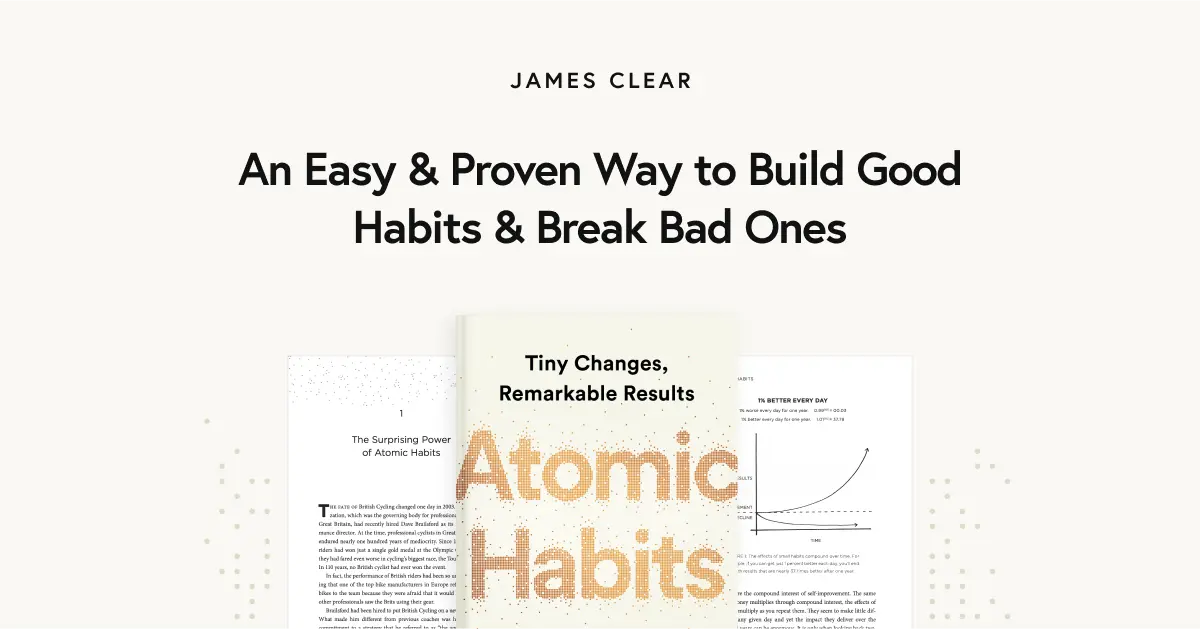
The architecture of daily life is built upon an invisible foundation of routines, automated behaviors, and micro-decisions. For decades, popular psychology treated habit formation as an exercise in sheer willpower—a framing that almost universally guaranteed high failure rates. In recent years, however, the paradigm has shifted toward systemic, evidence-based behavioral design. Central to this evolution is James Clear’s bestselling framework, Atomic Habits, which posits that monumental life changes are not the result of radical overhauls, but rather the compound interest of 1 percent improvements.
Rather than examining these principles in a purely theoretical vacuum, this report explores how everyday individuals have operationalized Clear’s strategies in the real world. Drawing from a curated archive of reader case studies, this investigation details 30 distinct, highly practical "one-sentence stories" of behavioral transformation. These accounts span eight core psychological mechanisms: identity-based habits, cue modification, habit stacking, physical and digital environment design, habit substitution, mindset restructuring, and visual habit tracking.
By analyzing these real-world implementations, we gain a clearer understanding of how behavioral science translates from the printed page into the messy, complex reality of human existence. The findings suggest that sustainable self-improvement relies less on the intensity of motivation and more on the structural friction—or lack thereof—engineered into our daily environments.
Detailed Chronology & Strategic Frameworks
The systematic approach to behavioral modification outlined in behavioral literature moves away from outcome-oriented goals toward identity-driven, system-based protocols. The practical application of these frameworks unfolds across several distinct methodological categories.
Phase 1: Identity-Based Habits
Traditional goal-setting focuses heavily on what an individual wants to achieve (e.g., "I want to lose 20 pounds" or "I want to stop smoking"). Identity-based habits, conversely, invert this model by focusing entirely on who the individual wishes to become.
- The Paradigm Shift in Nutrition: A reader named Roland struggled for years with erratic eating patterns. Long-term success eluded him until he abandoned outcome-focused language. By consciously reframing his internal monologue from "I want to stop eating bad food" to "I am someone that eats healthy and lives a healthy life," the psychological friction of dietary choice vanished. The decision ceased to be a daily negotiation of willpower and became an expression of self-conception.
- Reframing Sacrifice as Investment: Similarly, Robert approached smoking cessation through the lens of linguistic framing. By replacing the disempowering assertion "I can’t smoke" with the affirmative, agency-rich declaration "I don’t smoke," he eliminated the sensation of deprivation. In Robert’s cognitive model, abstaining from cigarettes was no longer a punishment or a loss of pleasure, but an active capital investment in his future well-being.
- External Reinforcement of Internal Identity: Identity shifts can also be accelerated through immediate external rewards that validate the new persona. One reader seeking to conquer alcohol dependency adopted the mantra, "I am no longer a drinker." To reinforce this psychological baseline, every sober 24-hour cycle was rewarded with a $10 credit directed toward personal enrichment items like clothing rather than toxic substances. Over time, the internal identity solidified, the external monetary reinforcement became obsolete, and the individual achieved six years of sustained sobriety.
Phase 2: Modifying and Managing Behavioral Cues
Every habit is initiated by a trigger or cue. By deliberately manipulating exposure to these cues, individuals can preemptively dictate their behavioral responses.
- Amplifying Positive Cues: Lisa cultivated a prolific reading habit by artificially engineering an abundance of literary cues in her immediate environment. By maintaining a constant queue of 20 to 30 books on hold at her local library, she eliminated the friction of browsing, ensuring that a physical book with a ticking three-week deadline was always waiting within her immediate field of vision. Similarly, Heather utilized visual placement and color psychology to increase her water intake, positioning a bright aqua water bottle—her favorite color—directly on her nightstand to guarantee it was the first visual stimulus encountered upon waking.
- Eliminating Negative Triggers: Conversely, behavioral optimization often requires the systemic destruction of detrimental cues. Max successfully conquered an e-cigarette dependency by identifying a compounding psychological anchor: his morning coffee. Recognizing that caffeine served as the primary environmental prompt for nicotine consumption, Max executed a simultaneous withdrawal from both substances, effectively severing the conditioned reflex loop.
Phase 3: Habit Stacking and Behavioral Anchoring
Pioneered by Stanford researcher Dr. B.J. Fogg and popularized as "habit stacking," this technique involves anchoring a novel, desired behavior onto an existing, deeply ingrained daily routine.
- Integrating Linguistic Milieu: When relocating to China to master Mandarin, one reader established a non-negotiable behavioral stack tied to daily transit. Capitalizing on a frequent existing routine—taking multiple taxi rides daily—the reader committed to initiating a Mandarin conversation with the driver regardless of fatigue or hour. This rigid anchor transformed everyday commuting into an immersive language laboratory, ultimately yielding professional-grade fluency.
- Keystone Habit Integration: David utilized a simpler, domestic anchor to establish a mindfulness practice, committing to a 20-minute meditation session immediately after brushing his teeth every morning. By coupling the new, abstract habit of meditation with an immutable keystone habit of hygiene, compliance rates approached 100 percent.
Phase 4: Environment Design (Physical and Digital Friction)
Human beings consistently overestimate their self-control and underestimate the influence of their physical and digital surroundings. Modifying architecture—both physical and virtual—remains one of the most reliable mechanisms for controlling human output.
- Increasing Friction for Bad Habits: To curb an intractable snacking habit, a reader named Cyd enlisted her husband to relocate their favored trigger foods (Pringles) into a locked vehicle parked in cold weather, introducing an insurmountable barrier of physical inconvenience. To eliminate the chronic habit of hitting the snooze button, Daniel programmed his morning alarm to deactivate only when scanning a physical QR code located inside his bathroom, weaponizing physical locomotion against lethargy. Chris combined this physical displacement with a habit stack, ensuring that getting out of bed to silence his phone immediately triggered a cascade of positive morning hygiene routines. Personal finance blogger J. Money deployed a similar friction-based psychological trick: by brushing his teeth promptly at 8:00 PM after putting his children to bed, he completely eliminated late-night snacking and alcohol consumption, unwilling to endure the annoyance of re-brushing his teeth.
- Digital Architecture and Self-Regulated Laziness: In the digital sphere, readers leveraged their own inherent laziness as a defense mechanism against screen addiction. Matthew drastically reduced his Instagram consumption simply by logging out of the application after every session, transforming a frictionless swipe into a deliberate multi-step authentication process. Viet utilized a similar barrier to eliminate Facebook browsing by deleting the mobile application entirely, forcing himself to navigate through a mobile browser and log in manually. Rahul took an even more radical physical approach to digital curtailment by physically unseating and removing the graphics card from his personal computer to curb video game addiction, while stripping his smartphone of web-browsing applications.
- Reducing Friction for Good Habits: Conversely, encouraging positive behaviors requires lowering the activation energy required to initiate them. Natalie eliminated the chronic presence of stray socks on her floor by placing an open laundry basket directly beside her bedroom door. Justin achieved an 8-to-10-workout-per-week consistency spanning 2.5 years by selecting a CrossFit and endurance facility located less than a mile from his residence, stripping away the commute-based excuses that had historically derailed his fitness goals. Another runner guaranteed a two-year streak of 6:00 AM workouts by systematically staging their compression gear, running shoes, and GPS watch in a meticulous pile every preceding evening, effectively eliminating morning decision fatigue.
Phase 5: Habit Substitution
Rather than attempting to violently eradicate an entrenched negative behavior—a strategy that frequently triggers psychological backfire—habit substitution replaces the toxic routine with a healthier action that satisfies the underlying psychological or physiological craving.
- Kinetic Substitution: Seeking an alternative to outdoor smoking breaks, one reader installed a weight bench in their backyard, mandating a set of physical repetitions whenever a nicotine craving struck. The physical exertion rapidly short-circuited the psychological craving loop. Similarly, another reader replaced compulsive nail-biting with proactive nail-clipping by ensuring professional-grade clippers remained permanently stationed at their workstation.
- Stepped De-escalation: Gradual substitution allows the nervous system to adapt without acute shock. Mark significantly reduced his post-work stress-drinking by substituting beer with flavored sparkling water and removing alcohol from his home refrigeration units, gradually reintroducing beer only after the emotional stress-response loop had been decoupled from alcohol. Another reader, Marc, systematically phased out a daily beer habit over a nine-month period, stepping down progressively from fruit juice to iced tea, and finally to seltzer water, reducing his weekly intake by a single unit at a time. Shawn utilized fun-sized Snickers bars as an oral and psychological substitute during acute nicotine withdrawal phases, permanently maintaining his smoke-free status years later.
- Radical Obsession Replacement: Suraj utilized complete substance-use substitution to overcome severe drug and alcohol dependencies, channeling his addictive neurological pathways into competitive powerlifting. While extreme, the substitution of a destructive compulsion for a rigorous athletic discipline demonstrates the viability of hijacking the brain’s reward machinery for productive ends.
Phase 6: Mindset Hacks and Cognitive Reframing
Cognitive restructuring allows individuals to bypass the brain’s innate resistance to delayed gratification through clever psychological framing.
- The Infinite Delay Tactic: To overcome chronic smoking cessation failures, Caelan abandoned the daunting prospect of quitting "for good." Instead, he continuously deferred his "cheat days" further into the future. By reframing the choice from an absolute binary ("Right now" versus "Never") to a manageable temporal distinction ("Right now" versus "Later"), acute cravings dissolved. Ken applied an identical incremental deferral strategy to fast-food consumption, successfully extending his self-imposed fasts from one week to two weeks, ultimately resulting in four years of abstinence from fast food and 15 months from carbonated soft drinks.
- Visceral Quantification: Qiana conquered her soda addiction by transforming abstract dietary data into a visceral, shocking visual reality. By aggregating her weekly soda consumption, calculating its cumulative sugar content in tablespoons, and physically scooping that identical volume of granular white sugar into an enormous glass bowl, she utilized visual disgust as a permanent deterrent.
Phase 7: Visual Habit Tracking
The final pillar of sustained behavioral change involves the objective, frictionless measurement of performance.
- The Power of Visual Chains: Cindy utilized a physical wall calendar to monitor her daily habits, building unbroken visual chains of red "X" marks over a six-month period. This simple visual reinforcement catalyzed widespread lifestyle improvements, including a 30-pound weight loss, enhanced physical strength, consistent language acquisition, and small business development.
- Scope Reduction and Micro-Tracking: To prevent the paralysis of perfectionism, readers embraced the concept of micro-tracking. Günter maintained a daily workout streak exceeding six months by ruthlessly shrinking the scope of his routine on days when motivation or time was scarce. Rather than abandoning the habit entirely, he executed an abbreviated session and marked the calendar nonetheless, preserving the psychological momentum of the chain without demanding unsustainable daily intensity.
Supporting Context & Metrics
To contextualize the efficacy of these reader-submitted methodologies, it is valuable to examine the broader empirical data surrounding habit formation and behavioral modification within behavioral science:
- The Myth of the 21-Day Rule: While popular culture frequently cites Dr. Maxwell Maltz’s mid-20th-century observation that it takes 21 days to form a new habit, modern psychological research conducted by Dr. Phillippa Lally at University College London reveals a much wider variance. Lally’s study found that the time required to achieve automaticity for a new health behavior ranges from 18 to 254 days, with a median duration of 66 days.
- The Impact of Environment on Decision Making: According to environmental psychology research, the average human makes upwards of 35,000 remotely conscious decisions per day. Minimizing this cognitive load through pre-planned environment design—such as staging workout gear or locking away trigger foods—reduces decision fatigue and preserves executive function for high-value tasks.
- Compound Growth Trajectory: Mathematically, the core thesis of atomic habits dictates that a 1 percent improvement daily compounds to roughly 37 times better over the course of a single calendar year ($1.01^365 approx 37.78$). Conversely, a 1 percent decline daily degrades performance to near zero ($0.99^365 approx 0.03$).
Official Statements & Expert Commentary
Reflecting on the overwhelming volume of reader-submitted case studies, behavioral experts and authors emphasize the universality of these systemic principles:
"None of these stories belong to a clinical laboratory; they belong to everyday people operating under real-world constraints, familial obligations, and professional pressures. What these accounts prove is that behavioral change is not an exclusive domain of exceptional willpower. It is an engineering challenge. When you change your identity, alter your cues, stack your routines, redesign your environment, and track your progress, human biology ceases to be an obstacle and becomes an engine for compounding progress."
— Behavioral Science Synthesis & Editorial Commentary
Psychologists note that the success of identity-based frameworks stems from cognitive dissonance theory: human beings possess an innate psychological drive to harmonize their external actions with their internal self-image. When an individual adopts an identity-driven mantra ("I am a healthy person"), performing contradictory actions generates discomfort that naturally steers the individual back toward aligned behaviors.
Future Outlook
As the fields of behavioral economics, neuroscience, and personal development continue to converge, the future of habit formation is moving increasingly toward personalized digital ecosystems and automated behavioral design. However, as demonstrated by the diverse array of low-tech interventions in these case studies—ranging from locked car trunks and physical QR codes to wall calendars and stacked commutes—the fundamental mechanics of human behavior remain stubbornly anchored to physical and psychological fundamentals.
Moving forward, the integration of ambient environmental cues, deliberate friction manipulation, and identity-driven mental models will likely form the bedrock of clinical therapies, corporate productivity frameworks, and educational curricula alike. As research expands, the consensus within the behavioral science community remains absolute: sustainable transformation is achieved not by fighting human nature, but by systematically designing the environments and routines through which human nature expresses itself.
