

Executive Overview
Artificial Intelligence has transitioned from a fringe technological curiosity into the boardroom’s primary obsession. Across industries, corporate leaders are scrambling to integrate generative AI models, large language frameworks, and automated workflows into their daily operations. Yet, a disheartening pattern is emerging. Rather than serving as a seamless catalyst for innovation, the current wave of enterprise AI rollouts increasingly resembles a bureaucratic farce—one defined by heavy-handed mandates, pervasive employee anxiety, and a profound misunderstanding of cultural integration.
According to digital strategist and author Paul Boag, corporate leadership is committing the exact same errors witnessed a decade ago during the chaotic dawn of "digital transformation." In a scathing critique of modern change management, Boag argues that organizations continue to treat monumental systemic shifts as mere IT implementation tasks. By focusing exclusively on software licenses, token budgets, and rigid governance frameworks while ignoring the human element, companies are actively sabotaging their own technological futures.
This special report examines the uncanny parallels between the digital adaptation era of the 2010s and today’s AI gold rush. By analyzing core strategic missteps—ranging from a lack of employee motivation and suffocating regulatory environments to the proliferation of "Shadow AI"—we explore what leadership must do to pivot from reactive panic to sustainable, human-centric adoption.
Detailed Chronology: From the CMS Era to the Generative Age
To understand why modern AI rollouts are misfiring, one must look backward. The corporate playbook being deployed today for artificial intelligence is nearly identical to the one that failed organizations during the digital transformation boom of the early-to-mid 2010s.
2014: The Digital Transformation Mirage
Back in 2014, when Boag published his seminal book Digital Adaptation through Smashing Magazine, organizations were facing an unprecedented paradigm shift. The rise of mobile devices, cloud computing, and advanced web platforms meant that traditional business models were rapidly becoming obsolete.
In response, corporate IT departments rushed to deploy Content Management Systems (CMS), Customer Relationship Management (CRM) tools, and sprawling internal intranets. On the consumer-facing side, companies demanded mobile apps and flashy websites. However, leadership made a foundational error: they focused entirely on the software while completely neglecting how human beings were expected to interact with it.
Internal systems were notoriously difficult to navigate, built without user research, and imposed upon workforces that had no voice in their design. Customers, meanwhile, often found these digital touchpoints irrelevant or frustratingly opaque. The result was a staggering failure rate for digital transformation projects—not because the technology was flawed, but because the organizations treated human adoption as an afterthought.
Today: The Copilot Panic
Fast forward to the present day, and the corporate script remains unchanged. Senior executives are once again captivated by technological hype. Driven by the fear of missing out, organizations are purchasing enterprise-wide licenses for tools like Microsoft Copilot Studio, rolling them out en masse, offering a generic, compliance-heavy training video, and declaring the job finished.
Just as they did a decade ago, employees are left stranded. They sit at their desks, staring at powerful new tools, wondering how these systems fit into their daily workloads, and nursing a quiet, underlying terror that these very tools are designed to render their jobs obsolete. The technology has evolved from static web architectures to dynamic neural networks, but the corporate blindness to human psychology remains absolute.
Supporting Context & Metrics: The Human Cost of Mismanaged Tech
The fundamental flaw in modern AI adoption lies in a basic misunderstanding of what drives human behavior in the workplace. Technology is cold and objective; humans are emotional, risk-averse, and self-interested. When these two forces collide without adequate mediation, friction is inevitable.
The Motivation Deficit
Consider the perspective of an average staff member. From executive leadership’s viewpoint, generative AI is a triumph of productivity—it allows individuals to accomplish more tasks in less time.
However, from the worker’s perspective, this equation offers virtually no personal benefit. Employees are still tethered to rigid nine-to-five schedules. They do not receive additional compensation for utilizing AI, nor are they rewarded with shorter working hours or reclaimed free time. Instead, increased productivity is frequently translated by middle management as an expectation to produce more work within the exact same timeframe.
When change is framed purely as an extraction of greater labor value rather than an enhancement of the working experience, employees naturally resist. To overcome this, organizations must first answer a critical question: Why should an employee want to adopt AI?
Successful transformation requires helping staff identify the most tedious, frustrating aspects of their roles—the administrative bottlenecks and mind-numbing data entry they actively despise—and positioning AI as the direct antidote to those pains. Change is welcomed only when it feels like an upgrade to an individual’s quality of work life, not a threat to their job security.
Procedural Knowledge and Cognitive Fatigue
Adopting AI is not as simple as logging into a new dashboard. It requires dismantling working habits and procedural knowledge built up over years, or even decades. This cognitive restructuring demands immense energy, time, and experimentation.
Yet, most modern workforces are already operating at or above capacity. Overworked employees juggling overflowing inboxes simply do not have the bandwidth to sit down, experiment, and figure out how a large language model fits into their specific daily pipeline. Sending staff to a generalized, one-size-fits-all webinar fails to account for the nuanced realities of different departments—whether they are UX designers, accountants, or human resources professionals.
Official Statements and Industry Insights
Industry analysts and thought leaders have increasingly raised alarms regarding the disconnect between executive mandates and ground-level execution in AI adoption.
"Organizations need to recognize that AI is a cultural shift as much as a technology, and that shift has enormous implications for their staff," notes Paul Boag. "This time around, it is even worse, because staff fear for their jobs. They have read the same headlines that you have, and no amount of corporate reassurance is going to make them feel secure."
This culture of fear is frequently exacerbated by mixed messages from leadership. While executives publicly champion innovation and experimentation, they simultaneously demand the strict adherence to historical Key Performance Indicators (KPIs) and ruthlessly penalize mistakes in annual reviews.
Furthermore, rigid governance structures are choking innovation before it can take root. Organizations frequently respond to the introduction of powerful new tools by drafting exhaustive compliance manuals. Pages of dense instructions detailing what employees can and cannot input into an AI model create an atmosphere of paranoia. Terrified of making a career-limiting mistake by breaching data protocols or burning through token allowances, employees logically conclude that the safest course of action is to ignore the new technology entirely and revert to legacy habits.

The Rise of "Shadow AI"
When official corporate channels become too restrictive or functionally inadequate, employees do what humans have always done under oppressive systems: they find workarounds.
Just as the digital transformation era gave birth to "Shadow IT"—where frustrated workers bypassed internal approval processes to sign up for Dropbox and Google Docs on personal credit cards—today’s workplace is drowning in Shadow AI.
When an internal enterprise tool cannot deliver on a team’s specific vision, or when bureaucratic steering committees demand months of paperwork just to evaluate a different software plugin, employees open personal ChatGPT or Claude accounts on their smartphones and personal laptops.
This phenomenon represents a severe enterprise risk. Company data, proprietary source code, and sensitive client information are routinely piped into external platforms entirely outside the organization’s visibility or control. Predictably, many organizations react to Shadow AI with authoritarian panic—deploying stricter web filters, issuing threatening disciplinary memos, and locking down networks even further.
According to workplace strategists, this is precisely the wrong approach. Shadow AI should not be viewed as a malicious security violation, but rather as an illuminating diagnostic tool. It reveals precisely where official enterprise infrastructure is failing. Rather than trying to stamp out these unauthorized work practices through punishment, progressive organizations are beginning to interview staff to understand why they turned to external tools, using those insights to reshape official technological rollouts.
Future Outlook: Building an Adaptive, Safe-to-Fail Enterprise
Navigating the AI era successfully requires a fundamental reinvention of corporate change management. If organizations wish to avoid the multi-million-dollar failures that plagued the digital transformation era, leadership must embrace several core strategic imperatives moving forward.
1. Cultivate Psychological Safety
Innovation cannot exist in an environment of fear. To encourage genuine exploration, organizations must explicitly normalize failure during the learning curve. This requires temporarily adjusting KPIs, modifying performance review metrics to reward curiosity and experimentation, and providing a buffer for the inevitable missteps that occur when workforces learn to wield cognitive tools.
2. Streamline Governance Through Principles
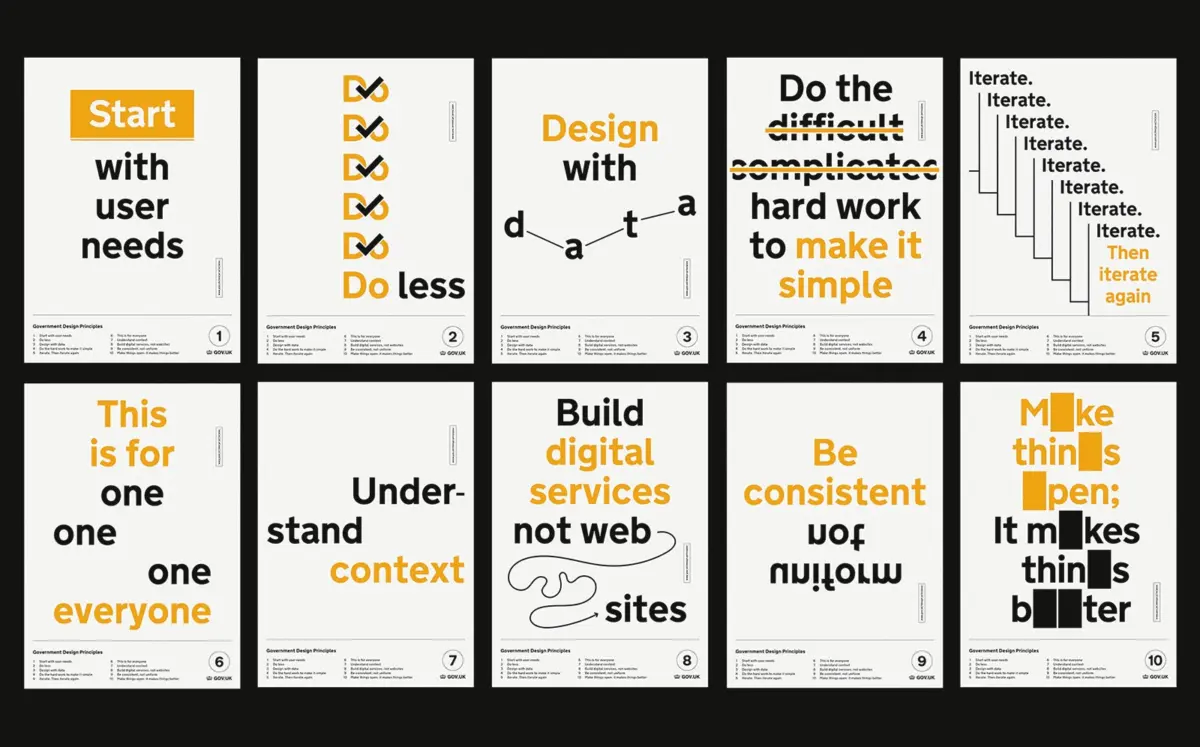
Instead of producing impenetrable legalistic frameworks that paralyze action, organizations should adopt lightweight, principles-based governance. Taking a page from successful public sector models—such as the digital design principles pioneered by GOV.UK—companies should condense their AI guidelines into a handful of core tenets that can fit on a poster. Beyond those broad boundaries, leadership must demonstrate institutional trust in the common sense and professionalism of their workforce.
3. Harness Internal Enthusiasts and Social Proof
Top-down memos and executive edicts carry little weight in driving genuine cultural change. Instead of targeting resistant employees first, organizations should identify and empower internal enthusiasts—the self-starters who are already experimenting with AI in their spare time. By creating internal forums and communities of practice where these pioneers can showcase successful use cases to their peers, organizations can leverage organic social proof. People are exponentially more likely to adopt a new workflow when they see a colleague in a similar role utilizing it to solve an everyday problem successfully.
4. Prioritize People Over Silicon
Ultimately, the defining characteristic of the AI era will not be the sophistication of the algorithms deployed, but the maturity of the human cultures built around them. Organizations that view artificial intelligence purely as an IT integration project are destined to repeat the costly stumbles of the past. By prioritizing employee motivation, providing dedicated time for experimentation, creating safe spaces for failure, and listening to the signals sent by Shadow AI, forward-thinking enterprises can transform AI from a source of workplace anxiety into a sustainable engine of human empowerment.
