

Executive Overview
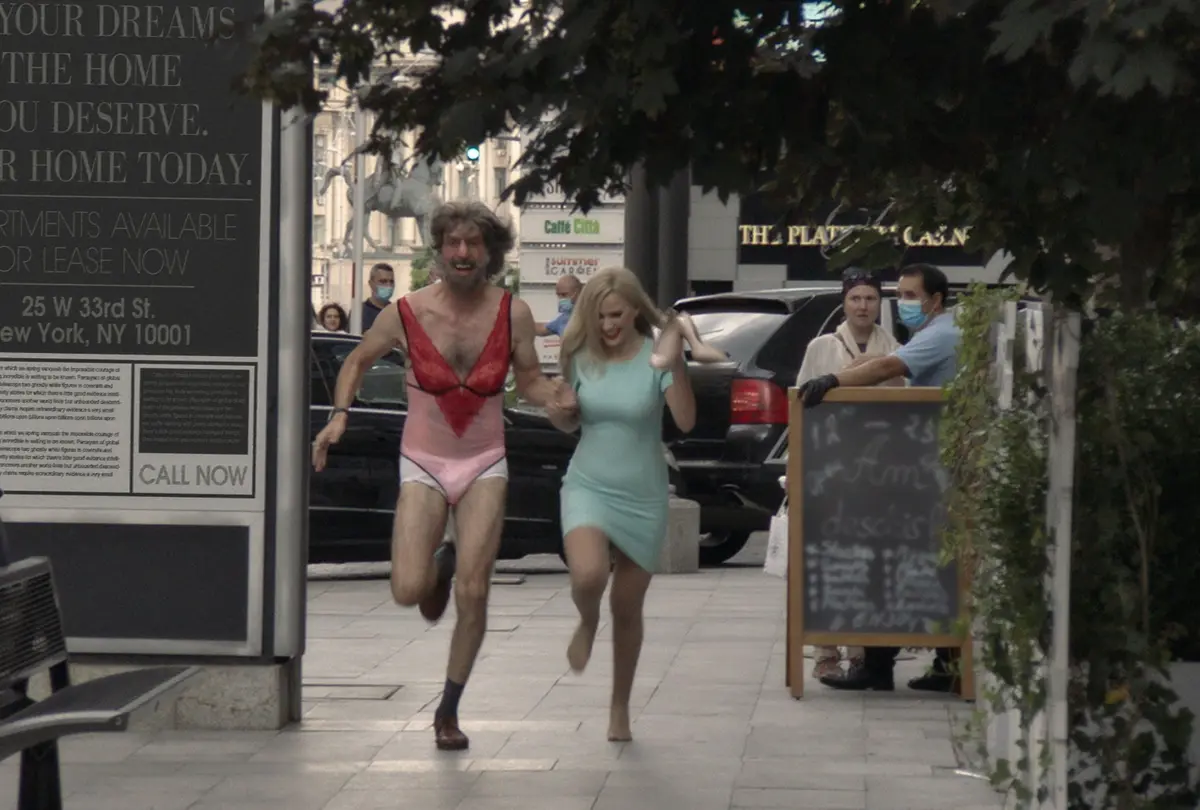
Fourteen years after Sacha Baron Cohen’s cultural juggernaut Borat: Cultural Learnings of America for Make Benefit Glorious Nation of Kazakhstan fundamentally disrupted the comedy landscape, the chaotic, gray-suited journalist returned in a political and social climate vastly altered by populism, misinformation, and digital tribalism. Released on Amazon Prime Video on October 23, 2020, Borat Subsequent Moviefilm: Delivery of Prodigious Bribe to American Regime for Make Benefit Once Glorious Nation of Kazakhstan arrived not merely as a belated comedy sequel, but as a barbed sociological diagnostic of a polarized America on the precipice of a high-stakes presidential election.
While the original 2006 mockumentary utilized Borat Sagdiyev as an amiable, wide-eyed cipher whose primitive bigotry invited everyday Americans to mirror or indulge his prejudices, the 2020 sequel pivots dramatically. No longer operating as a straightforward truth serum, Baron Cohen’s character functions as a prodding force navigating a domestic landscape where the rampant anti-Semitism, racism, and xenophobia once unmasked under the guise of absurdity have graduated to mainstream political discourse.
Crucially, the film shifts its comedic and emotional center of gravity by introducing Tutar, Borat’s 15-year-old daughter, brilliantly brought to life by Bulgarian breakout star Maria Bakalova. Bakalova’s unwavering commitment anchors the narrative’s feminist subtext, exposing the casual, systemic misogyny woven into the American fabric while orchestrating some of the film’s most notorious sting operations—culminating in the viral, headline-making entrapment of former New York City Mayor and presidential attorney Rudy Giuliani.
Rather than relying solely on the classic, innocent physical comedy of the original, Borat Subsequent Moviefilm captures an America where institutional norms have fractured, critical thinking has eroded, and the line between satire and stark reality has effectively vanished.
Detailed Chronology: From Gulag to Global Satire
The narrative architecture of Borat Subsequent Moviefilm begins far from the sprawling expanses of America, returning viewers to the fictionalized village of Kuzcek in Kazakhstan. In the wake of the international humiliation caused by the 2006 documentary, Borat’s countrymen, neighbors, and family members have endured years of public disgrace. Consequently, Borat has spent the intervening 14 years sentenced to grueling hard labor within a brutal Soviet-style gulag.
However, political expediency intervenes. Kazakhstan’s current Premier, Nazarbayev, realizes the regime desperately needs to curry favor with the Western world’s rising cadre of authoritarian leaders. Borat is hauled out of penal servitude, shaved, stuffed back into his iconic, ill-fitting gray suit, and tasked with a high-stakes diplomatic mission: to present a "prodigious bribe" to Vice Premier Mike Pence. The designated offering is Johnny the Monkey, framed absurdly as both Kazakhstan’s Minister of Culture and its number-one adult film star.
Upon arriving in the United States, Borat quickly discovers that his global notoriety makes traveling incognito impossible. Mobbed by enthusiastic fans in Texas, he is forced to adopt a series of rudimentary disguises. Simultaneously, he discovers a stowaway hidden inside his transport: Tutar, the teenage daughter he never knew he had. Raised in a literal pen and indoctrinated by a misogynistic handbook provided by the Kazakh state—which warns that women driving, owning businesses, or touching their own bodies will trigger apocalyptic disasters on par with the sinking of the Titanic—Tutar harbors a single aspiration: to live in a gilded cage like First Lady Melania Trump, whom she regards as "the happiest wife in the world."
The father-daughter dynamic anchors the film’s first half as they traverse the American South. Borat confines Tutar to a cage while sleeping in a horse trailer, setting the stage for an ideological and psychological transformation. When Tutar accidentally swallows a plastic baby cake decoration, a panicked Borat rushes her to what he mistakenly assumes is a medical facility, landing instead inside a crisis pregnancy center run by Pastor Jonathan Bright. The resulting encounter—where the pastor insists that Tutar carry the "baby" to term even after Borat casually admits he is the biological father (having bought the cupcake)—exemplifies the film’s knack for unearthing institutional dissonance.
As the narrative progresses through conservative debutante balls, militia gatherings in Washington state, and a fateful quarantine period with right-wing QAnon adherents, Tutar undergoes a radical awakening. Guided briefly by Jeanise Jones, a compassionate Black woman hired as her nanny, Tutar realizes her father’s lies and seizes control of her own destiny. This trajectory reaches its explosive climax when Tutar, posing as a conservative television journalist, gains access to Rudy Giuliani in a luxury hotel suite—a sequence that sent shockwaves through the American media landscape days before the film’s official release.
Supporting Context & Metrics: The Anatomy of an Infiltration
Evaluating Borat Subsequent Moviefilm requires a close examination of the mechanics behind Baron Cohen’s guerrilla filmmaking style and the sociopolitical metrics of the subjects he targets. Co-directed by Jason Woliner—whose background includes subversive comedic experiments like Nathan for You—the production relied heavily on improvisation, deep-cover acting, and real-time manipulation of unsuspecting public figures.
The Bakalova Factor and the Feminist Subtext
The undeniable linchpin of the sequel’s success is Maria Bakalova. In an era where Sacha Baron Cohen’s facial prosthetics and widely recognized persona make undercover work increasingly difficult, Bakalova acted as the ultimate Trojan horse. Maintaining character through grueling, high-pressure environments, she elicited jaw-dropping admissions from everyday Americans.
This dynamic underscores the film’s broader exploration of intersectional prejudice. While Borat uncovers latent anti-Semitism and racism, it is the pervasive, casual sexism of American society that serves as the gateway for the duo’s infiltration:
- A Texas baker casually pipes the antisemitic phrase "Jews Will Not Replace Us" onto a chocolate cake without a flicker of hesitation.
- A retail shop owner enthusiastically directs Borat toward a dress section jokingly associated with non-consensual advances.
- A spray-tanning salon technician matter-of-factly recommends a deep bronze tone when asked, "What color is best for racist family?"
In each instance, the ordinary individuals interacting with Borat and Tutar choose polite accommodation over moral intervention, illustrating a cultural malaise where bigotry is quietly normalized so long as it avoids disrupting polite social convention.
The Giuliani Controversy and Media Fallout
Days prior to its streaming debut, investigative reports broke identifying Rudy Giuliani as the central target of the film’s climax. The sequence features Bakalova posing as a conservative journalist conducting a supposedly serious interview with the former mayor, culminating in a compromising scene inside a hotel bedroom.
Rather than serving as a grand, affectionate political takedown akin to the Pamela Anderson prank in the 2006 original, the Giuliani entrapment functioned as a stark confirmation of existing political vulnerabilities. Giuliani swiftly denounced the ambush as a "hit job" orchestrated in retaliation for his political activities, yet the sequence laid bare the porous security and questionable judgment surrounding top-tier political surrogates.
Critical and Commercial Reception
Released directly to Amazon Prime Video during a global pandemic, Borat Subsequent Moviefilm bypassed traditional theatrical windows, instantly capturing massive global viewership. It scored critical acclaim, earning Academy Award nominations for Best Adapted Screenplay and Best Supporting Actress for Bakalova. Reviewers universally noted that while the sheer shock value of the original film could never be fully replicated, the sequel adapted brilliantly to a political reality that had arguably outpaced satire itself.
Official Statements and Industry Reactions
The unprecedented nature of Borat Subsequent Moviefilm generated immediate, vocal responses from political figures, cultural commentators, and the filmmakers themselves.
Sacha Baron Cohen defended the project’s aggressive approach as an essential mechanism for holding power to account during a fractured historical moment. In promotional interviews, Cohen emphasized that comedy in the Trump era could no longer simply mock absurdity; it had to actively document the dangerous normalization of extremism. Speaking on the necessity of the project, Cohen noted that the descent of public discourse into conspiracy theories and institutional distrust left democratic norms dangerously exposed to bad actors, both foreign and domestic.
Jeanise Jones, the Atlanta-based grandmother and church caretaker hired to look after Tutar, became an unexpected moral anchor of the film. Though initially distressed to discover she had been part of a satirical experiment—believing genuinely that she was helping a young foreign girl escape an abusive patriarchal situation—public outpouring and a GoFundMe campaign organized by fans raised over $180,000 for her, transforming her inadvertent participation into a widely celebrated moment of authentic human empathy.
Rudy Giuliani, addressing the media fallout following the leak of his scene, maintained that his actions were entirely innocent and that he was merely tucking in his shirt after removing recording equipment. Media pundits across the political spectrum debated the ethics of Baron Cohen’s entrapment methods, highlighting the ongoing tension between gonzo journalism and ethical boundaries in contemporary political satire.
Future Outlook: The Legacy of Gonzo Satire in a Post-Truth Era
As cultural distance grows between the release of Borat Subsequent Moviefilm and the present day, the film’s long-term legacy remains a subject of intense analysis among media scholars and political historians.
The primary takeaway from Baron Cohen’s 2020 experiment is the vulnerability of democratic institutions to weaponized disinformation and performative populism. By illustrating how easily individuals across various social strata succumb to outlandish conspiracy theories, Islamophobia, and partisan manipulation, the film documented a psychological turning point in Western democracy.
Furthermore, the triumphant introduction of Maria Bakalova established a blueprint for future iterations of guerrilla satire. It proved that legacy prank formats can successfully evolve by decentralizing the hyper-famous protagonist and introducing multi-dimensional co-stars capable of navigating complex sociological terrains.
Ultimately, Borat Subsequent Moviefilm leaves its audience with a sobering final impression. Unlike the comforting chauvinism of 2006—which allowed Western viewers to laugh smugly at the perceived backwardness of a foreign nation—the 2020 sequel collapses that safe distance. It posits that the true threat is not coming from abroad, but is actively festering at home: a once-glorious nation sleepwalking into democratic backsliding under the guidance of opportunistic goons. That realization, more than any slapstick sight gag or viral political sting, remains profoundly unfunny yet urgently necessary to confront.
