

Executive Overview
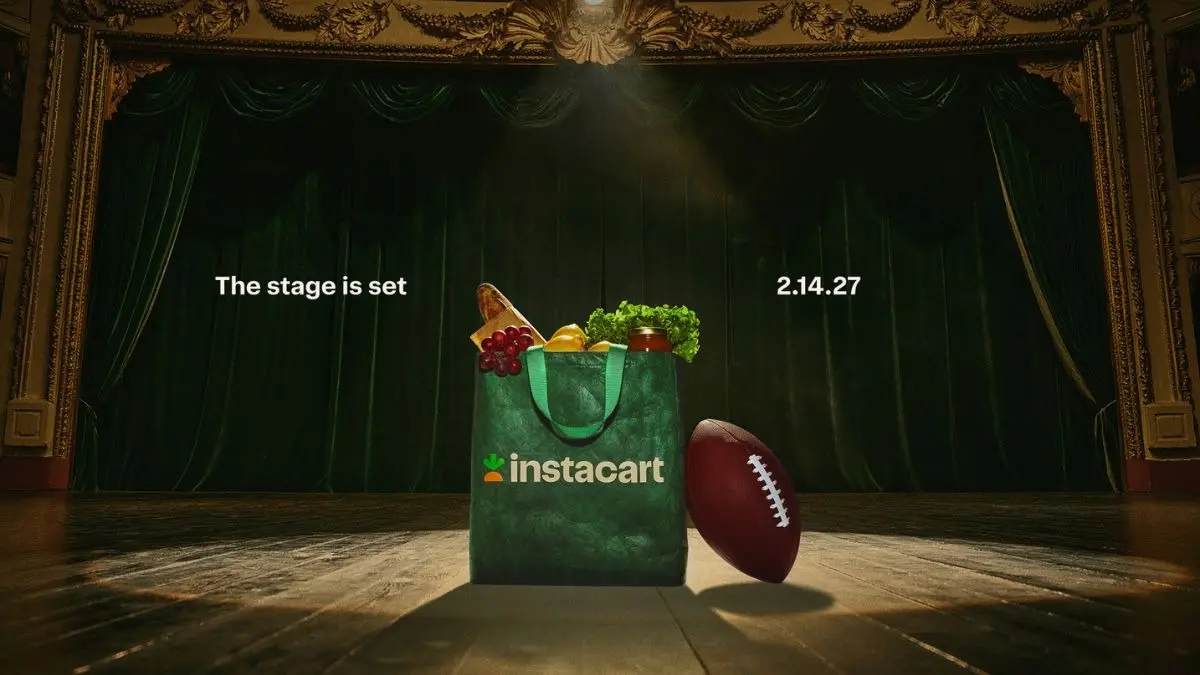
In a definitive display of marketing confidence and enduring brand strategy, grocery delivery and retail technology giant Instacart has officially announced its return to the Super Bowl advertising lineup for the third consecutive year. The upcoming national linear commercial marks another milestone in the company’s aggressive evolution from an essential e-commerce utility into a dominant cultural and retail media powerhouse.
Spearheaded by Chief Marketing Officer Laura Jones, the high-stakes creative campaign will once again be a collaborative effort between Instacart’s in-house creative agency, Local Produce, and global advertising powerhouse McCann, marking the second consecutive year the two entities have joined forces for the Big Game.
While specific plot details, celebrity cameos, and visual concepts for the upcoming spot remain tightly under wraps, the announcement underscores a broader industry trend: the Super Bowl is no longer just a platform for legacy consumer packaged goods (CPG) brands, but a vital battleground for tech-enabled platforms vying for daily consumer mindshare. For Instacart, the decision to return to football’s ultimate stage reflects strong internal metrics, sustained revenue growth, and a conviction that premium, mass-reach television advertising yields tangible dividends in customer acquisition and brand equity.
This comprehensive report examines Instacart’s rapid ascent to the Super Bowl stage, the strategic partnership between Local Produce and McCann under the leadership of Laura Jones, the economic realities of modern Super Bowl advertising, and what this high-profile marketing bet portends for the future of the grocery delivery and retail media landscape.
Detailed Chronology: From Startup Disrupter to Super Bowl Mainstay
The Incubation of an Advertising Titan
To understand the significance of Instacart’s third consecutive Super Bowl appearance, one must examine the astonishingly brief timeline of the company’s brand-building journey. Founded in 2012, Instacart spent its formative years operating with a lean, performance-marketing-heavy playbook. For the better part of a decade, the company relied on digital acquisition channels—search engine optimization, paid social media, and referral incentives—to scale its user base across North America. Brand advertising was secondary to utility.
However, the global disruptions of 2020 and 2021 fundamentally altered consumer behavior, catapulting grocery delivery from a niche convenience into an essential service. As millions of households turned to the platform to secure household staples during lockdowns, Instacart’s leadership recognized a critical imperative: to transition from a transactional utility into a deeply trusted, top-of-mind consumer brand.
The 2023 Breakthrough: Hitting the Big Game
That strategic pivot crystallized in early 2023 when Instacart made its inaugural appearance on the Super Bowl stage. Entering the world’s most expensive advertising arena was a bold gamble for a company that had spent the previous decade focusing almost exclusively on lower-funnel, conversion-driven digital marketing.
The debut spot introduced mainstream television audiences to the expansive scope of Instacart’s marketplace, showcasing how the app transcended mere supermarket delivery to encompass specialty retailers, beauty products, electronics, and home goods. The 2023 campaign served as a watershed moment, proving that the brand could command the attention of over 100 million concurrent viewers and translate that cultural moment into sustained app downloads and retail partnerships.
The 2024 Evolution: Refining the Narrative
Building upon the momentum of its rookie outing, Instacart returned for a sophomore appearance in 2024. By this time, the company’s marketing apparatus had matured significantly. The 2024 spot leaned deeper into the emotional resonance of food, family gatherings, and the seamless integration of technology into daily life.
Crucially, the 2024 campaign coincided with Instacart’s broader corporate evolution—most notably its transition into a publicly traded company following its September 2023 initial public offering (IPO). The Super Bowl stage provided an ideal megaphone to reassure investors, retail partners, and consumers alike of the platform’s enduring market leadership in an increasingly crowded quick-commerce ecosystem.
The 2025–2026 Horizon: Entering Year Three
Now, looking toward the upcoming Super Bowl, Instacart is cementing its status as a fixture of modern Big Game advertising. Having navigated the transition from an experimental broadcast newcomer to a seasoned Super Bowl advertiser, the company is utilizing its third consecutive appearance to reinforce its market dominance. The journey—summarized succinctly by CMO Laura Jones as going "from zero to Super Bowl in four years"—illustrates a masterclass in accelerated brand building within the hyper-competitive digital economy.
Supporting Context & Metrics: The Economics of Instacart’s Marketing Engine
Decoding the Investment: The ROI of Super Bowl LIX
Purchasing a 30-second national commercial spot during the Super Bowl is the single most expensive media buy in the global marketplace. With network broadcast costs for
a single half-minute routinely hovering between $7 million and $8 million—exclusive of production costs, talent fees, and multi-channel digital support campaigns—participating in the Big Game demands rigorous financial justification.
For a technology platform operating on marketplace margins, such an expenditure cannot be justified by vanity metrics alone. Industry analysts point to several key performance indicators (KPIs) that justify Instacart’s continued investment:
- Massive Top-of-Funnel Reach: The Super Bowl delivers the last remaining truly mass-audience television event, uniting demographics that are otherwise heavily fragmented across streaming services and ad-free platforms.
- Retail Media Synergy: Instacart is no longer just a delivery app; it is a burgeoning retail media network (RMN). Brands that advertise on the platform—and consumer goods giants that partner with Instacart for promotional campaigns—benefit enormously from the halo effect of a national television campaign.
- App Store Dominance: Historically, brands that advertise during the Super Bowl experience immediate, exponential spikes in app store search rankings and downloads within 48 hours of the broadcast. For Instacart, converting a casual viewer into an active app user on game day yields long-term customer lifetime value (LTV) that amortizes the initial media cost.
- B2B Brand Equity: Beyond consumer acquisition, a high-profile Super Bowl presence serves as a powerful B2B signaling mechanism. It reassures grocery chains, regional merchants, and enterprise CPG partners that Instacart possesses the financial muscle and cultural resonance to remain their primary digital storefront partner.
The Hybrid Creative Model: Local Produce and McCann
A vital element of Instacart’s creative strategy is its hybrid agency model. Rather than relying entirely on an external agency or keeping all creative ideation strictly internal, Instacart has cultivated a powerful synergy between its proprietary internal creative agency, Local Produce, and its long-standing external partner, McCann.
- Local Produce: Instacart’s in-house agency brings an intimate, nuanced understanding of the brand’s core product mechanics, proprietary data insights, and real-time consumer behavior. Because Local Produce lives and breathes the Instacart ecosystem daily, they ensure the creative concepts remain authentic to the actual app experience and the needs of shoppers and retailers.
- McCann: As a global creative titan, McCann injects world-class storytelling scale, cinematic execution, and broad cultural fluency into the partnership. McCann brings decades of institutional expertise in crafting iconic, conversation-starting campaigns that resonate far beyond the initial broadcast window.
This collaborative dynamic—leveraging the agile, data-informed insights of Local Produce alongside the blockbuster creative execution of McCann—has proven to be a formidable formula, earning the trust of executive leadership and delivering consistent returns.
Official Statements & Industry Perspectives
The announcement of Instacart’s return to the Super Bowl has generated considerable buzz across the advertising, tech, and retail sectors. At the center of this narrative is Chief Marketing Officer Laura Jones, whose strategic vision has steered the brand’s meteoric rise.
In an official corporate statement reflecting on the milestone, Jones emphasized the velocity of the company’s brand evolution:
"We went from zero to Super Bowl in four years, and since then, our big bets have continued to pay off for the business. Our brand is stronger than ever. I can’t wait to unveil what the team and McCann have been cooking up."
Jones’s reference to what the team has been "cooking up" serves as a clever nod to the culinary core of Instacart’s business while teasing the tone of the upcoming campaign. Industry insiders interpret her comments as a signal that the 2025/2026 creative iteration will double down on the intersection of food, convenience, and cultural joy, leaning away from dry functional messaging in favor of emotionally resonant storytelling.
Advertising analysts have been quick to praise Jones’s leadership and the stability provided by the Local Produce-McCann partnership. In an era where many CMOs rotate through agencies every few years in search of quick fixes, Instacart’s consistency in maintaining its core creative alliances signals a mature, long-term approach to brand stewardship.
Future Outlook: The Evolution of Delivery Apps in Mainstream Media
As Instacart prepares to take its place among the elite roster of Super Bowl advertisers for the third consecutive year, the broader implications for the quick-commerce and delivery app sector are profound.
1. The Maturation of Quick-Commerce Marketing
The grocery and retail delivery sector has transitioned from a hyper-aggressive growth-at-all-costs phase into a mature, profitable industry characterized by strategic brand building. While early marketing wars were fought with discount codes, push notifications, and aggressive digital acquisition funnels, today’s leaders recognize that sustainable differentiation requires deep emotional connections with consumers. Instacart’s continued presence on the Super Bowl stage establishes a high barrier to entry for smaller competitors who lack the brand equity and financial resources to command national broadcast attention.
2. The Convergence of Linear TV and Digital Retailing
The upcoming campaign will undoubtedly feature sophisticated multi-channel synchronization. Modern Super Bowl advertising is no longer contained within the 30-second television window; it is an omnichannel ecosystem spanning social media real-time marketing, influencer integrations, in-app experiences, and localized promotional tie-ins. Instacart is uniquely positioned to leverage its digital marketplace to capture the immediate purchase intent generated by the television broadcast, creating a seamless loop from inspiration to home delivery in real time.
3. Strengthening the Retail Media Footprint
As Instacart continues to expand its enterprise offerings—providing digital storefront technology and retail media networks to traditional grocers—national brand visibility is paramount. When grocery executives and major CPG brands see Instacart investing aggressively in prime-time cultural moments, it reinforces their confidence in the platform as an indispensable partner for reaching modern consumers.
Conclusion
Instacart’s return to the Super Bowl for its third consecutive year under the leadership of CMO Laura Jones is much more than a routine media buy. It is a calculated assertion of market leadership, a testament to the effectiveness of its hybrid agency model with Local Produce and McCann, and a clear signal of the company’s long-term vision. As the big game approaches, industry observers and consumers alike will be watching closely to see what culinary and cultural delights Instacart has "cooked up" for the global stage.
