

Executive Overview
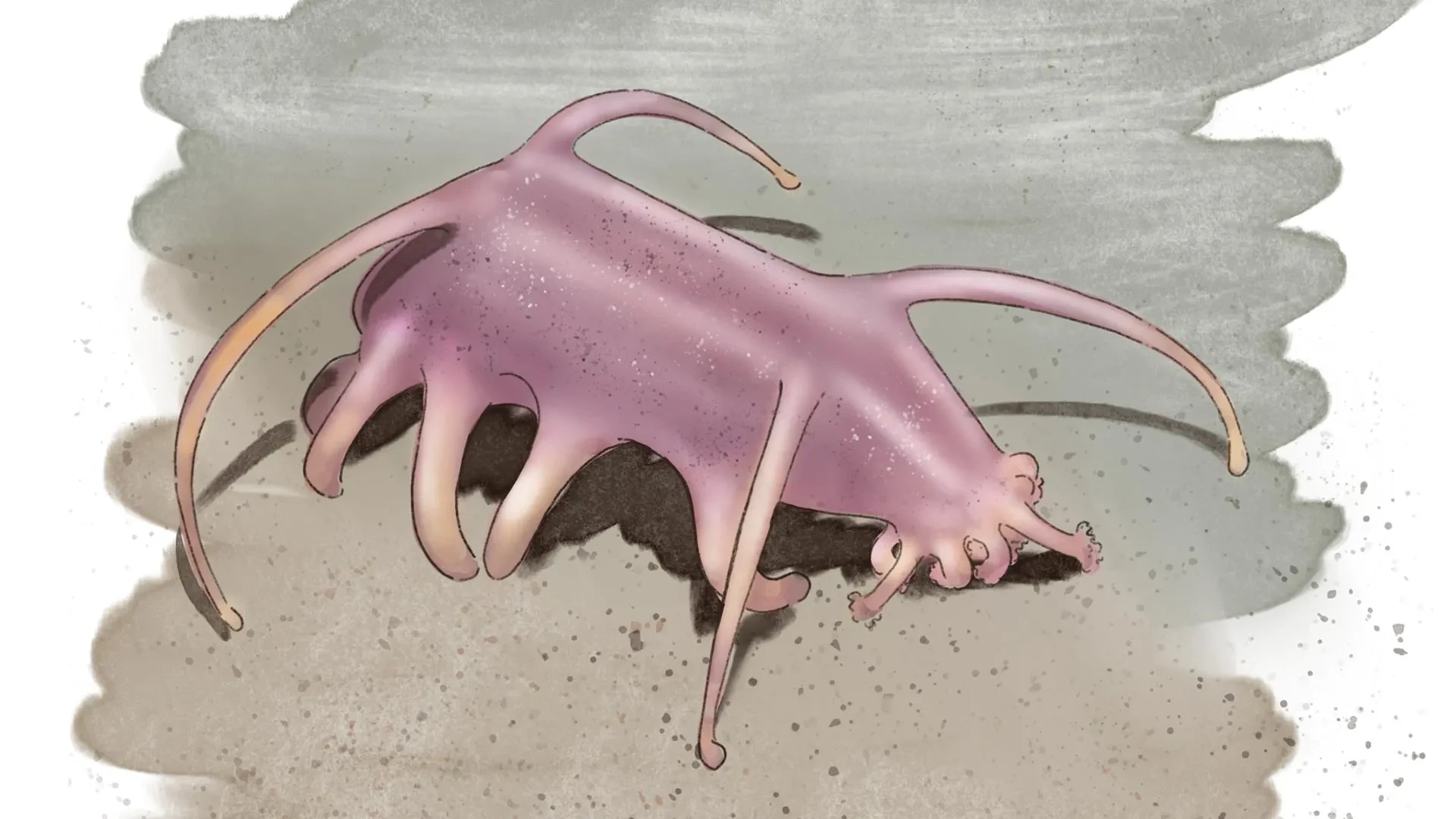
Deep beneath the crushing pressure and perpetual darkness of the ocean floor, a microscopic evolutionary drama has just been brought to light. Researchers at the University of Tokyo have made a groundbreaking discovery regarding Scotoplanes—affectionately known as "sea pigs"—translucent, gelatinous echinoderms that crawl slowly across abyssal plains. Hidden deep within the body walls of these unassuming deep-sea creatures lies a previously unknown bacterial species that challenges our understanding of microbial adaptation and host dependency.
Named Candidatus Abyssoplasma scotoplanesicola, this newly identified bacterium completely dominates the tissue ecosystem of its host, accounting for more than 70 percent of all bacterial gene sequences found in the sea pig’s body wall. What makes this microorganism profoundly fascinating to the scientific community is its radical genetic architecture. Boasting a heavily reduced, ultra-compact genome containing just 649,000 DNA bases—roughly one-seventh the size of common laboratory Escherichia coli—the bacterium has seemingly cast off essential metabolic pathways required for independent survival.
Instead of maintaining standard biological machinery for energy generation and nutrient synthesis, Candidatus Abyssoplasma scotoplanesicola has heavily invested its limited genetic real estate into something entirely unexpected: massive surface proteins. More than a quarter of its entire genome is dedicated to crafting colossal proteins exceeding 5,000 amino acids in length. For context, the average bacterial protein is a modest 300 amino acids long.
This monumental discovery sheds unprecedented light on the symbiosis between deep-sea invertebrates and their internal microbiomes. As marine biologists increasingly recognize that sea cucumbers and their kin drive up to 90 percent of the biomass in certain benthic ecosystems, uncovering the hidden mechanics of host-microbe evolution in the abyss opens vital new frontiers in marine microbiology, evolutionary biology, and ecology.
Detailed Chronology: Unraveling the Abyssal Mystery
The path to discovering Candidatus Abyssoplasma scotoplanesicola represents a meticulously executed synthesis of deep-sea oceanography, high-resolution molecular biology, and advanced bioinformatics.
Phase One: Specimen Collection and Benthic Exploration
The investigation began during systematic deep-sea research expeditions conducted by a collaborative network of Japanese scientific institutions. Researchers targeted the benthic zones to collect pristine specimens of Scotoplanes sea pigs. Operating at depths where sunlight is an absolute impossibility and temperatures hover just above freezing, retrieval of these delicate, gelatinous invertebrates required specialized submersibles and remote-operated vehicles (ROVs) equipped with gentle suction samplers to preserve the integrity of the animals’ soft tissues.
Upon returning to surface laboratories, the research team secured eight individual sea pigs spanning three distinct species. These samples formed the core foundation for a multi-pronged anatomical and genetic survey designed to map out the microbial communities residing within deep-sea echinoderms—a class of marine invertebrates that includes sea cucumbers, sea stars, and urchins, all known for harboring complex, under-studied microbial populations beneath their outer membranes.
Phase Two: DNA Extraction and Metagenomic Profiling
To identify which microorganisms inhabited the sea pigs, scientists extracted DNA from various tissue layers throughout the animals’ bodies. Rather than relying solely on traditional culturing methods—which notoriously fail to capture the vast majority of deep-sea bacteria that cannot replicate in artificial laboratory environments—the team utilized high-throughput genetic sequencing.
They focused particularly on amplifying and analyzing bacterial 16S rRNA gene sequences, a universal molecular marker used for identifying bacterial taxa. When the genetic sequencing data was processed, a striking and unequivocal pattern emerged. One specific bacterial phylotype was not merely present; it completely overwhelmed the samples. In the body walls of the three sea pig species examined, this single bacterium accounted for more than 70 percent of all detected 16S rRNA sequences. It was the undisputed master of the tissue microenvironment.
Phase Three: Fluorescence Imaging and Spatial Mapping
Knowing that the bacterium was statistically dominant in the genetic data was only half the battle; the team needed to confirm its physical whereabouts within the host architecture. To achieve this, the researchers deployed advanced fluorescence imaging techniques.
By applying fluorescently tagged probes designed to bind specifically to the genetic signatures of the dominant bacterium, scientists were able to illuminate its exact distribution under confocal microscopes. The imaging confirmed that the microorganisms were deeply integrated within the interstitial layers of the sea pig’s body wall—living not merely as transient hitchhikers, but as localized residents intimately associated with host cells.
Phase Four: Genome Assembly and the "Giant Protein" Reveal
With the bacterium’s physical and genetic identity established, the research team reconstructed its complete genome. This is where the investigation yielded its most astonishing revelations. The genome was exceptionally streamlined, containing a mere 649,000 DNA base pairs. Furthermore, critical gene sets responsible for autonomous energy-generating pathways—metabolic tools that free-living bacteria use to break down raw nutrients independently—were conspicuously absent.
Yet, as the researchers analyzed where the remaining genetic code was being spent, they uncovered a massive investment in surface-associated proteins. Over 27.6 percent of the bacterium’s entire genome was devoted to building gigantic surface structures, with individual protein chains exceeding 5,000 amino acids. This structural adaptation signaled a profound evolutionary trade-off: trading metabolic independence for specialized, host-integrated survival strategies.
Supporting Context & Metrics: The Ecology of Sea Pigs and Their Microscopic Tenants
To fully appreciate the significance of Candidatus Abyssoplasma scotoplanesicola, one must examine the unique ecological niche of its host and the staggering biological metrics governing this discovery.
The Underrated Architects of the Deep Floor
Sea pigs (Scotoplanes) belong to the order Elasipodida, a specialized group of deep-sea sea cucumbers. While marine mammals like sea lions and iconic fish like seahorses capture the public imagination, benthic echinoderms quietly dictate the biological rhythm of the deep ocean floor.
- Biomass Dominance: In many abyssal andhadal environments, sea cucumbers make up an astonishing 90% or more of the total biomass among large seafloor animals.
- Nutrient Cycling: Using delicate, tube-shaped feet, sea pigs slowly trudge across marine sediment, vacuuming up organic detritus (marine snow) with specialized oral tentacles. They process massive quantities of decaying matter, playing a vital role in recycling nutrients back into the benthic food web.
- Abyssal Daycare: Beyond their ecological housekeeping, sea pigs act as unexpected ecological anchors. Juvenile king crabs have frequently been documented utilizing the soft, gelatinous bodies of sea pigs as mobile fortresses to hide from apex predators.
Genomic Metrics of Candidatus Abyssoplasma scotoplanesicola
The discovery of this bacterium places it firmly in the conversation regarding the limits of microbial genome reduction (genome streamlining). Below is a comparative breakdown of its metrics against standard biological benchmarks:
| Biological Metric | Candidatus Abyssoplasma scotoplanesicola | Escherichia coli (Standard Lab Strain) |
|---|---|---|
| Total Genome Size | ~649,000 DNA bases | ~4,600,000 DNA bases |
| Genome Scale Ratio | ~1x (Baseline) | ~7x larger |
| Proportion of Genome for Surface Proteins | 27.6% | Significantly lower percentage |
| Maximum Length of Discovered Proteins | >5,000 amino acids | Rarely exceeds 1,000–2,000 amino acids |
| Average Bacterial Protein Length | ~300 amino acids | ~300 amino acids |
| Energy Pathway Genes | Largely absent/reduced | Fully robust and independent |
The Metabolic Dependency Trade-Off
Because the bacterium lacks standard energy-generating gene clusters, it cannot survive in open-ocean waters on its own terms. Instead, it relies heavily on its sea pig host to supply vital molecular building blocks. These include:
- Amino Acids: Essential pre-fabricated units required to construct cellular proteins without manufacturing them from scratch.
- Nucleic Acid Precursors: The molecular building blocks necessary to replicate DNA and RNA.
- Lipids and Minerals: Critical components required to maintain cell membrane integrity and metabolic homeostasis.
In return, the bacterium allocates nearly a third of its genetic coding capacity to synthesizing gigantic surface proteins. While their exact functions are still under investigation, these towering macromolecular structures are theorized to act as molecular Velcro or signaling arrays—anchoring the bacteria securely within the host tissues, modulating immune responses, or facilitating cellular clustering.
Official Statements from the Research Front
The implications of this discovery reach far beyond a single new species, offering profound theoretical models for how bacteria transition from free-living organisms to obligate symbionts.
Yu Yoshida, a Ph.D. student at the University of Tokyo’s Graduate School of Frontier Sciences and lead author of the study, emphasized the rarity of the findings and the specific gaps they bridge in deep-sea biology:
"Taxonomic and genomic information about these body-wall inhabiting bacteria is scarce, and very few studies of deep-sea species have linked this information to the bacteria’s location within host tissues," Yoshida noted, highlighting the technical hurdles the research team successfully cleared.
Elaborating on the shock of the genomic analysis, Yoshida pointed directly to the paradox of the bacterium’s missing metabolic machinery versus its bloated surface-protein inventory:
"The complete genome was very small, only 649,000 bases. By comparison, the E. coli genome is approximately seven times larger. However, we were more surprised by the composition. Genes for some of the energy-generating pathways—used for breaking down nutrients and generating energy—which are commonly found in bacteria were not detected."
Addressing the massive genomic allocation dedicated to cell-surface structures, Yoshida explained:
"Meanwhile, genes for encoding surface-associated protein groups—that is, DNA with the blueprints for building specific proteins on cell surfaces—accounted for 27.6% of the entire genome. This included genes for proteins exceeding 5,000 amino acids. As bacterial proteins average about 300 amino acids in length, 5,000 is exceptionally long. This offers us important clues as to which functions are retained in bacteria which live in close association with their host."
Looking toward the broader horizon of host-microbe evolution, Yoshida summarized the team’s ultimate investigative ambitions:
"We would really like to understand how this bacterium could become so dominant in the body wall, the functions of the giant surface proteins, what competition it faces from other bacteria, and of course the effects on the host. More broadly, further investigation could provide fundamental insights into how bacteria colonize hosts and adopt a host-dependent lifestyle."
Future Outlook: Uncharted Frontiers in Abyssal Symbiosis
The identification of Candidatus Abyssoplasma scotoplanesicola opens up an expansive new chapter in marine microbiology and evolutionary ecology, raising several critical questions that will guide future research initiatives:
1. Decoded Functions of the "Giant Proteins"
The immediate priority for structural biologists is to decipher the exact three-dimensional architecture and biological role of proteins exceeding 5,000 amino acids. Are these proteins mechanical anchors locking the bacterium into the sea pig’s extracellular matrix? Do they act as molecular camouflage that blinds the host’s immune system to the presence of millions of foreign microbial cells? Advanced cryo-electron microscopy and biochemical assays will be required to crack these structural codes.
2. Discerning Mutual Benefits
While it is clear what the bacterium gains from the relationship—a sheltered habitat and a steady supply of amino acids, lipids, and nucleic acid precursors—the reciprocal benefit to the sea pig remains an open scientific question. Researchers hypothesize that the dense carpet of Candidatus Abyssoplasma scotoplanesicola might act as a biological shield, outcompeting pathogenic microorganisms or producing secondary metabolites that deter disease. Proving this hypothesis will require comparative health analyses of sea pigs with varying microbial densities.
3. Broadening the Abyssal Survey
Sea pigs are only one component of the complex benthic ecosystem. Researchers are now eager to examine whether similar ultra-compact, giant-protein-producing bacteria inhabit other deep-sea echinoderms, such as brittle stars, sea lilies, and deep-water sea urchins. Such discoveries could reveal whether this evolutionary strategy is a localized anomaly or a widespread adaptation governing life across the world’s abyssal plains.
4. Funding and Institutional Support
This landmark research was made possible through dedicated public and academic funding grants, specifically supported by JSPS KAKENHI Grant Number JP22H00557 (awarded to S.Y.) and JST SPRING, Grant Number JPMJSP2108 (awarded to Y.Y.). Continued financial backing for deep-sea expeditions and genomic sequencing will remain essential as scientists race to document the hidden biodiversity of the deep ocean before anthropogenic pressures and climate shifts alter these fragile ecosystems forever.
Ultimately, Candidatus Abyssoplasma scotoplanesicola serves as a humbling reminder of the evolutionary ingenuity hidden away in the most inhospitable corners of our planet. By peering beneath the skin of a humble deep-sea sea pig, modern science has unlocked a microscopic window into how life adapts, cooperates, and endures against the crushing weight of the deep ocean.
