

Executive Overview
For nearly two decades, Dancing with the Stars (DWTS) has captured the hearts of television audiences, blending high-energy choreography, celebrity transformation, and intense, nail-biting competition. Yet, beneath the sequins, spray tans, and standing ovations lies a complex machinery of scoring algorithms, rigorous rehearsal schedules, and highly scrutinized financial structures.
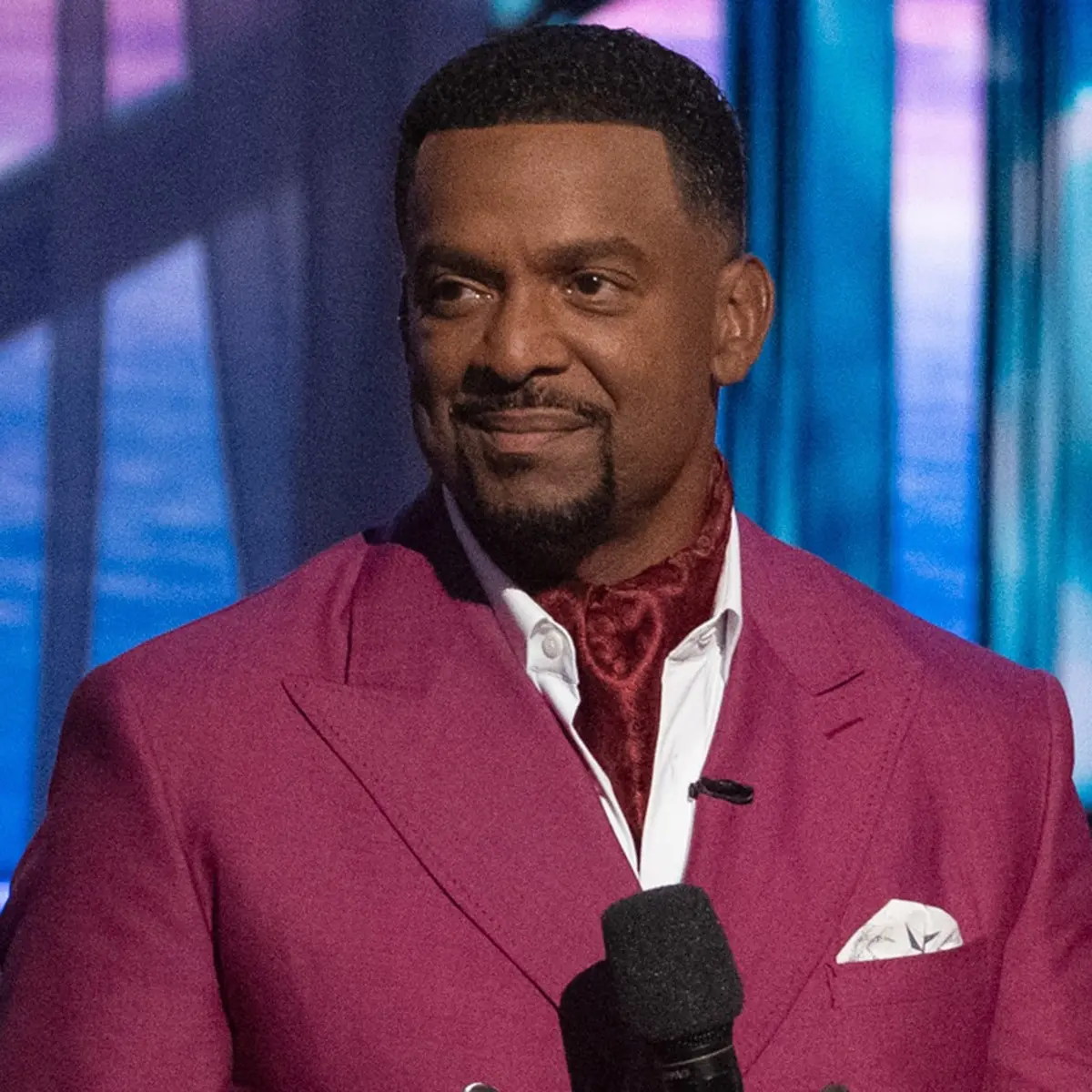
Recently, the inner workings of America’s favorite dance competition have been thrust into the spotlight. Following viral fan theories dissecting the mathematical integrity of the show’s weekly rankings—particularly surrounding internet personality Connor Wood and the fierce debates leading up to the season finale—longtime host Alfonso Ribeiro stepped up to clarify how the numbers genuinely add up.
At the same time, recent revelations from former champions like Bobby Bones and professional dancers such as Jenna Johnson, Lindsay Arnold, and Rylee Arnold have pulled back the curtain on the staggering economics of the ballroom. From multi-thousand-dollar per-episode star salaries and intense four-hour daily rehearsal blocks to the tightly guarded pairing process and a costume department that constructs custom wardrobes under impossible deadlines, Dancing with the Stars operates as an elite, high-stakes military-grade production disguised as lighthearted entertainment.
This deep dive investigates the mathematical mechanics governing DWTS eliminations, debunks long-standing myths of rigging, breaks down the financial realities of both celebrities and professional dancers, and explores the grueling infrastructure required to keep the ballroom spinning.
Detailed Chronology: Demystifying the Math and Debunking Fan Theories
The internet has long been a breeding ground for conspiracy theories regarding reality television competitions, and DWTS is no exception. Viewers routinely comb through broadcast footage, judge scorecards, and voting windows to find discrepancies or proof of manipulation.
The Numerical Ranking Theory and Ribeiro’s Correction
The latest wave of skepticism erupted on TikTok, where a viral fan theory claimed that contestants are ranked twice in numerical order during elimination nights: once based on the judges’ panel scores (ordered highest to lowest) and once based on audience votes. According to the theory, each star is awarded two sets of points matching their numerical positions in these rankings.
The speculation suggested that ties—such as when Amber Glenn and Jenna Dewan both earned a stellar 30 points from the judges in week nine—would cause the system to skip the next lowest position entirely. Theorists argued this glitch would artificially alter the point distribution, adversely affecting lower-tier stars fighting to escape elimination.
Stepping into the role of resident myth-buster, host Alfonso Ribeiro took to social media to shut down the assumption. Responding directly to the viral video on November 18, Ribeiro laid out the exact arithmetic used by the production team.
"Now do the math with no breaks in the scores. It doesn’t skip 5," Ribeiro wrote, referencing how Harry Shum Jr. earned the highest judges’ score of the seven remaining contestants to rank at number seven. Glenn and Dewan followed by tying for sixth place, which naturally positioned Maura Higgins at the fifth position rather than skipping ahead to fourth. "Maura would get 5. No skip."
Ribeiro further clarified how lower-tier scoring brackets are handled. When contestants like Ezra Frech, Tatyana Ali, and Connor Wood all received a collective low score of 27 points that same week, Ribeiro explained that they would seamlessly occupy the next shared position directly behind Higgins, ensuring the mathematical progression remains consistent. "The lowest judges’ scores might be 4 not 3," he noted, effectively putting an end to the panic surrounding Connor Wood’s standing ahead of the finale.
The original poster, visibly relieved by the transparency, replied, "Speechless! Ahhh making these adjustments! Thanks Alfonso!"
History Repeats: The "Rigged" Allegations
This is not the first time production members have had to separate fact from fiction. Speculation regarding the show’s integrity has bubbled up intermittently over the years, most notably following Hayes Grier’s shocking elimination back in season 21.
When a clip from the LexLos podcast discussed fan theories that the voting system was manipulated to push certain agendas, Ribeiro did not mince words.
"No chance," Ribeiro retorted. "We want everyone who’s popular to stay on. It’s basic logic."
From a business perspective, the network and production team rely heavily on high-profile fan favorites to maintain ratings, advertising revenue, and social media engagement. Deliberately ousting popular contestants would run counter to the fundamental goals of a live television broadcast.
Supporting Context & Metrics: The Economics of the Ballroom
While the focus on stage is entirely on the art of the tango, foxtrot, and salsa, off-stage conversations frequently turn to compensation. Exactly how much do the celebrities and professional dancers take home for their grueling physical efforts?
Celebrity Salaries: A Sliding Scale
Citing multiple industry sources, Variety reported in 2019 that standard Dancing with the Stars celebrity contestants pocket an upfront baseline of $125,000 for the initial rehearsal period and the first two weeks of live shows. As contestants survive successive elimination rounds, their weekly payout scales upward. Historically, sources indicated a maximum cap of approximately $295,000 for stars making it deep into the season.
However, inflation, increased production budgets, and star power have shifted these numbers. Bobby Bones, who famously won season 27 alongside partner Sharna Burgess in 2018 despite receiving low judges’ scores, shed light on the modern sliding scale during a September 2025 appearance on Jason Tartick’s podcast, Trading Secrets.
"That show pays OK," the radio personality revealed. "Like, first episode, no money. Second episode, $10,000. I think it’s like, $10,000, $10,000, $20,000, $20,000. It ends up being $50,000 an episode if you last."
Combined with a baseline rehearsal stipend of around $110,000, Bones estimated his total earnings: "I ended up making close to $400,000 from that show." While ABC has never officially confirmed these figures, Bones’ breakdown provides a rare, transparent glimpse into the lucrative reality of surviving until the finale.
Professional Dancer Contracts and Payouts
The professional dancers—the backbone of the franchise—operate under a vastly different financial framework, though longevity also dictates their earning potential. Even if a pro is eliminated early in the competition during the initial rounds, they are protected by contractual guarantees.
"You’re guaranteed until a certain amount of weeks," Jenna Johnson explained on a June 2025 episode of Kelly Stafford and Hank Winchester’s podcast, The Morning After. "I think there’s different contracts though. I can’t speak for everybody."
Contrary to popular belief, winning the coveted Len Goodman Mirrorball Trophy does not trigger a massive cash prize. Johnson, who secured victories in season 26 with Adam Rippon and season 33 with Joey Graziadei, confirmed that pros do not pocket a giant jackpot.
"If you make it all the way to the end, you’re getting paid the whole season, which is amazing, and you get a bonus on top of that for making it to the finale," Johnson noted. "If you win, it’s not like you win $1 million and split it with your partner. You’re just getting a cute trophy together."
The Troupe Pay Discrepancy
Stepping down from a professional slot to a troupe member comes with a severe financial penalty. On a 2022 episode of Trading Secrets, Lindsay Arnold recalled how her salary was slashed "more than in half" when she transitioned from a main-stage pro to a troupe dancer, highlighting the rigid tier system within the dance department.
Official Statements & Behind-the-Scenes Realities
Beyond the math and the money, the day-to-day ecosystem of DWTS is defined by strict operational secrecy, intense physical labor, and tightly controlled creative collaborations.
The Pairing Process: Zero Input, High Stakes
How do producers decide which professional dancer gets paired with which celebrity? According to the pros, the decision-making process is entirely out of their hands.
"You get no say," Lindsay Arnold stated on a May 2025 episode of Maggie Sellers’ podcast, Hot Smart Rich. "It’s very much just, ‘Here’s your partner. Make it work.’"
Furthermore, the identity of their partner is kept under wraps until the very last second to capture genuine, unscripted reactions on live television. "They really want to keep it a secret until you meet them live," Jenna Johnson explained on The Morning After. "They want that genuine reaction… They really don’t even want us to know the cast. It gets leaked a lot, but they want it very hush-hush until you walk in and meet your partner."
When casting directors do make their selections, they rely on a deliberate set of criteria. Former showrunner Rob Wade explained the methodology to E! News: "It’s based on height, build and personality and compatibility. We don’t pair people who aren’t going to get on. It’s too intense… You don’t want to see two people who don’t like each other and, quite frankly, we have made that mistake pairing people up who didn’t get on so well."
The Grueling Rehearsal Schedule
Viewers see a polished, two-minute routine on Tuesday nights, but the path to that performance is an all-consuming lifestyle. Rylee Arnold, partnered with Olympic gymnast Stephen Nedoroscik in season 33, detailed the relentless pace on the Lightweights Podcast:
"Every day we have four-hour rehearsals," Rylee shared. "It’s either 9:00 a.m. to 1:00 p.m., 1:00 p.m. to 5:00 p.m. or 5:00 p.m. to 9:00 p.m."
Once the physical rehearsal concludes, the work continues behind closed doors. Pros frequently meet with producers, refine creative concepts, sketch choreography, and review reference videos late into the night.
"Literally my whole life is devoted to it," Rylee added. "We have our show day on Tuesday and then it’s Wednesday to Sunday, straight rehearsals. And then Monday we have camera blocking and then Tuesday’s show day again." It is, by all accounts, a relentless, no-days-off operation.
Creative Collaboration and Wardrobe Miracles
When it comes to song selections, pros generally have creative freedom. Emma Slater and Britt Stewart shared via social media that song choices are "mostly yes" decided by the dancers, though executed as a collaborative effort alongside the show’s producers.
Meanwhile, the costume department operates at a breakneck speed that rivals the quickstep itself. Costume designer Daniela Gschwendtner revealed that her team of approximately 20 individuals, paired with a dedicated tailor shop, has a maximum of five days to construct all performance outfits from scratch.
"That’s half a day per costume, not including all the rhinestones," Gschwendtner noted. Because everything is custom-made to ensure a fresh, unique aesthetic every single week, couples typically try on their completed wardrobe items mere hours before the live broadcast begins.
Future Outlook
As Dancing with the Stars continues to evolve across broadcast and streaming platforms, the intersection of algorithmic transparency, fan engagement, and production integrity remains paramount. Alfonso Ribeiro’s direct intervention on social media marks a shift toward greater openness, reassuring a digitally savvy audience that the competition’s foundational mechanics are fair, structured, and mathematically sound.
Moving forward, the franchise will undoubtedly continue to grapple with public scrutiny regarding scores, votes, and celebrity advancement. Yet, as long as transparency matches the dazzling spectacle of the ballroom floor—and as long as legendary competitors and professional dancers continue to pull back the curtain on its inner workings—Dancing with the Stars will retain its crown as the gold standard of reality television competition.
