


Executive Overview
In the rapidly evolving landscape of digital product design, user experience (UX) research has long relied on general population testing to validate layouts, optimize conversion funnels, and iron out friction points. However, a groundbreaking exploratory study conducted in mid-2024 reveals that this conventional approach leaves blind spots in our design processes.
Led by accessibility experts and researchers from Fable—in collaboration with the University of California, Irvine—a comprehensive study investigated the unique insights provided by participants with cognitive disabilities. The findings are nothing short of paradigm-shifting: testers with cognitive disabilities identified 1.8 times more usability issues and generated 1.8 times more actionable suggestions than general population (gen pop) participants.
Cognitive disability—an umbrella term encompassing conditions that impact memory, focus, and information processing, including neurodivergent traits like ADHD, autism, and dyslexia—represents the fastest-growing disability demographic globally. As populations age and digital interfaces grow increasingly complex, understanding how cognitive disabilities intersect with UX is no longer a niche compliance checkbox. It is the ultimate diagnostic tool for building intuitive, high-performing digital products for everyone.
Detailed Chronology: From Pilot to Empirical Validation
The journey toward validating the value of cognitive inclusion in UX research followed a deliberate, rigorous methodology spanning several months:
- Summer 2024 – Formation of the Working Group: Fable’s VP of Innovation stepped in as co-chair of a specialized working group dedicated to establishing best practices for accessibility testing with individuals experiencing cognitive disabilities.
- Screener Development and Literature Review: The team designed specialized screeners to recruit participants self-identifying with memory, focus, and learning challenges. They simultaneously reviewed existing academic literature and industry case studies on cognitive testing.
- Pilot Testing (25 Testers): Best practices were put to the test in a pilot study involving 25 cognitive testers. Iterative refinements led to the creation of standardized interview guidelines, a quantitative survey for measuring digital product experiences, and open-source documentation.
- Experimental Design (The Joint Study): To test the hypothesis that cognitive testers yield superior usability insights compared to the general population, researchers partnered with the University of California, Irvine (featuring Syed Fatiul Huq and Fable researchers Pranav Pidathala, Ali Brown, and Michael Fagan).
- AI Prototyping and Execution: Using AI prototyping tools, the team generated three distinct websites with varying goals, content structures, and design paradigms:
- Strong Snacks: A minimalist, high-protein recipe site with bright visuals and straightforward filtering.
- Turning Pages: A feature-dense online bookstore featuring complex filtering, custom book lists, a book-matching swiping mechanism, and a full checkout flow.
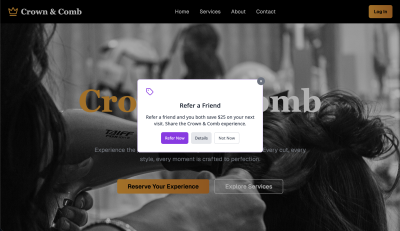
- Crown & Comb: A deliberate, high-concept hair salon site featuring booking tools, membership tiers, and an intentionally obscured bridal package task designed to test frustration limits.
- Data Collection and Analysis: Thirty user interviews were conducted (10 per website, split evenly between cognitive and gen pop participants). Every session was meticulously analyzed, counting every participant-raised issue, missed task element, and improvement suggestion.
Supporting Context & Metrics: What the Data Reveals
The quantitative and qualitative data gathered across the three platforms paint a vivid picture of how cognitive load impacts digital interactions.
Cross-Site Performance Overview
When comparing the two cohorts, the data consistently demonstrated that cognitive participants exposed structural flaws that general populations tended to adapt to or overlook:

- Strong Snacks (Simple Design): Cognitive participants found an average of 9.8 issues (compared to 6.4 for gen pop) and made 4.8 suggestions (vs. 2.6). Their overall experience scores (Accessible Usability Scale, or AUS) averaged 13.7 points lower.
- Turning Pages (Complex Functionality): As the most feature-heavy site, this platform triggered the highest volume of issues. Cognitive participants averaged 17 issues and 8.4 suggestions, scoring the experience 17.2 points lower than gen pop users.
- Crown & Comb (Intentional Complexity): Designed with high friction points, this site saw cognitive participants average 12 issues and 5.4 suggestions. Intriguingly, their AUS satisfaction scores were higher than the general population’s, suggesting that clear structural challenges frustrated the general audience more acutely when expectations weren’t met.
Categorical Breakdown of Issues
Grouping the data by issue category revealed that cognitive participants surfaced significantly more complaints regarding:
- Content: Ambiguous terminology, dense text blocks, and poorly organized information.
- Buttons and Links: Unpredictable affordances where interactive elements failed to behave as expected.
- Icons and Visual Elements: Decorative graphics that cluttered interfaces or failed to convey clear symbolic meaning.
- Media: Unwanted animations, carousels, and pop-ups that disrupted focus.
Official Statements & Qualitative Insights
The qualitative feedback captured during the study underscores how poor UX transcends mere inconvenience, often translating into profound cognitive fatigue and emotional drain.
Comparing two participants who gave the lowest scores within their respective cohorts on the Crown & Comb site highlights this divergence:

General Population Participant:
"As soon as you have a name of a treatment and a little explanation and like the duration and the price, as soon as you click onto that, it should be that you can interact with that service straight away… This feels not particularly engaging."Cognitive Accessibility Participant:
"For example, like, the mental energy aspect of it, like, sometimes there’s, like, okay, cookies, and then ads, pop-ups, or maybe the website or service has too many options to look through… It makes me, like, feel drained and less able to focus."
While the general population participant expressed annoyance at a broken user flow, the cognitive participant described an experience that actively depleted their mental energy—turning a simple website visit into an accessibility barrier.
Future Outlook: Why Cognitive Inclusion is the Future of UX
As digital platforms saturate the market, user retention relies heavily on seamless, frictionless interactions. The demographic realities of the near future make cognitive accessibility an imperative rather than an optional enhancement:
- An Aging Population: According to U.S. Census projections, the population aged 65 and older is set to surge from 17% to 25% by 2060. As populations age, cognitive decline and age-related access needs become universal experiences.
- The "Curb-Cut Effect" in Digital Design: Designing for cognitive accessibility—focusing on clarity, reduced cognitive load, and predictable navigation—directly benefits stressed users, mobile users operating in distracting environments, and individuals reading in a second language.
- A Catalyst for Broader Research: Teams often find assistive technology testing (such as screen readers) intimidating to initiate. Starting with cognitive accessibility provides a natural, highly actionable on-ramp to inclusive research. As UX managers have noted, engaging with cognitive users yields an extraordinary density of actionable insights: “Two sessions with cognitive users feel like 200 because of the volume of insights we get.”
Key Takeaways for Product Teams
- Reduce Cognitive Load: Eliminate unnecessary animations, pop-ups, and dense walls of text that drain user focus.
- Ensure Predictable Interactions: Make sure buttons, links, and navigation items behave consistently across every page.
- Broaden Your Testing Panels: Incorporate participants with cognitive access needs early in the design phase to catch usability flaws that general population testers normalize.
By embracing cognitive inclusion in UX research, product teams can build cleaner content, simpler workflows, and more empathetic products that ultimately drive better business outcomes for everyone.
