

Executive Overview
For decades, modern society has relied on plastic as an engineering marvel. Prized for its durability, versatility, and perceived chemical stability, synthetic polymer is embedded in virtually every facet of daily existence. From medical equipment and food packaging to children’s toys and single-use beverage containers, plastics are treated as benign and inert placeholders—materials that shape our world without chemically interacting with it.
That foundational assumption has now been fundamentally challenged.
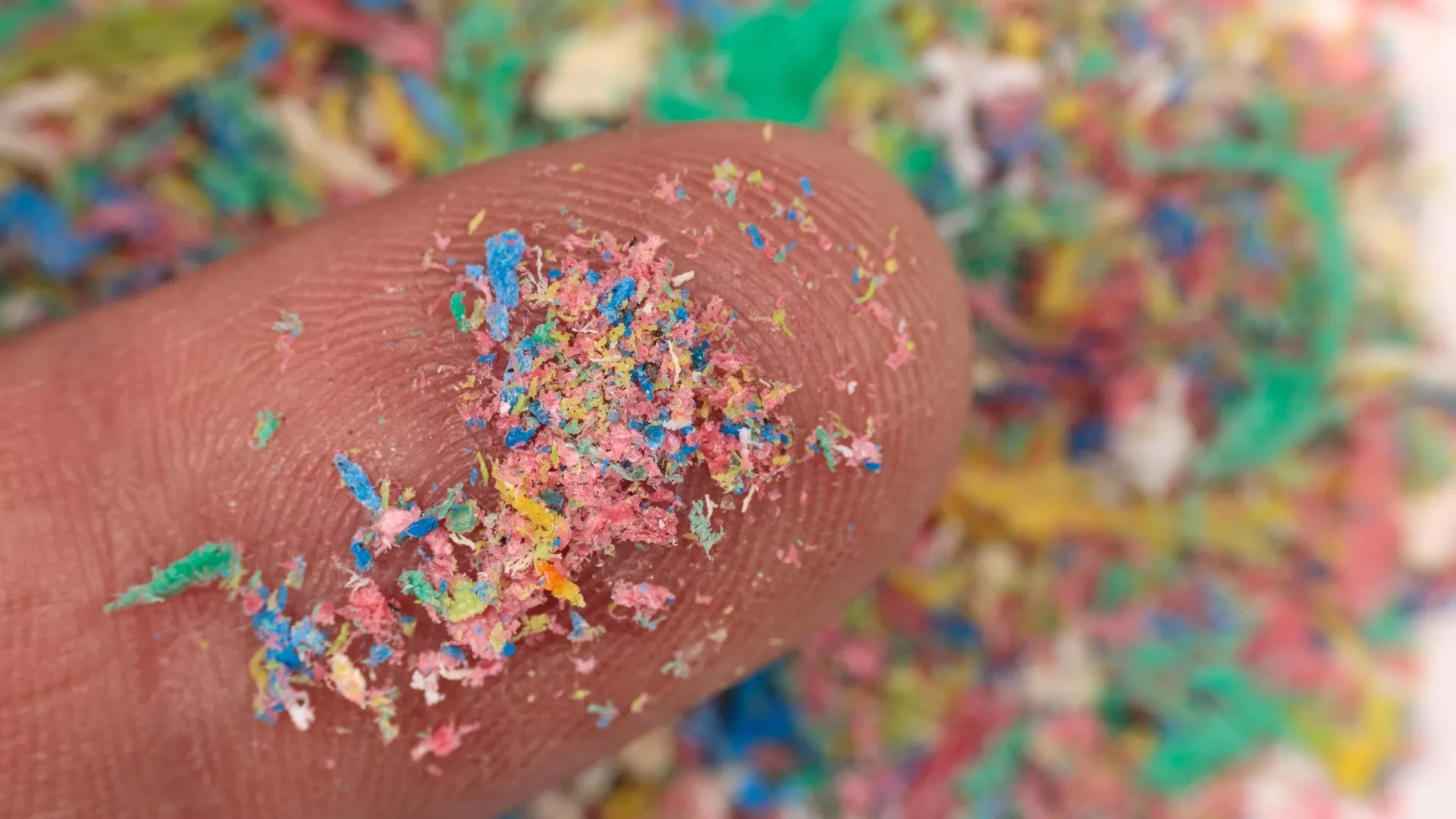
In a groundbreaking study published in the prestigious journal Nature, an interdisciplinary team of researchers from Columbia University and the University of California, Berkeley, has revealed that when plastics break down into microscopic fragments, they undergo a dangerous metamorphosis. Far from remaining passive bystanders in the environment or the human body, microplastics and nanoplastics actively alter the chemistry of their surrounding liquids.
By analyzing the physics of microscopic fragmentation, the research team discovered that as larger plastic objects degrade into microplastics and nanoplastics, their surface area-to-volume ratio explodes exponentially. These newly exposed surfaces engage in unexpected, highly reactive interactions with water molecules. The result is the spontaneous generation of reactive oxygen species (ROS)—volatile, high-energy radicals capable of wreaking havoc on living cells and biological tissue.
This discovery bridges a critical gap in modern toxicology. While epidemiological studies have increasingly correlated microplastic exposure with severe medical conditions—ranging from cardiovascular events and strokes to neurodegeneration—scientists lacked a concrete mechanism explaining how chemically inert polymers could cause biological damage. By proving that water and plastic create an electrochemical environment that generates tissue-damaging radicals, this research transforms our understanding of plastic pollution from an ecological eyesore into an urgent, systemic public health crisis.
Detailed Chronology: From Invisible Contaminants to Cellular Catalysts
To understand the weight of the recent Nature findings, it is necessary to trace the trajectory of microplastic research over recent years, charting how science shifted from mapping contamination to uncovering molecular toxicity.
The 2024 Bottled Water Breakthrough
The groundwork for this discovery was laid in early 2024, when a team in Columbia University’s Department of Chemistry, led by Professor Wei Min, unveiled a revolutionary laser-based microscopy technique. Utilizing stimulated Raman scattering—a cutting-edge optical imaging method—the researchers gained the unprecedented ability to visualize, count, and chemically identify individual plastic particles down to the nanometer scale.
Applying this technology to popular brands of bottled water, the team uncovered a startling reality. Each liter of bottled water contained an average of approximately 240,000 detectable plastic fragments. Crucially, the vast majority of these particles were not visible microplastics, but invisibly small nanoplastics measuring less than a micrometer across. This count was 10 to 100 times higher than previous analytical estimates, sending shockwaves through the scientific community and prompting immediate global scrutiny regarding dietary plastic ingestion.
The Escalation to Federal Action
The implications of the 2024 microscopy findings catalyzed swift responses from policymakers and regulatory bodies worldwide. The accumulation of peer-reviewed literature linking microplastics to human pathology triggered a cascade of institutional interventions:
- The Federal Initiative: In 2026, the federal government instituted a sweeping, $144 million multi-agency initiative specifically dedicated to investigating and mitigating the impacts of toxic microplastics within the human body.
- EPA Regulatory Shifts: Recognizing the pervasive nature of these contaminants, the U.S. Environmental Protection Agency (EPA) formally added microplastics to its federal list of contaminants of concern in drinking water—the first time these particles have achieved this regulatory classification.
- Clinical Warnings: Concurrently, premier medical publications including the New England Journal of Medicine, Nature Medicine, and Nature Health published alarming associative studies linking microplastic and nanoplastic burdens to elevated risks of heart attacks, strokes, dementia, and localized brain tumors.
Despite these terrifying correlations, an overarching paradox persisted: if plastics are fundamentally stable hydrocarbons designed not to react with their environments, how were they triggering such profound biological devastation?
The Nature Revelation: Unlocking the Molecular Pathway
To solve this mystery, Wei Min’s laboratory collaborated with theoretical chemists and physicists in Professor Teresa Head-Gordon’s laboratory at UC Berkeley. Together, they investigated the interfacial chemistry occurring at the boundary where plastic meets liquid.
The investigation confirmed that as plastics weather, fragment, and grind down into nanoplastics, their cumulative surface area expands massively. This vast physical expansion creates millions of microscopic reaction sites. When water molecules encounter these hydrophobic (water-repelling) surfaces, standard molecular behaviors break down. Electrically charged ions become concentrated along the boundary lines, facilitating spontaneous electron transfer.
This electron transfer sparks the creation of hydroxyl radicals and other reactive oxygen species (ROS). Because human blood, cellular cytoplasm, and interstitial fluids are aqueous environments, these tiny plastic invaders do not simply pass through the body harmlessly; they act as mobile chemical factories, continuously pumping out tissue-damaging radicals directly inside living tissues.
Supporting Context & Metrics: The Scale of the Threat
The revelation that microplastics are chemically active radical generators fundamentally changes how toxicologists must assess pollution metrics. To contextualize the scale of this hazard, consider the environmental vectors and physical metrics driving the crisis.
The Math of Microscopic Fragmentation
As a macroscopic plastic object—such as a single-use water bottle, a synthetic fleece garment, or a food container—breaks apart, its volume remains relatively constant, but its surface area multiplies exponentially.
$$textSurface Area-to-Volume Ratio = fractextSurface AreatextVolume$$
When a single millimeter-sized particle fragments into billions of nanometer-sized particles, the total exposed surface area expands by orders of magnitude. Every square nanometer of newly exposed polymer surface acts as a catalytic interface where water molecules can be structurally distorted, driving the electron transfers necessary to spawn reactive radicals.
Common Vectors of Exposure
Microplastics and nanoplastics do not arrive in our bodies from a single source; they are ubiquitously distributed throughout the modern biosphere. Researchers have identified several primary generation pathways:
- Commercial Food and Beverage Packaging: Friction from opening containers, thermal cycling, and normal wear shed thousands of invisible particles directly into consumable liquids and solids.
- Thermal and Solar Stress: Everyday domestic activities—such as heating meals in plastic containers within a microwave or leaving bottled water exposed to sunlight in a hot car—significantly accelerate polymer degradation and particle shedding.
- Industrial and Domestic Wastewater: Washing synthetic textiles in conventional washing machines releases thousands of microfibers per cycle, while manufacturing facilities discharge particulate-heavy effluent directly into municipal watersheds, contaminating aquatic ecosystems from the base of the food web upward.
Official Statements and Expert Insights
The interdisciplinary nature of the Columbia-Berkeley collaboration has yielded profound insights from the leading minds driving this research. Their commentary underscores the paradigm shift taking place across chemistry, physics, and medicine.
Professor Wei Min, Columbia University Department of Chemistry and Biomedical Engineering:
"As plastic fragments into smaller and smaller particles, its surface area increases enormously. Then microplastics change the water that surrounds them, generating high-energy, reactive radicals (reactive oxygen species, ROS) that very likely contribute to biological damage that we see in animals and potentially in humans as a result of microplastic exposure… Water is a key active player here, rather than just a spectator. It’s integral to making these microplastics reactive."
Naixin Qian, Postdoctoral Researcher and Co-lead Author, Columbia University:
"Our research found that when microplastics interact with water, as they do when they’re in bottled water, or when they’re absorbed into our bloodstream, they spontaneously generate what we call reactive oxygen species (ROS). ROS are textbook examples of the kinds of molecules that can damage animal and human tissue."
Professor Teresa Head-Gordon, UC Berkeley Department of Chemistry and Chemical and Biomolecular Engineering:
"Our fundamental work that the most hydrophobic microplastics interacting with water can drive chemical reactivity could ultimately lead to new engineering solutions by redesigning the chemistry of these commodity plastics to reduce the toxic outcomes on health and the environment."
Dr. Beizhan Yan, Lamont-Doherty Earth Observatory at Columbia University:
"This work has significant implications for environmental and human health. In certain environments, such as discharges from plastic manufacturers and laundromats, microplastics can form and enter aquatic environments. This work also indicates that radicals can form on hydrophobic plastic surfaces in water, which could affect ecosystems and human health following exposure."
Future Outlook: Re-Engineering a Safer Material World
While the discovery of radical-generating nanoplastics presents a sobering reality for global health, it also provides a clear roadmap for future mitigation, technological innovation, and regulatory policy.
1. Redesigning Polymer Chemistry
For nearly a century, industrial chemistry has prioritized durability, cost-efficiency, and resistance to biological degradation. The revelation that hydrophobicity and surface area drive radical generation provides material scientists with specific physical parameters to target. Future iterations of commodity plastics could be engineered with surface-modifying additives or chemical coatings that neutralize electron transfer at the water-polymer boundary, effectively cutting off the chemical pathway that produces reactive oxygen species.
2. Advanced Water Treatment Infrastructure
Current municipal water treatment facilities are largely unequipped to filter out particles in the nanometer range. Armed with the understanding of how nanoplastics interact chemically with aqueous environments, environmental engineers can develop targeted filtration systems—combining advanced membrane technologies with chemical scavengers designed to neutralize ROS before treated water reaches municipal distribution systems.
3. Policy, Regulation, and Consumer Awareness
With microplastics officially recognized on the EPA’s contaminant watchlists and federally funded research initiatives underway, regulatory oversight is poised to shift dramatically. Future policies will likely mandate stricter discharge limits for industrial manufacturers and commercial laundromats, while public health agencies will continue to issue guidance on minimizing consumer exposure—such as avoiding the heating of food in plastic vessels or the prolonged sun exposure of bottled beverages.
Ultimately, the work by the Columbia and UC Berkeley teams marks the end of the assumption that plastics are chemically neutral intruders in our bodies and ecosystems. By uncovering the active role that water and fragmented polymers play in generating cellular damage, science has provided the definitive baseline needed to protect human health and fundamentally reinvent our relationship with synthetic materials.
