

Executive Overview
The 2026 midterm elections delivered a complex and profoundly contradictory verdict on the state of American culture, queer representation, and political wedge strategies. On one hand, the electoral map illuminated a historic advance for gay men and political candidates targeted by homophobic rhetoric. In New Hampshire, Representative Chris Pappas secured a historic victory to become the first openly gay man ever elected to the United States Senate, contributing to the margin that reclaimed the chamber for Democrats. In Indiana, J.D. Ford transitioned from the state legislature to the U.S. House of Representatives after unseating a Republican incumbent. Meanwhile, in Texas, James Talarico defied multi-million-dollar spending campaigns and homophobic dog-whistling to defeat Ken Paxton, marking the first statewide Democratic victory in over three decades.
Yet, this narrative of normalized queer integration and resilience exists in stark contrast with a darker concurrent outcome. Across multiple states, voters approved restrictive ballot initiatives targeting transgender youth, cementing bans on trans girls in scholastic athletics and curtailing access to specialized healthcare for minors.
This duality reveals a sobering political reality: while the conservative playbook of weaponizing homosexuality has noticeably dulled due to broader cultural acceptance and voter fatigue, the political machine behind these campaigns has simply pivoted its focus. The animus that once targeted gay men has relocated downstream to the most vulnerable segment of the LGBTQ+ community. For political observers, civil rights advocates, and the broader electorate, the 2026 midterms serve not as a final triumph of inclusion, but as a clear-eyed warning of how cultural backlash adapts, shifts, and targets the next line of defense.
Detailed Chronology: Key Races and Statewide Turning Points
The events of Tuesday night, November 5, 2026, unfolded as a series of dramatic electoral tests across deeply contrasting political landscapes.
New England and the Midwest: Breaking Historical Ceilings
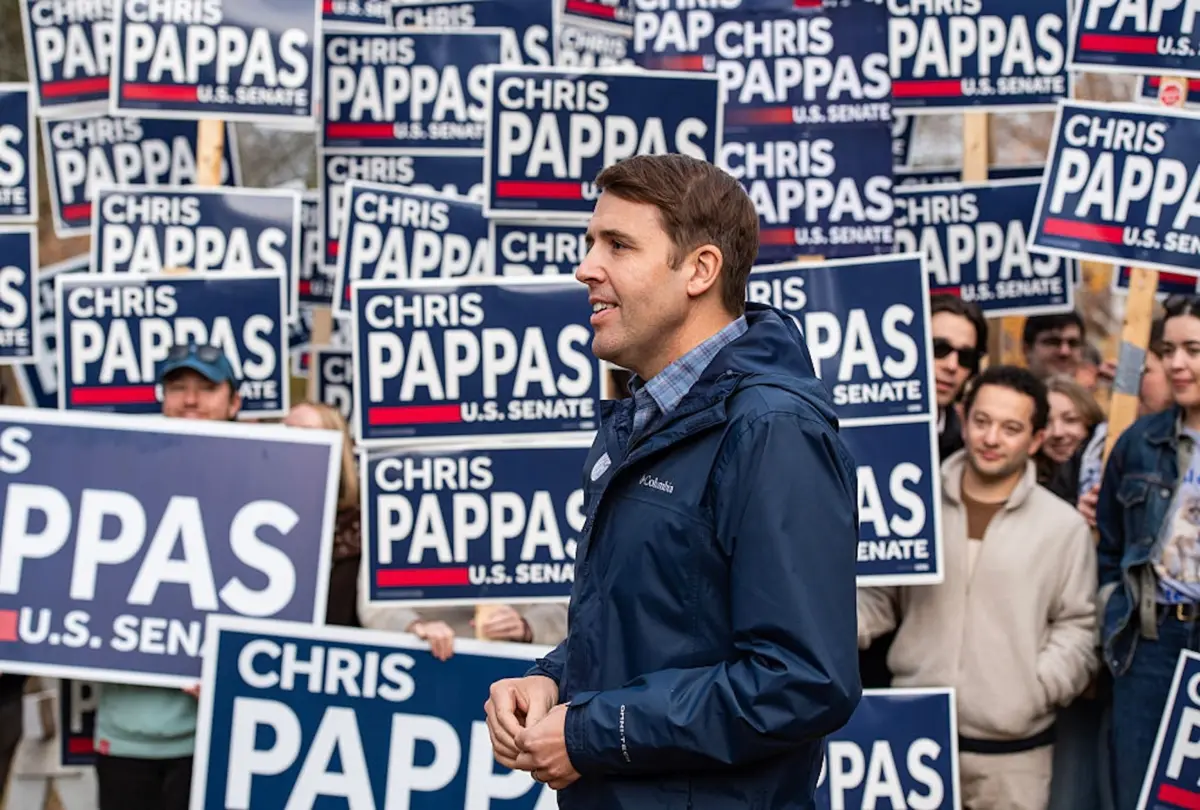
In Manchester, New Hampshire, U.S. Representative Chris Pappas stood before supporters outside Webster Elementary School following a grueling campaign cycle. By defeating his Republican opponent to secure a U.S. Senate seat, Pappas shattered a historic glass ceiling, becoming the first openly gay male senator in American history. His victory was more than a personal milestone; it served as a crucial bellwether in the national battle for control of the upper chamber.
Simultaneously, in Indiana, J.D. Ford captured a seat in the U.S. House of Representatives by unseating an entrenched Republican incumbent. Ford’s campaign capitalized on economic populism coupled with an unyielding defense of civil liberties, proving that candidates from the Midwest’s industrial core could successfully reject the politics of personal destruction.
Texas: Defying the Multi-Million Dollar Playbook
Perhaps the most stunning upset of the cycle occurred in Texas, where James Talarico secured a historic statewide victory over Ken Paxton. The race became a national focal point as conservative operatives poured unprecedented sums into anti-LGBTQ+ messaging. During a high-profile campaign stop, even the vice president of the United States utilized Talarico’s identity and personal life as a political punchline.
Despite Talarico identifying as straight, the campaign against him relied heavily on the time-tested tropes of homophobic character assassination. The strategy backfired spectacularly. Voters rejected the relentless negativity, handing Democrats their first statewide victory in Texas in more than thirty years and signaling a potential realignment in the Lone Star State.
Long Island: The Resilience of Chris Gallant
On Long Island, New York, within a congressional district carried by Donald Trump, gay Democratic candidate Chris Gallant faced an extraordinary breach of privacy. Weeks before the election, private photographs of Gallant were leaked online in a coordinated attempt to derail his candidacy and humiliate him out of the race.
Rather than withdrawing, Gallant leaned directly into his identity. He refused to participate in the shame prescribed by his detractors, framing the leak as an invasion of privacy symptomatic of a desperate opposition. Running in a safely rated Republican seat, Gallant came within two percentage points—roughly 6,700 votes—of unseating incumbent Republican Representative Nick LaLota in the closest race of LaLota’s career. When conceding on Wednesday morning, Gallant addressed his district not as a defeated outsider, but as a neighbor and "brother in arms," cementing a powerful template for resilience in the face of targeted smears.
The Down-Ballot Backlash: Transgender Rights on the Ballot
While Senate and House races demonstrated a growing immunity to anti-gay rhetoric, the picture at the state level revealed a deeply entrenched hostility toward transgender individuals. In Arizona and Nebraska, voters approved ballot measures explicitly barring transgender girls from participating in female scholastic sports. In Colorado, voters narrowly advanced Proposition 134 and Proposition 135, restricting surgical care for minors and regulating gender categories in youth athletics. Meanwhile, Washington State—traditionally a bastion of progressive politics—comfortably passed an initiative restricting transgender participation in girls’ sports.
Supporting Context & Metrics: The Mechanics of Modern Wedge Politics
To understand the 2026 midterms, analysts must examine how wedge issues have evolved over the past three decades. Historically, the American right utilized opposition to homosexuality—specifically marriage equality and adoption rights—as a reliable turnout mechanism. However, demographic shifts, generational replacement, and widespread mainstream representation have neutralized the efficacy of anti-gay campaigns among suburban and independent voters.
- The Dulling of Anti-Gay Rhetoric: Polling data leading up to the 2026 midterms indicated that independent voters viewed aggressive attacks on a candidate’s sexual orientation as antiquated and indicative of a lack of substantive policy platforms. The failures in Texas and Long Island underscore that suburban swing voters are increasingly fatigued by culture-war distractions.
- The Pivot to Transgender Youth: Deprived of a winning message against gay adults, political machines engineered a strategic pivot toward transgender youth. Because trans minors represent a statistically small, highly misunderstood, and legally disenfranchised demographic, they became an ideal target for fear-based messaging.
- The Financial Footprint: Opposition groups outspent pro-equality political action committees by a factor of nearly three-to-one in states with active ballot initiatives regarding transgender healthcare and athletics. Despite this financial disparity, the success of these measures in states like Washington and Nebraska highlights the effectiveness of protectionist narratives centered around children and fair play.
Official Statements and Political Reactions
The dichotomy of the election results drew sharp commentary from political leaders, civil rights organizations, and the candidates themselves.
In his victory speech in Manchester, Senator-elect Chris Pappas emphasized the historic nature of his win while acknowledging the broader national struggle:
"Tonight proves that the people of New Hampshire value service, integrity, and progress over division. But we cannot look at the map of this country and pretend our work is finished when fundamental rights remain under legislative assault in statehouses from coast to coast."
James Talarico addressed the Texas electorate following his historic win, condemning the escalation of personal attacks in modern campaigns:
"For months, millions of dollars were spent trying to divide us using the oldest, ugliest playbook in American politics. Texans saw through it. They chose healthcare, public education, and basic human dignity over hatred and cheap punchlines."
In his concession speech on Long Island, Chris Gallant reflected on the weaponization of his personal life:
"They thought a series of photographs would end my campaign, silence my voice, and drive me out of the community I have called home my entire life. They miscalculated. I am still your neighbor, and I am still standing."
Conversely, proponents of the state-level athletic and healthcare restrictions framed their ballot victories as common-sense measures designed to protect traditional institutions. Representatives from national advocacy groups supporting the bans issued statements arguing that the outcomes in Arizona, Nebraska, Colorado, and Washington reflect mainstream public consensus regarding competitive fairness and parental rights.
Future Outlook: The Challenges Ahead for the LGBTQ+ Movement
The 2026 midterm elections have left the LGBTQ+ community standing at a historic crossroads. The victories of Chris Pappas, J.D. Ford, and the near-misses of candidates like Chris Gallant demonstrate that gay men and lesbians have largely achieved a level of political insulation. The machinery of political homophobia no longer guarantees an automatic victory; in many cases, it actively repels moderate voters.
However, the simultaneous passage of anti-transgender legislation across multiple states shatters any illusions of a unified, sweeping emancipation. Civil rights leaders face a profound moral and strategic imperative: the necessity of expanding the solidarity that protected gay candidates to encompass the trans community.
As the political landscape looks ahead to the upcoming legislative sessions and the subsequent presidential cycle, several critical questions remain:
- Will mainstream political campaigns completely abandon anti-gay rhetoric? Given its poor performance in high-profile federal races in 2026, national strategists may permanently shelve overt homophobia in competitive districts.
- How will the defense of transgender rights be integrated into broader civil rights platforms? The 2026 results make it clear that piecemeal representation—where one segment of a community gains institutional power while another absorbs the brunt of political hostility—is politically and morally untenable.
- Can grassroots organizations replicate the successful defense against homophobia in the battle for trans equality? The ultimate test for the electorate will be whether the cultural maturity that rejected attacks on gay candidates can be successfully mobilized to protect transgender youth from legislative erasure.
Ultimately, the 2026 midterms were not a clean celebration, but a complex mirror reflecting both how far American society has progressed and how ruthlessly bigotry adapts to survive. The lesson of the night is clear: representation is a vital milestone, but true liberation remains incomplete until it protects the most vulnerable among us.
