

Executive Overview
The 2026 midterm elections delivered a sweeping national rebuke of the MAGA movement, sending a profound "blue earthquake" rippling across the American political landscape. Fueled by persistent anti-Trump sentiment and widespread voter fatigue over economic and social instability, Democratic and progressive candidates made unexpected gains in regions previously written off as untouchable conservative strongholds. From surprising flips in the Carolinas and Texas to competitive nail-biters deep in the heart of the Deep South, the electoral map demonstrated that anti-Republican energy was not geographically confined to traditional blue bastions.
Yet, for all the talk of a national wave, a critical subtext emerged from the wreckage of the campaign trail: the self-sabotage of the national Democratic Party machinery.
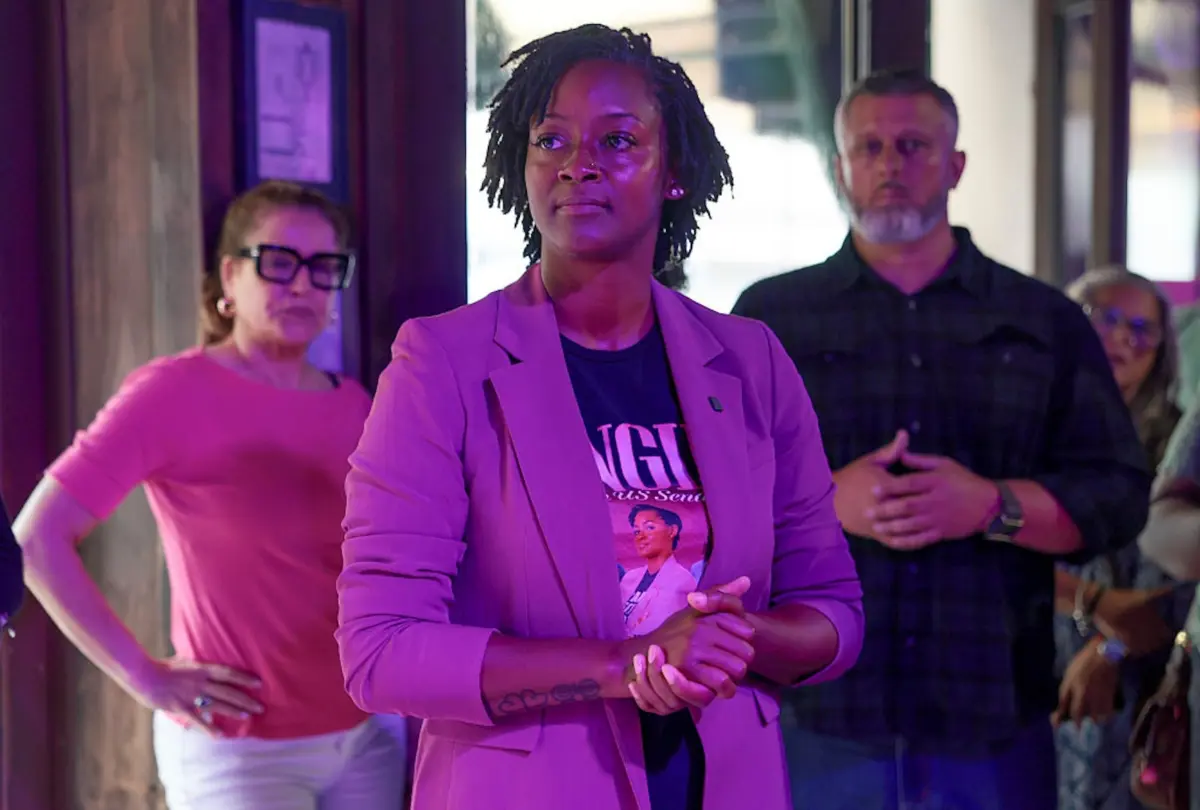
Nowhere was this phenomenon more starkly illustrated than in Florida, and across several other vital Southern races, where the Democratic Senatorial Campaign Committee (DSCC) and allied leadership essentially conceded defeat before the first ballots were even cast. In Florida, democratic socialist and state Representative Angie Nixon ran a remarkably competitive, populist-driven Senate campaign against Republican incumbent Ashley Moody. Despite generating genuine enthusiasm, outperforming expectations, and narrowing the gap to less than two percentage points, Nixon found herself starved of resources, institutional backing, and national messaging support.
An autopsy of the 2026 midterms reveals a systemic failure by national Democratic architects. By relying on outdated demographic fatalism, internal caution regarding Black female candidates in the South, and a risk-averse allocation strategy that prioritized safe bets over aggressive expansion, party leadership squandered a historic opportunity to reshape the Senate. As shocking overperformances in Louisiana, Mississippi, and Texas proved, the ground across the South was fertile for challengers willing to fight—if only the cavalry had shown up.
Detailed Chronology: The Rise, Struggle, and Narrow Defeat of Angie Nixon
The trajectory of the 2026 Florida Senate race cannot be understood without examining the improbable and energetic campaign mounted by Angie Nixon. A Jacksonville-based organizer, bookstore owner, and state representative, Nixon shocked the Florida political establishment by securing the Democratic nomination on an unapologetically democratic socialist platform.
The Summer Surge and National Chilling Effects
Following her primary victory in August 2026, Nixon immediately set out to build a multi-racial, working-class coalition centered around universal healthcare, reproductive rights, and economic affordability—pressing themes in a state battered by repeated property and health insurance crises. However, her momentum was immediately met with institutional friction from Washington.
Behind closed doors, the DSCC and party leadership were hesitant. In September, during appearances on political media podcasts, Nixon detailed lukewarm receptions from high-ranking officials, including Senate Minority Leader Chuck Schumer. When pressed on whether the national party would invest in her insurgent challenge against Ashley Moody—who had been appointed to the seat by Governor Ron DeSantis following Marco Rubio’s confirmation as Secretary of State—Schumer offered little more than noncommittal delays, stating the party would "look into it."
Nixon and her supporters were blunt about the underlying hesitations driving Washington’s reluctance. Drawing a direct line to the national political trauma of the 2024 presidential cycle, Nixon argued that party leaders were gun-shy following Vice President Kamala Harris’s defeat. This institutional anxiety translated into a debilitating reluctance to fund Black women running statewide in the South, cementing a self-fulfilling prophecy that the region was fundamentally unwinnable.
Election Night and the Tale of Two Floridas
On Tuesday, November 5, 2026, the national political environment suggested that conventional wisdom was crumbling. Across the country, progressive and populist candidates were riding a wave of anti-incumbent, anti-MAGA sentiment to shocking victories. In Michigan, Dr. Abdul El-Sayed triumphed; in Texas, James Talarico electrified the electorate in the nation’s most expensive Senate contest.
In Florida, the national wave crashed against a wall of institutional neglect, yet still managed to leave deep impressions. Nixon ultimately fell to Moody by less than two percentage points—a razor-thin margin made all the more striking given that Moody outspent her challenger by more than two-to-one.
An examination of county-level results underscores the missed opportunity. Nixon performed exceptionally well in unexpected places, carrying Miami-Dade County despite its traditionally conservative Cuban-American voting blocs, and turning out decisive left-leaning margins in Jacksonville. Had the national party invested even a fraction of its warchest into Florida’s urban centers, the enthusiasm gap could easily have been bridged, potentially flipping a marquee Senate seat and rewriting the state’s modern political history.
Supporting Context & Metrics: The Cost of Washington’s Redlining
The decision by national Democrats to write off Florida and large swaths of the South was not merely a tactical error; it was an empirically verifiable misallocation of resources that defied the reality on the ground.
The Iowa-Florida Disparity
Data compiled by the Wesleyan Media Project (WMP) in the final weeks of the 2026 campaign cycle exposed a staggering disparity in resource allocation. According to media tracking metrics, national Democratic committees and aligned super PACs spent ten advertising dollars in Iowa for every single dollar spent in Florida.
While this investment strategy paid off in the Hawkeye State—which successfully elected a new Democratic senator and governor—it starved local campaigns in the Sunshine State of the air cover necessary to define their opponents and mobilize low-propensity voters. By treating Florida as a lost cause, national strategists effectively abandoned millions of registered Democrats and independents trapped under the state’s entrenched GOP supermajorities.
The Broader Southern Landscape
The narrative of Southern defeat was repeatedly contradicted by the actual behavior of voters across the region. Wherever national Democrats reluctantly or accidentally engaged, candidates overperformed:
- Texas: The Senate race became the most expensive in U.S. history, powered by massive, targeted investments that turned the Lone Star State into a competitive battleground and lifted progressive standard-bearers like James Talarico.
- Louisiana: Democratic challenger Jamie Davis lost to Republican Julia Letlow by a mere two percentage points. This remarkably close finish occurred despite Davis receiving zero advertising dollars from the national party throughout the entire month of October, as confirmed by WMP analyses.
- Mississippi: In what quickly materialized as the most dramatic race of the cycle, district attorney and Democratic nominee Scott Colom ran neck-and-neck with incumbent Republican Senator Cindy Hyde-Smith. With 96% of precincts reporting, Colom trailed by a microscopic 138 votes, with roughly 15,000 provisional ballots left to be tabulated.
These outcomes paint a clear picture: the electorate in the South was primed to reject conservative orthodoxy. The barrier to Democratic victory was never regional conservatism; it was national risk aversion.
Official Statements and On-the-Record Assessments
Frustration over the national party’s regional neglect boiled over onto television networks and digital platforms as election returns rolled in on Wednesday, November 6, 2026. Local leaders who had fought uphill battles against institutional indifference made their grievances public.
Appearing on national news programs, Mississippi state Rep. Cheikh Taylor didn’t mince words when discussing the nail-biting Senate contest between Scott Colom and Cindy Hyde-Smith. Speaking to anchor Anderson Cooper, Taylor laid the blame for the tight margins squarely at the feet of Washington fundraising gatekeepers:
"Early money always helps. Monies have come to the state of Mississippi, just not through the traditional means, through the DNC," Taylor stated. "We all know that the Colom campaign was locked out of that $30 million contribution to U.S. Senate races. Even though the money didn’t come, in Mississippi, we figure it out."
Similarly, media analysts and commentators pointed out the structural flaws in the DSCC’s calculus. Writing and broadcasting on post-election analytics, economic and political analyst Steven Rattner emphasized that candidates like Louisiana’s Jamie Davis proved competitive purely on the strength of local organizing, underscoring how transformative basic financial backing from the national apparatus could have been.
Angie Nixon herself offered a sobering critique of the party’s risk tolerance during her campaign and post-election debriefs, noting that the national leadership’s fear of bold, working-class messaging—and their implicit biases regarding candidates of color in the former Confederacy—robbed the party of generational victories.
Future Outlook: Lessons Learned and the Path Forward for Democrats
The 2026 midterm elections will be remembered as a night of significant national triumph for the anti-MAGA coalition, but it will also be studied as a masterclass in squandered potential. By treating the South as a write-off, the Democratic establishment left vital congressional seats on the table and failed to build the long-term infrastructure required to contest conservative hegemony in the Sun Belt.
The Strategic Imperative of Expansion
As both parties look ahead to the 2028 presidential cycle and subsequent midterms, the events of November 2026 offer a stark warning: demographic shifts and anti-incumbent sentiment mean little if national committees refuse to fund them.
Securing even one or two additional Senate seats through strategic, well-timed investments in states like Florida, Mississippi, or Louisiana would have fundamentally altered the balance of power in Washington. Instead of playing a narrow, defensive game in future legislative battles, Senate Democrats would have entered the next congressional term with an expanded caucus capable of aggressively challenging executive overreach and dismantling the legislative agenda of the political right.
Reimagining the Southern Strategy
To remain competitive on a national scale, the Democratic Party must undergo a cultural and strategic reckoning regarding the American South. The successes of candidates like Angie Nixon, Scott Colom, and Jamie Davis demonstrate that voters in these states are responsive to populist economic appeals, universal healthcare, and unapologetic advocacy for working families.
The mandate moving forward is clear: national committees must abandon their self-defeating hesitancy. Winning in the South does not require running watered-down, conservative-leaning establishment figures who depress base enthusiasm; it requires investing in authentic, movement-building candidates who give voters something to vote for, rather than just someone to vote against.
If national Democrats learn the right lessons from the 2026 midterms, the "blue earthquake" could have been merely the beginning of a permanent nationwide realignment. If they persist in regional redlining, they will continue to snatch defeat from the jaws of a historic, grassroots-driven victory.
