

Executive Overview
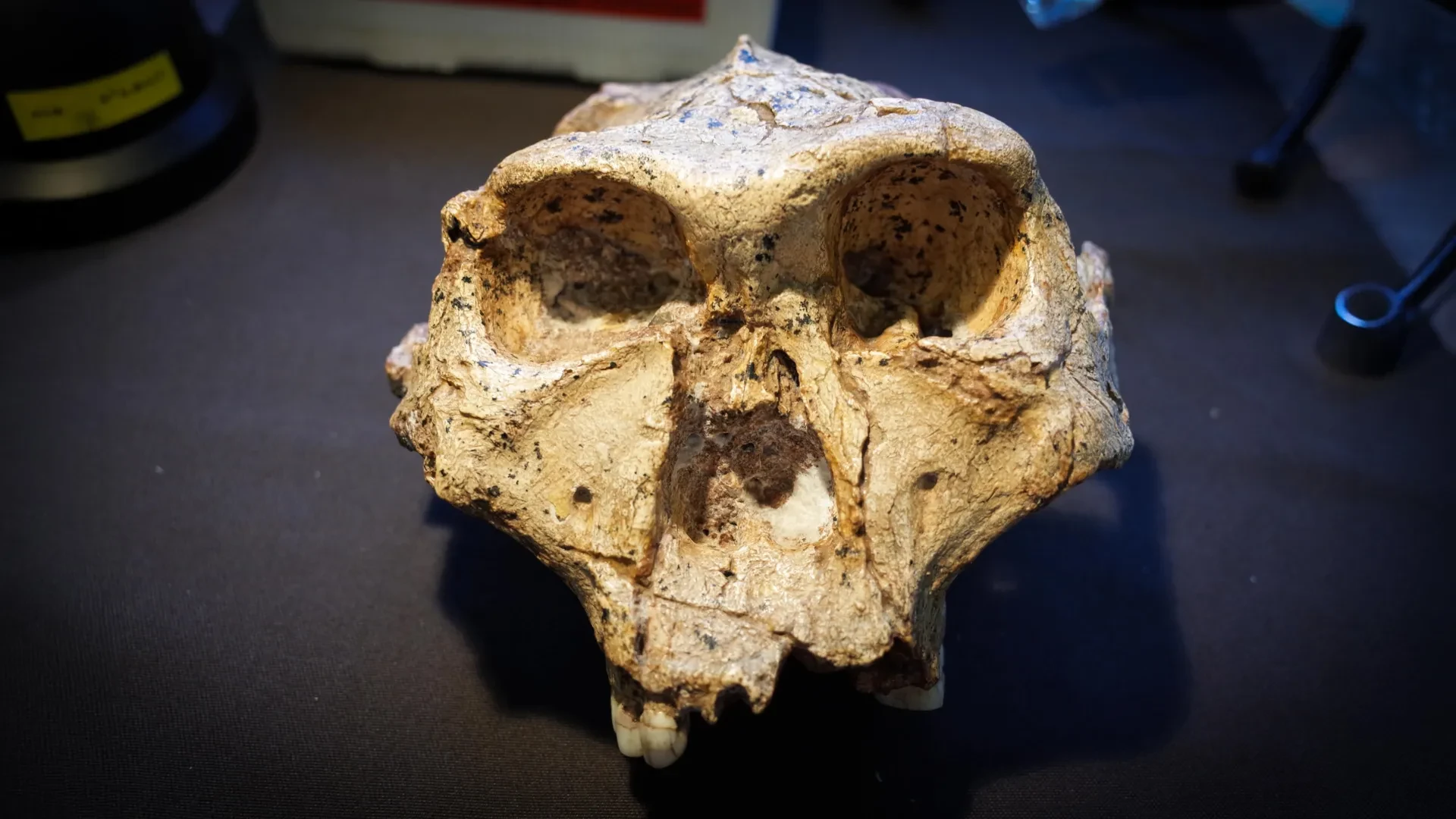
The traditional narrative of human evolution—often depicted as an orderly, linear march from ape-like ancestors to modern Homo sapiens—is facing its most profound theoretical challenge in decades. A groundbreaking study published in the American Journal of Biological Anthropology argues that the current taxonomic framework governing human origins is fundamentally broken. Authored by Dr. Ian Towle, a Research Fellow at the Monash Biomedicine Discovery Institute, the paper proposes a sweeping, radical revision of the human family tree: merging several long-separated
ancient groups, including Australopithecus and Paranthropus, directly into our own genus, Homo.
For over a century, paleoanthropologists have relied on distinct anatomical and behavioral milestones—such as cranial capacity, bipedalism, and sophisticated stone tool manufacture—to draw sharp boundary lines between human ancestors and their evolutionary cousins. However, as the fossil record expands, those once-rigid boundaries have steadily dissolved. Recent archaeological discoveries and advanced genetic analyses reveal a tangled, braided evolutionary web rather than a straightforward family tree. Species within the Homo genus have been found with surprisingly small brains, while supposedly "primitive" groups like Australopithecus display complex behaviors and anatomical overlaps previously thought exclusive to modern humans.
By expanding the definition of Homo to encompass hominins spanning the past 4 to 5 million years, Dr. Towle’s proposal seeks to align human taxonomy with modern cladistics—the biological practice of grouping organisms strictly by shared evolutionary ancestry rather than subjective physical traits. While this proposition represents a significant departure from established scientific convention, it highlights an undeniable reality: our definitions of what it means to be "human" must evolve alongside the physical evidence we unearth from the earth.
Detailed Chronology: The Evolution of Human Taxonomy
To understand the magnitude of Dr. Towle’s proposition, it is necessary to examine how our understanding of biological classification—known as taxonomy—has transformed over time, alongside the shifting fossil record.
18th to 20th Century: The Linnaean Legacy and Linear Evolution
Modern biological classification traces its roots to Carl Linnaeus, who introduced binomial nomenclature in the 18th century. In this system, organisms are sorted into hierarchical tiers, with the genus acting as the broad category immediately preceding the specific species identifier (e.g., Homo sapiens).
For generations, early paleoanthropologists operated under a typological framework. When a new fossil was discovered, it was compared against a mental or physical "type specimen." If the fossil possessed a significantly smaller braincase, heavier jaw muscles, or unusual limb proportions, it was automatically relegated to a distinct genus outside of Homo. This gave rise to the classic, highly popularized iconography of human evolution: a sequential progression moving from knuckle-walking apes to Australopithecus africanus, through early Homo species like Homo habilis and Homo erectus, and finally culminating in modern humans.
Late 20th Century: The Rise of Cladistics
During the latter half of the 20th century, the biological sciences underwent a paradigm shift known as the cladistic revolution. Pioneered by scientists like Willi Hennig, cladistics argued that classification systems should reflect absolute evolutionary history—phylogeny—rather than general likeness.
Under cladistic principles, a valid taxonomic group (a clade) must consist of a common ancestor and all of its descendants. If a group excludes certain descendants, it becomes "paraphyletic" and scientifically problematic. Despite the adoption of cladistics across almost all branches of biology, paleoanthropology remained stubbornly resistant. Researchers continued to invent and maintain separate genera—such as Australopithecus, Paranthropus, and Kenyanthropus—largely to manage the immense morphological diversity found in the Plio-Pleistocene fossil record.
The 21st Century: Blurring the Lines
Over the past two decades, an avalanche of fossil discoveries has exposed the fragility of these traditional boundaries. Skulls, teeth, and post-cranial skeletons unearthed in Africa, Asia, and Europe have consistently defied easy categorization.
- The Small-Brain Paradox: Species historically assigned to the Homo genus, such as Homo floresiensis (the "Hobbit" humans of Flores, Indonesia) and Homo naledi from the Rising Star Cave system in South Africa, possessed cranial capacities comparable to modern chimpanzees or Australopithecus. This shattered the long-held dogma that a large brain was a mandatory prerequisite for membership in the human genus.
- Complex Behaviors Beyond Homo: Concurrently, trace evidence and direct archaeological finds have revealed that tool use, butchery, and potentially even symbolic behavior were not exclusive to Homo. Species within Australopithecus and Paranthropus are increasingly implicated in the creation of stone tools and the exploitation of complex environments.
These discoveries culminated in Dr. Towle’s 2024–2025 proposition in the American Journal of Biological Anthropology, arguing that the historical practice of splitting hominins into separate genera based on subjective phenotypic differences is no longer scientifically tenable.
Supporting Context & Metrics: The Anatomy of a Taxonomic Crisis
Evaluating the proposed expansion of the Homo genus requires an analysis of the specific biological metrics, anatomical data, and evolutionary models currently debated by the scientific community.
Morphological Overlap vs. Taxonomic Splitting
In biological anthropology, researchers frequently divide themselves into two philosophical camps: "lumpers" and "splitters."
- Splitters favor creating new species and genera at the slightest hint of anatomical divergence, arguing that this best captures ecological diversity.
- Lumpers prefer broader categories, emphasizing genetic continuity and shared ancestry over minor physical adaptations.
For decades, splitters have dominated paleoanthropology. Consider the metrics of the Plio-Pleistocene hominin record:
| Genus / Group | Approximate Time Frame | Average Cranial Capacity | Primary Defining Historical Traits |
|---|---|---|---|
| Australopithecus | 4.0 – 2.0 million years ago | 380 – 450 cm³ | Bipedal, small-to-moderate brain size, pronounced facial prognathism. |
| Paranthropus | 2.7 – 1.0 million years ago | 410 – 530 cm³ | Hyper-robust jaw apparatus, massive molar teeth, sagittal crests for heavy chewing. |
| Homo | 2.8 million years ago – Present | 500 – 1,450+ cm³ | Reduced dentition, flat face, expanded cranial vault, advanced stone tool culture. |
Dr. Towle’s research points out that these numerical and morphological boundaries are porous. For instance, the overlap in brain size between early Homo and late Australopithecus is statistically significant. Furthermore, variations in jaw size (Paranthropus) represent dietary specializations rather than deep phylogenetic cleavages. Grouping them all within an expanded Homo genus would accommodate this natural variation without requiring the constant creation of arbitrary taxonomic branches.
The Problem of Evolutionary "Clades"
From a strict phylogenetic standpoint, maintaining Australopithecus as a distinct genus outside of Homo creates a paraphyletic grouping—meaning it leaves out the descendant lineage (Homo) that evolved directly from an Australopithecus ancestor.
By widening the umbrella of Homo to include all hominins from the last 4 to 5 million years, taxonomists would achieve a strictly monophyletic classification. This ensures that every species within the genus shares a unique common ancestor that excludes more distant primate relatives, such as chimpanzees and bonobos.
Official Statements & Expert Perspectives
The publication of Dr. Towle’s study has ignited fierce debate across the international anthropological community. The implications touch upon the core of how scientists communicate evolutionary history to both peers and the public.
Speaking on the motivations behind the study, Dr. Ian Towle emphasized that the current system is buckling under the weight of its own historical baggage:
"Recent fossil discoveries and advances in evolutionary and genetic analysis make this an ideal time to reconsider whether our traditional taxonomy still accurately reflects human evolution," Dr. Towle stated.
"These groups do not necessarily represent distinct evolutionary branches, or ‘clades,’ and differences in behavior and ecology once used to distinguish them have also become increasingly difficult to maintain. I propose expanding Homo to include these other groups to provide a more accurate and stable way to represent the complex evolutionary relationships revealed by the growing fossil record."
Dr. Towle further elaborated on the practical benefits of a broader taxonomic definition, noting that paleontology frequently suffers from a reactionary cycle of taxonomy: every time a unique fossil is unearthed, a new species—or even a new genus—is named, leading to an unstable and overly complicated literature base.
"The more we learn about our ancestors and close fossil relatives, the more we realize how complex and non-linear our family tree is," added Dr. Towle. "Expanding the Homo genus to also include species of Australopithecus and Paranthropus will allow us to account for differences without regularly reclassifying particular groups."
While some evolutionary biologists have applauded the study for its rigorous adherence to modern cladistic principles, traditional paleoanthropologists have urged caution. Critics of the proposal argue that collapsing Australopithecus and Paranthropus into Homo risks obscuring the genuine ecological and adaptive diversities that characterized our ancient relatives. They contend that while these groups are closely related, their distinct locomotive, dietary, and craniofacial adaptations warrant separate generic designations to communicate functional differences efficiently.
Future Outlook: What This Means for the Future of Anthropology
As the academic community digests the Monash University proposal, the field of paleoanthropology stands at a methodological crossroads. Whether or not official governing bodies of biological nomenclature formally adopt an expanded Homo genus, the paper has successfully forced a re-evaluation of long-held dogmas.
1. Shift Toward Integrative Genomics and Phenomics
As ancient DNA extraction techniques continue to improve—pushing past the million-year mark in exceptional preservation conditions—future taxonomy will increasingly rely on paleoproteomics (the study of ancient proteins) and genomics rather than purely morphological bone metrics. If genetic data increasingly demonstrates that lineages previously placed in separate genera interbred or shared deep, continuous gene flow, taxonomic lines will inevitably have to yield to genetic realities.
2. Rewriting Educational Curricula and Public Science Communication
For decades, museums, textbooks, and documentaries have relied on the linear "march of progress" graphic. If studies like Dr. Towle’s gain traction, science communication must adapt. Educational frameworks will need to present human evolution not as a relay race where one species hands the baton to a superior successor, but as an intricate, branching bush where multiple human-like experiments coexisted, interacted, and occasionally merged across millions of years.
3. Toward Taxonomic Stability
Ultimately, the debate is not merely semantic; it touches upon our fundamental desire to categorize our place in nature. By seeking a more stable, inclusive definition of Homo, researchers are attempting to build a framework capable of absorbing the inevitable future discoveries that will continue to unearth from the earth. As science presses forward, our categories must become flexible enough to embrace the full, wonderfully messy tapestry of our shared human ancestry.
