

Executive Overview
The political landscape of the United States shifted dramatically on November 3, 2026, culminating in a sweeping midterm election that pundits across the spectrum have labeled a definitive repudiation of the ruling administration. For years, major independent and center-left media outlets operated under a cloud of existential dread, facing relentless political pressure, corporate restructuring, and hostile legal environments. Yet, as the returns trickled in on election night, networks like CNN and MS NOW (formerly MSNBC) underwent a stunning psychological transformation.
Moving away from the funerary tone that has characterized much of their coverage over the past decade, anchors and analysts embraced an uncharacteristic optimism. The night was marked by historic electoral victories—including majorities regained in both the House and Senate, groundbreaking state-level milestones, and a striking cultural rejection of Trumpism. This commentary explores how cable news networks processed this political sea change, balancing journalistic objectivity with raw, unfiltered emotional relief as a "blue-nami" reshaped Washington.
Detailed Chronology: An Election Night Like No Other
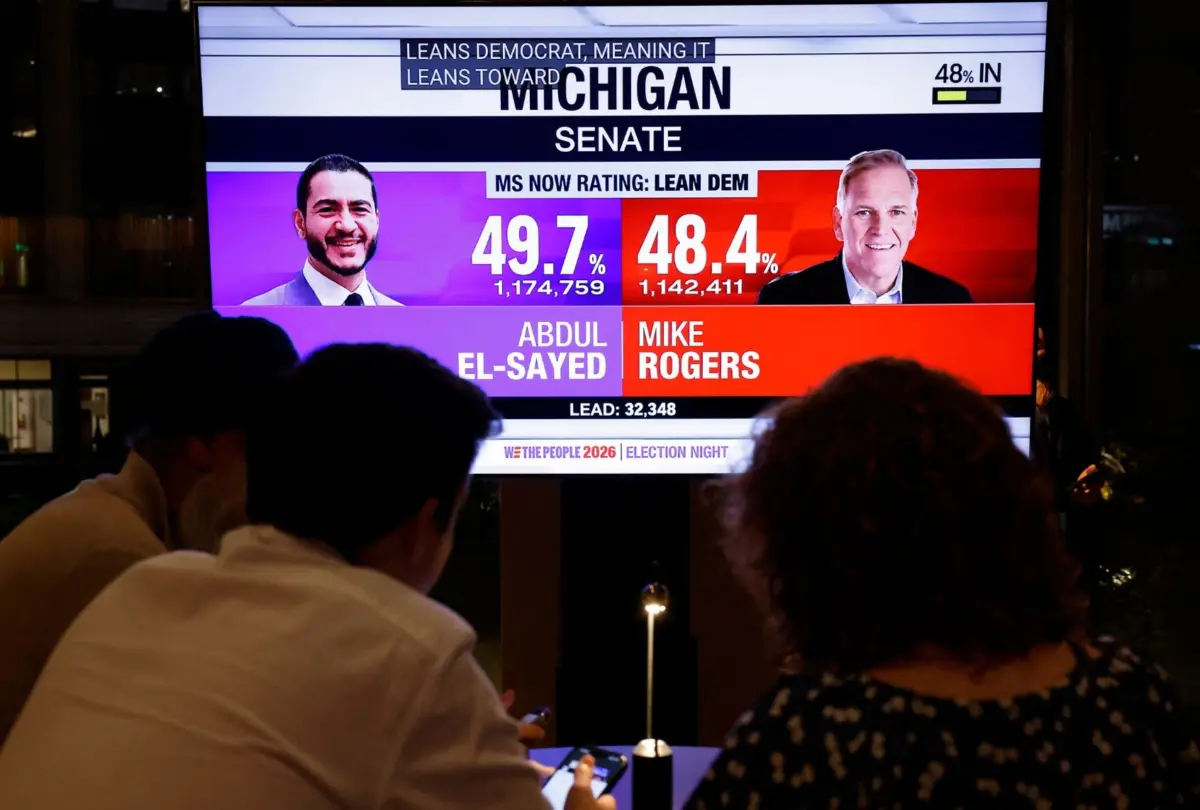
As the sun set on November 3, 2026, election-watchers braced themselves for the familiar, high-stress ritual of data aggregation and late-night prognostications. In Detroit, Michigan, supporters packed watch parties for Democratic senatorial candidate Abdul El-Sayed, mirroring the anxiety felt nationwide.
The early hours of the telecasts set a stark tone. On CNN, anchor Anderson Cooper—whose career has spanned iconic deployments with 60 Minutes and battles against corporate takeovers—began the evening with the somber demeanor of a statesman mourning the decline of democratic norms. Beside him, data anchor John King navigated the network’s Magic Wall with a cautious reverence, comparing the unfolding maps of 2024 with the sudden, overwhelming expanse of blue in 2026.
By midnight, however, the tone had shifted entirely. As races were called in rapid succession, King openly mused on live television about the nature of the shift: "What’s happening right now? Is it a rebuke? Is it repudiation? Is it shellacking? I mean, at the moment, this is the collapse of the president’s party on live television as you watch it play out."
Over on MS NOW, the energy was electric from the onset. Rachel Maddow opened coverage by celebrating high voter turnout as a testament to the resilience of American democracy. Hours later, when control of Congress officially flipped, Maddow and her colleagues could barely contain their elation, punctuating race calls with sharp, humorous asides about Republican candidates—such as labeling Pennsylvania congressional contender Rob Bresnahan a "sometime ghost hunter."
Meanwhile, analyst Ali Velshi darted across MS NOW’s Big Board with hummingbird-like intensity, breaking down improbable upsets, including a shocking Democratic victory in South Carolina. The night was no longer just about numbers; it was a collective exhale for millions of viewers and the journalists who report on them.
Supporting Context & Metrics: Historic Breakthroughs and Structural Shifts
The 2026 midterms were historic not merely for the party shift in Washington, but for the profound demographic and cultural milestones achieved across the country:
- Legislative Majorities: Democrats successfully captured majorities in both the House of Representatives and the U.S. Senate, effectively halting the legislative agenda of the executive branch.
- New Hampshire Milestone: Voters in New Hampshire elected Democrat Chris Pappas to the U.S. Senate, marking the first time an openly gay man has won a seat in the chamber.
- The Texas Shift: Traditional red strongholds showed unprecedented purple-to-blue movement, signaling shifting suburban and urban demographics.
- Gubernatorial History: Four Black governors were elected nationwide. Most notably, former Atlanta mayor Keisha Lance Bottoms won the race for governor of Georgia, becoming the first woman and the first Black person to hold the office in state history—and setting up a powerful institutional firewall ahead of the 2028 presidential election.
These breakthroughs occurred against a backdrop of fierce corporate and political turbulence within the media industry. MS NOW operates independently following its spin-off from NBCUniversal under Versant, while CNN faces an uncertain corporate future tied to Skydance and its Trump-allied leadership. Despite these institutional headwinds, the newsrooms delivered coverage that resonated deeply with a fatigued public.
Official Statements and Analyst Commentary
The emotional pinnacle of the evening arrived through unfiltered moments of commentary that captured the zeitgeist of the political shift.
Van Jones, whose somber 2016 "whitelash" monologue defined the dawn of the Trump era, delivered perhaps the most talked-about commentary of the night. Seated near chastened conservative pundit Scott Jennings, Jones did not hold back:
"If you join a cult, at some point the cult leader takes you to Jonestown and tries to get you to drink the Kool-Aid. This is Jonestown for the Republican Party. They drank the Kool-Aid, and they have candidates that are dropping like flies across the country because did not stand up to this guy when he was doing things that were wrong… That’s where you are tonight, Republicans."
Later, Jones described the night with unadulterated joy: "This is like Christmas and a birthday and an Easter bunny and Halloween! This is the repudiation of Trumpism that people have been hoping for, seeing American democracy stand up."
Conversely, the human cost of the preceding political era was laid bare by MS NOW analyst Symone Sanders-Townsend. Reacting to the historic election of Keisha Lance Bottoms in Georgia, Sanders-Townsend fought back tears on air as she reflected on the emotional toll of the 2024 presidential cycle:
"After the 2024 presidential election, for myself and Black women all over this country, it felt like a repudiation of us. There were Black women, myself included, that felt like, ‘Well, maybe America just does not want us.’… Georgia wanted Keisha."
Chris Hayes added analytical depth to the emotional celebrations, noting that while economic pressures and high consumer prices drove voters to the polls, the rejection extended far beyond inflation: "The rot that is coming from the top of the country is very, very, very clearly on voters’ minds."
Future Outlook
As the dust settles on the 2026 midterms, the political and media landscapes face a complex horizon. The legislative paralysis that once favored the executive branch has been decisively broken, promising a contentious final two years of the presidential term. For newly elected leaders like Governor Keisha Lance Bottoms, the immediate future will involve high-stakes governance—including certifying the upcoming 2028 presidential election under intense national scrutiny.
For cable news networks like CNN and MS NOW, the election night pivot from dread to optimism highlights a resilient, if battered, press corps. While corporate acquisitions and political hostility will continue to pose challenges, November 3, 2026, served as a reminder that the media—and the electorate—retain a capacity for reinvention, hope, and democratic renewal. Whether this "blue-nami" signals a permanent realignment or a temporary pendulum swing remains to be seen, but for one night, the airwaves carried a message of undeniable transformation.
