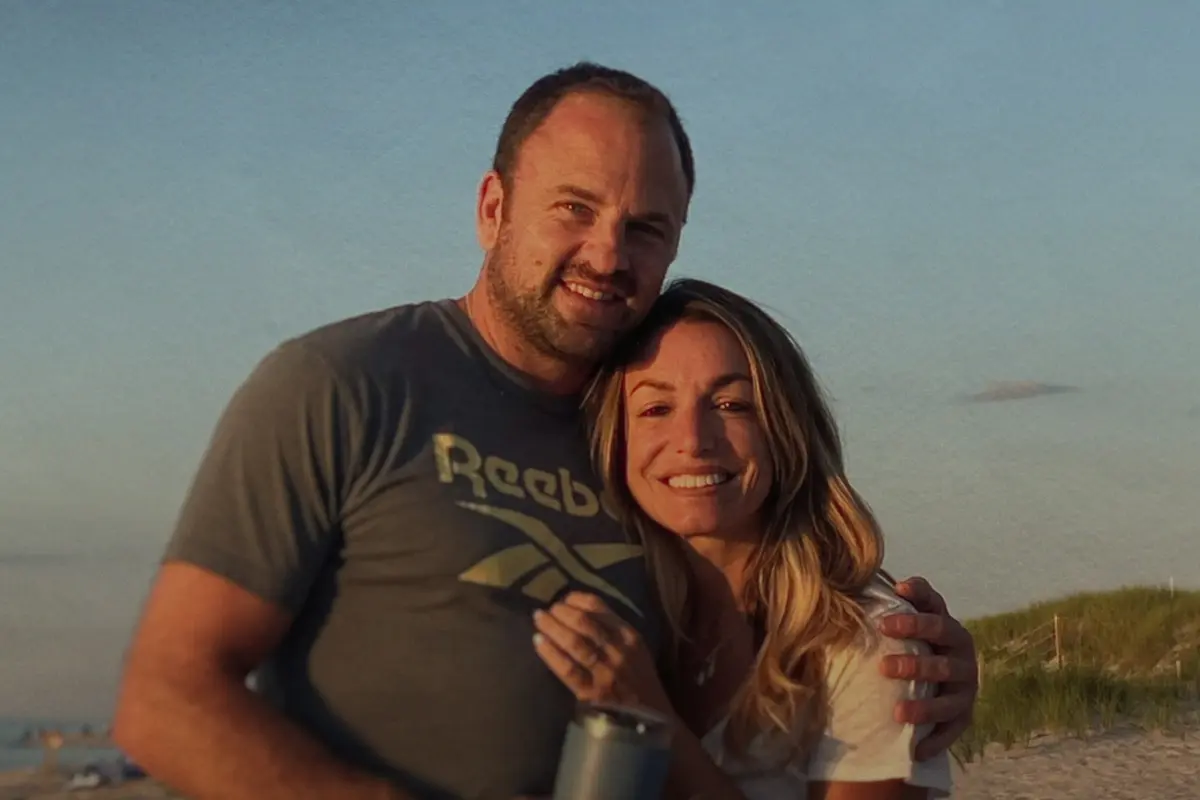
Nearly five years after the lifeless body of Boston police officer John O’Keefe was discovered in a snowbank outside a suburban Massachusetts home, the circumstances surrounding his death continue to cast a long, polarizing shadow over the American true-crime landscape. What began as a routine police call on January 29, 2022, in the quiet town of Canton, rapidly metastasized into one of the most contentious, heavily scrutinized, and internet-famous murder trials in modern legal history. At the center of this firestorm was Karen Read, O’Keefe’s girlfriend, whose journey from an unknown local resident to a deeply divisive murder defendant captivated millions worldwide.
Directed by Danielle Johnson Cutts and released on November 23, Netflix’s three-part docuseries, The Trials of Karen Read, leverages a fresh cache of never-before-seen footage, unreleased audio, and new firsthand interviews to chart the case’s chaotic aftermath. Eschewing a mere rehash of courtroom arguments, the series pivots toward a more profound exploration: restoring the human dimension of John O’Keefe, whose memory, family, and friends say, was systematically overshadowed by a global digital spectacle.
While Read and her legal representatives declined to participate in the production, the documentary features compelling accounts from O’Keefe’s grieving family, close friends, investigators, and jurors. By weaving together police bodycam footage, home videos, and exclusive interviews, The Trials of Karen Read exposes the collateral damage of a viral prosecution—revealing how social media crusades, police misconduct, and institutional failures collided to create a legal and cultural quagmire.
Detailed Chronology of Events
To understand the magnitude of the Netflix docuseries, one must trace the winding, catastrophic timeline of the Karen Read case from its chilling inception to its dramatic courtroom resolutions.
The Night in Question: January 28–29, 2022
What started as an ordinary Saturday night out for Read and O’Keefe quickly descended into tragedy. The couple met friends at Canton’s Waterfall Bar and Grille, eventually deciding to continue the evening at the home of Brian Albert, an off-duty Boston police officer. Read, who later admitted to consuming several alcoholic beverages and possessing a hazy memory of the night’s events, drove O’Keefe to the residence.
According to Read’s initial statements to law enforcement, she dropped O’Keefe off at the Albert home and departed. It was only in the early morning hours, waking up and realizing O’Keefe had never returned home, that she retraced her steps alongside friends. They discovered O’Keefe’s unresponsive body lying face-down in a snowbank outside the property, battered, bruised, and covered in snow.
The Investigation and Arrest
Local police and prosecutors arrived at a starkly different conclusion than the defense. Investigators theorized that an intoxicated Read had accidentally struck O’Keefe with her SUV while reversing, leaving him to freeze to death in the elements. Within days, on February 1, 2022, Read was arrested and formally charged with second-degree murder, manslaughter while operating under the influence of alcohol, and leaving the scene of personal injury resulting in death.
However, as the case progressed toward trial, defense teams seized upon anomalies in the physical evidence and the trajectory of the investigation. Data extracted from Read’s vehicle indicated that her backup cameras and safety sensors were fully functional—casting deep doubt on the prosecution’s accidental-strike narrative.
The Trials and Verdicts
The legal battles that followed were nothing short of historic. Read’s first high-profile trial commenced on April 16, 2024, concluding in a mistrial after a heavily deadlocked jury could not reach a unanimous verdict. The mistrial was significantly fueled by explosive revelations regarding the lead investigator’s conduct.
A second trial began on April 1, 2025. This time, a fresh jury evaluated the diminished credibility of the state’s investigative apparatus against the persistent holes in the prosecution’s timeline. Ultimately, the jury acquitted Read of second-degree murder and manslaughter, leaving her convicted only of a lesser drunk driving charge—effectively rendering her a free woman, though the societal and personal fallout was far from over.
Supporting Context & Metrics: The Anatomy of a Digital Circus
The Trials of Karen Read meticulously deconstructs how a suburban homicide mutated into an unprecedented internet phenomenon, driven by digital vigilantism, social media algorithms, and institutional toxicity.
The Rise of Digital True-Crime Vigilantism
As Read’s legal jeopardy mounted, the case escaped the confines of the courtroom and flooded digital platforms like TikTok, YouTube, and X (formerly Twitter). Alternative theories blossomed across the internet, heavily promoted by online commentators. The most prominent among them was Aidan Kearney, a blogger and YouTuber operating under the moniker "Turtleboy."
Kearney published dozens of aggressive videos alleging that the Canton Police Department and local figures were orchestrating an elaborate cover-up to frame Read. Kearney’s alternative theories posited that O’Keefe had actually been beaten to death inside Brian Albert’s home during a brawl or attacked by a dog.
Kearney’s crusade did not remain confined to digital spaces. He regularly staked out the homes of O’Keefe’s friends and family, confronted witnesses at public venues and sporting events, and organized "Free Karen Read" rallies. His primary target became Colin Albert, a teenager present at the home that night, whom Kearney publicly accused of participating in a fatal altercation with O’Keefe.
The Collateral Damage on Victims and Witnesses
While the true-crime community treated the trial as an interactive sport, the human toll on those caught in the crossfire was devastating. In a rare public interview featured in the Netflix series, Colin Albert describes the paralyzing fear caused by Kearney’s relentless targeting.
"I am not the kid that these people were making me out as," Albert shares in the docuseries. "I am scared every single day about somebody coming up to me, whether they try to attack me, whether they try to do something horrible. I’m scared every day of my life for that."
Jen McCabe, Brian Albert’s sister-in-law, who was with Read when O’Keefe’s body was found, echoes this sentiment of profound grief hijacked by public exploitation.
"At the end of the day this was about John O’Keefe. And his death has become an absolute circus," McCabe states in the documentary. "People have profited off it and people have used it to destroy so many lives and the victim and his family, they lost. People should remember John and the amazing guy he was. Not Karen Read."
Humanizing John O’Keefe
A central achievement of Director Danielle Johnson Cutts’ docuseries is reclaiming the narrative around John O’Keefe. Before his death, O’Keefe was widely respected in Canton as a dedicated police officer and a pillar of strength for his family. Following the tragic passing of his sister and brother-in-law, O’Keefe stepped up as the legal guardian of his niece and nephew, Kayley and Patrick Furbush.
Through intimate home videos, interviews with lifelong friends, and heartbreaking testimonies from his brother, Paul O’Keefe, the series paints a vivid picture of a devoted father figure.
"Johnny was the strong one and the pillar of strength," Paul O’Keefe reflects in the documentary. "You want someone to be held accountable for taking a loved one from you. We just want justice for our loss."
Kayley Furbush, now approximately 18 years old, shares how warmly Read was welcomed into their family fold prior to the tragedy, remembering her as funny, welcoming, and someone she hoped would be a maternal confidante. The juxtaposition between these fond domestic memories and the subsequent legal melee underscores the profound tragedy experienced by the O’Keefe and Furbush households.
Official Statements & Institutional Scandals
The integrity of the Commonwealth’s case was severely undermined not merely by defense arguments, but by egregious misconduct within the ranks of law enforcement itself.
The Fall of Trooper Michael Proctor
During Read’s first trial, her defense team delivered a fatal blow to the prosecution’s credibility by uncovering digital text messages sent by Massachusetts State Police Trooper Michael Proctor, the lead investigator on the O’Keefe homicide. In the messages, Proctor referred to Read using vile, misogynistic slurs—calling her a "bitch" and a "wack job cunt"—and explicitly added, "hopefully she kills herself."
The revelation of Proctor’s deep-seated bias shattered public trust in the integrity of the state’s investigation. Following months of administrative suspension, Proctor was officially fired in 2025. The fallout extended beyond his termination; on November 10, 2025, the Massachusetts State Police and Karen Read reached a settlement in a civil lawsuit alleging severe police misconduct during her arrest and trial. The lawsuit explicitly cited Proctor’s text messages and accused the department of harboring "an embedded culture of bigotry, misogyny, and systemic failures."
In the docuseries, Proctor offers a rare, somber acknowledgment of his professional and moral collapse:
"I feel like I let down the O’Keefe family. I feel like I let down my family. I let down the state police, the DA’s office," Proctor admits. "I just feel like I let down so many people."
The Juror Perspective: Navigating Reasonable Doubt
The Trials of Karen Read also grants rare insight into the minds of those tasked with deciding Read’s fate. Two jurors from the second trial, identified by their first names, Jason and Janet, discuss the insurmountable challenge of finding an impartial jury in an age of hyper-connectivity.
"I don’t know if it was possible to find a jury that was a completely blank slate," Jason remarks in the series, noting that most jurors were acutely aware of internet conspiracy theories prior to entering the courtroom.
While the jury remained deeply divided regarding whether an actual police conspiracy took place, they ultimately agreed that the prosecution failed to meet its legal burden of proof.
"I really did think, most likely, that she did it," Janet confesses in the docuseries. "But I think by our legal system’s standards, she’s not guilty because there were so many different possibilities. He could’ve gone into the house, he could’ve gotten beaten up, he could’ve got hit by a plow. It’s almost like ‘doubt, doubt, doubt’ kinda hanging out there. It was a lot of doubt — it was more than reasonable doubt."
Future Outlook & Broader Implications
As The Trials of Karen Read streams to a global audience on Netflix, the cultural and legal shockwaves of the Canton case continue to resonate across the American justice system. The documentary serves as both a riveting true-crime post-mortem and an urgent cautionary tale about the intersection of modern media, social algorithms, and criminal jurisprudence.
The Evolution of Trial Publicity: The Read case stands as a watershed moment illustrating how digital creators, independent sleuths, and online mobs can fundamentally alter the public perception of a high-profile prosecution—sometimes intimidating witnesses and distorting local communities beyond recognition.
Accountability in Law Enforcement: The fallout from Trooper Michael Proctor’s text message scandal has triggered intensified internal reviews within the Massachusetts State Police, emphasizing the critical need for institutional oversight, unbiased investigations, and professional accountability.
The Preservation of Victim Dignity: Ultimately, Netflix’s docuseries leaves viewers with a sobering mandate. While the legal battles have concluded and Karen Read walks free, the true casualty of the Canton tragedy remains John O’Keefe. The ongoing challenge for his family, friends, and the broader public is ensuring that his legacy of service, dedication, and love as a father figure is not permanently eclipsed by the digital circus that bore his name.