

EXECUTIVE SUMMARY
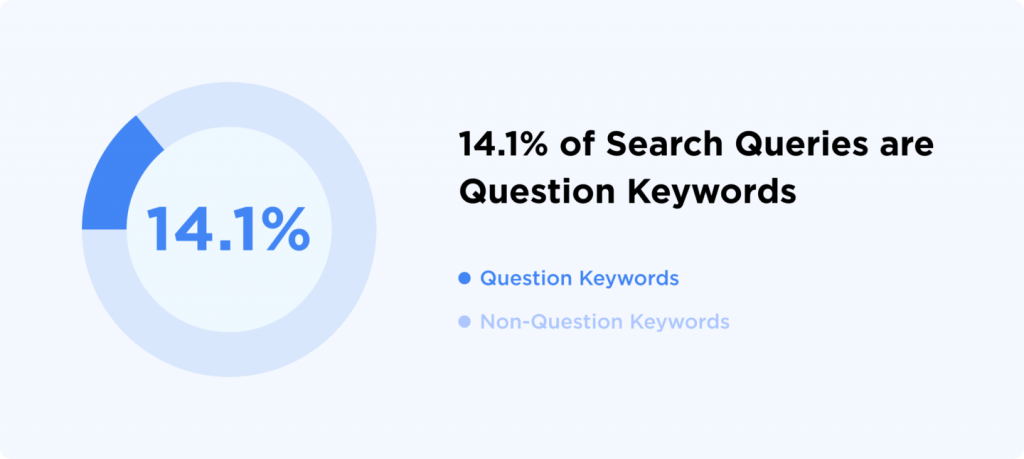
In the modern digital information ecosystem, user behavior has undergone a profound structural shift. Driven largely by the proliferation of conversational AI, mobile devices, and voice-activated search assistants, audiences no longer rely solely on fragmented, head-term keywords to navigate the web. Instead, they frame their inquiries as complete, complex, and intent-driven questions. Recent search engine data underscores this paradigm: question-based queries account for a substantial 14.1% of all Google searches. When contextualized against an estimated 3.5 billion daily global searches, this metric reveals an astonishing volume of roughly 490 million user-generated questions processed every single day.
For digital marketers, content strategists, and enterprise SEO professionals, this reality represents a dual opportunity and challenge. Question keywords—dominated heavily by variants of "how" and "what"—exhibit remarkably high user intent and significantly lower keyword competition than broad commercial terms. Capitalizing on this landscape allows brands to bypass traditional, arduous backlink-acquisition campaigns and capture high-converting traffic by offering immediate, authoritative solutions.
This investigative report outlines four tactical methodologies for scaling question-based keyword research. By leveraging specialized reporting tools, automating "People Also Ask" (PAA) data extraction, and mining niche communities on Reddit and Quora, content teams can systematically unearth untapped keyword goldmines and build high-performance content engines.
The Anatomy of Modern Search: Why Questions Drive High-Intent Traffic
To understand the economic value of question-based keywords, one must first analyze the psychology of the contemporary searcher. When an individual types or speaks a query beginning with "how," "what," "why," or "can," they are rarely engaging in casual, top-of-funnel browsing. They are experiencing a distinct friction point, a knowledge gap, or an urgent operational challenge.

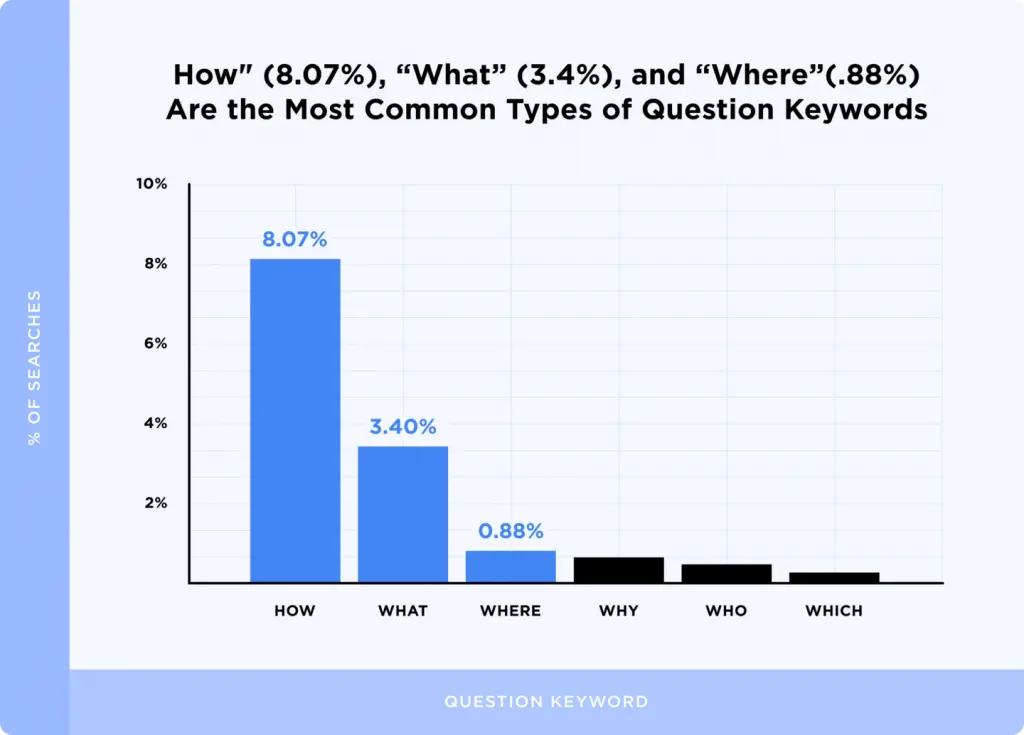
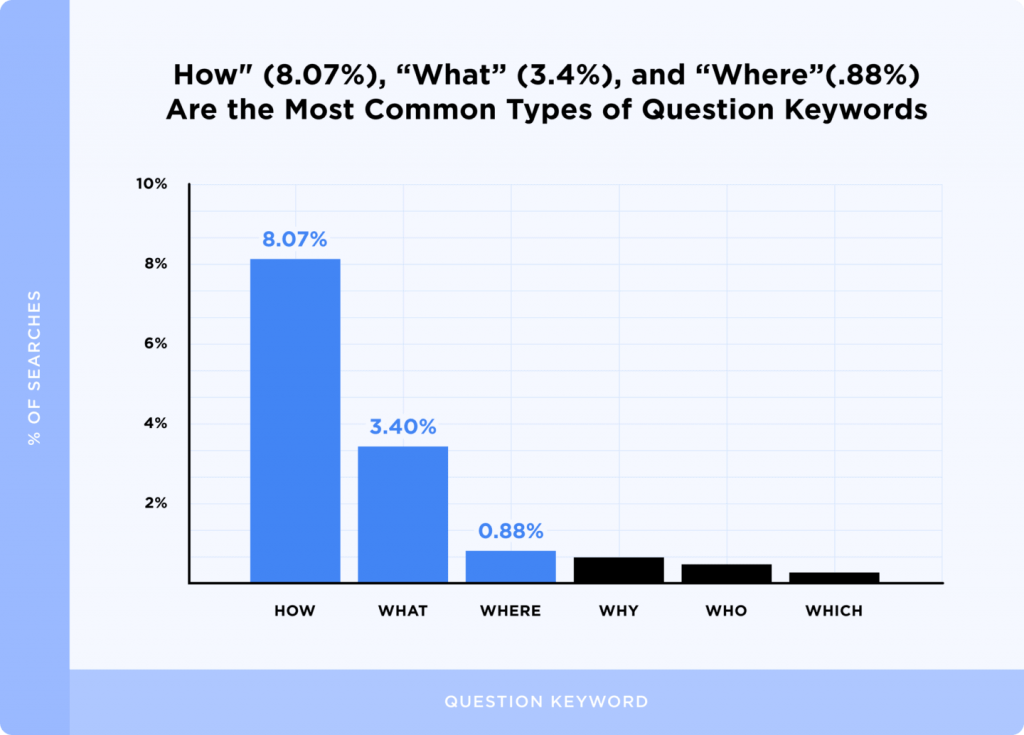
Data compiled from extensive industry keyword studies indicates that interrogative terms cluster heavily around specific linguistic structures. Queries beginning with "how" make up over 8% of total search traffic, while "what" inquiries capture approximately 3.4%. These long-tail terms are intrinsically linked to the rise of voice search, where users naturally revert to conversational syntax rather than shorthand keywords. Whether a consumer is asking a granular lifestyle question—such as how to properly grind specialty coffee beans—or a complex enterprise query regarding the ideal Enterprise Resource Planning (ERP) architecture for a multinational supply chain, the intent remains singular: they want an immediate, actionable answer.

[Total Daily Google Searches: ~3.5 Billion]
       │
       └──> [14.1% Question Keywords] ──> ~490 Million Daily Inquiries
             ├── "How" Queries (~8.07%)
             └── "What" Queries (~3.40%)
This behavioral shift provides a strategic opening for publishers, brands, and affiliate marketers. By positioning your product, service, or recommendation directly within the response matrix of these high-intent queries, you seamlessly introduce your brand as the logical solution to the user’s problem.

Furthermore, question-based keywords offer two distinct advantages within competitive Search Engine Optimization (SERP) landscapes:

- High Commercial and Informational Intent: Because these users are actively seeking resolutions, conversion rates on dedicated, question-targeted landing pages and support articles consistently outperform generic traffic categories.
- Low Keyword Difficulty (KD): Because questions are long-tail and hyper-specific, they frequently face less aggressive institutional competition. Consequently, content creators can secure prominent Page One rankings for these terms without investing months into rigorous, resource-heavy link-building campaigns.
Method 1: Leveraging Dedicated Question-Based Keyword Reports
The most straightforward entry point for scaling interrogative keyword research involves utilizing enterprise-grade SEO suites such as Semrush or Ahrefs. These platforms feature dedicated reporting modules designed to isolate and categorize questions related to any broad seed topic.

Executing the Workflow
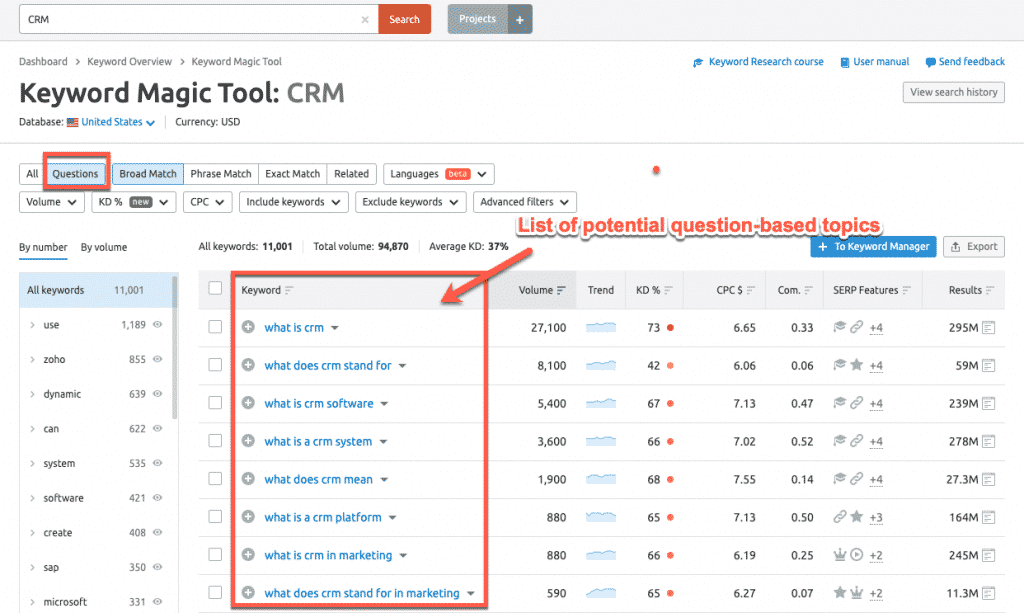
To deploy this tactic effectively, input a core product, service, or industry category term into your preferred SEO tool’s keyword research dashboard and navigate to the "Questions" filter tab.
- Top-Tier Inquiries: At the summit of the resulting report, you will typically encounter high-volume, highly competitive baseline queries (e.g., "What is a CRM?" or "How to choose a CRM"). While valuable for establishing topical authority, these require substantial content depth to rank.
- Mid-Tier Structural Queries: As you scroll further down the report, the data yields increasingly specific conceptual questions—for instance, "What is the business case for a CRM?" This signals an opportunity to develop comprehensive guide content addressing the organizational value proposition of the software.
- Bottom-Tier Operational Queries: Deep within the report, you will uncover ultra-specific, low-competition long-tail keywords such as "Can a CRM be integrated with an ERP?" or "How to maintain a clean CRM database."
By targeting these hyper-focused terms, brands can create dedicated support articles, integration documentation, or targeted blog posts that align directly with specific functional features of their product offerings.
Utilizing Intent and Grouping Filters
Modern platforms allow advanced segmentation via intent and grouping filters. By isolating informational and commercial intent markers within the question report, analysts can instantly sort out vanity metrics and isolate the exact phrases most likely to drive qualified leads. Reviewing the integrated Keyword Difficulty (KD) metrics—categorized into easy, possible, or difficult—enables content teams to curate a balanced portfolio of low-hanging fruit alongside long-term strategic targets.

Method 2: Automated Scraping of the "People Also Ask" (PAA) Box
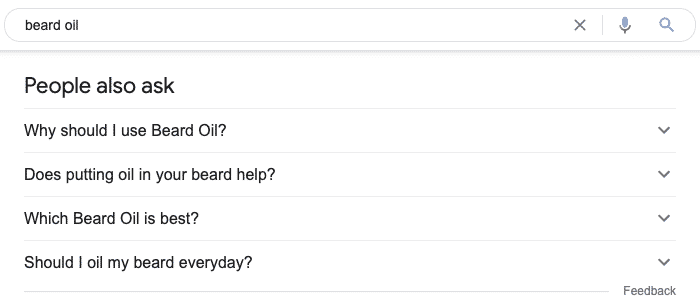
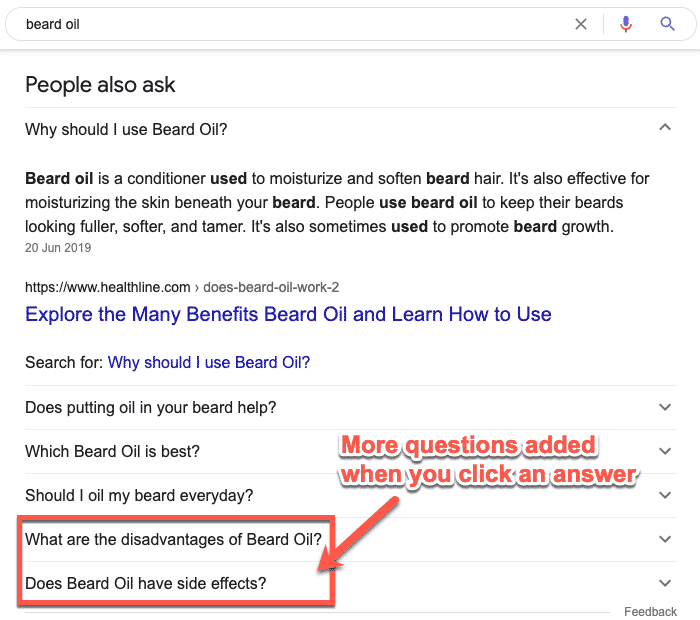
Google’s "People Also Ask" (PAA) feature represents a direct window into the collective consciousness of your target audience. Every dynamic box displayed on the SERP reflects real-time user inquiries gathered algorithmically from search behavior.
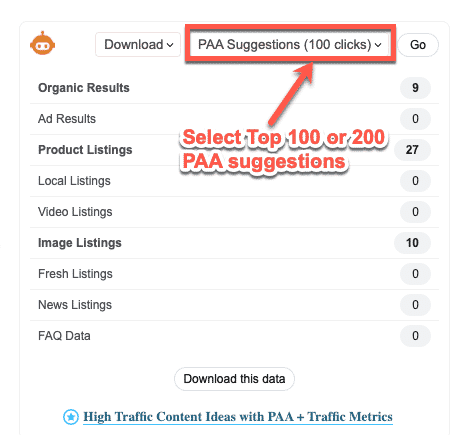
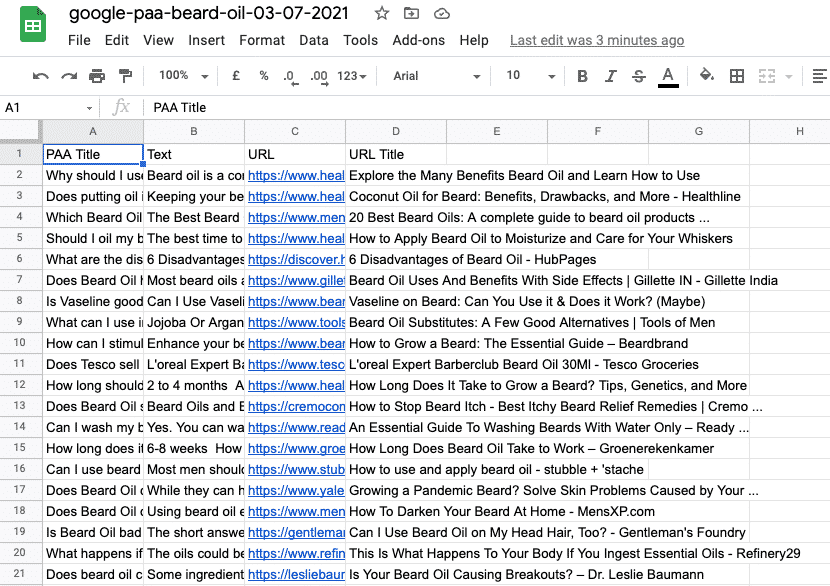
However, manually clicking, expanding, and copying data from PAA boxes across dozens of seed topics is an unsustainable manual burden. To scale this process efficiently, SEO professionals employ automation workflows using browser extensions like SEO Minion combined with bulk keyword analysis tools.
[Google Search: Seed Topic]
       │
       ▼
[Extract 100+ PAA Results via SEO Minion]
       │
       ▼
[Export to CSV (PPA Title, Text, URL, Title)]
       │
       ▼
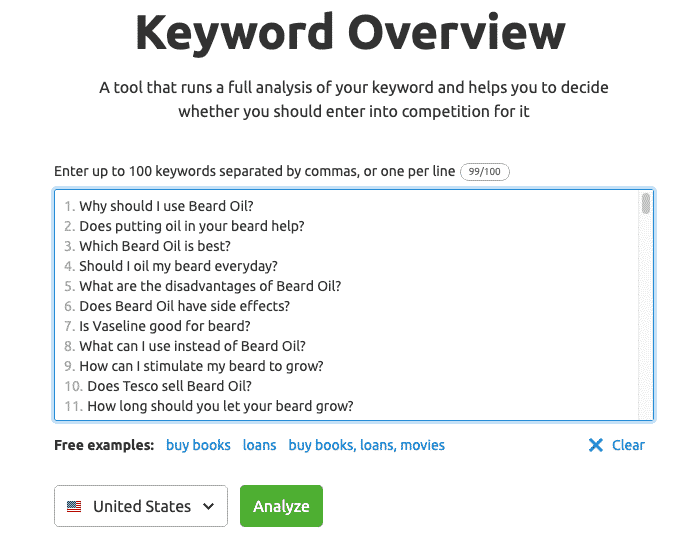
[Bulk Upload to Semrush Keyword Overview]
       │
       ▼
[Filter for Low KD & High Intent = Actionable Content Briefs]
Step-by-Step Execution Protocol
- Install and Configure: Install the SEO Minion extension within your browser. Navigate to Google, enter your seed keyword, and locate the PAA expansion box.
- Bulk Extraction: Open the SEO Minion dashboard, select the "All Organic Results" or PAA export function, and designate a larger data batch (e.g., extracting the top 100 to 200 PAA records associated with the search ecosystem).
- Data Export: Export the resulting dataset into a CSV file containing four primary metrics: PPA Title, Text, URL, and URL Title.
- Volume and Difficulty Enrichment: Isolate Column A (containing the raw PAA questions), copy the complete dataset, and paste the queries in bulk into the Semrush Keyword Overview reporting tool.
- Metric Analysis: Run the analysis to evaluate aggregate search volumes, keyword difficulty percentages, and competitive density for all extracted questions simultaneously.
While roughly 95% of harvested PAA questions may exhibit negligible search volumes or irrelevant angles, filtering across multiple seed keywords consistently yields a concentrated handful of low-competition, high-value content topics ready for immediate deployment.
Method 3: Mining Niche Subreddits for Consumer Pain Points
Online communities represent unfiltered repositories of consumer frustration, feature requests, and granular operational questions. Platforms like Reddit host thousands of micro-communities dedicated to specific software verticals, consumer products, and niche hobbies. Mining these forums allows content strategists to discover exact phrasing that traditional keyword databases occasionally miss.

The Organic Research Subfolder Tactic
- Identify Target Subreddits: Search Reddit for forums matching your niche, competitor ecosystem, or buyer persona pain points (e.g.,
r/CRMfor customer relationship management software discussions). - Isolate Subfolder Data: Input the target subreddit URL or subfolder structure directly into Semrush’s Organic Research report, ensuring the analysis is restricted strictly to that specific subfolder path.
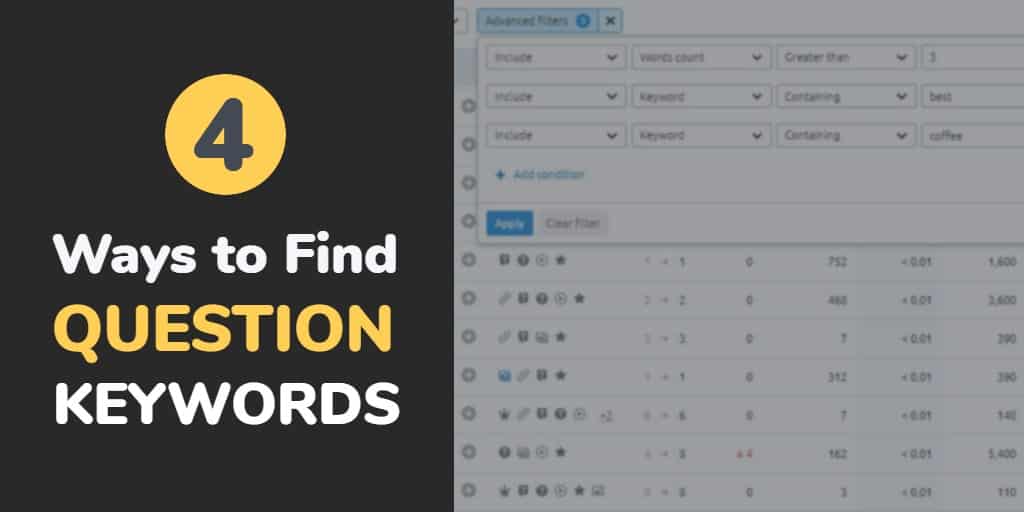
- Apply Advanced Filters: Layer precise filters to refine the output. For instance, restrict the report to keywords with a Minimum Search Volume of 20+ and apply an advanced text filter to include word counts greater than two to eliminate single-word brand mentions.
- Identify Comparative and Niche Angles: Scan the filtered results for green or light-yellow keyword difficulty scores. Beyond standard head terms (e.g., "HubSpot vs. Salesforce"), you will frequently uncover highly specialized commercial inquiries, such as "HIPAA compliant CRM" (capturing hundreds of monthly searches with low difficulty) or "best CRM for gyms and contractors."
Uncovering these niche community queries enables brands to develop highly targeted comparison pages, compliance guides, and buyer enablement assets that directly answer questions competitors are ignoring.

Method 4: Unearthing Hidden Gems in High-Traffic Quora Threads
Quora operates as a massive, user-generated knowledge base that frequently dominates top-tier SERP rankings for interrogative keywords. Beyond participating directly in threads to secure referral traffic, content strategists can use Quora’s organic footprint as a sophisticated keyword discovery engine.

Execution Workflow
- Configure Organic Filters: Navigate to the Organic Research tool within Semrush, enter the domain
quora.com, and apply advanced filtering rules. - Target Modifier Strings: Combine your core product or industry keyword with common interrogative modifiers. For example, pair "beard oil" with "how" or "best" within the inclusion filter fields.
- Analyze Low-Competition Findings: Scroll through the resulting keyword report to isolate Quora threads ranking organically for long-tail variations—such as "how to fix patchy beard growth with oil" or "does beard oil soften coarse hair."
- Compile the Master List: Click the add (
+) icon next to high-potential queries to aggregate them directly into your centralized keyword manager. From there, export the master list into a shared spreadsheet, generate structured content briefs, and assign them to your editorial team.
FUTURE OUTLOOK: SCALING CONTENT PRODUCTION IN AN AI-DRIVEN SEARCH ERA
As search engines evolve into conversational answer engines powered by generative AI, the prominence of question-based search will only accelerate. Users increasingly expect synthesized, direct answers rather than a list of blue links. Consequently, brands that master the art of uncovering, organizing, and answering granular user questions will secure disproportionate visibility across both traditional SERPs and AI-driven discovery interfaces.

By systematically deploying the four research methodologies outlined in this report—leveraging dedicated SEO reporting tools, automating PAA extractions, mining niche subreddits, and analyzing high-traffic Quora threads—content organizations can future-proof their keyword strategies. Transitioning from guesswork to data-backed, intent-driven content creation ensures that your brand remains the definitive authority wherever your customers are asking questions.
