

Executive Overview
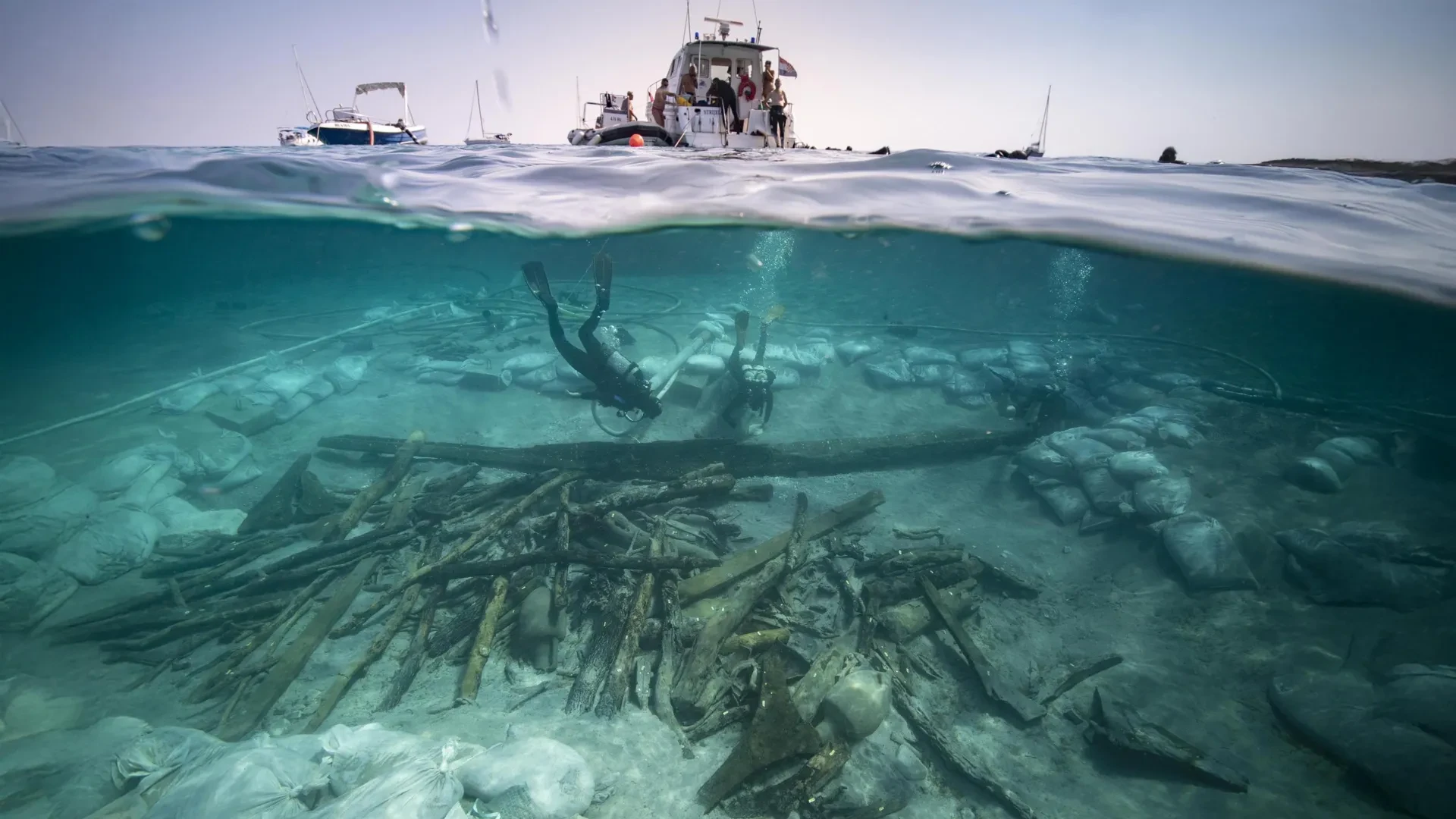
Deep beneath the crystalline waters off the coast of Croatia, a 2,200-year-old vessel dating back to the Roman Republic is rewriting our understanding of ancient maritime technology. Known to marine archaeologists as the Ilovik-Paržine 1 wreck, this remarkably preserved vessel has become a focal point for archaeometric research.
For generations, marine archaeology has prioritized the structural skeleton of ancient ships—focusing heavily on timbers, fastening methods, and cargo hulls. The chemical barriers that kept these wooden craft afloat, however, have remained largely unexamined. A groundbreaking study published in the journal Frontiers in Materials shifts this paradigm.
Led by an international team of researchers from France and Croatia—including specialists from the Laboratory of Mass Spectrometry of Interactions and Systems in Strasbourg, the Croatian Conservation Institute, and Aix-Marseille University—scientists have successfully decoded the complex organic waterproofing recipes used by Roman shipwrights.
By combining advanced molecular analysis, such as mass spectrometry, with an innovative palynological approach, the research team discovered that ancient shipbuilders utilized sophisticated dual-layer protective coatings. These included a specialized concoction of pine tar mixed with beeswax—a historical substance referenced in classical texts as zopissa.
Even more astonishingly, the researchers discovered that the sticky, viscous nature of these pitches acted as an accidental time capsule. Microscopic pollen grains, trapped within the coatings more than two millennia ago, have survived intact. This palynological evidence provides an unprecedented, high-resolution geographic and ecological ledger. It traces the ship’s construction in southern Italy, subsequent voyages across the Mediterranean, and multiple maintenance overhaul events along the rugged Adriatic coastline before its final, watery resting place.
Detailed Chronology
To fully appreciate the significance of the Ilovik-Paržine 1 discovery, researchers have mapped out a chronological narrative that spans the initial building of the vessel in the ancient Mediterranean to its modern scientific excavation and laboratory analysis.
Phase 1: The Golden Age of Roman Republic Shipbuilding (c. 2nd Century BCE)
Sometime during the era of the Roman Republic, a vessel was commissioned and constructed. Earlier mineralogical and petrographic analyses of the ship’s ballast—heavy stones placed in the hold to ensure maritime stability—point decisively to the ancient port city of Brundisium (modern-day Brindisi) on the southeastern coast of Italy. As a critical maritime gateway between the Roman mainland and the eastern Mediterranean, Brundisium was a bustling hub of naval architecture and commerce.
During its initial construction, shipwrights applied a foundational layer of waterproofing pitch to the hull. This pitch, derived from heated conifer resins, was designed to seal the wood against seawater and destructive marine borers.
Phase 2: Lifespan, Voyages, and Multiple Repairs Across the Mediterranean
As the ship traversed the trade routes of the ancient world, it inevitably suffered the wear and tear of long-distance navigation. The new study’s molecular and pollen mapping confirms that the vessel underwent at least four or five distinct repair cycles.
- The Bow: Physical sampling of the forward section revealed three distinct chemical and palynological variations in the protective coatings, indicating multiple patch-jobs executed in different regional ports.
- The Stern and Midsection: These areas shared a unified coating profile, suggesting they were maintained during a single, major dry-docking event.
The inclusion of beeswax into at least one of these repair recipes—transforming standard pine tar into flexible zopissa—highlights the adaptive engineering capabilities of ancient shipwrights. This modification allowed the hull to absorb the relentless flexing forces of oceanic waves without cracking the protective seal.
Phase 3: The Final Voyage and Sinking off the Adriatic Coast
The ship’s final journey brought it into the waters of the northeastern Adriatic Sea, near the modern Croatian island of Ilovik. For reasons still lost to history, the vessel sank, coming to rest on the seafloor where it remained undisturbed for over two millennia.
Phase 4: Discovery, Excavation, and Modern Archaeometry (2016–Present)
- 2016: The Ilovik-Paržine 1 shipwreck and its scattered cargo were formally discovered, triggering initial archaeological surveys by the Department for Underwater Archaeology of the Croatian Conservation Institute.
- The Collaborative Initiative: Recognizing the unique preservation of organic residues on the hull timbers, Croatian archaeologists partnered with France’s ‘ADRIBOATS’ program at the Centre Camille Jullian (Aix-Marseille University) and mass spectrometry experts.
- Recent Breakthrough: Researchers extracted 10 distinct samples of the protective hull coatings. Utilizing cutting-edge mass spectrometry and palynological (pollen) analysis, the team successfully identified the chemical signatures of pine tar and beeswax, while extracting microscopic ecological data from the embedded pollen grains.
Supporting Context & Metrics
The survival of wooden vessels in the marine environment has always been a race against biological and chemical degradation. Understanding the metrics of this decay explains why the work of Charrié and her colleagues is so revolutionary.
The Biological Threat: Marine Borers and Permeability
Wood submerged in saltwater is subject to rapid deterioration. Without protective coatings, hulls are quickly infested by shipworms (Teredo navalis and related bivalve mollusks). Despite their worm-like appearance, these marine organisms are actually specialized clams that bore extensive networks of tunnels through structural timber, drastically compromising vessel integrity within months. Furthermore, unprotected wood absorbs water, increasing the vessel’s weight, reducing speed, and accelerating rot through fungal and bacterial action.
+-------------------------------------------------------------------------+
                    THREATS TO ANCIENT WOODEN HULLS
+---------------------------+---------------------------------------------+
| Threat Type               | Mechanism of Destruction                    |
+---------------------------+---------------------------------------------+
| Marine Borers (Shipworms) | Burrow into timber, hollowing out structural|
|                           | frames and causing catastrophic failure.     |
+---------------------------+---------------------------------------------+
| Hydrodynamic Permeability | Water absorption increases dead weight,     |
|                           | slows vessel, and fosters fungal rot.       |
+---------------------------+---------------------------------------------+
| Wave Stress & Flexing     | Rigid coatings crack under dynamic pressure,|
|                           | letting water breach the hull seams.        |
+---------------------------+---------------------------------------------+
Analytical Metrics of the Study
To overcome these threats, ancient shipbuilders developed sophisticated organic barriers. The recent investigation utilized rigorous scientific metrics to evaluate these coatings:
- Sample Size: 10 discrete organic coating samples extracted from various strategic points along the bow, stern, and central hull sections.
- Analytical Techniques:
- Gas Chromatography-Mass Spectrometry (GC-MS): Employed to break down and identify the molecular components of the conifer resins, revealing specific diterpenoids characteristic of pine trees.
- Palynology (Light Microscopy): Used to isolate, count, and classify microscopic pollen grains trapped within the viscous pitch matrix.
- Geographic Resolution: Pollen taxa identified up to family and genus levels, allowing scientists to reconstruct localized riparian, mountainous, and Mediterranean scrubland ecosystems.
The Chemistry of Zopissa
Classical authors such as Pliny the Elder wrote extensively about naval architecture, describing a mixture of pitch and wax known as zopissa. While classical texts noted its use, physical archaeological proof was exceedingly rare. The identification of beeswax combined with pine tar in the Ilovik-Paržine 1 samples provides definitive material evidence of this practice.
Chemically, pure pine pitch hardens significantly as it cools and ages, becoming brittle. When exposed to the relentless stress of sea swells, rigid pitch cracks. By blending beeswax into the heated resin, ancient shipbuilders lowered the melting point, increased workability during application, and imparted long-term elasticity to the coating—an engineering solution that mirrored modern elastomeric sealants.
Official Statements
The breakthrough findings have drawn acclaim from the international archaeological community, shedding light on a long-neglected facet of ancient naval history.
"In archaeology little attention is paid to organic waterproofing materials. Yet they are essential for navigation at sea or on rivers and are true witnesses of past naval technologies,"
— Dr. Armelle Charrié, Archaeometrist at the Laboratory of Mass Spectrometry of Interactions and Systems in Strasbourg and lead author of the study.
Dr. Charrié emphasized that while visual inspections and wood identification have long dominated nautical archaeology, organic residues hold the key to understanding regional manufacturing techniques and maintenance cycles:
"Studying the coatings, we found two different kinds on this vessel: one made of pine tar, also called pitch, and the other of a mixture of pine tar and beeswax. Analysis of pollen in the coating made it possible to identify the plant taxa present in the immediate environment during the construction or repairs of the ship."
Commenting on the unique shipbuilding traditions of the Mediterranean basin, Charrié added:
"Some regions throughout the Adriatic have particular characteristics that led local populations to develop a specific shipbuilding style. Only studies like ours offer an overview into these traditions which bear witness to genuine know-how and diverse traditions."
Reflecting on the challenge of proving that an ancient ship underwent multi-port repairs—a hypothesis that is notoriously difficult to substantiate using timber analysis alone—Charrié concluded:
"While it seems obvious that ships sailing long distances need repairs, it’s simply not easy to demonstrate this. Pollen has been very useful in identifying different coatings where the molecular profiles were identical."
Future Outlook
The methodology pioneered in the investigation of the Ilovik-Paržine 1 shipwreck establishes a transformative new standard for marine archaeology worldwide. By treating organic hull residues not as contamination to be cleaned away, but as microscopic archives of ancient environments and industrial practices, researchers have unlocked a wealth of previously inaccessible data.
1. Expanding the Archaeometric Database
Conservation laboratories across Europe and the Mediterranean are already re-evaluating artifacts recovered from earlier excavations. Shipwreck coatings stored in museum archives can now be subjected to mass spectrometry and palynological screening. This retrospective analysis promises to reveal trade networks for raw materials like pine pitch and beeswax, mapping the supply chains that sustained ancient navies and merchant fleets.
2. Refining Provenance Methodologies
The success of using trapped pollen to track ship repairs opens up new avenues in provenance research. By building comprehensive regional palynological databases of ancient Mediterranean ports, future researchers may be able to pinpoint repair sites down to specific coastal zones or river estuaries. This approach complements traditional ceramic and ballast stone analysis, offering an independent verification tool for ancient trade routes.
3. Interdisciplinary Collaboration
The success of the Ilovik-Paržine 1 project—bridging underwater archaeology (Croatian Conservation Institute), classical maritime history (Centre Camille Jullian), and advanced organic chemistry (IPCMS Strasbourg)—underscores the necessity of interdisciplinary science in modern archaeology. As analytical instruments become increasingly sensitive, future studies will likely extract even finer biochemical signatures from ancient artifacts, illuminating the daily realities, technical ingenuity, and environmental interactions of ancient mariners.
Ultimately, the humble sticky pitch that coated a Roman Republic merchant vessel 2,200 years ago has proven to be far more than a simple sealant. It is a time capsule, preserving the chemistry of classical engineering and the whispering pollen of ancient forests, ensuring that the voyages of antiquity continue to speak to the modern world.
