


Executive Overview
In the high-stakes world of modern digital journalism and freelance content creation, efficiency is the ultimate currency. For professionals specializing in long-form, authority-driven pieces—such as fintech publications, deep-dive features, and industry analyses—interviews with Subject Matter Experts (SMEs) form the bedrock of credible reporting. However, these foundational conversations historically introduced a massive logistical bottleneck: manual transcription.
Historically, a standard 20-minute conversation with an SME can yield upwards of 3,000 words of dense, specialized dialogue. Without automated assistance, writers found themselves manually reviewing audio recordings five or six times, often spending an hour or more scrubbing through tape just to capture accurate quotes. This divided attention—frantically scribbling notes while trying to maintain an engaging, organic dialogue—frequently resulted in compromised interview quality and superficial content.
Enter AI-driven voice transcription platforms, a technological shift that has fundamentally rewritten the modern editorial workflow. Among these tools, Otter.ai has emerged as an industry standard since its widespread adoption by writers around 2020. Costing roughly $100 per year for its professional tier, the platform promises instant text generation, AI-powered chat search, and seamless calendar integration.
This comprehensive review investigates whether Otter.ai—and automated transcription tools at large—truly deliver on their productivity promises, calculating the precise return on investment (ROI), evaluating real-world accuracy limitations, and analyzing how AI is reshaping the economics of freelance writing.
Detailed Chronology: The Evolution of the Freelance Transcription Workflow
To understand the transformative impact of real-time AI transcription, one must look at how the mechanics of interviewing and drafting have evolved over the past decade.
Phase 1: The Era of Manual Note-Taking (Pre-2015)
Before automated tools became mainstream, freelance writers relied heavily on shorthand, hurried typing during calls, or standalone digital voice recorders.
- The Process: A writer would record a call on a separate device, simultaneously taking handwritten notes to mark "timestamps" of important quotes.
- The Pain Point: Post-interview, the writer faced a grueling review process. Listening back at normal speed meant that transcribing a 30-minute interview could take anywhere from two to three hours. This immense time investment severely limited the number of interviews a writer could comfortably conduct per week
.

Phase 2: Human Outsourcing and Bottlenecks (2015–2019)
As freelancing scaled and profit margins tightened, many writers began utilizing human transcription services (such as Rev or specialized freelance transcriptionists on platforms like Upwork).
- The Process: Audio files were uploaded to a secure dashboard, where human transcribers would manually type out the conversation.
- The Pain Point: While accuracy was exceptionally high, turnaround times typically ranged from 24 hours to 5 business days. For agile freelance journalists working on tight, weekly turnarounds, waiting days for a transcript represented an unacceptable operational delay. Expedited services existed, but they came with hefty rush fees that ate directly into profit margins.
Phase 3: The Real-Time AI Revolution (2020–Present)
The maturation of speech-to-text algorithms and conversational AI ushered in the current era of instant, ambient transcription.
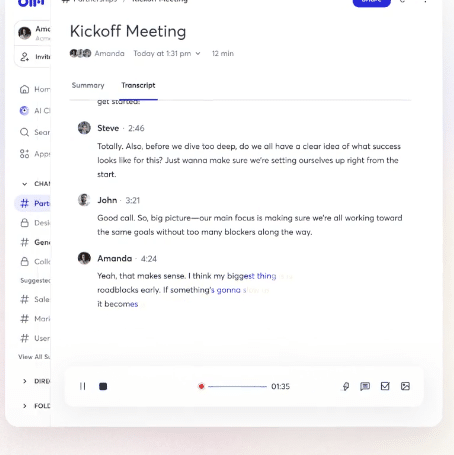
- The Process: Cloud-based AI transcription bots integrate directly into calendar apps, auto-joining Zoom, Google Meet, or Microsoft Teams calls. They capture the audio stream in real time, apply natural language processing (NLP) to separate speakers, and generate a fully searchable transcript the exact second the meeting ends.
- The Impact: Writers can now transition immediately from an interview into the outlining and drafting phase, effectively eliminating the post-call transcription lag.
Supporting Context & Metrics: Calculating the Real ROI of AI Transcription
For independent professionals operating on fixed-fee models, every minute spent on administrative overhead is a minute stolen from revenue-generating writing. To evaluate whether a $100/year investment in Otter.ai is mathematically sound, we can break down a standard freelance article workflow.
The Economics of an Interview-Based Article
Consider a standard assignment: a 1,000-word article commissioned at a flat rate of $1,200, requiring one authoritative SME interview.
-
Traditional Workflow Breakdown:
- Research & Interview Preparation: 1 hour
- Conducting the SME Interview: 30 minutes
- Manual Review & Transcription Cleanup: 1.5 hours
- Outlining & Drafting: 3 hours
- Editing & Polishing: 1 hour
- Total Time Invested: ~7 hours
- Effective Hourly Rate: ~$171/hour
-
AI-Assisted Workflow Breakdown (Using Otter.ai):
- Research & Interview Preparation: 1 hour
- Conducting the SME Interview: 30 minutes
- Automated Transcription & 10-Minute Verification: 20 minutes
- Outlining & Drafting: 3 hours
- Editing & Polishing: 1 hour
- Total Time Invested: ~5 hours and 50 minutes
- Effective Hourly Rate: ~$205/hour
While saving roughly an hour per article might appear modest on a single assignment, the compounding effect over a calendar year is substantial. A writer producing three to four interview-driven pieces per month saves between 3 to 5 hours monthly. Across a 12-month period, this totals up to 60 hours saved—the equivalent of an entire workweek reclaimed for higher-value tasks, client acquisition, or rest.
Because the Professional subscription costs approximately $100 annually, the tool pays for itself within the first assignment of the month.
Key Feature Analysis: Beyond Basic Transcription
Modern transcription platforms do more than simply convert speech to text. Several core features drive their utility for professional writers:
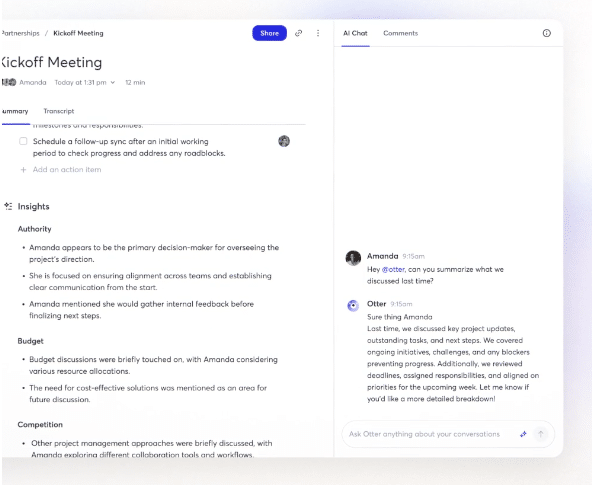
- AI Chat Search: Rather than scrolling endlessly through a 4,000-word document looking for a specific mention of "credit card fraud" or "artificial intelligence personalization," writers can query an in-app AI chatbot. The system instantly scans the transcript, pulls relevant excerpts, and generates contextual summaries. This feature is particularly valuable when an expert goes off on a complex tangent that connects to multiple themes in the article.
- Audio-to-Text Linking: Accuracy is rarely 100%. When a technical term or proper noun is garbled by the AI, clicking on any word in the transcript instantly triggers the audio recording to play from that exact timestamp. This allows for rapid, friction-free verification.
- Generous Free Tiers: Platforms typically offer a basic free tier (e.g., 300 minutes per month with a 30-minute limit per recording), allowing writers to thoroughly test the software against their specific audio setups before committing capital.
Official Industry Limitations & Technical Realities
Despite the glowing financial metrics, professional journalists must remain clear-eyed about the technical constraints of automated transcription. Relying blindly on AI-generated text introduces editorial risks that require careful mitigation.
1. Accuracy Realities: The 80–85% Threshold
While software providers frequently market accuracy rates as high as 95%, real-world testing—particularly in specialized niches like fintech, legal, or medical journalism—reveals that actual accuracy often hovers closer to 80% to 85%.
- The Culprits: Industry jargon, acronyms, regional accents, and overlapping speech frequently confuse speech recognition algorithms. Proper nouns and brand names are particularly susceptible to imaginative misspellings.
- The Safeguard: Professional writers must never copy-paste quotes directly from an unverified transcript. The mandatory step of cross-referencing flagged quotes against the underlying audio file remains an essential journalistic safeguard.
2. Hardware and Environmental Constraints
Most transcription bots running on desktop applications rely on computer audio capture ("speaker mode") rather than direct internal routing, depending on how they are configured.
- The Catch: If a writer wears headphones during an interview, the software may only capture the writer’s voice while failing to record the remote interviewee. Consequently, interviews must often be conducted via computer speakers or specialized acoustic routing, which can introduce echo or background noise if conducted in non-private environments like coffee shops or open-plan coworking spaces.
3. Speaker Identification Glitches
Multi-speaker algorithms attempt to dynamically label participants as Speaker 1, Speaker 2, and so forth. However, in fast-paced debates, panel discussions, or interviews featuring speakers with similar vocal timbres, attribution errors are common. Writers must manually correct speaker tags to avoid misattributing critical quotes to the wrong expert.
Future Outlook: The Trajectory of AI in Freelance Journalism
As artificial intelligence continues to mature, the intersection of automated transcription and content creation will only deepen. Several key trends are poised to shape the future of the freelance writing industry over the coming years:
Enhanced Contextual Awareness
Next-generation transcription models are moving beyond basic phonetic spelling. By integrating custom vocabulary banks and industry-specific language models (LLMs), future tools will automatically recognize complex financial, legal, and technical terminology on the first pass, dramatically reducing cleanup time.
Deep Ecosystem Integration
The barrier between recording, transcribing, and drafting is dissolving. Future workflows will likely feature native AI assistants embedded directly into word processors (such as Google Docs or Microsoft Word), allowing writers to highlight a section of a transcript and instantly command an AI copilot to draft a specific paragraph, synthesize a bulleted summary, or verify factual claims against the source audio.
The Human Advantage
As AI tools commoditize the mechanics of transcription and speed up drafting, the true differentiator for freelance writers will shift entirely toward editorial judgment, narrative arc, and relational intelligence. The ability to ask incisive, empathetic questions during an interview—and to synthesize those insights into a compelling, human-centered story—remains a uniquely irreplaceable human skill. Tools like Otter.ai do not replace the writer; rather, they strip away the administrative friction, allowing the writer to focus purely on the craft.
Conclusion
For freelance writers, journalists, and content creators who regularly conduct interviews, investing in a robust AI transcription tool is no longer a luxury—it is a core operational necessity. While limitations in raw accuracy and speaker identification mean that human oversight remains mandatory, the time-savings, ROI, and mental clarity provided by instant transcription are undeniable.
By reclaiming hours of administrative drudgery every month, writers can invest their finite energy where it matters most: conducting deeper research, sharpening their prose, and building enduring relationships with the sources who make great stories possible.
