The landscape of freelance writing has undergone a profound structural shift. Artificial intelligence tools are no longer experimental novelties or futuristic talking points; they are deeply embedded baseline infrastructure. For independent writers, copywriters, and content strategists, the modern dilemma is no longer whether to adopt AI, but how to integrate it without hollowing out the creative core that justifies their fees.
Industry data reveals a stark bifurcation in the freelance market. On one side are the thriving professionals who treat AI as an operational multiplier—offloading administrative friction, structural paralysis, and repetitive research to algorithms. This allows them to double down on human-centric competencies: strategic thinking, source interviewing, empathetic storytelling, and relationship management. On the other side are those who either stubbornly reject technological leverage entirely or rely on generative tools as an uncritical crutch, pumping out homogenized, low-friction text that discerning clients can instantly recognize and reject.
This comprehensive guide explores the ten pragmatic, high-value applications of AI tools—such as ChatGPT, Claude, Perplexity, and Otter.ai—that enhance professional capability rather than dilute it. By examining these workflows, freelance writers can streamline their operations, scale their output, and protect their distinct voice in an increasingly crowded marketplace.
Detailed Chronology: The Evolution of AI in Freelance Workflows
To understand where the industry stands today, it is helpful to trace how generative technology transitioned from a novelty into an essential operational partner for freelance writers:
The Novelty Phase (Late 2022 – Early 2023): The public release of accessible large language models sparked widespread panic and excitement. Early adopters experimented with full-article generation, leading to an initial flood of robotic, unedited AI output across blogs and content mills. Clients quickly pushed back against derivative, inaccurate writing.
The Backlash and Realignment (Mid 2023 – 2024): As search engines and enterprise clients implemented strict filters against low-effort AI content, writers realized that wholesale generation was a dead end. The narrative shifted from "AI will write your articles" to "AI is a glorified intern." Writers began using tools selectively for brainstorming and formatting.
The Operational Integration Era (2025 – Present): Today, AI has matured into a nuanced administrative and creative assistant. Freelancers are leveraging specialized models (like Perplexity for verified research and Claude for structured data tracking) to manage the entire lifecycle of a freelance business—from cold outreach and interview triage to content repurposing and performance analytics.
Supporting Context & Metrics: The 10 Ways AI Elevates Professional Writing
To harness AI effectively, writers must focus on tasks that break mental friction and accelerate workflow without outsourcing critical judgment. Here are ten tactical implementations designed to elevate your output.
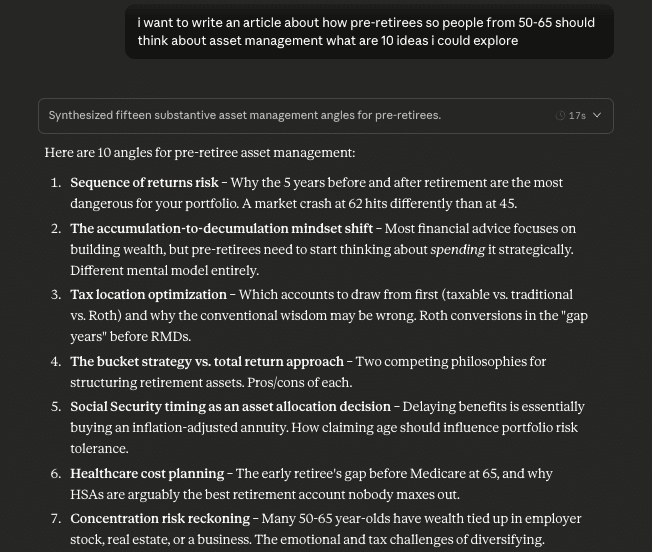
1. Overcoming the Blank Page Paralysis
The psychological barrier of the blinking cursor remains the single greatest time-sink for professional writers. You understand the assignment, you have the domain knowledge, but mapping out the first sentence feels insurmountable.
AI excels not as a ghostwriter, but as a cognitive springboard. By prompting platforms like ChatGPT or Claude to generate ten distinct structural angles, alternative opening paragraphs, or reader-centric questions, you break the paralysis. You may discard eighty percent of the suggestions, but you instantly transition from staring at a void to reacting to tangible text.
2. Streamlining Structural Outlines
Before drafting a single paragraph, professional copy requires an architectural blueprint. AI can accelerate the outlining phase by processing a topic and suggesting logical subheadings, thematic sections, and audience expectations.
Advanced writers often build intake prompts within Claude, feeding the tool raw notes, target audience parameters, core objectives, and relevant data points. The model organizes this unstructured information into a coherent framework, frequently suggesting nuances or counter-arguments the writer may have overlooked.
3. Accelerated Research Triage
Modern freelance writing demands deep research, requiring professionals to digest dense reports, white papers, and academic studies. AI significantly compresses this triage phase. Pasting a lengthy document into an LLM and requesting a summary of key arguments and verified statistics prevents hours of wasted reading.
Tools like Perplexity Pro have revolutionized web-based research by providing real-time internet searches accompanied by explicit citations. This allows writers to quickly verify current statistics and source material, preventing the classic pitfall of utilizing outdated data. Furthermore, feeding interview transcripts or webinar recordings into AI allows writers to extract core expert themes before drafting begins.
4. Drafting Cold Emails and Letters of Introduction (LOIs)
Client acquisition is a relentless necessity for freelancers, yet writing repetitive outreach emails is exhausting. AI serves as a powerful drafting engine for Letters of Introduction (LOIs), generating varied templates—from concise value propositions to narrative-driven pitches.
However, the golden rule of AI-assisted outreach is the "human finish." While an AI can construct 80% of the framework, the final sentence must be deeply personalized. Mentioning a company’s recent industry award, a newly released study, or a specific piece of corporate news is something algorithms cannot authentically replicate. The AI provides the structure; you provide the human connection.
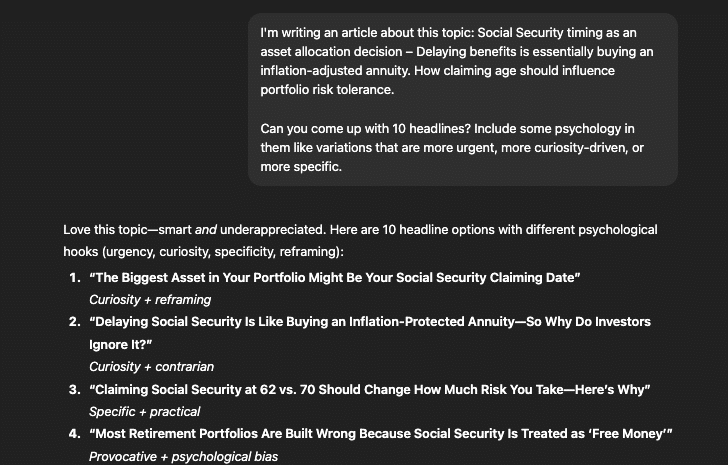
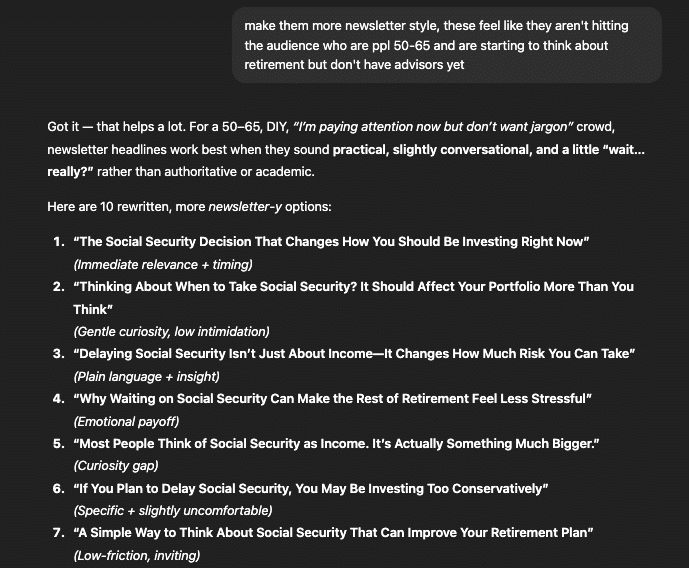
5. Crafting Compelling Headlines and Hooks
An exceptional article is worthless if the headline fails to capture attention. Because writing punchy, non-clickbait titles is notoriously difficult, AI serves as an ideal brainstorming partner.
By asking models to generate ten varied headline options emphasizing urgency, curiosity, or specific data points, writers bypass the blank-page dilemma. Often, the true value lies in hybridization—taking elements from two or three AI-generated suggestions to forge a title that resonates. The same methodology applies to crafting magnetic opening hooks that pull readers past the introduction.
6. Advanced Editing and Proofreading
Human eyes naturally glaze over self-authored text, filling in intended gaps rather than reading what is actually on the page. AI acts as an impartial, tireless second set of eyes.
Writers can paste drafts into Claude or ChatGPT with prompts to flag wordiness, convoluted phrasing, or logical leaps. Taking it a step further, writers can instruct the AI to role-play as the intended target audience, providing qualitative feedback on what sections feel confusing or unconvincing. Combined with dedicated proofreading tools like Grammarly, this layer of review catches mechanical and structural errors without compromising the author’s unique voice.
7. Automated Content Repurposing
Producing a comprehensive 1,500-word article is only half the battle; promoting it across LinkedIn, newsletters, and social channels consumes massive amounts of energy. AI allows writers to extract maximum value from existing intellectual property.
By inputting a completed article into an LLM, writers can generate multi-platform promotional assets instantly:
Extracting core data points into short-form LinkedIn hooks.
Drafting threaded summaries for social media engagement.
Synthesizing teaser copy for weekly newsletter distributions.
This transforms a single piece of long-form content into a multifaceted marketing campaign with minimal additional labor.
8. Strategic Interview Preparation
The quality of a Subject Matter Expert (SME) interview directly dictates the quality of the final article. Preparing thoughtful, probing questions requires deep contextual understanding, especially when entering an unfamiliar industry.
Writers can leverage Perplexity and conversational LLMs to research an interview subject’s recent publications, company milestones, and industry trends. Prompting the AI for ten targeted questions ensures the interview yields specific, compelling quotes rather than generic baseline answers, respecting both the writer’s time and the expert’s expertise.
9. Managing and Mining Interview Transcripts
Post-interview transcription tools like Otter.ai generate massive walls of unstructured text. Finding specific quotes or thematic clusters across a 60-minute recorded conversation can derail a writing schedule.
Modern transcription platforms feature integrated chat capabilities. Once recorded (with explicit permission), writers can query the transcript directly: "Pull the three best quotes regarding compliance," or "Summarize the expert’s stance on market volatility." While every quote must be cross-referenced against the original audio to ensure absolute accuracy, AI drastically reduces the time spent hunting for soundbites.
10. Operational Tracking and Marketing Analytics
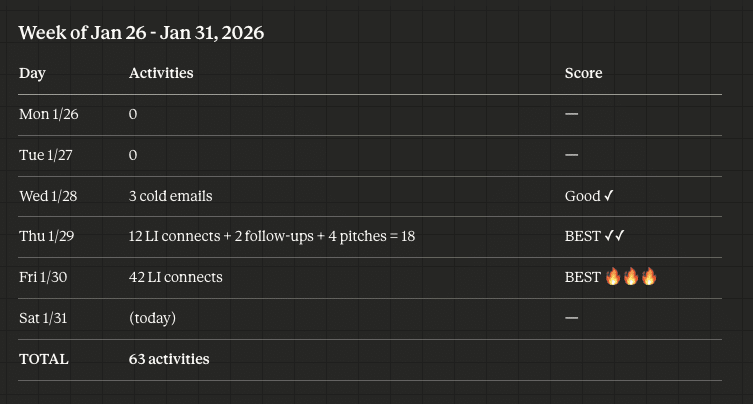
For creative professionals who despise traditional spreadsheets, AI can function as an intuitive administrative assistant. Utilizing platforms with advanced data memory (such as Claude Cowork), freelancers can log their daily outreach efforts—recording dates, contact names, outreach channels, and client responses.
At the end of the month, writers can query the AI for a comprehensive performance audit: How many LOIs were sent? What was the conversion rate on follow-ups? Which niche subset yielded the highest response rate? By gamifying the tracking process with customized weekly scorecards, freelancers can identify operational bottlenecks and refine their marketing strategies without updating complex manual spreadsheets.
Official Industry Statements & Perspectives
As the line between human and machine generation blurs, industry leaders emphasize that AI’s ultimate value lies in augmentation, not substitution.
"The freelancers who are thriving right now use AI to handle the tedious parts of the job so they can focus on the work that actually matters: the thinking, the interviews, the expertise, the relationships," notes Sean Ogle, founder of Location Rebel.
Ogle emphasizes a critical boundary for modern creators: "AI tools can make you faster, but they can’t make you better if you use them wrong. If you outsource your thinking, your voice, and your strategic insight to an algorithm, you are simply competing with everyone else who can type a prompt."
Editorial standards across major publications similarly mandate transparency and human accountability. While syntax, outlining, and administrative tracking are widely accepted domains for automation, final editorial accountability rests squarely on the human author.
Future Outlook: The Resilient Freelancer
Looking ahead, artificial intelligence will inevitably become even more integrated into the digital workspace. Voice-to-text integration, autonomous research agents, and predictive client-matching algorithms will continue to reshape the freelance economy.
However, this technological saturation increases the premium on genuinely human traits. As the internet floods with competent, average-quality, AI-generated text, the value of authentic original reporting, lived experience, rigorous critical thinking, and genuine relationship-building will skyrocket.
The resilient freelance writer of tomorrow is not the one who writes the fastest by leaning entirely on automated tools, but the one who utilizes AI to eliminate friction—freeing up cognitive bandwidth to deliver deep, expert, undeniable value that algorithms can never replicate. Start by integrating one or two of these workflows into your daily routine, master them, and build a sustainable, future-proof freelance business.