

Executive Overview
For decades, standard planetary science models were built upon a dramatic, albeit terrifying, premise: that the inner Solar System, including Earth and its lunar companion, suffered through a catastrophic, concentrated epoch of cosmic bombardment known as the Late Heavy Bombardment (LHB). According to this prevailing paradigm, an apocalyptic storm of asteroids and comets suddenly hammered the Moon roughly 3.9 billion years ago, long after the planets had initially coalesced.
However, an international team of researchers has shattered this foundational chronology. Analyzing pristine ancient rocks retrieved from the enigmatic far side of the Moon—brought back to Earth by China’s historic Chang’e-6 mission—scientists have uncovered evidence that fundamentally rewrites this chapter of cosmic history.
Rather than pointing to a sudden, short-lived cataclysm, the data reveals a long, slow-burning decline in asteroid impacts stretching across more than three billion years. This new timeline does not merely update our understanding of lunar evolution; it fundamentally transforms how scientists view the violent nursery of the early inner Solar System and reopens the debate regarding the environmental pressures faced by Earth as life first struggled to emerge.
Published in the prestigious journal Science Advances under the title "The bombardment history on the lunar farside revealed by 40Ar/39Ar geochronology of Chang’e-6 impact melt rocks," the study was spearheaded by the State Key Laboratory of Deep Earth Processes and Resources at the Guangzhou Institute of Geochemistry, Chinese Academy of Sciences, in collaboration with esteemed global institutions, including Curtin University’s School of Earth and Planetary Sciences and the John de Laeter Centre.
By marrying cutting-edge geochronology with samples from a previously unreachable geological terrane, this research ushers in a golden age of lunar science, proving that the Moon still holds deep, unread chapters of our cosmic ancestry.
Detailed Chronology: Spanning Over Three Billion Years of Cosmic Impacts
To unpack the bombardment history of the inner Solar System, the research team focused on tiny, unassuming fragments of lunar rock embedded with impact glass and mineral grains melted by ancient collisions—known as impact melt rocks. These geological relics act as precision chronometers, resetting their internal radiometric clocks the exact moment a high-velocity asteroid slams into the lunar crust.
By employing high-precision $^40textAr/^39textAr$ (argon-argon) geochronology, the scientists were able to date these impact events with remarkable accuracy. The resulting temporal distribution spanned an immense window, identifying distinct collision events occurring from approximately 4.33 billion years ago down to 1.13 billion years ago.
This sweeping chronological arc provides a continuous record covering more than three billion years of planetary history. When the researchers mapped out the frequency of these impacts, a clear, unmistakable trend emerged. The data completely undermined the classic "spike" model associated with the Late Heavy Bombardment, which predicted a sharp, concentrated cluster of impacts roughly 3.9 billion years ago. Instead, the frequency of asteroid strikes displayed a steady, gradual tapering off over eons.
This long-term decline indicates that the inner Solar System was not subjected to a sudden, anomalous cataclysm brought on by planetary migration or orbital destabilization in the outer Solar System, as many dynamic models have previously suggested. Rather, the primordial debris field left over from planetary accretion cleared out in a much more orderly, protracted fashion. The impact rate experienced a continuous, secular decrease, dropping off decade by decade, century by century, over billions of years.
This new chronology paints a picture of a universe that was hazardous, yes, but far more predictable in its decay than the chaotic storm theoretical models had long assumed.
Supporting Context & Metrics: Unlocking the Far Side’s Pristine Archive
Why did it take until now to uncover this continuous decline? The answer lies in the deeply asymmetric geological history of our nearest celestial neighbor.
The Earth-Facing Bias
For generations, planetary science was inherently handicapped by observational bias. Nearly all lunar samples returned by the American Apollo and Soviet Luna programs originated from the Moon’s near side—specifically the smooth, dark volcanic plains known as the maria.
While these samples provided groundbreaking insights, the near side is a heavily altered landscape. Over billions of years, extensive basaltic volcanism flooded vast impact basins, burying ancient craters beneath thick sheets of lava. Furthermore, the near side has been subjected to continuous impact gardening and ejecta blankets from subsequent large-scale collisions. In short, Earth’s gravitational pull locked the Moon in synchronous rotation, protecting the near side while simultaneously exposing it to unique thermal and tectonic histories that heavily degraded its oldest records.
The Pristine Far Side Advantage
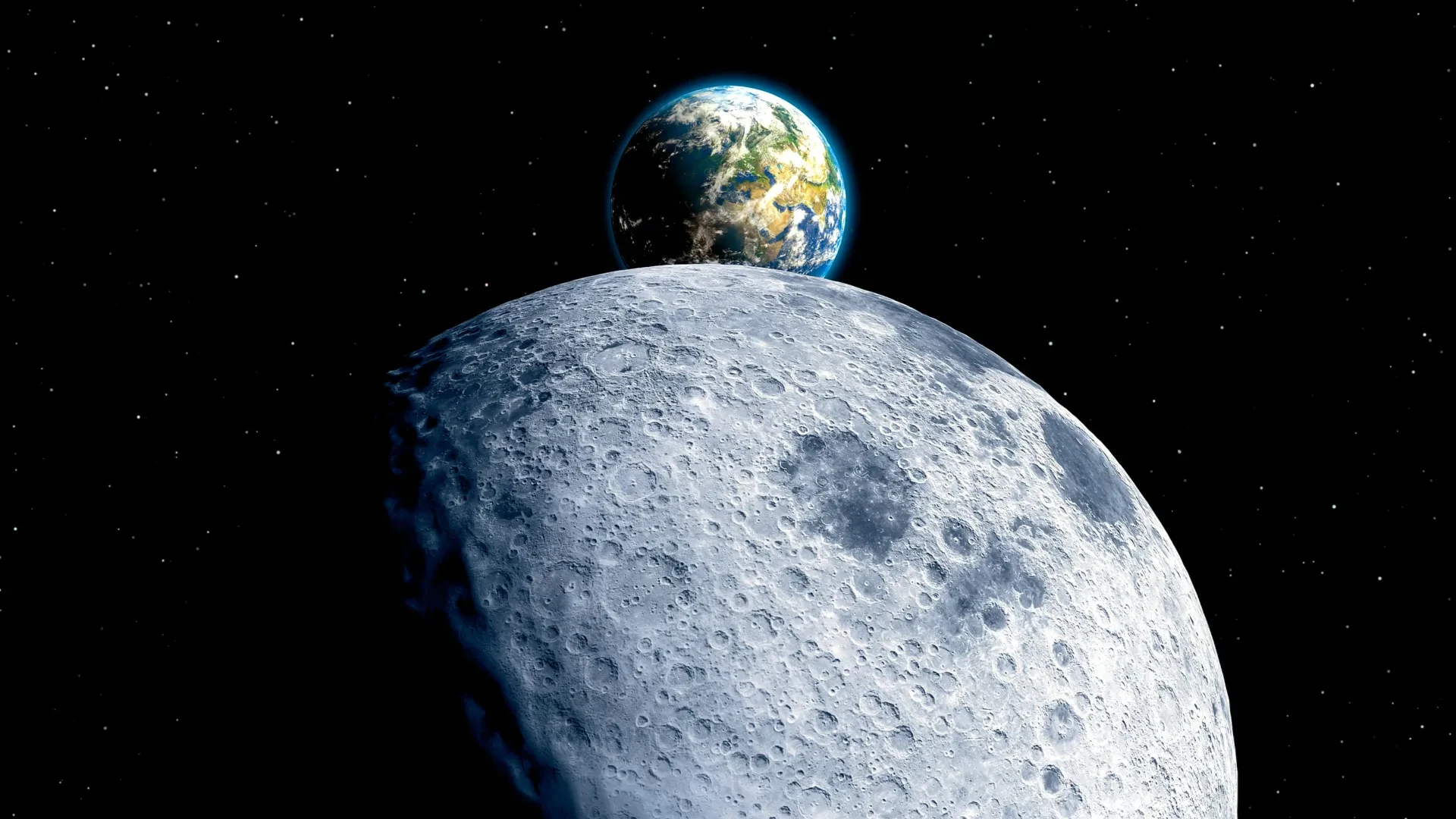
The far side of the Moon, by contrast, is a vastly different geological beast. It is heavily cratered, dominated by rugged highlands, and features far fewer volcanic mare deposits. Because it faced away from Earth, it evolved under a different crustal thickness regime and experienced far less subsequent internal melting and resurfacing.
"The Moon is like a time capsule—it has preserved a record of events that have been erased from Earth by erosion, plate tectonics and other geological processes," notes Dr. Fred Jourdan, a research co-author from Curtin University.
"Samples collected from the Moon’s far side are particularly significant because they allow us to compare two very different parts of the Moon for the first time. Until now, almost everything we knew came from the side facing Earth."
Dr. Jourdan emphasizes that the far side preserves a much cleaner, unadulterated record of the earliest impacts because it was sheltered and insulated from the complex volcanic and tectonic overprinting that plagued the near side. By extracting and dating these far-side impact melts, scientists have effectively pierced through the veil of terrestrial bias, gaining an unbiased, hemisphere-wide perspective on the impact flux of the Earth-Moon system.
The Chang’e-6 Triumph
This scientific leap forward was made possible entirely by the triumphant engineering of China’s Chang’e-6 mission. Landing within the South Pole-Aitken (SPA) basin—the largest, deepest, and oldest impact structure on the Moon—Chang’e-6 successfully scooped up and returned the world’s first-ever samples from the lunar far side. This technological milestone opened a virgin geological archive, transforming theoretical debates into empirical certainties.
Official Statements: Perspectives from the Scientific Vanguard
The implications of this study have sent ripples through the global planetary science community, challenging textbooks and prompting researchers to rethink the dynamical evolution of the inner planets.
Dr. Jourdan elaborated on the profound conceptual shift required by the new data:
"These samples are helping us rewrite parts of the Moon’s history and suggest the early Solar System experienced a long decline in asteroid impacts rather than a single catastrophic bombardment."
He further underscored the intimate geological kinship between Earth and the Moon, noting that understanding our satellite is the ultimate proxy for understanding our own formative epochs:
"The Moon and Earth share a common history, but the evidence of early impacts has largely disappeared from our planet. Because the Earth and Moon formed together, every major impact recorded on the Moon tells us something about the conditions experienced by the young Earth."
By establishing a reliable impact chronology on the Moon, scientists gain an empirical yardstick that can be projected backward onto Earth. Because Earth’s plate tectonics, active atmosphere, and vigorous hydrological cycle have effectively scrubbed away its Hadean and early Archean crusts, the lunar surface serves as our planet’s external memory hard drive.
Furthermore, Dr. Jourdan highlighted how these revelations directly intersect with the chronology of life’s emergence:
"Studying lunar rocks allows us to look back billions of years and better understand the events that shaped the environments of both worlds and helps us understand the role asteroid impacts played in planetary evolution and the conditions that may have influenced the emergence of life on Earth."
The research leadership, anchored by the Guangzhou Institute of Geochemistry of the Chinese Academy of Sciences, echoed these sentiments, stressing that interdisciplinary collaboration and robotic lunar exploration are the twin engines driving modern planetary discovery. The integration of high-resolution isotopic dating techniques with pristine, mission-returned planetary regolith has set a new gold standard for empirical cosmochemistry.
Future Outlook: A New Era of Comparative Planetology
As the scientific community digests the profound implications of the Chang’e-6 findings, planetary scientists are already looking toward the horizon. This study marks not an endpoint, but a beginning—the inauguration of a dynamic new era of comparative planetology.
Re-evaluating Dynamic Models
Theoretical astrophysicists who model the gravitational migration of giant planets—such as the famous "Nice model," which attempted to explain the Late Heavy Bombardment via sudden orbital shifts of Jupiter, Saturn, Uranus, and Neptune—will now need to recalibrate their simulations. If the impact flux was characterized by a smooth, long-term power-law decline rather than a violent, synchronized spike, planetary migration scenarios must account for a more gradual, protracted destabilization of the asteroid belt and Kuiper Belt reservoirs.
The Roadmap for Future Lunar Missions
The success of Chang’e-6 has catalyzed international momentum for subsequent lunar sample-return initiatives. Future missions targeting other specific far-side geological anomalies, ancient impact basins, and high-land terranes will continue to refine the temporal error bars established by this latest Science Advances paper. As more samples are cataloged, researchers hope to construct an unassailable, high-resolution impact curve for the entire inner Solar System spanning the past 4.5 billion years.
Implications for Astrobiology
Beyond geology and dynamics, these findings hold massive stakes for astrobiology. The transition from a sterile, molten young Earth to a world teeming with primitive microbial life occurred during the very window illuminated by these lunar rocks.
Understanding whether early Earth was subjected to intermittent, life-sterilizing global cataclysms or a more manageable, steady background rate of impacts completely alters our models of abiogenesis. If the bombardment was a slow taper, it means prebiotic chemistry and nascent ecosystems may have faced fewer total system resets, providing stable niches where hydrothermal vents, shallow seas, or warm little ponds could foster the complex organic molecules that eventually sparked terrestrial biology.
Ultimately, the ancient rocks brought home by Chang’e-6 have done far more than fill a gap in a terrestrial ledger. They have illuminated the deep-time mechanisms of our solar neighborhood, proving that even the most deeply entrenched scientific dogma can be successfully challenged when science finally gains access to untouched ground.
