

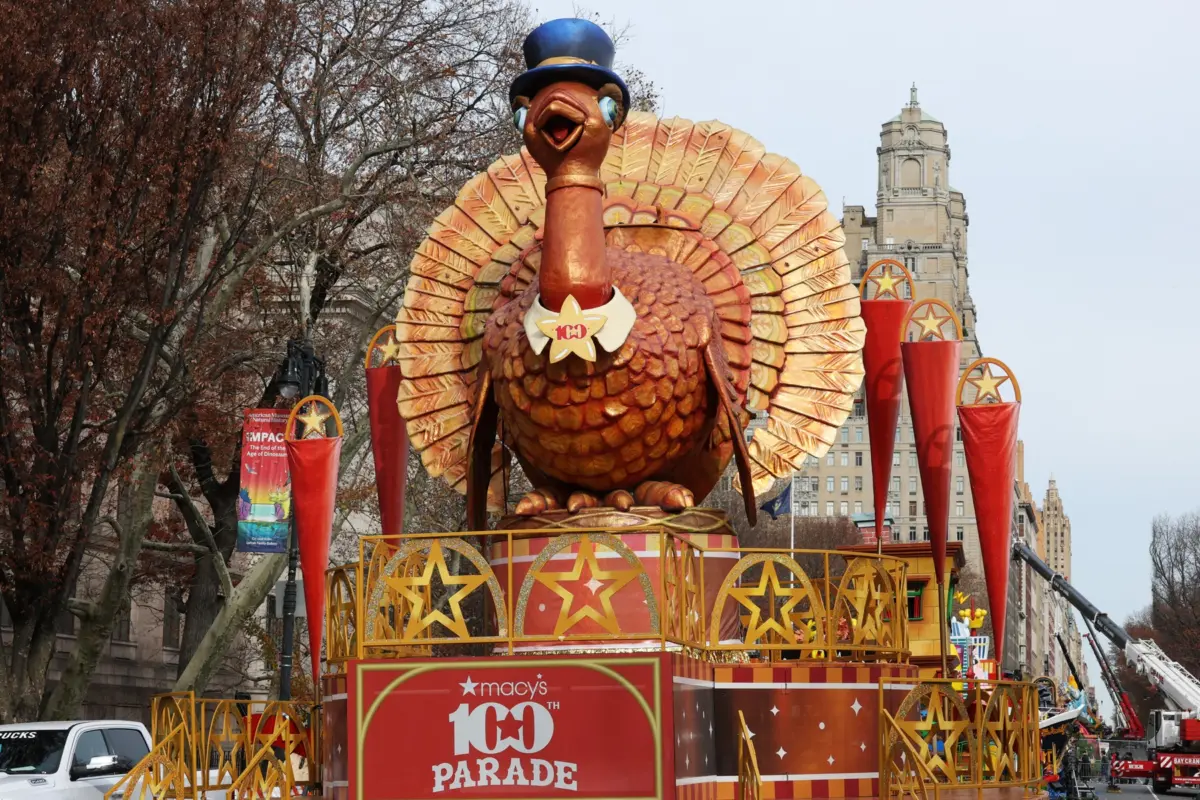
Executive Overview
As families gathered across the United States to celebrate the Thanksgiving holiday, millions faced a major disruption to a beloved national tradition. In an unprecedented move, organizers of the historic 100th Macy’s Thanksgiving Day Parade announced that the landmark celebration has been postponed due to severe, fast-moving weather systems advancing up the East Coast.
Instead of stepping off on Thursday morning, the centennial parade is now scheduled to take place on Saturday, November 28. Driven by safety protocols that take zero chances with wind thresholds—particularly regarding the towering, iconic character balloons that define the holiday spectacle—organizers, in close coordination with New York City officials and emergency services, made the difficult call to reschedule.
Meteorologists warned of heavy rain, flooding, and sustained high winds capable of destabilizing the massive inflatables and endangering both participants and the millions of spectators lined up along the 2.5-mile Manhattan route. While previous parades have faced weather modifications, high winds have only ever forced the lowering of balloons or resulted in localized incidents; a full postponement for inclement weather is entirely unprecedented in the century-long history of the event.
Despite the shift in the calendar, the star-studded lineup—featuring an opening performance by Grammy-nominated artist Raye alongside appearances by Wyclef Jean, Queen Latifah, Natasha Bedingfield, and others—remains intact. This comprehensive report explores the meteorological drivers behind the postponement, the strict safety parameters governing the parade, historical precedents of weather and wartime cancellations, and the logistical ripple effects on millions of holiday travelers, performers, and local businesses.
Detailed Chronology: The Evolution of a Weather Emergency
The decision to postpone the 100th Macy’s Thanksgiving Day Parade was not made lightly, nor was it arrived at overnight. It was the culmination of continuous, high-stakes monitoring by meteorological agencies, city emergency management teams, and Macy’s executive producers tracking a volatile low-pressure system developing off the Atlantic seaboard.
The Meteorological Threat Assessment
In the days leading up to Thanksgiving, forecasters at the National Weather Service and private meteorological outlets tracked a rapidly intensifying coastal storm system. As the system tracked northward, it gathered moisture and energy, threatening the Mid-Atlantic and Northeast corridors with severe atmospheric instability.
By Wednesday evening, models converged on a sobering reality for New York City: sustained winds were projected to reach 25 to 35 miles per hour, with potentially hazardous gusts reaching much higher speeds as the storm front collided with urban canyons. For standard outdoor events, 35 mph winds are merely a nuisance. For the Macy’s Thanksgiving Day Parade, however, these wind speeds represent a critical safety threshold.
The physics of flying giant character balloons—some standing as tall as four-story buildings and requiring dozens of handlers—make them acutely sensitive to crosswinds and sudden gusts. When winds exceed established safety limits, the balloons can act as massive kites, lifting handlers off their feet, colliding with urban infrastructure, or tearing loose entirely.
The Decision-Making Process
Throughout Wednesday night and into the early hours of Thursday morning, emergency management officials held emergency briefings with Macy’s parade leadership. City agencies, including the New York City Police Department (NYPD) and the Fire Department of New York (FDNY), evaluated crowd management risks, wet-weather traction hazards for marching bands and dancers, and the structural integrity of temporary viewing stands.
With forecasts showing no sign of the wind abating during the crucial morning hours when the parade was scheduled to unfold, officials reached an inevitable consensus. The decision to move the parade to Saturday, November 28, was finalized and broadcast to the public early Thursday morning, catching millions of viewers off guard as they tuned in for their traditional holiday morning broadcasts.
Supporting Context & Metrics: The Scale of the Spectacle and the Danger of Wind
To understand the magnitude of postponing the 100th Macy’s Thanksgiving Day Parade, one must examine the staggering scale of the operation and the complex science of wind safety that governs it.
By the Numbers: The Parade’s Footprint
The Macy’s Thanksgiving Day Parade is an logistical marvel requiring nearly a year of planning, thousands of volunteers, and intricate coordination with municipal services.
- The Route: A 2.5-mile path winding down from Central Park West to Herald Square.
- The Crowd: More than 3 million spectators typically line the barricades along the route, with an additional 50 million viewers watching live broadcasts nationwide.
- The Talent: This year’s centennial lineup featured top-tier musical acts, including Grammy-nominated singer Raye—who was set to open the parade alongside her sisters, Amma and Absolutely—as well as performances by Wyclef Jean, Smash Mouth, Natasha Bedingfield, Icona Pop, JoJo, The Hunger Games star McKenna Grace, and entertainment icon Queen Latifah.
- The Workforce: Thousands of balloon handlers, security personnel, sanitation workers, and technical crew members dedicate their Thanksgiving holiday to ensuring the production runs smoothly.
The Wind Factor: A History of Incidents
Macy’s and New York City officials do not take wind warnings lightly because past parades have demonstrated the destructive potential of unchecked gusts. Strict regulations were codified following harrowing incidents in the late 20th century:
- 1997: High winds proved catastrophic for multiple units. A gust caught the Barney the Dinosaur balloon, tearing it open and causing it to deflate. More dangerously, a Cat in the Hat balloon was blown off course, colliding with a lamppost and falling into a crowd of spectators, resulting in serious injuries to a bystander.
- 1998: During its debut appearance, the Where The Wild Things Are balloon struck a lamppost under severe wind pressure, forcing safety crews to quickly deflate and remove it from the route.
- 2006 and 2019: Wind speeds prompted city officials to enforce strict operational adjustments, ordering handlers to fly the massive character balloons significantly lower to the ground to prevent them from catching high-altitude gusts.
These historical precedents established a zero-tolerance policy for wind-related hazards. With forecasters predicting sustained winds that exceeded the strict legal and operational safety limits established by the City of New York following the 1997 incidents, proceeding on Thursday morning was deemed an unacceptable risk to public safety.
Official Statements and Stakeholder Reactions
The announcement of the postponement triggered immediate waves of reaction from organizers, city leaders, performers, and disappointed fans who had traveled from around the globe to witness the centennial celebration.
Macy’s Official Stance
In an official statement released early Thursday morning, Macy’s executives emphasized that public safety was the absolute and uncompromised priority guiding their historic decision:
"The safety of our participants and spectators is our top priority, and after close consultation with our City and agency partners, we have made the decision to move this year’s celebration. Thank you to the thousands of volunteers, performers, and partners who create the magic millions enjoy each year. We look forward to celebrating together on Saturday."
Historical Context: When the Parade Stopped Before
While this marks the first time in history that the parade has been delayed due to inclement weather, it is not the first time external crises have disrupted the tradition.
During World War II, the parade was completely canceled for three consecutive years—1942, 1943, and 1944. During these dark years of global conflict, the United States military required all available rubber and helium for the war effort. Macy’s famously surrendered its giant rubber balloons, symbolically "deflating" them in a public ceremony as the rubber was repurposed for wartime needs.
Comparing the wartime suspensions to the modern weather delay highlights the sheer rarity of an interruption. For a century, the parade has marched through economic depressions, political upheavals, and regional storms. Yielding to a coastal nor’easter in its centennial year underscores just how severe contemporary meteorological projections were.
Future Outlook: Logistical Adjustments and the Saturday Spectacle
Moving an event of this magnitude with less than 24 hours’ notice creates a massive logistical puzzle for New York City agencies, transit authorities, local businesses, and out-of-town visitors.
Rescheduling and Programming
Organizers have confirmed that the core programming and talent lineup will remain unchanged. Fans who traveled to New York City will still have the opportunity to see Raye, Queen Latifah, Wyclef Jean, and the rest of the star-studded roster perform. The giant character balloons, intricately painted floats, marching bands, and dance troupes will simply execute their routes two days later than planned.
Economic and Logistical Ripple Effects
- Hotel and Travel Adjustments: Many tourists who planned brief Thanksgiving getaways now face decisions regarding extended hotel stays or altered travel itineraries. Tourism boards and local hotels are working to accommodate visitors extending their trips through the weekend.
- Municipal Overtime and Coordination: The NYPD, FDNY, and Department of Sanitation must redeploy thousands of personnel for Saturday shifts, modifying security perimeters, street closures, and clean-up operations that were originally scheduled to wrap up on Thursday afternoon.
- Broadcast Realignments: Network television partners, including NBC, are adjusting their broadcast schedules to ensure that millions of viewers at home can still experience the 100th anniversary celebration live on Saturday.
A Historic Milestone Delayed, Not Denied
While the disappointment among holiday travelers and families gathered around their televisions was palpable, the overarching sentiment from community leaders and organizers is one of resilience. The 100th Macy’s Thanksgiving Day Parade will go down in history not just for its centennial milestone, but for the unprecedented caution that prioritized human life and safety above all else.
As the skies clear and winds subside heading into the weekend, New York City prepares to finally roll out the red carpet—and launch the giant balloons—for a historic Saturday celebration that promises to be worth the wait.
