

Executive Overview
The landscape of modern retail is undergoing a profound paradigm shift, driven by the rapid maturation of generative artificial intelligence and machine learning models. As legacy brick-and-mortar giants and digital-first marketplaces alike race to capture the attention of increasingly digitally native consumers, the concept of the AI-powered shopping assistant has transitioned from futuristic speculation to a baseline strategic necessity. Into this high-stakes arena steps Target Corporation, one of the most recognizable names in American retail, with the nationwide rollout of its proprietary generative AI tool: Ask Target.
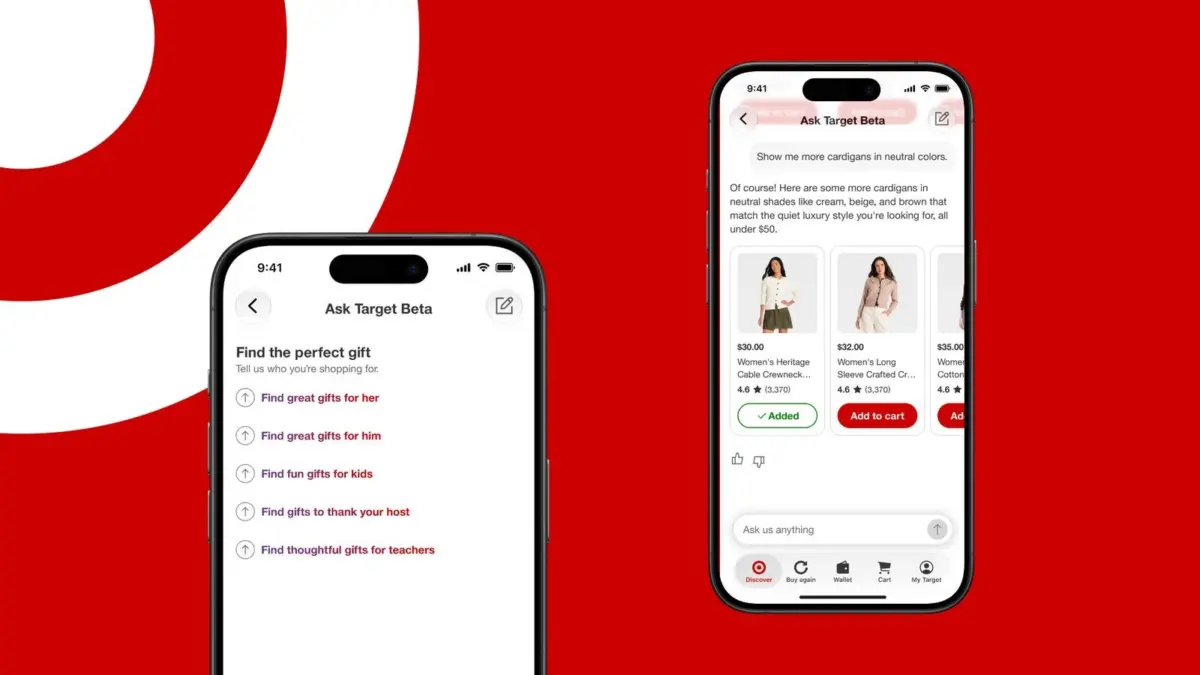
Following an initial, closely monitored internal pilot involving company employees, Target has officially democratized access to Ask Target, deploying the beta assistant across its primary digital touchpoints—its official website and its widely used mobile application. Unlike competing technological experiments that attempt to leap straight to autonomous transactional agents capable of autonomously executing complete purchasing lifecycles on a consumer’s behalf, Target’s leadership has consciously elected to chart a more measured, methodical course. Ask Target is not designed, at least in its current iteration, to make independent purchasing decisions for the user. Instead, it operates as an intuitive, highly informed digital concierge, expertly engineered to reduce cognitive friction, synthesize fragmented product data, and guide shoppers through an increasingly overwhelming inventory landscape.
This strategic deployment reflects a nuanced understanding of consumer behavior in the post-pandemic digital economy. Modern shoppers are inundated with choices, disparate product specifications, and conflicting review metrics. Ask Target addresses this friction point directly by offering hyper-personalized product discovery, transparent cross-item comparisons, synthesized review summaries, and real-time inventory checks. Behind this user-facing simplicity lies a sophisticated architectural framework guided by a philosophy of intentional phased development.
In this comprehensive report, we examine the genesis, rollout strategy, technical capabilities, and broader market implications of Ask Target. Through exclusive insights from executive leadership, detailed chronological tracking of the tool’s development, and forward-looking market analysis, we explore how Target’s cautious yet calculated foray into generative AI may redefine the future of omnichannel retail.
Detailed Chronology of the Ask Target Rollout
The emergence of Ask Target did not happen in a vacuum; it represents the culmination of months of iterative engineering, internal testing, and strategic prioritization within Target’s digital product and user experience divisions. To understand the significance of the public rollout, it is essential to trace the chronological milestones that brought the tool from conceptual blueprint to a nationwide digital feature.
Phase 1: Conceptualization and Internal Ideation (Late 2023 – Early 2024)
As generative AI models demonstrated commercial viability across various enterprise sectors throughout 2023, Target’s executive leadership and digital experience teams recognized the imperative to harness these technologies to enhance the guest experience. Traditional keyword-based search algorithms, while effective for finding exact product matches (e.g., "red throw pillow"), frequently struggled with complex, conversational, or context-driven queries (e.g., "What do I need to set up a cozy outdoor movie night for six people under $150?").
During this initial phase, Target’s internal engineering and UX teams laid the foundational architecture for a natural language processing interface that could tap directly into the retailer’s massive product catalog, inventory databases, and customer review repositories. The goal was clear: build a conversational partner that understood retail context, nuance, and inventory realities rather than merely serving up static search results links.
Phase 2: The Employee Beta Testing Period (Mid 2024)
Before exposing any new AI-driven product to the scrutiny of millions of everyday shoppers, risk mitigation and quality assurance take center stage for major enterprise retailers. Target elected to deploy an early iteration of Ask Target exclusively to its internal workforce.
This controlled environment served as a vital stress test. Employees used the tool to simulate thousands of diverse shopping scenarios, ranging from routine grocery restocks to complex holiday gift curation. This phase allowed Target’s data scientists and engineers to identify hallucinations, refine response latencies, optimize prompt-handling capabilities, and ensure that the assistant’s output adhered strictly to brand safety guidelines and product accuracy standards. Feedback gathered during this internal dogfooding period proved invaluable in shaping the user interface and ironing out early operational creases.
Phase 3: The Public Beta Rollout (October 2024)
In October, having gathered sufficient operational confidence from the employee trial, Target officially initiated the public beta phase of Ask Target. Integrated seamlessly into both the desktop website and the native mobile application, the tool became accessible to a broad cross-section of consumers.
This rollout was deliberately framed as a beta release, signaling to consumers and industry analysts alike that the tool is an evolving platform. Rather than positioning Ask Target as a finished, static product, Target invited customer engagement and behavioral observation to inform the next generations of feature enhancements.
Phase 4: Nationwide General Availability (Current Status)
Building upon the positive engagement metrics and stability observed during the initial public beta weeks, Ask Target has now achieved general availability across Target’s digital ecosystem. Every shopper utilizing the website or app can now leverage the assistant to navigate product catalogs, compare options, and check local store availability. This milestone marks the formal transition of Target from a traditional e-commerce search model to an interactive, conversational commerce framework—setting the stage for future capabilities yet to come.
Supporting Context & Metrics: The Retail AI Landscape
To fully appreciate the strategic weight of Target’s launch, one must examine the broader macroeconomic and technological trends sweeping the retail sector. The integration of generative artificial intelligence into e-commerce is no longer an experimental luxury; it has become an essential battleground for customer acquisition and retention.
The Shift Toward Conversational Commerce
For decades, the digital shopping experience has remained fundamentally anchored to the search bar. Consumers type keywords, scan lists of filtered results, click into individual product detail pages, and manually compare specifications across multiple browser tabs. While effective, this traditional funnel introduces cognitive load and friction, particularly on mobile devices where screen real estate is constrained.
Conversational commerce upends this paradigm. By allowing shoppers to articulate their needs in natural, conversational language—whether they are looking for gluten-free snack alternatives for a birthday party or trying to match a specific living room aesthetic—AI assistants compress the discovery and research phases of the buyer’s journey. Industry data consistently indicates that reduced friction in product discovery correlates directly with higher conversion rates, larger average order values (AOV), and improved customer lifetime value (LTV).
Competitive Benchmarking
Target is far from alone in exploring this frontier. Across the retail spectrum, major players are deploying AI-driven features to capture consumer mindshare:
- Amazon: Continues to refine its AI-powered shopping assistant, Rufus, designed to answer customer questions about products, make comparisons, and offer tailored recommendations directly within the mobile app.
- Walmart: Has heavily invested in generative AI capabilities, including conversational search tools and virtual interior design assistants aimed at enhancing the digital shopping experience.
- Direct-to-Consumer (DTC) Brands: A multitude of nimble e-commerce startups are integrating specialized LLMs (Large Language Models) to mimic the personalized, consultative experience of an in-store boutique associate.
Within this competitive matrix, Target’s approach stands out for its deliberate restraint. While competitors race to claim that their AI agents can execute purchases independently, Target has chosen to focus squarely on empowerment and assistance. By prioritizing features that solve immediate shopper pain points—such as synthesizing hundreds of disparate reviews into a cohesive summary or verifying real-time local store inventory—Target is addressing the practical realities of omnichannel retail.
Official Statements and Executive Insights
The strategic rationale behind Ask Target is best understood through the lens of those guiding its development. Purvi Shah, Senior Vice President of User Experience at Target, offered critical perspective on the company’s philosophy during an interview with industry publication ADWEEK.
Shedding light on the company’s measured approach to technological integration, Shah emphasized a philosophy rooted in practical problem-solving rather than technological gimmickry:
"We really are taking a phased approach in terms of AI and the types of problems it’s going to solve for our guests."
This statement underscores a vital distinction in contemporary tech strategy. In an era where venture-backed startups and legacy enterprises alike frequently succumb to "AI washing"—rebranding existing features with buzzwords to capture market hype—Target’s executive team has maintained a disciplined focus on utility.
Rather than promising a fully autonomous shopping agent that operates without human oversight, Target has concentrated on building an assistant that enhances the human shopper’s agency. By focusing the AI on specific, high-friction tasks—finding items based on nuanced preferences, sharing verified product facts, comparing complex specifications, summarizing aggregated customer reviews, and checking real-time inventory availability—Target ensures that the technology delivers tangible, verifiable value to the consumer from day one.
Furthermore, Shah’s commentary highlights an organizational commitment to scalability and safety. By rolling out the feature iteratively—transitioning from internal employee testing to a public beta and finally to general availability—Target mitigates the reputational and operational risks associated with deploying unrefined generative AI models at enterprise scale.
Future Outlook: Where Goes Target Next?
As Ask Target transitions from its initial public rollout into a permanent fixture of the retailer’s digital ecosystem, industry analysts and retail strategists are already looking toward the horizon. What lies next for Target’s conversational commerce strategy, and how might generative AI continue to transform the retail experience in the years to come?
1. Evolution Beyond Assistance to Autonomous Curation
While current leadership emphasizes that Ask Target is an assistant rather than an autonomous buyer, the technological trajectory points inevitably toward greater agency. In future iterations, we can anticipate the tool evolving to handle more complex, multi-step workflows. Imagine a scenario where a shopper tells Ask Target: "I need to buy everything required to host a Thanksgiving dinner for ten people, keeping gluten-free dietary restrictions in mind, with a total budget under $200, and I need it ready for drive-up pickup at my local store by Wednesday afternoon."
An advanced autonomous agent would not only identify and compare the individual components of this request but would also assemble the entire cart, apply eligible Circle loyalty discounts, and process the transaction seamlessly with a single guest authorization. While Target is taking a phased approach today, the foundational architecture being deployed now is laying the groundwork for these advanced capabilities tomorrow.
2. Deepening Integration with Target Circle and Omnichannel Ecosystems
Another critical frontier for Ask Target lies in its integration with Target’s broader loyalty and omnichannel infrastructure. By connecting the conversational assistant directly to a guest’s personalized Target Circle profile, purchase history, and saved preferences, the AI can deliver hyper-contextual recommendations that transcend generic product listings.
For instance, if the assistant knows from past purchase data that a shopper frequently buys organic produce and specific household cleaning brands, its responses to general queries can be automatically tailored to align with those established brand affinities and dietary preferences. Furthermore, tighter synchronization with real-time, store-level inventory management systems will ensure that the assistant never recommends an item that is out of stock at the guest’s preferred physical location—solving one of the most persistent pain points in omnichannel retail.
3. Multimodal AI and Visual Discovery
As consumer interactions shift increasingly toward mobile devices, the modalities of search and discovery are expanding beyond text. The future of Ask Target will likely incorporate multimodal AI capabilities, allowing shoppers to upload photos of an outfit they saw on social media, a broken home appliance part they need to replace, or a room they want to redecorate, and ask the assistant to find matching or complementary items within Target’s catalog.
4. Balancing Automation with the Human Touch
Ultimately, Target’s long-term success in the AI arena will depend on its ability to balance technological efficiency with the emotional and sensory aspects of shopping that consumers still value. Retail has always been, at its core, a human enterprise. By positioning Ask Target as a knowledgeable, reliable digital concierge that reduces friction without replacing human agency, Target is carving out a sustainable, consumer-centric pathway through the AI revolution.
Conclusion
Target’s nationwide rollout of the Ask Target AI assistant marks a defining moment in the retailer’s digital evolution. By deliberately choosing a phased, problem-solving approach over rushed autonomy, Target has demonstrated a mature understanding of what modern shoppers truly need: less friction, greater clarity, and reliable guidance in an ocean of retail choices.
As conversational commerce continues to reshape the competitive landscape, tools like Ask Target will transition from innovative novelties to expected standards of digital retail. Backed by disciplined execution, executive foresight, and a steadfast commitment to enhancing the guest experience, Target is well-positioned to navigate the AI frontier—proving that thoughtful, measured innovation can often outpace the frantic pursuit of technological novelty.
