

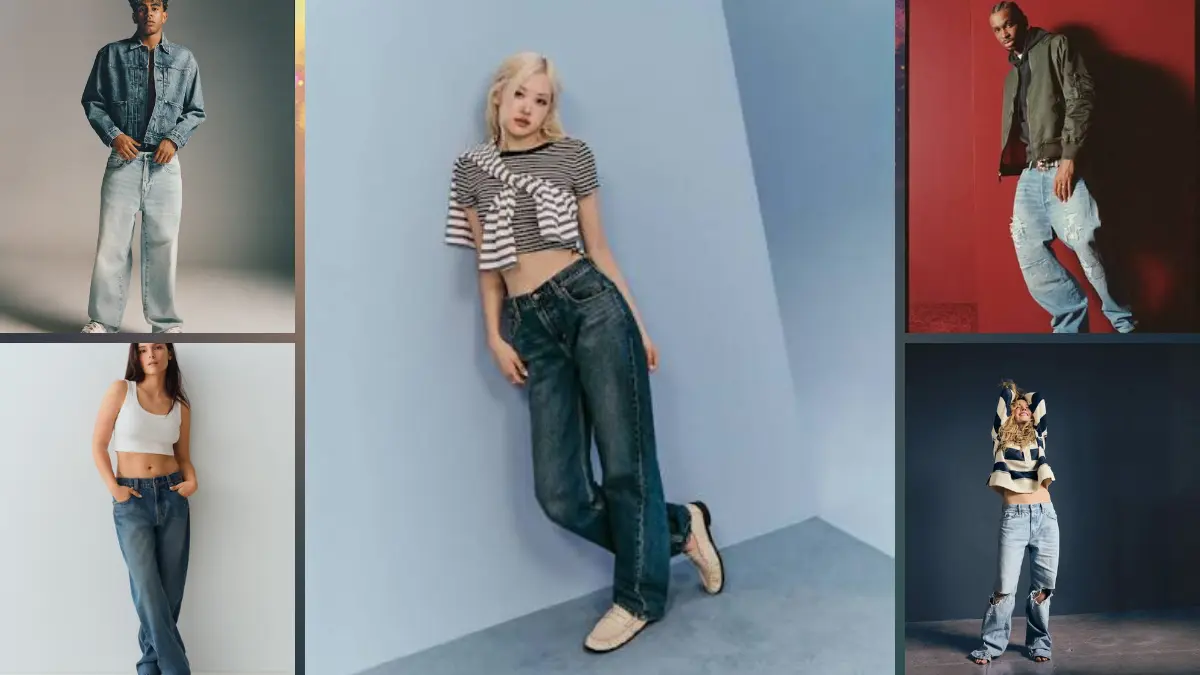
Executive Overview
The retail marketing landscape of 2025 will long be remembered by industry insiders as the crucible of the great "Denim Wars." Driven by shifting consumer behaviors, post-pandemic wardrobe realignments, and an urgent need to capture the attention of a fragmented media audience, legacy denim brands and retail giants unleashed an unprecedented wave of high-budget, star-studded advertising campaigns.
What began as a competitive push to reclaim market share quickly escalated into a multi-million-dollar blitz of television, digital, and experiential media. According to comprehensive TV data and measurement metrics provided by EDO, denim brands increased their television advertising volume by nearly 70% in 2025 compared to the previous year. This wasn’t merely a seasonal inventory push; it was a foundational realignment of brand strategy.
Levi’s made global headlines by integrating its heritage directly into the cultural zeitgeist through an unprecedented collaboration with global icon Beyoncé. Meanwhile, Gap redefined viral youth marketing by partnering with rising global girl group Katseye, leveraging synchronized choreography and digital-first content to capture Gen Z. Not to be outdone, American Eagle deployed a staggering star-studded roster featuring Sydney Sweeney, Martha Stewart, and Travis Kelce, successfully bridging generational divides to dominate cultural conversations.
This report provides an investigative deep dive into how these titanic campaigns unfolded, the strategic pivots that drove them, the hard data behind the surge, and the new creative playbook emerging as brands look toward the future of retail marketing.
Detailed Chronology: The Escalation of the 2025 Denim Wars
To understand how the denim market transformed into an advertising heavyweight battleground in 2025, one must trace the chronological escalation of campaigns that redefined the industry over a twelve-month period.
Q1 2025: Setting the Stage and Shifting Inventories
As the retail sector entered the first quarter of 2025, macroeconomic indicators suggested a cautious consumer base. Inflationary pressures had forced shoppers to be more selective, prompting apparel brands to rethink their messaging. Rather than relying on traditional discounting models, the industry’s premier players recognized that emotional resonance and high-concept storytelling were required to justify price points and drive foot traffic.
Early indicators in January and February 2025 showed a notable uptick in media spend across traditional cable and streaming television networks. Retailers recognized that inventory turnover in the denim category—traditionally considered a stable, foundational department—needed a aggressive jolt to stimulate replacement cycles among consumers who had leaned heavily into athleisure during preceding years.
Q2 2025: The Heavyweights Enter the Ring
By the second quarter, the competition shifted from a localized skirmish into a full-scale creative arms race. Brands began deploying major capital investments into multi-platform campaigns.
Gap, seeking to recapture the cultural lightning-in-a-bottle moments of its historic 1990s and 2000s advertising legacy, turned its focus squarely to Gen Z and late Millennials. The brand orchestrated a high-energy campaign centered around Katseye, a multinational girl group formed through a hybrid Western-K-pop talent pipeline. The resulting creative assets went viral across TikTok, Instagram Reels, and connected TV (CTV) platforms. The strategy relied heavily on participatory culture—encouraging dance challenges, digital sound bites, and immediate user-generated content creation.
Simultaneously, American Eagle began rolling out its expansive, cross-demographic strategy. Recognizing that denim appeals to virtually every age bracket, American Eagle built a diverse coalition of brand ambassadors. By pairing Gen Z darling Sydney Sweeney with cultural omnipresence Travis Kelce and American icon Martha Stewart, the brand crafted a multi-pronged narrative that ensured daily dominance across entertainment news, morning television, and social media feeds.
Q3 2025: The Levi’s and Beyoncé Phenomenon
The undisputed apex of the 2025 Denim Wars arrived mid-year when Levi’s launched its historic cultural partnership with Beyoncé. Following the pop superstar’s explicit nod to the brand on her critically acclaimed Cowboy Carter album, Levi’s capitalized on the momentum with a global advertising campaign that reimagined classic brand touchpoints through a modern, cinematic lens.
The campaign spanned television spots, digital billboards in major global metropolises, and immersive experiential activations. It was a masterclass in modern co-branding, proving that a heritage brand could leverage contemporary music royalty to maintain cultural relevance without losing its core identity. The sheer scale of the media buy associated with the Levi’s-Beyoncé collaboration forced competitors to escalate their own ad spends, pushing the industry’s total television ad volume up by nearly 70% year-over-year, as documented by EDO.
Q4 2025: Holiday Climax and Retrospective Analysis
As the year drew to a close, the fourth-quarter holiday shopping season served as the ultimate stress test for these aggressive marketing strategies. Retailers flooded airwaves and digital algorithms with final pushes, emphasizing giftability, fit innovation, and sustainability messaging. By December 2025, financial analysts and media observers alike—including CNBC—formally classified the phenomenon as the "denim wars," highlighting how star power and massive budgets had become table stakes for survival in the modern apparel market.
Supporting Context & Metrics: Decoding the Data Behind the Spend
The surge in denim advertising during 2025 was not merely an aesthetic triumph; it was a data-driven response to shifting consumer attention spans and media consumption habits. To evaluate the true magnitude of this trend, industry analysts looked closely at quantitative metrics provided by measurement firms such as EDO.
The 70% TV Ad Surge
According to EDO’s comprehensive tracking data, denim brands increased their TV advertising volume by approximately 70% in 2025 compared to 2024. This dramatic increase flew in the face of broader industry trends, where many traditional apparel categories were pulling back on linear television spend in favor of localized digital-only initiatives.
Several factors drove this heavy investment in television:
- The Rise of Connected TV (CTV): Brands could achieve the broad reach of traditional broadcast television while benefiting from the precision targeting and interactive capabilities of digital streaming platforms.
- Appointment Viewing Events: High-profile sports broadcasts, award shows, and streaming premieres served as prime real estate for cinematic brand spots, such as those executed by Levi’s and American Eagle.
- Cross-Screen Synergy: Television spots served as the anchor points for broader digital ecosystems, driving immediate online search volume and social media engagement.
The ROI of A-List Talent and Cross-Generational Appeal
The strategic deployment of high-profile ambassadors yielded measurable engagement spikes. In the case of American Eagle, the juxtaposition of Sydney Sweeney’s massive digital footprint with Martha Stewart’s cross-generational household recognition created a unique halo effect. Analytics firms noted immediate spikes in brand consideration scores across disparate demographic cohorts—proving that carefully curated celebrity partnerships can successfully bridge the gap between Gen Z and Boomer consumers.
Furthermore, Gap’s alignment with Katseye demonstrated the immense value of music-driven marketing. In an era where traditional banner ads face severe ad-blocker attrition, embedded music and choreography-driven video content achieved exceptionally high completion rates and organic shares across social platforms.
Official Statements and Industry Perspectives
The high stakes of the 2025 Denim Wars prompted numerous executives, brand strategists, and marketing experts to speak on the evolving nature of retail advertising.
Reflecting on the shift toward cultural collaborations, industry analysts noted that consumers no longer respond to generic product-benefit advertising. As one senior retail strategist observed:
"In 2025, a pair of jeans is no longer just a garment made of cotton twill; it is a canvas for identity. Brands that relied solely on fit and price point were left behind. The winners were those who successfully integrated their products into the broader cultural conversation through authentic, high-impact partnerships."
Advertising executives also emphasized the structural shift in media planning. The decision by brands like Levi’s, Gap, and American Eagle to aggressively scale their television and multimedia budgets signaled a renewed confidence in top-of-funnel brand building.
An executive closely associated with major retail media buying remarked:
"We saw a complete paradigm shift this past year. Brands realized that performance marketing alone cannot sustain long-term growth. You have to build emotional equity at scale. The 70% increase in TV ad volume wasn’t an accident—it was a calculated re-investment in fame."
Future Outlook: The Next Creative Playbook for Denim Retailers
As the dust settles on the turbulent landscape of 2025, industry leaders are wasting no time drafting the next iteration of the creative playbook. Heading into the busy fall season and looking ahead toward future retail cycles, several key trends are shaping the future of denim marketing.
1. Moving Beyond the "Megastar" Monopoly
While the star-powered campaigns of 2025 delivered massive visibility, marketing directors are acutely aware of diminishing returns and escalating talent costs. Looking forward, the next creative playbook emphasizes a hybrid approach: pairing top-tier global icons with hyper-targeted micro-influencers and community-driven creators. This ensures that while massive cultural moments are still captured on television and CTV, daily digital engagement remains authentic and grassroots.
2. Immersive and Interactive Retail Technologies
The future of denim advertising is increasingly interactive. Brands are moving past passive video viewing by integrating shoppable video technology directly into connected TV and social media ad units. Consumers watching a high-concept denim commercial on a streaming platform can now click to view product availability, select their size, and complete a purchase without ever leaving the viewing experience.
3. Sustainability and Circularity as Core Narratives
As regulatory scrutiny increases and consumer preferences lean heavily toward eco-conscious purchasing, future denim campaigns must balance star power with substance. The next wave of marketing will place greater emphasis on sustainable manufacturing processes, water conservation in denim dyeing, and circular fashion initiatives—proving that style and environmental responsibility can coexist seamlessly.
4. Agility and Real-Time Cultural Responsiveness
The rapid viral success experienced by brands in 2025 proved that agility is paramount. The rigid, year-long campaign planning cycles of the past are being replaced by flexible frameworks that allow marketing teams to pivot in real-time, capitalizing on trending audio tracks, internet memes, and spontaneous celebrity moments within hours rather than months.
Conclusion
The Denim Wars of 2025 permanently altered the playbook for retail advertising. By injecting massive budgets, unprecedented star power, and innovative multimedia strategies into the market, brands successfully revitalized a foundational category and captured the imagination of consumers worldwide. As the industry charts its course for the future, the lessons learned from this high-stakes battleground will continue to dictate how brands build fame, drive engagement, and secure consumer loyalty in an ever-evolving media landscape.