

Executive Overview
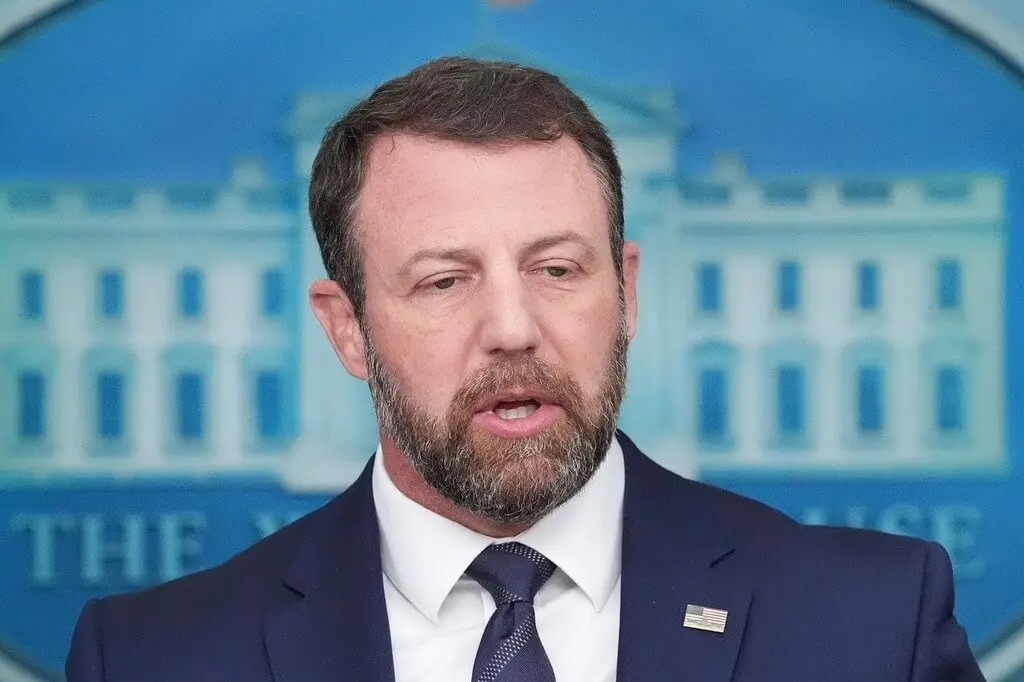
In an aggressive recalibration of the administration’s public communications strategy, Homeland Security Secretary Markwayne Mullin has been benched from all television appearances, earning what insiders are calling a definitive "primetime timeout." The directive, orchestrated by newly minted White House Chief of Staff Stephen Miller, comes in the wake of widespread public anxiety over crippling nationwide technological disruptions, including a sweeping Federal Aviation Administration (FAA) ground stop that paralyzed domestic travel last week.
According to administration sources, Mullin’s erratic explanations and frequent verbal missteps during live broadcasts exacerbated public fears during a period already fraught with uncertainty over whether the nation was facing a catastrophic cyberattack. To restore message discipline, Miller—currently traveling with President Donald Trump in Asia—reassigned public-facing duties regarding the technical anomalies to National Intelligence Director Jay Clayton and Secretary of State Marco Rubio.
Concurrently, the political sphere is buzzing over comments made by tech billionaire and major Republican mega-donor Elon Musk during The New York Times DealBook Summit. When pressed on his political alignment, Musk bluntly declared, "I’m not MAGA." President Trump addressed the remarks in a subsequent phone interview, balancing praise for Musk’s loyalty and intentions with a firm defense of the Make America Great Again movement’s core identity.
Meanwhile, the interview itself has ignited a fierce debate within media circles. Critics, including prominent journalism academics and media watchdogs, have lambasted DealBook host Andrew Ross Sorkin for allegedly failing to press Musk on critical humanitarian controversies linked to his government efficiency initiatives, raising pressing ethical questions about high-profile executive interviews.
Detailed Chronology: The Tech Crashes and Mullin’s Media Exit
The crisis that ultimately sidelined Homeland Security Secretary Markwayne Mullin began unfolding quietly before exploding into public view. Over a tense multi-day span, anxious Americans watched a cascade of critical infrastructure failures ripple across the country. Software systems crashed unpredictably, banking services flickered offline, and commercial air traffic came to a screeching halt when the FAA grounded all domestic flights.
In moments of sweeping national disruption, the public invariably looks to the executive branch for steady reassurance and precise explanations. Unfortunately, as noted by The Atlantic’s Nick Miroff, clear and careful communication proved not to be Mullin’s forte. Tasked with calming a jittery populace that feared a coordinated foreign or domestic cyberattack, the Homeland Security Secretary instead delivered a series of disjointed briefings.
Senior Department of Homeland Security (DHS) officials privately conceded that Mullin consistently "gave the perception that he was winging it." Compounding the frustration within West Wing circles, Mullin’s frequent verbal gaffes began rivaling historical talking points for frequency, turning routine press conferences into public relations liabilities.
Recognizing the escalating damage to the administration’s credibility, Chief of Staff Stephen Miller—acting swiftly from overseas while accompanying President Trump on an Asian diplomatic tour—pulled the plug. Mullin was summarily removed from all upcoming TV spots. In his stead, the White House established a streamlined communication apparatus, positioning Director of National Intelligence Jay Clayton and Secretary of State Marco Rubio as the authoritative voices addressing the technological outages.
The shift yielded immediate dividends. When Clayton appeared on Fox News to articulate the administration’s ongoing investigations and remediation efforts, praise rolled in swiftly from administration allies. Former White House Press Secretary Karoline Leavitt took to social media to champion the pivot, tweeting:
"Good move by the White House to have DNI Jay Clayton out on television. He is smart, professional, and a very credible voice to address Americans’ legitimate concerns about recent outages."
A White House official summarized the structural pivot to Politico, stating:
"This is a perfect example of why Stephen was put in the role as chief of staff — he knows all the different components, every member of the Cabinet trusts him, and he can quickly get them coordinated to deliver on a unified goal. Despite the mixed messaging from Mullin, the administration was able to take the reins — even overseas — and put together a coordinated response to inform the American people."
Supporting Context & Metrics: Musk, Midterms, and the "Not MAGA" Declaration
While the West Wing scrambled to contain the communications fallout from the infrastructural glitches, political tremors emanated from another key Trump ally: Elon Musk.
Musk’s relationship with Donald Trump and the broader Republican apparatus has been characterized by massive financial investments and outspoken political advocacy. Most notably, during the recent midterm election cycle, Musk poured approximately $500 million into GOP-aligned political action committees and candidate campaigns, cementing his status as one of the most influential mega-donors in modern American political history.
However, the limits of that alignment burst into the open during an appearance at The New York Times’ prestigious DealBook summit. When questioned about his political identity, Musk offered a nuanced, albeit provocative, distinction:
"I’m not MAGA. If that means sort of blind adherence to a set of policies by the Republican Party, then I certainly don’t have that."
The remarks instantly reverberated through Washington, prompting NBC News to seek a direct response from President Trump during a telephone interview. Trump maintained a diplomatic yet firm posture regarding his billionaire ally:
"He’s a friend of mine. What can I tell you? I mean, you have to ask — there are lots of definitions out there. MAGA, to me, means something very specific, and when people veer from it, they don’t do very well. But Elon is — Elon’s got very good intentions. I mean, he was with me the whole — he traveled with me."
Trump’s calculated response underscores the delicate balancing act the administration maintains with Musk—acknowledging his unprecedented financial contributions and personal loyalty while guarding the ideological boundaries of the MAGA movement against any perceived apostasy.
Official Statements and Media Fallout
The fallout from The New York Times DealBook summit extended far beyond Musk’s political self-definition, sparking an intense intra-industry reckoning over journalistic accountability.
Summit host Andrew Ross Sorkin—renowned as a financial columnist for The New York Times and co-anchor of CNBC’s Squawk Box—found himself at the center of a firestorm over his 47-minute interview with Musk. Critics argued that the conversation heavily favored corporate and technological narratives while glossing over severe, real-world human costs attributed to Musk’s public policy and federal cost-cutting recommendations.
The most biting criticism came from Columbia Journalism Review’s Bill Grueskin. In a widely circulated post on Threads, Grueskin did not mince words regarding the missed journalistic opportunities:
"I’m just a simple newspaper guy but I kinda think that if you get a 47-minute interview with a guy who is reasonably accused of cutting off aid to thousands of starving people in another continent, you might want to find a minute or two to ask him about that. ‘Mr. Musk, how do you feel at peace with evidence that your DOGE efforts led to mass starvation, disease and death?’ is a pretty easy question to ask here!"
The critique speaks to a broader, ongoing debate within mainstream media institutions concerning how journalists should interview powerful tech oligarchs who wield immense political and economic influence. Critics contend that soft-ball financial interviews allow figures like Musk to sidestep substantive accountability regarding their influence on global humanitarian crises and federal governance.
Future Outlook
As the dust settles on a tumultuous week in Washington and corporate media, several critical trajectories emerge for the remainder of the administration’s term.
First, Stephen Miller’s decisive intervention regarding Markwayne Mullin’s media ban signals a hardline approach to executive branch communications. Under Miller’s leadership as Chief of Staff, the West Wing is expected to enforce strict message discipline, minimizing off-the-cuff cabinet appearances in favor of vetted, technocratic surrogates like Jay Clayton and Marco Rubio. For Mullin, the "primetime timeout" serves as a stark warning that executive performance and media literacy will be rigorously monitored.
Second, the dynamic between Donald Trump and Elon Musk will continue to be heavily scrutinized. While Musk’s distancing from the explicit "MAGA" label highlights his desire to maintain an independent corporate identity, his financial gravity within the conservative ecosystem ensures he remains an indispensable ally to the Republican platform.
Finally, the fierce backlash faced by Andrew Ross Sorkin underscores a permanent shift in journalism ethics. As tech leaders increasingly intertwine themselves with geopolitical power and statecraft, interviewers will face mounting pressure from media watchdogs, academic institutions, and the public to pivot away from sycophantic soft-ball inquiries and toward rigorous, adversarial accountability.
