


Executive Overview
In the high-stakes economy of digital journalism and B2B content marketing, the currency of the realm is speed blended with absolute accuracy. For freelance writers specializing in long-form, authority-driven pieces, Subject Matter Expert (SME) interviews form the bedrock of credibility. However, they have historically been married to one of the most agonizing bottlenecks in the creative process: the post-interview transcription logjam.
Conducting a standard 20-minute conversation with an industry insider typically yields upwards of 3,000 words of dialogue packed with proprietary insights, technical nuances, and quotable soundbites. Traditionally, a writer faced a grim choice: frantically scribble notes—thereby sacrificing conversational engagement and missing spontaneous story angles—or spend upward of an hour per call painstakingly re-listening and transcribing recordings.
This investigative review examines how cloud-based artificial intelligence transcription platforms—specifically pioneering tools like Otter.ai, alongside alternatives such as Fireflies, Fathom, and Rev—have systematically dismantled this workflow barrier. Drawing on long-term data from seasoned fintech and finance writers who have integrated these platforms since 2020, this article analyzes the true return on investment (ROI) of real-time voice-to-text technology. We break down the hard math of time savings, the inevitable trade-offs regarding accuracy, and whether a modest $100 annual investment can fundamentally alter a freelancer’s profit margins.
Detailed Chronology: The Evolution of Interview Workflows
To understand the transformative impact of automated AI transcription, one must look at how the mechanics of freelance interviewing have shifted over the past decade.
Phase I: The Era of Manual Scrawl (Pre-2018)
Before the mainstreaming of reliable cloud transcription, freelance writers operated in a high-friction environment. An interview required a split focus: one part of the brain actively conversed with the expert, while the other desperately tried to capture verbatim quotes on a keyboard or legal pad.
- The Cost: Conversations were stilted. Writers adhered strictly to rigid, pre-written question lists because improvising meant risking missing a crucial quote in real-time.
- The Aftermath: Reviewing raw audio recordings required playing, pausing, and rewinding an audio file five or six times. A 20-minute interview could easily consume 60 to 90 minutes just to reduce to a rough text document.
Phase II: The Outsourced Waiting Game (2018–2020)
As digital budgets expanded, many writers turned to human transcription agencies or early-stage automated web services. While human transcription offered near-perfect fidelity, it introduced a crippling logistical issue: latency.

- The Bottleneck: Turnaround times for human transcribers typically ranged from three to five business days. In an agile newsroom or modern freelance assignment where a writer might have a total turnaround window of one week from pitch to publication, waiting half a week for a transcript made real-time reporting nearly impossible. Rush fees compounded expenses, eating directly into profit margins.
Phase III: The Real-Time AI Standard (2020–Present)
The integration of advanced speech-to-text neural networks changed the equation entirely. Platforms like Otter.ai introduced instant, on-device or cloud-based synchronization that rendered transcripts available the exact second a video conference or voice call concluded.
- The Modern Workflow: Writers now step into interviews with total peace of mind. Recording software runs quietly in the background, freeing the interviewer to pursue organic follow-up questions, dive deep into tangents, and maintain 100% eye contact through video interfaces.
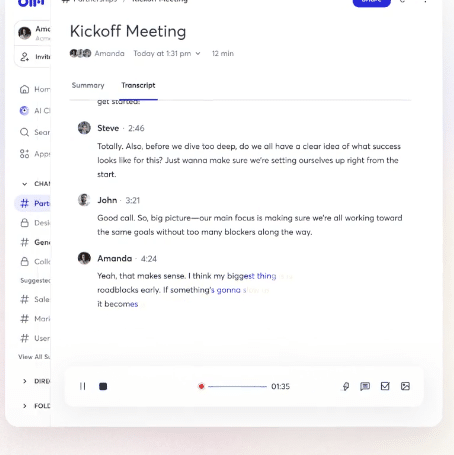
- The Instant Hand-Off: The moment the Zoom or phone call ends, a fully searchable, time-stamped text file is ready for review, bridging the gap between field reporting and drafting instantaneously.
Supporting Context & Metrics: The ROI Math of AI Transcription
For independent contractors operating on fixed-fee models, every minute spent on administrative overhead represents a direct reduction in effective hourly earnings. To properly evaluate whether a paid transcription subscription is justifiable, one must dissect the economic mechanics behind an article’s production cycle.
Breaking Down the Article Production Equation
Consider a standard high-value assignment: a $1,200 commission for a 1,000-word authoritative B2B feature article requiring a single SME interview.
-
Traditional Workflow Allocation:
- Background Research & Source Outreach: 1 hour
- SME Interview & Manual Transcription Cleanup: 1.5 hours
- Outlining, Drafting, & Revision: 3 hours
- Total Time Invested: 5.5 hours
- Effective Hourly Rate: ~$218 per hour
-
AI-Optimized Workflow Allocation:
- Background Research & Source Outreach: 1 hour
- SME Interview & Instant AI Generation (with 10 minutes of quick verification): 1.1 hours
- Outlining, Drafting, & Revision: 3 hours
- Total Time Invested: 5.1 hours
- Effective Hourly Rate: ~$235 per hour
While saving 30 to 45 minutes on a single article might appear modest, scale this across a prolific freelance business producing three to four interview-driven pieces per month. Writers consistently report saving between three to five hours per month in administrative labor. For professionals managing heavier meeting loads, that figure multiplies significantly.
At a cost of roughly $100 per year for a professional-grade subscription (such as Otter.ai’s Pro tier, billed annually at approximately $8.33/month), the platform effectively pays for itself within the first month of operation by reclaiming billable hours that can be redirected toward pitching new clients or drafting additional content.
Feature-Specific Value Drivers
Beyond raw time savings, modern transcription tools incorporate secondary features that drastically streamline the writing process:
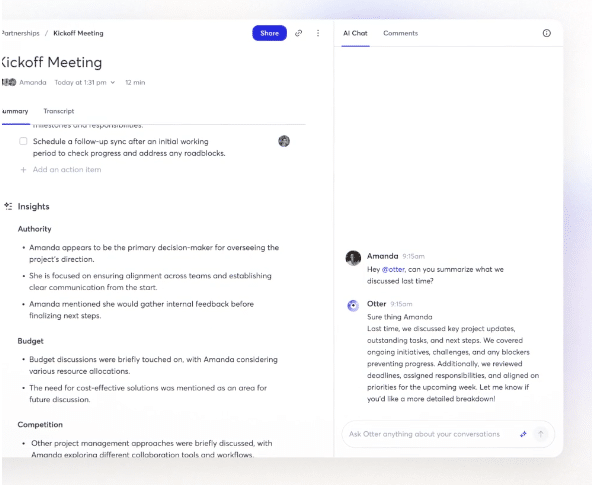
- AI Chat Search Capabilities: Instead of manually scrolling through thousands of words of dense dialogue to find a specific reference, writers can query the transcript via integrated natural language chat. Prompting the system with queries like "What did the expert say about credit card fraud prevention?" or "Summarize the points on AI personalization" instantly retrieves relevant excerpts, complete with contextual summaries.
- Audio-Text Cross-Linking: Accuracy is paramount in journalism. Premium platforms link every word in the text transcript directly to the underlying audio file. By clicking any line of text, the audio playback jumps precisely to that timestamp, allowing writers to quickly verify garbled industry jargon or unusual acronyms without scrubbing through an entire recording.
- Calendar Synchronization & Auto-Joining: Modern tools integrate directly with Google Calendar or Microsoft Outlook, autonomously deploying virtual assistants to join scheduled Zoom, Microsoft Teams, or Google Meet sessions without manual initiation.
Official Industry Analysis & Limitations
Despite the clear financial and operational advantages, industry veterans caution against uncritical reliance on artificial intelligence. Real-world testing reveals distinct limitations that every professional writer must navigate.
The Accuracy Gap: 85% vs. 95%
While marketing brochures often tout accuracy rates approaching 95%, practical deployment in specialized niches—such as fintech, healthcare, or legal reporting—typically yields an actual accuracy rate closer to 80% to 85%.
- The Failure Points: Proprietary software frequently struggles with regional accents, overlapping dialogue, rapid speech patterns, and niche technical terminology or company names.
- The Editorial Safeguard: Because professional publishing demands absolute precision, automated transcripts cannot be copy-pasted directly into a draft. Writers must employ a verification phase—clicking through to cross-check disputed quotes against the source audio. While this cleanup phase adds roughly 10 minutes per transcript, it remains vastly superior to starting from a blank page.
Technical Constraints and Speaker Attribution
- Speaker Mode Quirks: Certain recording setups present technical hurdles. For instance, if a user wears headphones during a recorded call, some transcription configurations fail to capture the remote speaker’s audio, recording only the local microphone. Workarounds require routing audio through computer speakers, which demands a quiet, private environment unsuitable for open-plan offices or public coffee shops.
- Speaker Diarization Errors: Automated identification algorithms routinely misattribute lines in multi-party calls, labeling participants generically as "Speaker 1" or "Speaker 2," or confusing voices with similar tonality. Consequently, multi-speaker webinars or panel discussions require rigorous manual auditing to ensure quotes are attributed to the correct individual.
Future Outlook: The Next Wave of Writing Productivity Tools
As generative artificial intelligence continues to mature, the landscape of freelance writing support tools is shifting from simple transcription to comprehensive content generation ecosystems.
The Convergence of Transcription and Drafting
The next generation of writing aids is moving beyond passive transcription into active synthesis. Tools are increasingly capable of analyzing an interview transcript, identifying overarching narrative themes, structuring a logical article outline, and automatically drafting introductory paragraphs based on the SME’s most compelling insights.
For the modern independent writer, this does not signal the replacement of human creativity, but rather the elevation of the writer from a low-level data entry clerk to a high-level editorial architect.
Choosing the Right Tier: A Strategic Assessment
For freelancers navigating this toolset, current market offerings generally break down into three distinct tiers:
- The Free/Basic Tier: Ideal for testing. Offering limited monthly minutes (typically around 300 minutes with strict session caps), it provides sufficient runway to trial an application on two or three live calls to evaluate workflow compatibility before financial commitment.
- The Pro Tier ($8–$10/month): The established "sweet spot" for full-time freelance writers. Generous minute allocations and extended single-recording limits comfortably cover regular interview schedules and standard client briefings.
- The Business Tier ($20+/month): Tailored for agencies, multi-author publications, or high-volume content operations requiring advanced administrative controls, centralized billing, and team-wide sharing permissions.
Ultimately, while automated transcription platforms are not infallible, they represent an indispensable force multiplier for the modern knowledge worker. By trading tedious administrative friction for instantaneous, searchable data archives, writers can re-focus their energy where it matters most: crafting compelling, authoritative stories that resonate with readers.