


Executive Overview
The landscape of freelance writing has shifted irrevocably. Artificial intelligence tools are no longer speculative novelties or futuristic concepts—they are deeply embedded components of the modern digital workspace. Yet, a stark division defines the contemporary writing market. On one side are the thriving freelancers who leverage AI to eliminate administrative friction and streamline the mechanical elements of production, freeing up cognitive space for high-level synthesis, unique reporting, and relationship building. On the other side are those struggling to stay afloat: writers who either stubbornly ignore the technology entirely or rely on it as a lazy crutch, churning out derivative, hollow prose that modern clients and sophisticated algorithms instantly detect.
This bifurcation highlights a central truth of the modern information economy: AI does not replace the writer; rather, the writer using AI replaces the writer who does not. By integrating machine intelligence into foundational workflows—ranging from breaking past the dreaded blank page to tracking marketing funnels and conducting initial research—freelancers can radically amplify their productivity without sacrificing their authentic voice. This report explores ten strategic, high-value methodologies for integrating AI into a freelance practice, alongside critical guardrails outlining what not to delegate to algorithms.

Detailed Chronology: The Evolution of AI in the Writer’s Toolkit
To understand where the freelance industry stands today, it is instructive to examine the chronological progression of AI adoption over recent years:
- The Phase of Skepticism (Pre-2023): Early interactions with language models were characterized by amusement mixed with distrust. Tools produced erratic prose, hallucinated facts, and struggled with basic narrative coherence. Freelancers viewed AI as a novelty or a passing tech trend with little practical application for human-driven storytelling.
- The Phase of Over-Reliance (2023–2024): As conversational models like ChatGPT and Claude matured, a gold rush mentality emerged. Eager to maximize output, a segment of the freelance market attempted to fully automate blog posts, newsletters, and pitches. The result was an influx of predictable, formulaic content that quickly degraded client trust and saturated search engines with generic noise.
- The Phase of Strategic Integration (Present): Today, the most successful independent creators have found a sustainable equilibrium. They treat AI not as a ghostwriter, but as a tireless research assistant, an administrative coordinator, and an interactive sounding board. By shifting the machine’s role from creation to facilitation, writers have turned AI into a competitive advantage.
Supporting Context & Metrics: The Mechanics of Augmented Freelancing
The modern freelance writer faces unprecedented demands. According to industry surveys, successful independent professionals spend less than 40% of their actual workday writing; the majority of their time is consumed by research, client outreach, marketing tracking, transcript analysis, and content repurposing.
By strategically deploying AI across these operational bottlenecks, writers can reclaim vital hours. Here are ten tactical areas where AI actively enhances, rather than diminishes, human value:
1. Beating the Blank Page
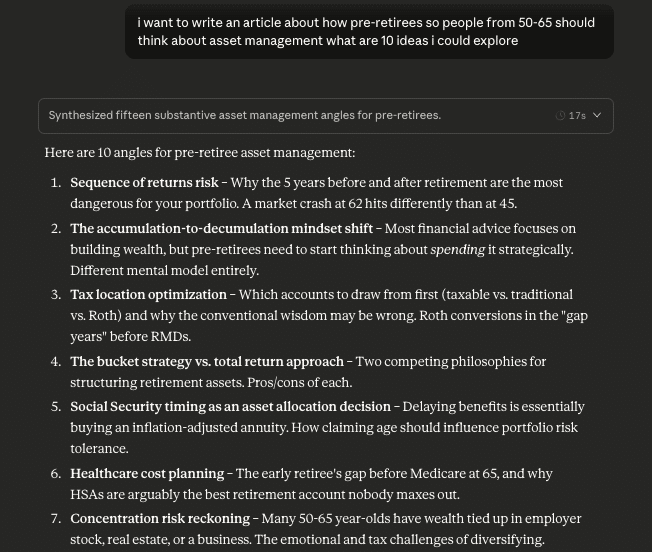
The psychological barrier of the blinking cursor remains one of the greatest time-wasters in professional writing. Knowing the topic is not the same as knowing how to initiate the narrative arc.

- The AI Strategy: Instead of asking a tool like ChatGPT or Claude to write an article, prompt it to generate ten distinct structural angles, alternative opening paragraphs, or reader-centric questions.
- The Value: The goal is not to accept the machine’s output verbatim, but to break cognitive paralysis. Interacting with imperfect suggestions prompts the human brain to react, pivot, and rapidly establish momentum.
2. Streamlining the Outlining Process
Experienced writers know that a solid outline is the structural skeleton of any successful blog post, long-form feature, or client pitch.
- The AI Strategy: Feed your core topic, target audience parameters, and raw research notes into an AI assistant. Request a logical architectural breakdown, comprehensive subheadings, and missed sub-topics that an expert reader would expect.
- The Value: This collapses hours of structural planning into minutes, offering fresh angles and ensuring no critical pillar of the topic is omitted.
3. Accelerated Research and Triage
Freelancers wade through dense academic studies, lengthy industry reports, and multi-page corporate white papers to extract actionable data.
- The AI Strategy: Platforms like Perplexity Pro act as dynamic research assistants that query the live web and return verified statistics accompanied by full citations. Similarly, pasting dense source texts into Claude allows for rapid summarization and extraction of core arguments.
- The Value: Writers can quickly triage source material to ensure relevance and verify currency (avoiding the pitfall of relying on outdated data) before committing deep reading time.
4. Drafting Cold Outreach and Letters of Introduction (LOIs)
Initiating contact with prospective clients—such as marketing agencies and enterprise brands—is an exhausting yet mandatory routine for business sustainability.
- The AI Strategy: Use AI to generate foundational templates for cold emails and Letters of Introduction. Ask the model for multiple variations, adjusting for brevity and tone.
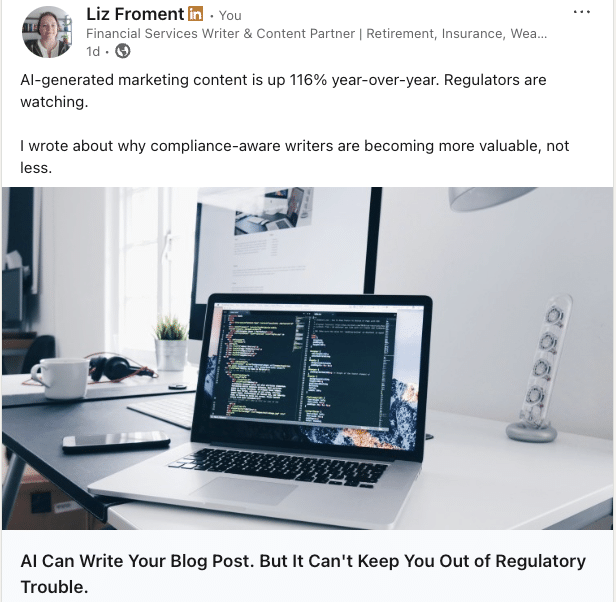
- The Crucial Step: Stop short of full automation. The opening sentence of any outreach email must be hyper-personalized—referencing a company’s recent award, a newly released study, or a specific brand milestone. AI provides the structural 80%, while the human writer supplies the vital 20% of genuine personalization.
5. Crafting Compelling Headlines and Hooks
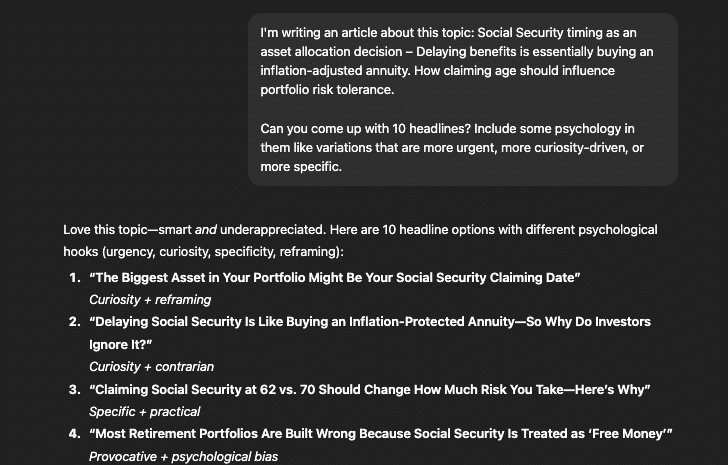
A great piece of content fails if its title and introduction do not immediately capture attention. Yet, writing concise, curiosity-driven headlines is notoriously difficult.
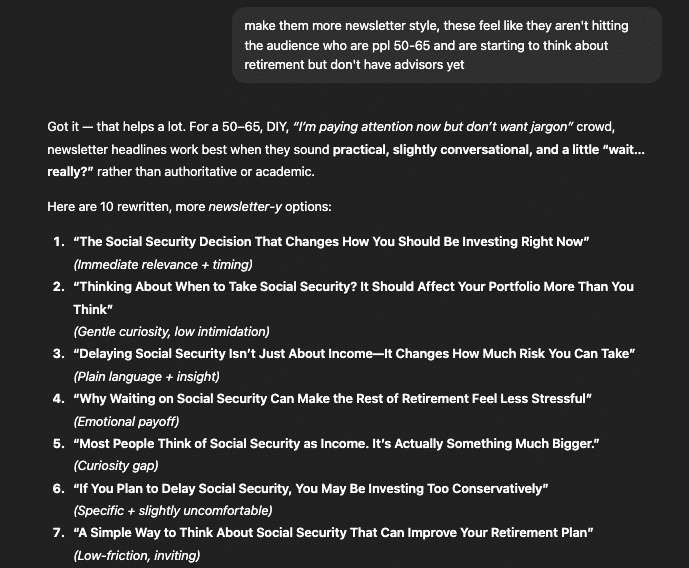
- The AI Strategy: Request ten varied headline options tailored to specific psychological triggers (e.g., urgency, curiosity, data-driven specificity). Ask the tool to punch up draft headlines or generate alternate high-impact hooks.
- The Value: Reviewing a range of AI-generated hooks helps spark inspiration, allowing writers to mix, match, and refine components into a headline that resonates.
6. Dynamic Editing and Proofreading
Human eyes naturally gloss over recurring errors, structural awkwardness, and wordiness in self-written drafts because the brain fills in what it intended to write.
- The AI Strategy: Treat tools like Grammarly, ChatGPT, and Claude as a secondary set of eyes. Beyond basic grammar correction, prompt the AI to role-play as a critical editor or, better yet, as the target audience member—flagging confusing passages, overly complex phrasing, and underdeveloped arguments.
- The Value: The final editorial judgment remains firmly in human hands, but the software catches blind spots that slip past tired proofreaders.
7. Maximizing Content Repurposing
Producing a comprehensive 1,500-word article represents a massive investment of intellectual capital. Relying on a single publication point leaves immense value on the table.

- The AI Strategy: Feed a completed blog post into a language model and request specific promotional derivatives: a LinkedIn post thread, newsletter snippets, or punchy social media hooks.
- The Value: This transforms a single foundational asset into five to ten distinct pieces of promotional content, keeping a writer’s personal brand active across platforms without requiring redundant writing sessions.
8. Rigorous Interview Preparation
Securing interviews with Subject Matter Experts (SMEs) requires thoughtful preparation to extract high-value insights rather than basic, easily Googled facts.
- The AI Strategy: Input the expert’s background, industry context, and article goals into an AI tool. Ask for ten targeted, incisive questions designed to elicit specific, engaging anecdotes and professional opinions.
- The Value: It rapidly brings writers up to speed in unfamiliar industries, ensuring every minute of the expert’s time is respected and maximized.
9. Transcript Mining and Synthesis
Post-interview workflows often leave writers staring at hundreds of lines of raw text generated by transcription services like Otter.ai.
- The AI Strategy: Utilize built-in conversational features within transcription platforms to query the text directly. Ask the AI to pull the most poignant direct quotes, organize themes, or locate specific data points mentioned during meandering responses.
- The Value: It eliminates the need to read through lengthy transcripts multiple times. Note: Every direct quote must be cross-verified against the original audio file prior to publication to guarantee accuracy.
10. Automated Marketing and Outreach Tracking
For many independent creators, maintaining a CRM or marketing spreadsheet is a tedious chore that gets abandoned within weeks.
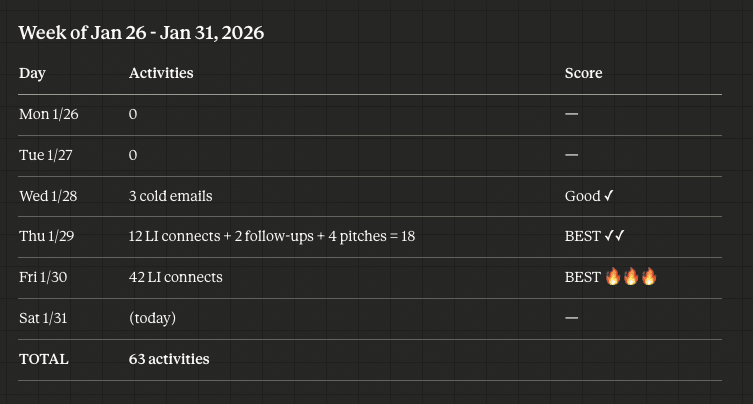
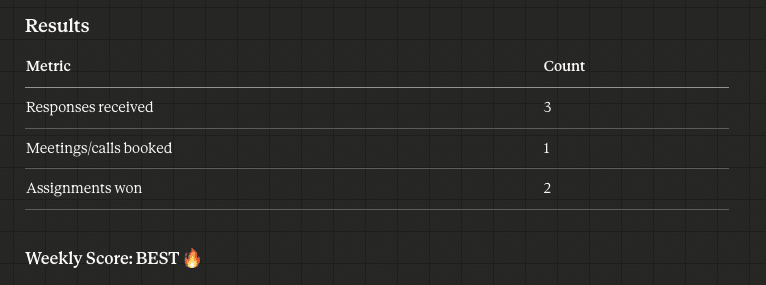
- The AI Strategy: Use advanced conversational interfaces—such as Claude Cowork—to log outreach activities conversationally. Report dates, contacts, outreach types, and responses in a running dialogue, then request monthly summaries, conversion rates, and pipeline health metrics.
- The Value: Writers can gamify their marketing efforts, establish weekly scorecards ("good, better, best"), and easily spot systemic weaknesses in their outreach conversion funnels.
Official Industry Perspectives & Guidelines
Industry leaders emphasize that the integration of artificial intelligence must preserve the core integrity of journalistic and commercial writing. Professional bodies and veteran independent creators consistently stress a few non-negotiable boundaries:
- Transparency and Accountability: The writer whose name appears on the byline remains fully accountable for every word, fact, statistic, and quote published. Delegating mechanical tasks to software does not absolve a writer of factual verification.
- Originality over Homogeneity: Clients pay freelancers for unique perspectives, human empathy, lived experiences, and original reporting—qualities that large language models fundamentally lack. Relying on AI to generate complete drafts leads directly to generic, commoditized output that fails client objectives.
What NOT to Do With AI
To protect career longevity and client relationships, modern freelancers must adhere to strict operational boundaries regarding AI usage:
- Never Outsource Original Thinking: The core value of a freelance writer lies in formulating unique arguments, synthesizing disparate ideas, and establishing distinct points of view. If this foundational thought process is outsourced to a machine, the writer becomes interchangeable.
- Never Publish Unverified Claims or Quotes: AI models are prone to hallucinating data, misattributing studies, and slightly altering interview transcripts. Publishing unverified text introduces severe liability and destroys professional credibility.
- Never Rely on Unedited AI Text: Passing off raw AI generations as final copy is easily detected by modern clients and search algorithms. It signals a lack of professional craft and professionalism.
Future Outlook
As artificial intelligence continues to evolve at a relentless pace, its ubiquity in the digital workspace is guaranteed. For freelance writers, the path forward does not lie in resistance or anxious avoidance, but in mastery.
Those who embrace AI as a functional lever—automating the administrative overhead, accelerating research triage, and optimizing content distribution—will operate with unprecedented speed and efficiency. By delegating the tedious friction of the profession to algorithms, human writers secure the time and cognitive bandwidth required to focus on what truly matters: deep critical thinking, authentic human connection, expert storytelling, and enduring relationships that define enduring professional value.