

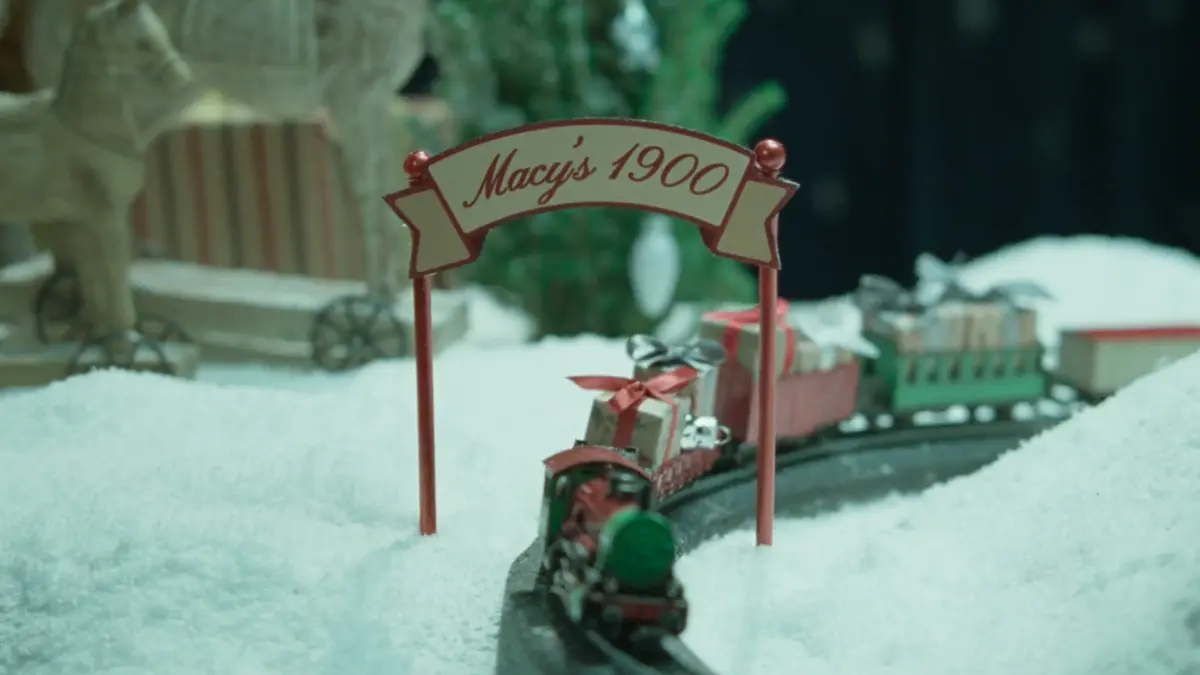
Executive Overview
For nearly a century, the name Macy’s has been synonymous with the official kickoff of the American holiday season. While millions of households associate the historic brand with towering cartoon characters, marching bands, and Broadway performances floating down the canyons of Manhattan, the retailer has historically functioned as a canvas for other entities’ intellectual property. Snoopy, SpongeBob, Pikachu, and a pantheon of pop-culture icons have ridden the crisp autumn winds of New York City, drawing billions of collective eyeballs over generations.
However, as the institution approaches its monumental 100th edition, a strategic shift is underway. In an era where brand heritage must be actively leveraged to maintain consumer loyalty against a backdrop of fierce digital competition and retail evolution, Macy’s is finally turning the lens inward.
The numbers underlying the property remain staggering. In 2025, an astonishing 35.7 million viewers tuned in to watch the Macy’s Thanksgiving Day Parade, cementing its status as America’s most-watched non-sports entertainment program. Capitalizing on this unparalleled captive audience, the retailer is orchestrating a dual-pronged milestone celebration for its upcoming centennial parade. Alongside an expansive aerial display featuring 100 giant inflatables, Macy’s is launching a high-profile, 90-second brand film titled “What If,” created in partnership with agency BBH USA.
The commercial marks a rare narrative pivot: rather than utilizing the broadcast purely to showcase consumer partnerships or upcoming holiday merchandise, Macy’s is dedicating prime-time airtime to honoring the generations of behind-the-scenes artisans, employees, and visionaries who literally and figuratively inflate the magic. This piece explores the rich history, economic metrics, creative strategy, and future outlook of a cultural juggernaut preparing to write its next chapter.
Detailed Chronology: From Marionettes to Manhattan Megaliths
To understand the weight of Macy’s upcoming centennial, one must look back at the humble, highly theatrical origins of what would become a global tradition.
The 1920s: The Birth of a Holiday Tradition
In 1924, Macy’s flagship store at Herald Square was riding a wave of unprecedented growth. Driven largely by a massive influx of European immigrants who had recently joined the company’s workforce—many of whom possessed master-level craftsmanship in theater, tailoring, and carpentry—store executives decided to thank the city of New York with a grand Christmas parade.
Conceived initially as the "Macy’s Christmas Parade," the inaugural event featured live animals borrowed from the Central Park Zoo, professional floats, and employees dressed as clowns, cowboys, and knights. Crucially, the parade was explicitly designed to announce the opening of the store’s "Christmas windows"—a retail tradition that would define holiday window-shopping for decades. The gamble paid off: over 250,000 spectators lined the streets, prompting organizers to immediately declare it an annual tradition.
The 1930s–1950s: The Rise of the Inflatable Titan
The parade quickly outgrew its live-animal novelty. In 1927, the iconic Felix the Cat made history as the very first giant helium balloon, marking the beginning of the aerial spectacle that defines the event today. Designed by Tony Sarg, a pioneering puppeteer often called the "Father of Modern Puppetry in America," these early balloons were artistic marvels crafted from rubberized silk and filled with air before transitioning to helium.
During World War II, the parade faced its first existential threat. Between 1942 and 1944, the event was suspended, and the massive stores of rubber were donated to the United States government for the war effort. When the parade returned with a triumphant roar in 1945—broadcast locally on television for the first time—it signaled a collective national healing and set the stage for television syndication. By the 1950s, network television executives realized the nationwide marketing potential of the procession, transforming a local New York street festival into an electronic hearth for American families.
The Late 20th Century: Commercialization and Cultural Dominance
As television networks vied for broadcasting rights, the character lineup evolved to reflect the shifting tides of American pop culture. The parade transitioned away from generic historical figures and mythical holiday beasts toward licensed commercial properties.
- 1968: The introduction of Snoopy marked the beginning of the character-balloon golden age.
- The 1980s and 1990s: Technological advancements allowed for increasingly complex, multi-articulated balloons that could navigate the tight turns of Broadway and Columbus Avenue despite turbulent urban wind patterns.
Throughout this period, Macy’s role was primarily that of a brilliant curator and host. The company provided the infrastructure, logistics, and staging, while third-party studios and entertainment conglomerates utilized the parade as the ultimate promotional vehicle for movies, toys, and television shows.
Supporting Context & Metrics: The Anatomy of a Modern Media Empire
While cultural nostalgia keeps viewers coming back year after year, the Macy’s Thanksgiving Day Parade is, at its core, a masterclass in modern media economics, retail psychology, and logistical engineering.
Audience Metrics and Ratings Dominance
In an era of deep media fragmentation—where streaming services, social media algorithms, and video games have pulverized traditional television ratings—the Macy’s Thanksgiving Day Parade stands as an improbable anomaly.
- The 35.7 Million Benchmark: The 2025 broadcast drew 35.7 million viewers across NBC, Peacock, and associated streaming platforms. This makes it not merely a holiday special, but the single most-watched non-sports entertainment broadcast in the United States.
- The Multigenerational Stickiness: Audience research consistently indicates that the parade enjoys rare co-viewing metrics. Grandparents, parents, and children watch the broadcast simultaneously, creating an unshakeable generational touchpoint that advertisers covet.
The Logistical Labyrinth
Behind the two-and-a-half-hour televised spectacle lies a year-round operation managed by Macy’s Parade Studio, located in Moonachie, New Jersey.
- The Studio Team: A dedicated team of engineers, sculptors, painters, carpenters, and costume designers work tirelessly inside the workshop. These artisans blend old-world craftsmanship—such as sculpting clay models by hand—with cutting-edge technology, including 3D modeling and advanced aerodynamic testing.
- The Centennial Scale: For the upcoming 100th edition, the logistical challenge is unprecedented. The deployment of 100 inflatables requires hyper-coordinated deployment schedules, specialized handling crews (many of whom are Macy’s employees volunteering their time), and strict adherence to New York City’s municipal wind-speed safety thresholds.
Official Statements and Creative Strategy: Unveiling "What If"
To capture the emotional weight of the centennial, Macy’s partnered with creative agency BBH USA to craft a campaign that bridges past eras with the present day. The centerpiece of this marketing push is a 90-minute—pardon, a 90-second—narrative film entitled "What If."
The Narrative Architecture of "What If"
Rather than relying on fast-paced product placements or celebrity endorsements, the spot functions as a cinematic historical essay. According to creative leads at BBH USA, the commercial invites viewers to contemplate the counterfactual history of the holiday: What if a group of immigrant retail workers hadn’t decided to build a parade in 1924? What if the puppet workshops had failed to innovate?
The film guides viewers on a visual time-travel sequence:
- The Early Windows: It opens with the meticulous, hand-crafted holiday window displays of early 20th-century New York, capturing the wonder of families peering through frost-kissed glass.
- The Puppet Workshop: The narrative transitions into the smoky, sawdust-laden workshop where Tony Sarg and his team of artisans engineered the very first balloons, sketching out fantastical creatures on large drafting tables.
- The Modern Dreamers: The journey culminates in the present-day Macy’s Parade Studio, drawing a direct, unbroken line from those original 1920s craftsmen to the diverse contemporary workforce that still designs, tests, and pilots the massive inflatables today.
Corporate Strategy: Reclaiming the Brand Narrative
Industry analysts have lauded the campaign as a strategic masterstroke. For years, critics argued that Macy’s had allowed external IP holders to eclipse its own corporate identity during its signature event. By investing heavily in a narrative that centers on its internal workforce and institutional history, Macy’s is performing a vital brand reinforcement exercise.
"For a century, we have had the extraordinary privilege of hosting America’s holiday," noted a senior Macy’s marketing executive during the campaign’s preview. "With the ‘What If’ campaign and our centennial celebration, we aren’t just looking back at the characters that flew down the street; we are looking inward at the human hands, the quiet dedication, and the collective imagination of the people who made the magic possible in the first place."
Future Outlook: The Next Century of the Holiday Spectacle
As Macy’s looks past its 100th parade toward the future, the enterprise faces both extraordinary opportunities and complex modern challenges.
The Convergence of Physical and Digital Experiences
The traditional model of holiday retail promotion has shifted dramatically. While the physical parade remains an untouchable anchor of live-event marketing, Macy’s has aggressively integrated digital extensions into the experience:
- Augmented Reality (AR) and Metaverse Integration: Younger demographics now interact with parade balloons via immersive AR filters on social platforms and digital twin experiences in virtual worlds. Future iterations of the parade are expected to feature deeper synchronization between the physical floats on Broadway and interactive digital activations that allow remote viewers to "customize" or "pilot" virtual balloons.
- Sustainable Production: Environmental consciousness is reshaping the Parade Studio. The organization is actively researching biodegradable materials for balloon construction, energy-efficient LED float lighting systems, and zero-waste logistics frameworks to ensure that a century-old tradition aligns with modern corporate sustainability mandates.
Navigating Retail Transformation
Macy’s, Inc.—like many legacy department store anchors—has navigated a turbulent economic landscape characterized by shifting consumer shopping habits, the dominance of e-commerce, and the continuous restructuring of brick-and-mortar retail footprints.
In this context, the Thanksgiving Day Parade is no longer viewed merely as a marketing expense, but as an irreplaceable brand asset that anchors the company’s emotional equity. By reminding consumers of its deep, foundational roots in American culture, Macy’s leverages the goodwill generated by the parade to drive both digital traffic and holiday-season sales.
Conclusion
One hundred years after a modest group of immigrant artisans and retail workers marched down 34th Street with live lions and makeshift floats, the Macy’s Thanksgiving Day Parade stands as an unshakeable monument to American popular culture.
The upcoming centennial celebration—anchored by a staggering 100 inflatables, watched by tens of millions of loyal viewers, and deeply humanized by the retrospective storytelling of the "What If" campaign—proves that the magic of the parade does not rest in the rubber or the helium alone. It rests in the enduring human capacity to imagine, to build, and to share a collective moment of joy across generations. As Macy’s steps into its second century, it does so with a renewed appreciation for its own story, proving that the greatest character in the parade has been its creator all along.
