

Executive Overview
As the holiday shopping season roars into motion, the retail industry fixates on the critical five-day stretch spanning from Black Friday through Cyber Monday. According to data from market research firm Circana, an astonishing 43% of all American consumers will complete the lion’s share of their holiday shopping during this compressed window. Most notably, nearly a quarter of these shoppers will check off their entire gift lists on Black Friday alone.
Yet, beneath the perennial headlines of server crashes, flash sales, and e-commerce logistics, a profound cultural shift is taking place on the ground. Retailers are pivoting their primary crosshairs toward Generation Z. Deloitte’s holiday retail outlook reveals that 94% of Gen Z consumers plan to shop this week, shelling out an average of $752 per person—outpacing every other living demographic cohort in projected holiday spending.
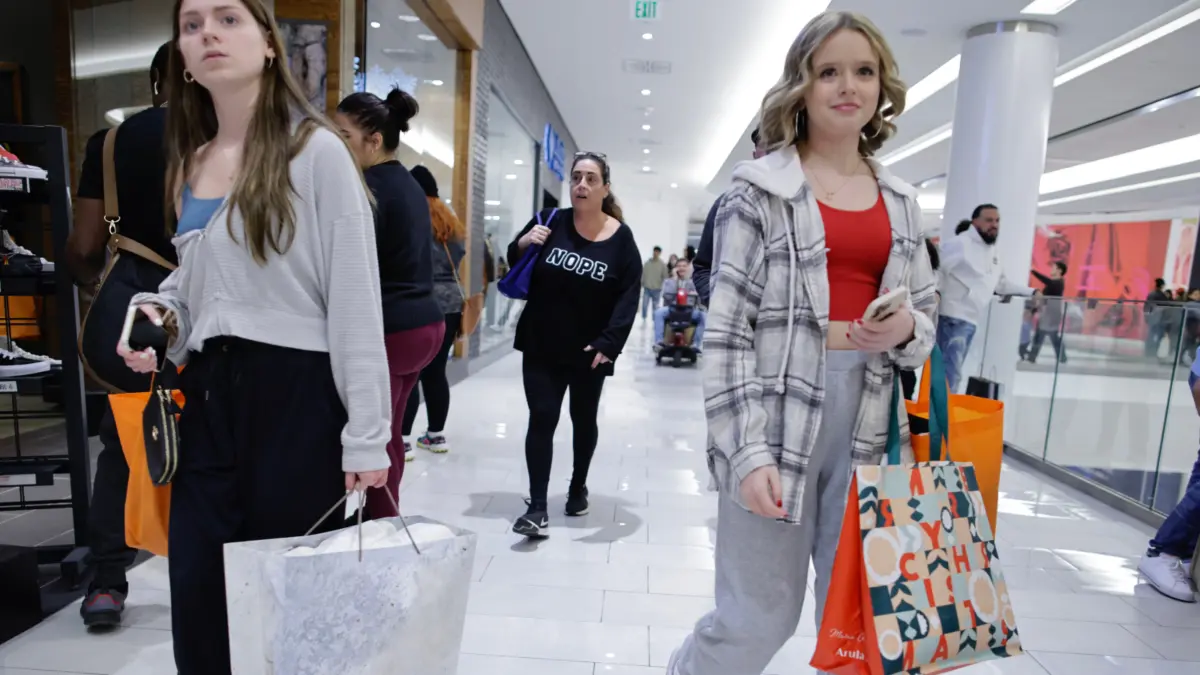
While the conventional wisdom dictates that this demographic of 14-to-29-year-olds will transact exclusively through glowing smartphone screens, a striking reality challenges that narrative. Gen Z is heading back to the very architectural symbol that Generation X made famous three decades ago: the traditional shopping mall.
However, young shoppers are not navigating these sprawling retail hubs in the way older generations might expect. Some are spending aggressively, while others are simply treating the physical store as a social lounge or a content studio. To decode this evolving consumer psyche, industry analysts, retail executives, and recent market intelligence paint a complex portrait of Gen Z’s relationship with the physical mall—and what it signals for the future of retail.
Detailed Chronology: The Evolution of the Holiday Shopping Pilgrimage
To understand the weight of today’s foot traffic, it is necessary to examine how the Thanksgiving weekend pilgrimage has morphed over the past generation.
The Era of Hyper-Frictionless Digital Commerce
For the better part of the past decade, retail prognosticators pronounced the shopping mall a dying relic. The rise of frictionless, one-click e-commerce, combined with same-day shipping promises, made leaving the house to acquire goods feel archaic. Retailers shifted their capital expenditures away from physical real estate, prioritizing digital acquisition funnels, algorithmic ad spend, and mobile-optimized web architecture. For Gen Z—digital natives who grew up swiping tablets before they could write cursive—online shopping was the baseline reality.
The Pandemic Acceleration and Social Fatigue
The COVID-19 pandemic temporarily accelerated this shift, forcing total reliance on digital storefronts. But it also birthed an unforeseen counter-movement. As remote learning, remote work, and algorithmic feeds locked billions of people behind glass screens for hours on end, a profound sense of digital fatigue set in. The very frictionless convenience that e-commerce championed began to feel hollow, sterile, and isolated.
The Post-Digital Rebound
By the mid-2020s, retail analysts began documenting a surprising rebound effect. Younger consumers, having never known a world without the internet, began looking past the screen. They started craving the tactile, the multisensory, and the communal. Physical retail ceased to be a place of mere utility—where one goes strictly to acquire an item—and transformed into a destination for experiential discovery.
Today, this journey culminates on Black Friday. The modern holiday shopping pilgrimage is no longer about queuing up in the freezing pre-dawn dark simply to secure discounted consumer electronics. Instead, it is an intentional, social ritual where Gen Z reclaims physical space from the digital ether.
Supporting Context & Metrics: Unpacking the Data Behind the Mall’s Resurgence
The empirical evidence supporting Gen Z’s physical retail renaissance is both robust and counterintuitive. Multiple studies released throughout the year dispel the myth that younger shoppers have abandoned brick-and-mortar storefronts entirely.
Frequency and Duration of Visits
- High Footfall: According to research published by Coresight in April, an impressive 48% of Gen Z consumers reported visiting a shopping mall within a single two-week period.
- Demographic Disparity: A comprehensive Ipsos survey underscored this generational divide, finding that shoppers aged 18 to 34 are twice as likely to visit a mall compared to consumers aged 55 and older.
- Time and Spend per Visit: A Stagwell study released this year revealed that Gen Z not only logs more total time per mall visit than older cohorts, but they also drop an average of $296 per visit—the highest spend-per-trip of any age demographic.
- Gender Dynamics: Female zoomers show a particularly strong affinity for physical spaces. A study conducted by snack maker Sunnie and Westfield Rise titled The Comeback of the Hangout found that 86% of young women praise the mall for delivering an energetic atmosphere that they simply "can’t get digitally."
The Rise of Gen Alpha
Crucially, this analog renaissance is not stopping with Gen Z. Industry experts are tracking the exact same behavioral patterns trickling down to Gen Alpha (those aged 13 and under). Backed by an estimated collective spending power and family influence approaching $100 billion, per Charles Schwab, Gen Alpha is following closely in the footsteps of their slightly older peers, treating physical retail as a primary social landscape.
Official Statements & Industry Perspectives
Industry leaders on the front lines of retail real estate and youth apparel are actively restructuring their strategies to capture this hybrid consumer.
Helenor Gilmour, head of marketing research firm Beano Brain, emphasized the developmental importance of physical shopping to ADWEEK:
"A trip to the mall with friends can be an important first taste of autonomy. That shared experience is a powerful part of the appeal of shopping in stores. It is why we expect younger shoppers to embrace shopping events like Black Friday as a reason to visit malls together."
Brieane Olson, CEO of youth apparel brand PacSun, occupies a unique vantage point, managing a retail footprint that spans online channels, freestanding boutiques, and traditional mall locations. Olson rejects the notion that young consumers view shopping through an either/or lens:
"We’re continuing to see just how important physical retail is to young consumers, and there’s a real opportunity for malls heading into Black Friday and the holiday season. Young people aren’t choosing between digital and physical experiences. They want both, and they expect brands to create meaningful connections across each."
The Mall of America Case Study
No single location better illustrates this dynamic than the Mall of America (MOA) in Bloomington, Minnesota. Spanning 4.2 million square feet with over 520 stores and annual sales clearing $650 million, MOA remains the crown jewel of American retail real estate. According to the mall’s 2026 Holiday Shopping Survey, an astonishing 92% of Gen Z respondents expressed an intent to visit the property today, with more than half confirming they planned to make purchases upon arrival.
Jill Renslow, chief business development and marketing officer at Mall of America, notes that physical leasing strategies are actively shifting to mirror digital subcultures:
"Gen Z may discover what’s next online, but they still want to experience it together in the real world. Social media may introduce them to a brand, trend or community, but there’s still an appeal to experiencing those interests firsthand. We’re seeing that with our leasing strategy. Brands such as Edikted and Pop Mart, along with concepts like Bandai Namco and Kpop Nara, reflect how interests that develop online are translating into physical retail experiences."
Future Outlook: The Paradox of the "Non-Shopping" Mall Visit
As brands finalize their post-Black Friday assessments, they must grapple with a nuanced metric: visiting the mall does not always equate to making a transaction.
Data from the International Council of Shopping Centers indicates that 60% of Gen Z mall visitors go simply to socialize or meet friends. Furthermore, the Sunnie and Westfield Rise study revealed that 72% of female zoomers would willingly visit a shopping mall even if they were explicitly barred from purchasing anything.
For traditional retail accountants, this might sound alarming. However, forward-thinking marketers view this foot traffic through a different lens. Coresight’s research highlights that user-generated content creation serves as a primary catalyst for physical visits. Gen Z treats malls as aesthetically curated backdrops designed for organic, shareable social media moments.
Consequently, the retail brands capturing the highest ROI this holiday season are those that prioritize visually engaging environments, immersive installations, and "Instagrammable" or "TikTok-ready" store decor.
What This Means for the Future of Retail
Looking past the immediate frenzy of Black Friday 2026, the retail landscape has permanently bifurcated into an ecosystem where digital and physical channels are mutually dependent.
- Algorithmic Discovery, Tactile Conversion: Brands must continue using social media algorithms as the top-of-funnel discovery engine, but they must deliver on the promise of community and sensory engagement once the consumer crosses the threshold of a physical store.
- The Death of the Pure-Play Binary: Retailers that rely exclusively on e-commerce risk losing out on the high-margin, high-basket-size impulsive spending driven by social group dynamics at the mall. Conversely, brick-and-mortar operators that ignore digital culture will fail to draw foot traffic in the first place.
- Experiential Architecture: Malls will continue to survive—and in many cases thrive—not as mere distribution warehouses for clothing and goods, but as civic town squares for an increasingly isolated, digitally fatigued generation.
As the doors open across America’s malls this morning, the crowds rushing inside are not just hunting for doorbuster deals. They are participating in a collective reclamation of physical space—proving that the death of the mall was, quite simply, greatly exaggerated.
