

Executive Overview
The fragile calm brokered by Egyptian mediators in the Gaza Strip has collapsed, plunging the region back into active hostilities. Early Wednesday morning, the Israel Defense Forces (IDF) launched precision airstrikes targeting two designated "terror activity sites" in the northern Gaza Strip. The military action came in direct response to persistent rocket fire from Palestinian militant factions, effectively dismantling an Egyptian-brokered cease-fire that had barely survived its first full day.
The latest escalation follows four days of some of the most intense cross-border violence witnessed in the region this year. The hostilities were initially ignited on Friday by an Israeli targeted killing operation that eliminated Zuhair al-Qaisy, a high-ranking leader of the Popular Resistance Committees (PRC). Al-Qaisy’s assassination triggered a massive retaliatory barrage of hundreds of rockets and mortar shells fired from Gaza into civilian population centers across southern Israel.
By the time a tentative truce was announced, the human cost had mounted significantly. At least 25 Palestinians—including 14 members of the Iran-backed militant group Islamic Jihad—lost their lives in the fighting, with upwards of 80 others sustaining injuries. While Egyptian intelligence officials successfully negotiated the terms of a cessation of hostilities, deep fractures in the interpretation of the agreement immediately undermined its longevity. Palestinian factions insisted the deal included a halt to Israeli targeted assassinations, a condition flatly rejected by Israeli defense officials.
Compounding the regional instability, Egypt’s newly empowered, Islamist-dominated parliament voted unanimously in a symbolic gesture to suspend diplomatic relations with Israel and halt natural gas exports. Although the vote carried no immediate legal weight—as foreign policy remains under the exclusive purview of Egypt’s ruling Supreme Council of the Armed Forces (SCAF)—the legislative action underscored the rapidly shifting geopolitical landscape following the ouster of former President Hosni Mubarak. As diplomatic channels strain and military commanders on both sides adopt a zero-tolerance policy, the international community watches with mounting apprehension, fearing that a single miscalculated strike could plunge the region into an even wider war.
Detailed Chronology of Escalation
Friday: The Spark of Conflict
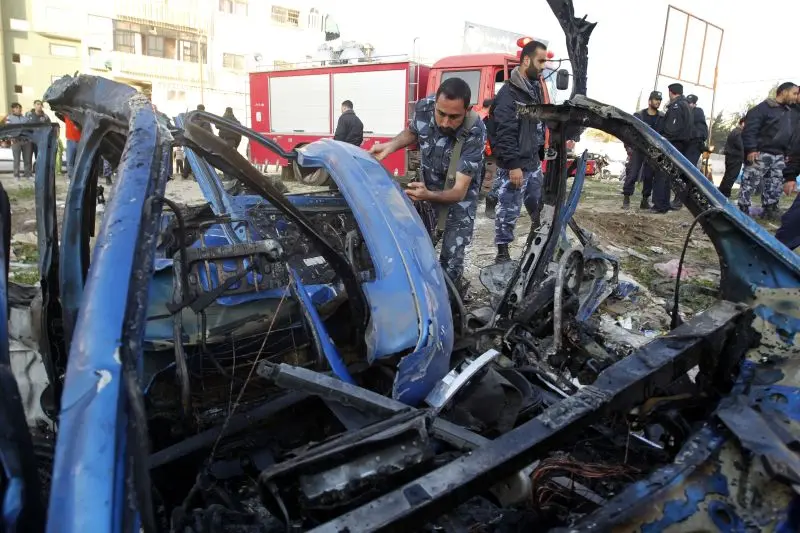
The catalyst for the four-day conflagration occurred on Friday, when the Israeli military executed a targeted missile strike against a vehicle traveling in Gaza. Inside was Zuhair al-Qaisy, a prominent leader within the Popular Resistance Committees. Israeli defense officials maintained that al-Qaisy was actively planning an imminent, large-scale terrorist attack against Israeli targets, making his elimination an operational necessity to protect civilian lives.
Friday to Monday: The Rocket Barrages and Retaliation
Al-Qaisy’s death served as an immediate trigger for widespread retaliation. Over the subsequent 96 hours, Gaza-based militant groups—spearheaded primarily by Islamic Jihad and the PRC—unleashed a relentless barrage of hundreds of rockets and mortar rounds into southern Israel. Siren warnings echoed continuously through Israeli border towns, sending tens of thousands of civilians into bomb shelters.
In response, the Israeli Air Force launched waves of retaliatory airstrikes across the coastal enclave. The strikes targeted rocket-launching sites, weapons depots, and operative cells. The intense exchange of fire marked the most severe military flare-up in and around the Gaza Strip since the beginning of the year, overshadowing international focus on the ongoing crises in Syria and Iran.
Tuesday: The Shaky Truce and Contradictory Terms
By early Tuesday, signs of exhaustion and diplomatic intervention began to take hold. Israeli Defense Minister Ehud Barak declared during a morning briefing, "It appears that we have reached the end of this round of violence," adding that the IDF had "demonstrated once again that we will take out anyone who tries to act against us."
Egyptian intelligence officials stepped in to mediate a cease-fire between Israeli representatives and Palestinian militant factions. However, the agreement was built on fundamentally incompatible premises:
- The Palestinian Perspective: Khaled al-Batsh, a prominent Gaza-based leader of Islamic Jihad, stated that the militant factions agreed to a reciprocal cease-fire only after receiving Egyptian assurances and mediation that Israel had agreed to halt both its air campaign and its policy of targeted assassinations of militant leaders.
- The Israeli Perspective: Senior Israeli defense officials vehemently denied agreeing to any restriction on targeted killings. Amos Gilad, a senior defense official, publicly defended the practice, asserting that targeting high-value terrorist leaders remains the most effective preemptive strategy to save civilian lives.
Despite the diplomatic ambiguity, the cease-fire held precariously through much of Tuesday, marred only by sporadic reports of early morning rocket fire that the IDF reported as three separate projectiles launched into Israeli territory.
Wednesday: The Collapse and Airstrikes
The fragile arrangement collapsed entirely in the early hours of Wednesday. Citing ongoing rocket fire that violated the understanding of calm, Israeli aircraft struck two "terror activity sites" in northern Gaza. IDF spokespersons confirmed direct hits on the targets, framing the action as a direct consequence of the breakdown in deterrence.
Concurrently, tensions flared on the ground near the security fence. Palestinian news agency WAFA reported that the Israeli army opened fire on a funeral procession near the Jabaliya cemetery in northern Gaza, wounding three people. Conversely, an IDF spokesperson stated that soldiers operating along the security fence identified approximately 50 Palestinians gathering suspiciously near the barrier, prompting troops to fire warning shots in strict accordance with standard rules of engagement, with initial reports indicating no injuries.
Supporting Context & Metrics
The human and geopolitical dimensions of the recent flare-up illustrate the acute volatility of the Gaza-Israel border. A review of the metrics and contextual factors highlights the severity of the crisis:
- Casualty Figures: The four days of intense combat resulted in the deaths of 25 Palestinians. Among the deceased, 14 were identified as combatants belonging to Islamic Jihad, an organization heavily backed and funded by Iran. At least 80 other Palestinians sustained varying degrees of injuries.
- Ordnance and Impact: Militant groups in Gaza fired hundreds of rockets and mortar shells into southern Israeli population centers. The continuous barrage disrupted daily life, closed schools, and tested the resilience of Israel’s civil defense infrastructure.
- The Egyptian Political Shift: The crisis unfolded against the backdrop of a profound political transition in Cairo. In a dramatic, albeit nonbinding, display of parliamentary sentiment, Egypt’s Islamist-dominated parliament voted unanimously by a show of hands to suspend diplomatic relations with Israel and halt the export of natural gas.
- Constitutional Limitations: Political analysts noted that the parliamentary vote was primarily symbolic. Under the transitional governance structure following the ouster of long-time President Hosni Mubarak, the Supreme Council of the Armed Forces (SCAF) retains exclusive authority over foreign policy and international treaties. Consequently, the vote did not legally alter official state-to-state relations between Cairo and Jerusalem, though it signaled a hardening of public and legislative sentiment in Egypt regarding the Palestinian cause.
Official Statements & Diplomatic Maneuvers
The diplomatic and military leadership of the involved parties articulated distinct positions as the crisis evolved, reflecting the deep-seated distrust and clashing strategic objectives governing the conflict.
Israel Defense Forces and Political Leadership
The Israeli leadership emphasized a posture of deterrence, balancing defensive readiness with targeted offense:
- Lt. Gen. Benny Gantz, IDF Chief of the General Staff: Emphasized the nation’s resolve, stating, "We must appreciate the public’s endurance and cooperation while following the ongoing situation. Calm will be reciprocated with calm, and fire will be reciprocated with fire."
- The IDF Official Statement: Reaffirmed the military’s operational parameters: "The IDF will not tolerate any attempt to harm Israeli civilians or IDF soldiers, and will continue to operate with determination at any given time against anyone who uses terror against the State of Israel. The Hamas terror organization is solely responsible for any terrorist activity emanating from the Gaza Strip."
- Ambassador Ron Prosor, Israel’s Permanent Representative to the UN: Addressed a critical letter to the United Nations Secretary-General, lamenting the international body’s inaction regarding the indiscriminate rocket fire targeting Israeli towns. Prosor warned the Security Council: "It is time for the Security Council to speak with one voice against the terrorism that continues to flow from Gaza. The situation is grave. If one rocket lands in the wrong place at the wrong time, Israel will be forced to respond in a completely different manner."
Palestinian Militant Factions
Representing the Gaza-based organizations, Islamic Jihad articulated the conditions under which they entered the short-lived truce:
- Khaled al-Batsh, Islamic Jihad Leader: Highlighted the reliance on Egyptian mediation, noting that militant factions agreed to lay down their weapons only after receiving assurances that Israel would cease its airstrikes and targeted assassinations—a premise swiftly rejected by Israeli authorities.
Future Outlook
As the dust settles from the latest round of retaliatory strikes, the long-term outlook for the Gaza border remains precarious. The fundamental disconnect regarding the terms of the Egyptian-brokered cease-fire—specifically Israel’s refusal to abandon targeted killings versus Palestinian demands for total immunity for militant leadership—guarantees that the underlying drivers of conflict remain unaddressed.
Furthermore, the evolving political climate in Egypt introduces a new layer of regional unpredictability. While Egypt’s military council currently maintains the stability of the 1979 peace treaty, the rising influence of Islamist legislators voicing hostile rhetoric toward Israel signals that Cairo may play a less predictable role as a mediator in future crises.
Military analysts warn that unless a more robust, comprehensive political arrangement is forged—one that addresses both Israel’s security imperatives against rocket fire and Gaza’s severe humanitarian and economic isolation—the region will remain trapped in an endless cycle of temporary truces punctuated by sudden, violent escalations. For now, civilians on both sides of the border remain on high alert, acutely aware that the current calm is extraordinarily fragile.