

Executive Overview
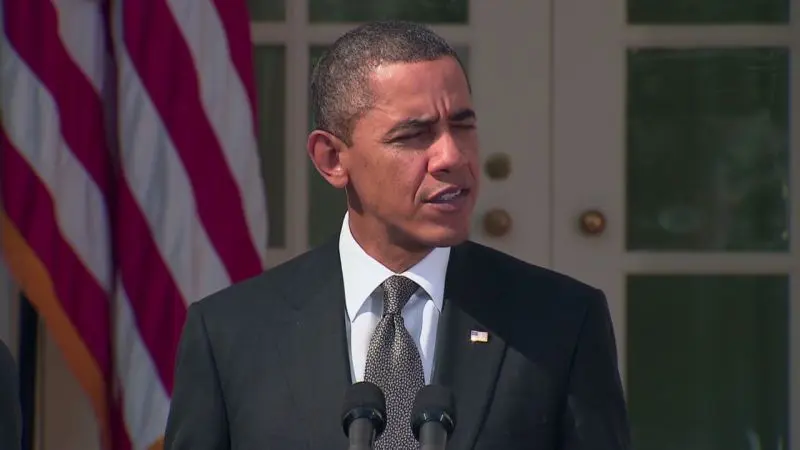
In a coordinated display of transatlantic and transpacific economic unity, the United States, the European Union, and Japan launched a landmark legal challenge at the World Trade Organization (WTO) against China’s aggressive export restrictions on critical raw materials. Announced by President Barack Obama during a press briefing at the White House, the dispute settlement consultations target Beijing’s tight grip on rare earth elements, tungsten, and molybdenum—specialized minerals that form the fundamental building blocks of modern high-technology electronics, renewable energy infrastructure, and advanced defense systems.
The core of the international grievance centers on accusations that Beijing is deliberately weaponizing its near-monopoly on rare earth production. By implementing stringent export quotas, levying punitive export tariffs, and systematically reducing allowable outbound shipment volumes, China has allegedly engineered an uneven playing field. Western officials argue that these protectionist policies artificially inflate raw material costs for manufacturers outside of China while depressing prices domestically. This economic distortion creates a powerful incentive for global corporations to relocate their factories, proprietary technologies, and high-skilled jobs directly to Chinese soil.
While the White House and its European and Japanese allies insist the legal action is not designed to stifle China’s economic rise, but rather to ensure fair competition and enforce established global trade norms, Beijing has robustly defended its sovereignty over resource management. Chinese officials maintain that their regulatory framework is fully compliant with WTO guidelines and is primarily designed to curb environmental degradation and promote sustainable resource extraction. With the WTO formally initiating the dispute process, China faces mounting pressure to justify its trade policies or risk formal sanctions, setting the stage for a protracted geopolitical and economic showdown over the future of high-tech manufacturing supply chains.
Detailed Chronology: Escalating Tensions and Legal Action
The escalation leading to the historic WTO filing represents the culmination of years of mounting frustration among Western trade authorities, who watched helplessly as China tightened the screws on global access to critical minerals.
- 2010: Tensions reached a boiling point when China dramatically slashed its overall export quotas by 32% for domestic enterprises and a staggering 54% for foreign-invested companies. That same year, amidst a territorial dispute, Beijing temporarily halted rare earth shipments entirely to Japan, causing international spot prices to skyrocket and triggering widespread panic across global electronics and automotive supply chains.
- September 2011: Recognizing the acute vulnerability of Western supply chains, the U.S. House Foreign Affairs Subcommittee on Asia and the Pacific convened urgent congressional hearings. Lawmakers focused intensely on the national security implications of rare earth dependencies, specifically highlighting how critical these materials are for cutting-edge military hardware, including missile guidance systems, surveillance drones, and the then-nascent F-35 Joint Strike Fighter program.
- Early 2012: Following years of failed bilateral negotiations and unheeded warnings from Brussels and Washington, trade commissioners concluded that informal diplomacy had hit a dead end. The European Union noted that it had raised the issue repeatedly over preceding years without securing any meaningful policy shifts from Beijing.
- March 13, 2012: In a synchronized global announcement, President Obama, alongside top EU and Japanese trade officials, formally declared that the three economic superpowers were filing a joint request for dispute settlement consultations with China at the WTO. This marked the official opening salvo of a legal process designed to dismantle China’s restrictive export regime.
- Post-Filing Timeline: Under WTO protocols triggered by the March 13 filing, China was given a mandatory 10-day window to formally acknowledge the case and was legally obligated to enter structured bilateral consultations with the complaining parties within two months. Failure to reach a mutually acceptable resolution during these consultations paves the way for the complainants to request a formal WTO dispute resolution panel to adjudicate the matter and issue a binding legal ruling.
Supporting Context & Metrics: The Indispensable Elements of the Digital Age
To understand the profound gravity of the WTO challenge, one must examine the unique economic and industrial footprint of the targeted minerals. Often referred to collectively as "rare earths," the group comprises 17 chemically similar metallic elements—including cerium, neodymium, and dysprosium—alongside related strategic industrial metals like tungsten and molybdenum.
Global Production Share of Targeted Critical Minerals:
[████████████████████████████████████████] China: 97% (Rare Earths)
[██████████████████████████████████████  ] China: 91% (Tungsten)
[██████████████████                      ] China: 36% (Molybdenum)
According to data compiled by the European Commission and the U.S. Trade Representative’s office, China’s dominance over these foundational resources is near absolute:
- Rare Earth Elements: China produces approximately 97% of the world’s entire supply of rare earths. These elements possess unique magnetic, heat-resistant, and phosphorescent properties that cannot be easily substituted without triggering costly product redesigns and severe performance degradation.
- Tungsten: Widely utilized in high-intensity lighting technology, advanced electronics, automotive components, and aerospace engineering, tungsten is heavily concentrated under Chinese control, with Beijing accounting for roughly 91% of global output.
- Molybdenum: An essential metallic element prized for its durability and high melting point—making it vital for light bulb filaments, structural steels, and chemical catalysts—China commands roughly 36% of worldwide production.
The utility of these materials spans virtually every pillar of the 21st-century economy. They are indispensable for manufacturing flat-screen televisions, smartphones, hybrid and electric vehicle (EV) batteries, wind turbines, energy-efficient LED lighting, petroleum refining catalysts, and advanced medical imaging devices. Because these inputs are deeply embedded in complex manufacturing ecosystems, the European Union warned that their non-availability or artificial scarcity can easily cause catastrophic disruptions across entire global value chains.
Official Statements and Divergent Perspectives
The legal battle at the WTO exposed a stark philosophical and economic divide between the industrialized market economies of the West and the state-guided economic model of Beijing.
The Western Coalition: Enforcing Global Rules
President Barack Obama framed the challenge as a fundamental defense of American manufacturing and the international rule of law. Speaking to reporters at the White House, Obama made clear the administration’s strategic intent:
"We want our companies building those products right here in America. But to do that, American manufacturers need to have access to rare earth materials which China supplies. Now, if China would simply let the market work on its own, we’d have no objections. Instead, Chinese policies currently are preventing that from happening and they go against the very rules that China agreed to follow."
White House Press Secretary Jay Carney echoed this sentiment, emphasizing that the action was not an attempt to contain China’s emergence as an economic superpower, but rather to ensure a level playing field.
"We believe that China’s rise is a good thing for the Chinese people and for the global community, a good thing for the United States," Carney stated. "It is also important that, as China becomes a bigger and bigger economic power, that China play by the same set of rules that other major economic powers play by."
U.S. Trade Representative Ron Kirk underscored the immediate damage inflicted on Western industry:
"America’s workers and manufacturers are being hurt in both established and budding industrial sectors by these policies. China continues to make its export restraints more restrictive, resulting in massive distortions and harmful disruptions in supply chains for these materials throughout the global marketplace."
From Europe, EU Trade Commissioner Karel De Gucht adopted an equally assertive tone, noting that despite prior WTO rulings against Chinese raw material export curbs, Beijing had shown zero inclination to self-correct:
"China’s restrictions on rare earths and other products violate international trade rules and must be removed. These measures hurt our producers and consumers in the EU and across the world, including manufacturers. This leaves us no choice but to challenge China’s export regime again to ensure fair access for our businesses to these materials."
Beijing’s Defense: Environmental Stewardship and Sovereignty
In stark contrast, Beijing staunchly defended its regulatory framework, framing the export restraints as a legitimate and necessary exercise of environmental governance.
Addressing journalists at a regular press conference in Beijing, Chinese Ministry of Foreign Affairs spokesman Liu Weimin pushed back against the allegations of protectionism:
"China has worked out its own policy on managing rare earths, which is in line with WTO regulations. Our policies tackle not only the export of rare earth but also its production and exploration."
Chinese officials argued that decades of unbridled, highly polluting mining and processing had caused severe ecological damage, soil erosion, and water contamination within its mining regions. By capping production quotas and tightening export controls, Beijing insisted it was fulfilling its domestic environmental responsibilities while conserving exhaustible natural resources—exemptions that are theoretically permissible under certain articles of international trade law, provided they are applied transparently and without discriminatory intent.
Future Outlook: Domestic Policy, Legislative Pressure, and Long-Term Strategy
While the launch of WTO dispute consultations marked a major diplomatic milestone, domestic lawmakers in the United States argued that international legal frameworks moved far too slowly to protect fragile industrial supply chains.
Reflecting deep congressional impatience, U.S. Senator Chuck Schumer (D-New York) publicly called for more aggressive, unilateral economic levers.
"There are faster ways to assert leverage on China than relying on the WTO, which could take years to resolve the case," Schumer argued in a statement.
The New York senator advocated for a multi-pronged legislative strategy, including proactive efforts by the U.S. government to block Chinese-funded mining acquisitions on American soil and pushing to restrict World Bank financing for industrial mining projects inside China.
Simultaneously, private enterprise began scrambling to diversify supply chains outside of China’s sphere of influence. Companies like Molycorp Inc., which operates rare earth mines in Mountain Pass, California, and processing facilities in Colorado, emerged as critical western champions. Industry leaders urged lawmakers to double down on domestic research and development, streamline permitting processes for domestic mining ventures, and subsidize alternative material research to reduce systemic reliance on Chinese imports.
Ultimately, the WTO challenge over rare earth minerals transcended a simple trade dispute over tariffs and quotas. It served as a defining geopolitical test case for whether multilateral trade governance could effectively regulate access to the vital natural resources underpinning the 21st-century green and digital economy. As the case proceeded through consultations and toward potential adjudication panels, its resolution would profoundly shape the contours of global industrial policy for decades to come.